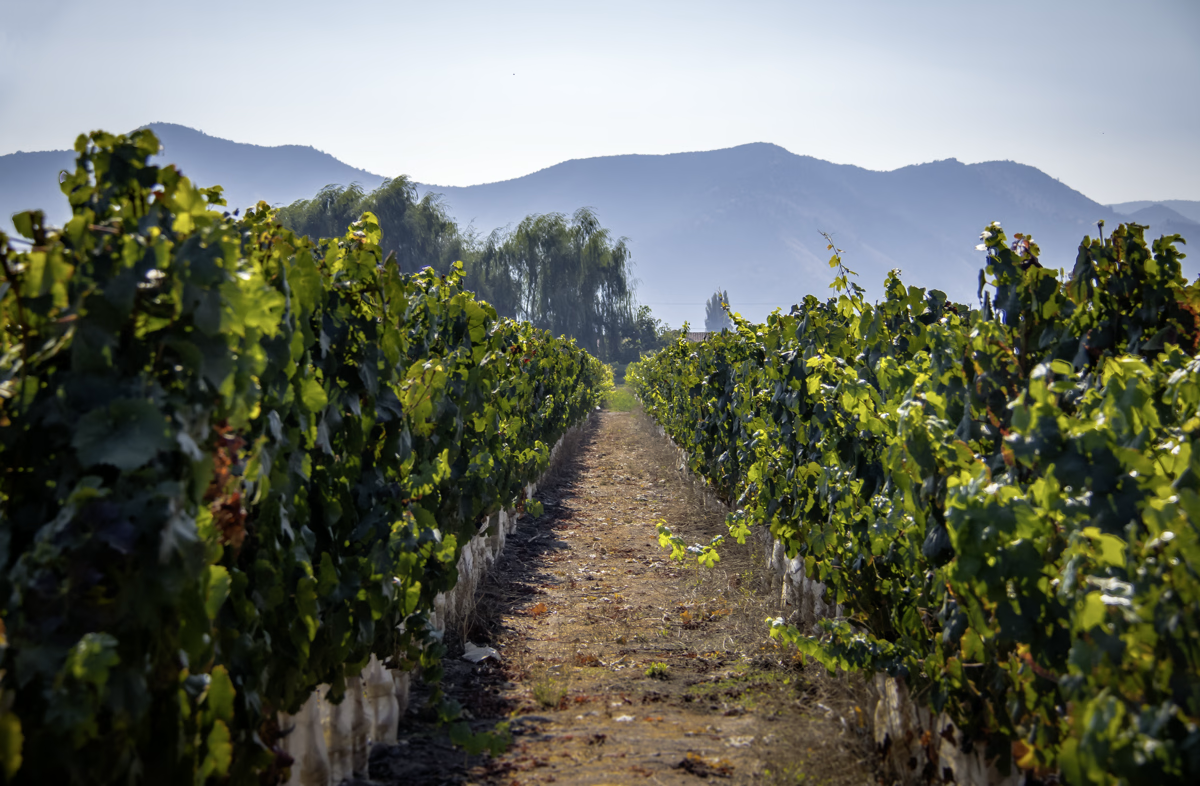
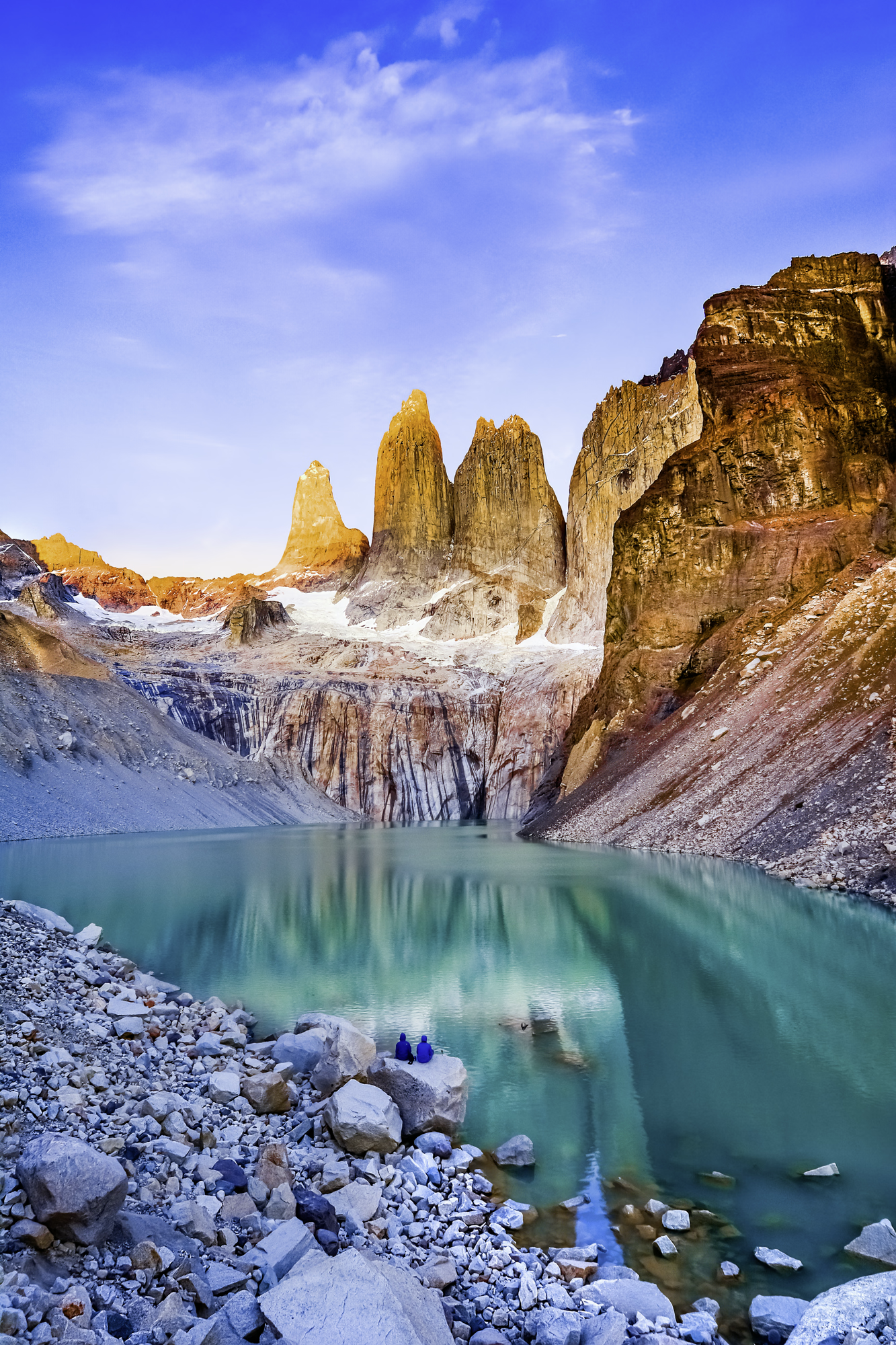
Chile's geography naturally divides the country into distinct regions connected by domestic flights. The central valleys around Santiago combine cities, vineyards, and the Pacific coast, while the north is defined by high-altitude deserts and salt flats. Farther south, volcanoes, forests, and lakes give way to Patagonia's glaciers, mountains, and fjords.
Because of Chile's length, most itineraries focus on two or three regions rather than attempting to travel overland from north to south. Whether you're interested in wine, hiking, wildlife, astronomy, or dramatic landscapes, this guide will help you choose the regions that best match your travel style.
Chile destination finder
| If you're looking for... | We'd recommend... |
|---|---|
| Your first trip | Santiago, the Atacama Desert, and Patagonia or the Lake District |
| Luxury | Patagonia, the Atacama Desert, or the Lake District |
| City and culture | Santiago or Valparaíso |
| History | Santiago, Valparaíso, or Easter Island |
| Wine country | Maipo Valley, Casablanca Valley, or Colchagua Valley |
| Volcanoes | The Lake District |
| Hiking | Patagonia, the Lake District, or the Atacama Desert |
| Glaciers | Patagonia |
| Wildlife | Patagonia, Chiloé Island, or the Atacama Desert |
| Stargazing | The Atacama Desert or the Elqui Valley |
| Birdwatching | Patagonia, Chiloé Island, or the Lake District |
| Road trips | The Lake District or Patagonia |
| Families | Santiago with the Lake District |
| Honeymoons | Patagonia with the Atacama Desert or the Lake District |
| Off-the-beaten-path travel | Chiloé Island, Aysén, or Easter Island |


How should you divide your time?
Most international trips begin in Santiago, which serves as Chile's main gateway and is worth exploring for a few days before continuing elsewhere. Because Chile stretches more than 2,600 miles from north to south, domestic flights are the most practical way to connect its major regions. Rather than trying to see everything, most travelers choose two or three destinations that complement one another.
As a general rule:
5–7 days: Two destinations
8–10 days: Three destinations
11–14 days: Three to four destinations
15+ days: Four or more destinations, including Easter Island or Chile's more remote southern regions.
For a first visit, we usually recommend combining Santiago with the Atacama Desert and Patagonia or the Lake District. This pairing showcases Chile's extraordinary geographic diversity while keeping travel times manageable.
Chile's regions


Santiago & Central Chile
Santiago is the natural starting point for most trips to Chile. Set between the Andes and the Chilean Coastal Range, the capital combines museums, historic neighborhoods, contemporary architecture, and one of South America's strongest culinary scenes. It also serves as the gateway to Chile's renowned wine regions and the colorful port city of Valparaíso.
Central Chile offers remarkable variety within a short drive. Visitors can spend the morning touring vineyards in the Maipo or Casablanca valleys before continuing to the Pacific coast or returning to Santiago for the evening. Most travelers spend two or three nights here before flying north or south.
Explore Santiago & Central Chile →
Atacama Desert
The Atacama Desert is one of the driest places on Earth, where salt flats, volcanoes, geysers, hot springs, and high-altitude lagoons create landscapes unlike anywhere else in South America. Most visitors stay in San Pedro de Atacama, using the town as a base for exploring the Valley of the Moon, El Tatio Geysers, flamingo-filled salt lakes, and some of the world's clearest night skies.
Although distances between attractions can be significant, most excursions are easily organized from San Pedro. Three or four nights allows enough time to experience the region's geological diversity while adjusting to its high elevation.

Lake District
Stretching south from Temuco to Puerto Varas, Chile's Lake District is defined by snow-capped volcanoes, ancient forests, clear lakes, and German-influenced towns. The region is home to some of Chile's best hiking, kayaking, rafting, and scenic driving, while national parks protect temperate rainforest found nowhere else in the world.
Puerto Varas, Frutillar, and Pucón each offer a different experience, from lakeside luxury hotels to adventure-focused lodges. The Lake District appeals equally to outdoor enthusiasts, families, and travelers looking for a slower pace than Santiago or Patagonia.
Patagonia
Southern Chile is home to one of the world's great wilderness regions. Patagonia combines granite peaks, glaciers, turquoise lakes, windswept steppe, and vast national parks that stretch toward the southern tip of the continent. Torres del Paine National Park is the region's best-known destination, but fjords, glaciers, and wildlife extend far beyond its famous hiking trails.
Most travelers base themselves in Puerto Natales before exploring Torres del Paine or cruising through the surrounding fjords. Whether hiking, photographing wildlife, or simply taking in the scenery, Patagonia rewards travelers who can dedicate at least three or four nights to the region.

Chiloé Island
Separated from the mainland by the Chacao Channel, Chiloé has developed a distinct identity shaped by fishing traditions, maritime culture, mythology, and centuries-old wooden churches. Rolling green hills, colorful palafito houses built over the water, and a rugged Pacific coastline give the island a character unlike anywhere else in Chile.
Chiloé is best suited to travelers looking for a quieter pace. Boutique lodges, seafood restaurants, coastal walks, and opportunities to observe seabirds, penguins, and marine life make it an excellent addition to the Lake District or Patagonia.
Easter Island (Rapa Nui)
More than 2,000 miles west of mainland Chile, Easter Island is one of the world's most remote inhabited islands. Best known for its monumental moai statues, Rapa Nui preserves an extraordinary Polynesian culture and archaeological landscape that differs completely from continental Chile.
Most visitors spend three or four nights exploring volcanic craters, ceremonial platforms, lava caves, beaches, and archaeological sites spread across the island. Because of its distance from the mainland, Easter Island is best planned as a dedicated extension rather than a brief stop during a broader Chile itinerary.