Easter Island, known locally as Rapa Nui, lies more than 2,000 miles from continental Chile and is one of the world's most remote inhabited islands. Its archaeological landscape includes nearly 1,000 moai, ceremonial platforms known as ahu, quarry sites, petroglyphs, village remains, and volcanic craters. These sites are inseparable from the living Rapa Nui community, whose language, music, dance, food, and stewardship continue to shape how the island is understood.
At a glance
| Best for | Archaeology, Polynesian culture, photography, volcanic landscapes, and remote island travel |
|---|---|
| Don't miss | Ahu Tongariki, Rano Raraku, Rano Kau, Orongo, Anakena, and Tahai |
| Recommended stay | 4 to 5 nights |
| Best area to stay | Hanga Roa or the quieter countryside immediately outside town |
| Pairs well with | Santiago & Central Chile, Atacama Desert, and Patagonia |
| Closest airport | Mataveri International Airport (IPC) |
| Best time to visit | Year-round, with particularly favorable conditions from October through April |
| Getting around | Private transfers and accredited local guides |
| Budget | $$$$ to $$$$$ |
Why stay on Easter Island (Rapa Nui)?
Rapa Nui was settled by Polynesian navigators who developed a monumental sculptural and architectural tradition in extreme isolation. The moai represented important ancestors and were erected on ahu facing inland toward communities. Their placement, quarrying, transport, and later toppling form part of a long cultural history rather than a single unexplained event.
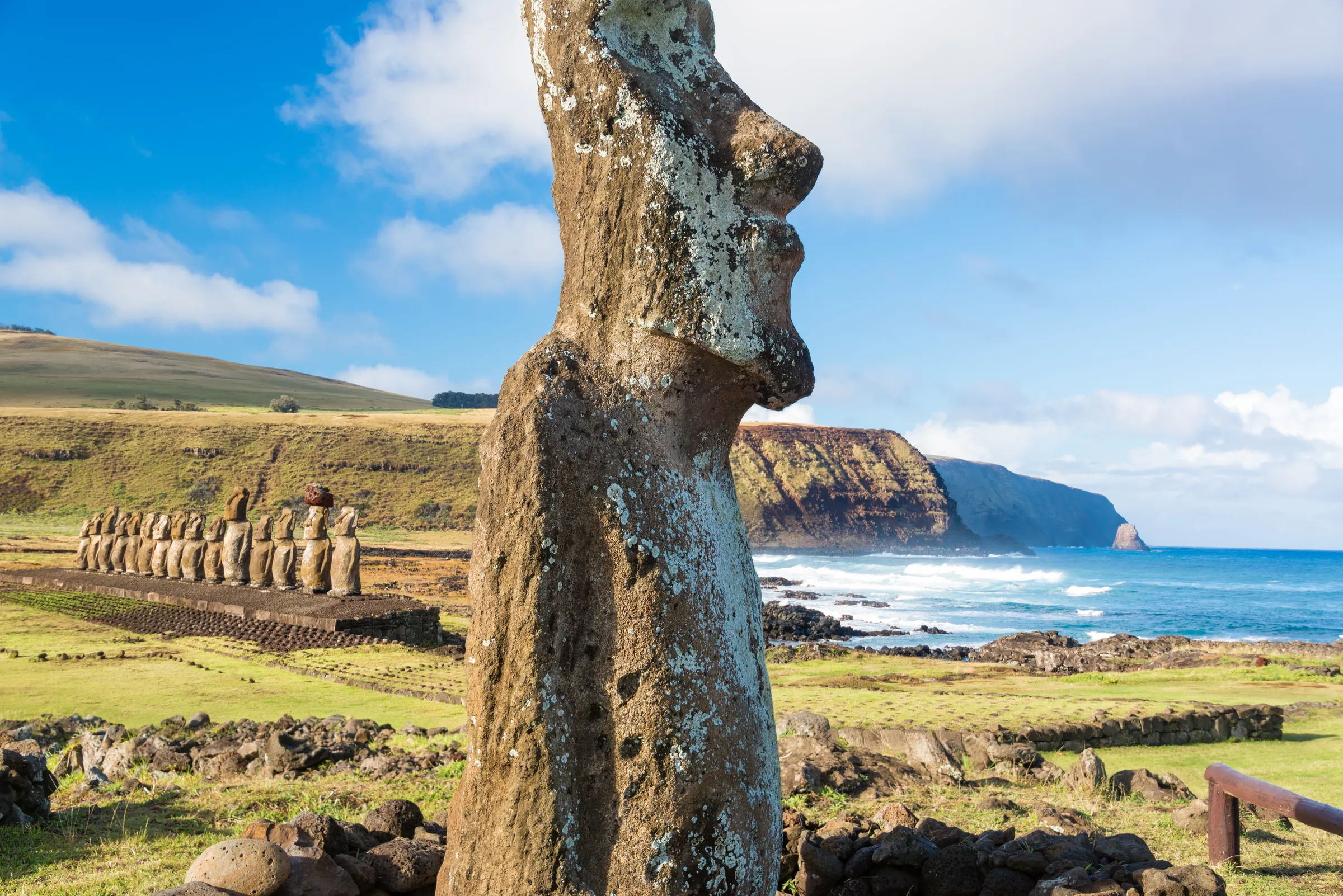
Rano Raraku, the volcanic quarry where most moai were carved, preserves statues in many stages of production. Ahu Tongariki demonstrates the scale of the ceremonial platforms, while Orongo and Rano Kau document the later birdman period. Beaches, caves, agricultural features, and petroglyphs reveal that the island's history extends far beyond the standing statues.
Hanga Roa is the island's only town and contains restaurants, shops, the local church, a harbor, and the Father Sebastián Englert Anthropological Museum. Most archaeological sites lie beyond town and require planned excursions, which is why guide quality has such a strong influence on the visit.
Our take: Rapa Nui should be approached as a living cultural landscape, not an outdoor sculpture collection. Four or five nights allow time to understand the sequence of sites, spend time with local guides, and explore without compressing the island into one long driving day.
Is Easter Island (Rapa Nui) a good fit?
- Are interested in archaeology and Polynesian history.
- Want to explore with knowledgeable local guides.
- Enjoy volcanic landscapes, coastal walks, and photography.
- Appreciate destinations where contemporary culture is central to the experience.
- Are comfortable planning around limited flights and special entry requirements.
- Want to visit one of the most remote inhabited islands on Earth.
Atacama is a better choice for astronomy and high-altitude desert landscapes, while Patagonia has more extensive trekking and wildlife. Rapa Nui is Chile's most important destination for Polynesian archaeology and living island culture.
Best things to do
See sunrise at Ahu Tongariki
Fifteen restored moai stand on the island's largest ceremonial platform beneath Poike Volcano. Sunrise reveals the statues in silhouette before the light reaches their carved features, making this one of the island's most important photographic and archaeological visits.
Explore Rano Raraku
Most moai were carved from volcanic tuff at this quarry. Hundreds remain on the slopes or partially attached to the rock, allowing guides to explain carving methods, statue proportions, transport theories, and why production eventually stopped.
Visit Rano Kau and Orongo
Rano Kau is a broad volcanic crater filled with a mosaic of freshwater wetlands. On its rim, the ceremonial village of Orongo contains stone houses and petroglyphs associated with the birdman competition that became important after the moai-building period.
Spend time at Anakena
Anakena combines a white coral-sand beach with Ahu Nau Nau and Ahu Ature Huki. The setting connects recreation with archaeology, and the better-preserved carving at Ahu Nau Nau helps visitors see details that weather has erased from many other moai.
Watch sunset at Tahai
The Tahai ceremonial complex lies within walking distance of Hanga Roa and includes several ahu, restored moai, house foundations, and a boat ramp. Late afternoon light makes it a popular place to review what you have learned elsewhere on the island.
Visit the anthropological museum
The Father Sebastián Englert Anthropological Museum provides useful context on settlement, language, tools, carving, environmental change, and early outside contact. Visiting near the start of the trip makes the field sites easier to interpret.
Hike Terevaka or Poike
Terevaka is the island's highest point and gives broad views across the triangular landmass, while Poike has older volcanic geology and fewer visitors. Routes should be chosen with local guidance because access and protected areas can change.
Experience contemporary Rapa Nui culture
Locally hosted meals, music, dance, carving, and language experiences show how Rapa Nui identity continues beyond the archaeological park. The most valuable programs are led by island residents and avoid treating cultural performance as disconnected entertainment.

Where to stay
Stay in Hanga Roa if you want restaurants, shops, the harbor, Tahai, and the museum within easy reach. Nayara Hangaroa is on the coast close to town, while smaller boutique properties provide a more intimate experience near residential streets and gardens.
Stay outside the town center if quiet surroundings and a fully guided lodge program are more important than evening walkability. Explora Rapa Nui occupies open countryside away from Hanga Roa and organizes archaeology, hiking, and cultural excursions directly from the lodge.
All major archaeological routes require transportation, so hotel choice should be based on guiding style, room scale, and inclusion level rather than proximity to one site. The island is compact, but the most important visits are distributed across different coasts and volcanic zones.
Our favorite hotels
Nayara Hangaroa
Nayara Hangaroa is a 75-room coastal resort near Hanga Roa whose curved architecture and grass roofs reference the ceremonial village of Orongo. The property has a spa, pool, ocean views, and an all-inclusive option.
Explora Rapa Nui
Volcanic stone and low-slung architecture blend into the landscape outside Hanga Roa at Explora Rapa Nui. Guided excursions examine the island’s moai, archaeological sites, coastlines, and volcanic terrain in considerable depth.
Hare Uta
Hare Uta has nine rooms arranged across three villas in a quiet area outside central Hanga Roa. The small scale, gardens, pool, and personal service suit travelers who prefer an intimate boutique property to the island's larger experiential lodges.
Best time to visit
Rapa Nui can be visited throughout the year. October through April has warmer temperatures and longer days, while January through March is the busiest period. February typically brings the Tapati cultural festival, when accommodations and flights require particularly early planning.
Rain can occur in every month, often in short periods, and wind affects coastal conditions throughout the year. May through September is cooler and quieter, with good hiking temperatures and fewer visitors at the major sites.
Pair it with
- Santiago & Central Chile because all regular flights to Rapa Nui depart from Santiago.
- Atacama Desert for archaeology, astronomy, and a second landscape defined by extreme isolation.
- Patagonia for glaciers, trekking, and a complete contrast in climate and ecology.
Getting there
Regular access is by direct flight from Santiago to Mataveri International Airport. Flights are limited relative to mainland routes, so reservations should be secured well before hotels and guided programs are finalized.
Approximate travel times:
- Santiago to Rapa Nui (flight): 5 hours 30 minutes
- Mataveri Airport to central Hanga Roa: 5 minutes
- Hanga Roa to Ahu Tongariki: 30 minutes
- Hanga Roa to Rano Raraku: 25 to 30 minutes
- Hanga Roa to Anakena: 25 minutes
Travelers must complete the Single Entry Form within 48 hours before the flight, hold a round-trip ticket for a stay of no more than 30 days, and confirm accommodation registered with SERNATUR or an approved resident invitation. A national park ticket is also required, and key sites such as Orongo and Rano Raraku must be visited with an accredited guide.


Frequently asked questions
How many nights should I stay?
Four nights is the minimum we recommend, while five nights provide more flexibility for weather, hiking, cultural experiences, and revisiting a site in different light. The long flight makes a shorter stay poor value.
Is Easter Island the same as Rapa Nui?
Yes. Easter Island is the widely used English name, while Rapa Nui is the Indigenous name of the island and its people. We use Rapa Nui whenever possible and retain Easter Island where it helps travelers recognize the destination.
Do I need a guide?
Yes. Accredited guides are mandatory at important archaeological sites including Orongo and Rano Raraku, and we recommend guided visits throughout the national park. Local interpretation is essential for understanding the moai, ahu, settlement history, and contemporary Rapa Nui perspective.
Can I see the island in two or three days?
You can visit several major sites, but the experience becomes rushed and leaves little time for the museum, Hanga Roa, hiking, or cultural programs. Four or five nights allow the archaeological sequence to make sense.
Is Rapa Nui good for families?
Yes. Archaeological sites, beaches, caves, horses, and volcanic landscapes are engaging for school-aged children and teenagers. Families should choose guides who can adjust the level of historical detail and walking time.
Can I swim on Rapa Nui?
Yes. Anakena is the island's best-known swimming beach, and small coastal pools near Hanga Roa are used when conditions are suitable. The coastline is exposed, so local advice should always determine where swimming is safe.
What documents do I need?
In addition to the documents required for entering Chile, travelers need the Rapa Nui Single Entry Form, a round-trip ticket, and proof of registered accommodation or an approved invitation. Requirements can change, so they should be verified again before departure.