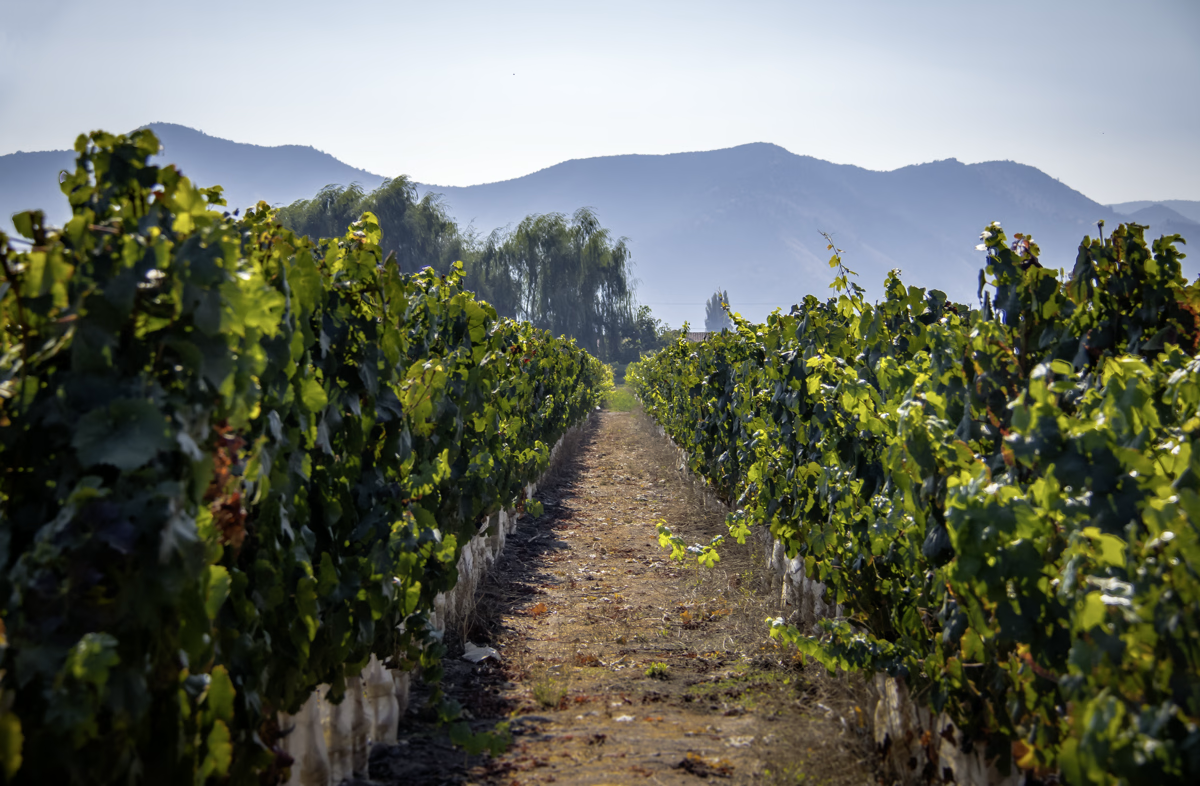
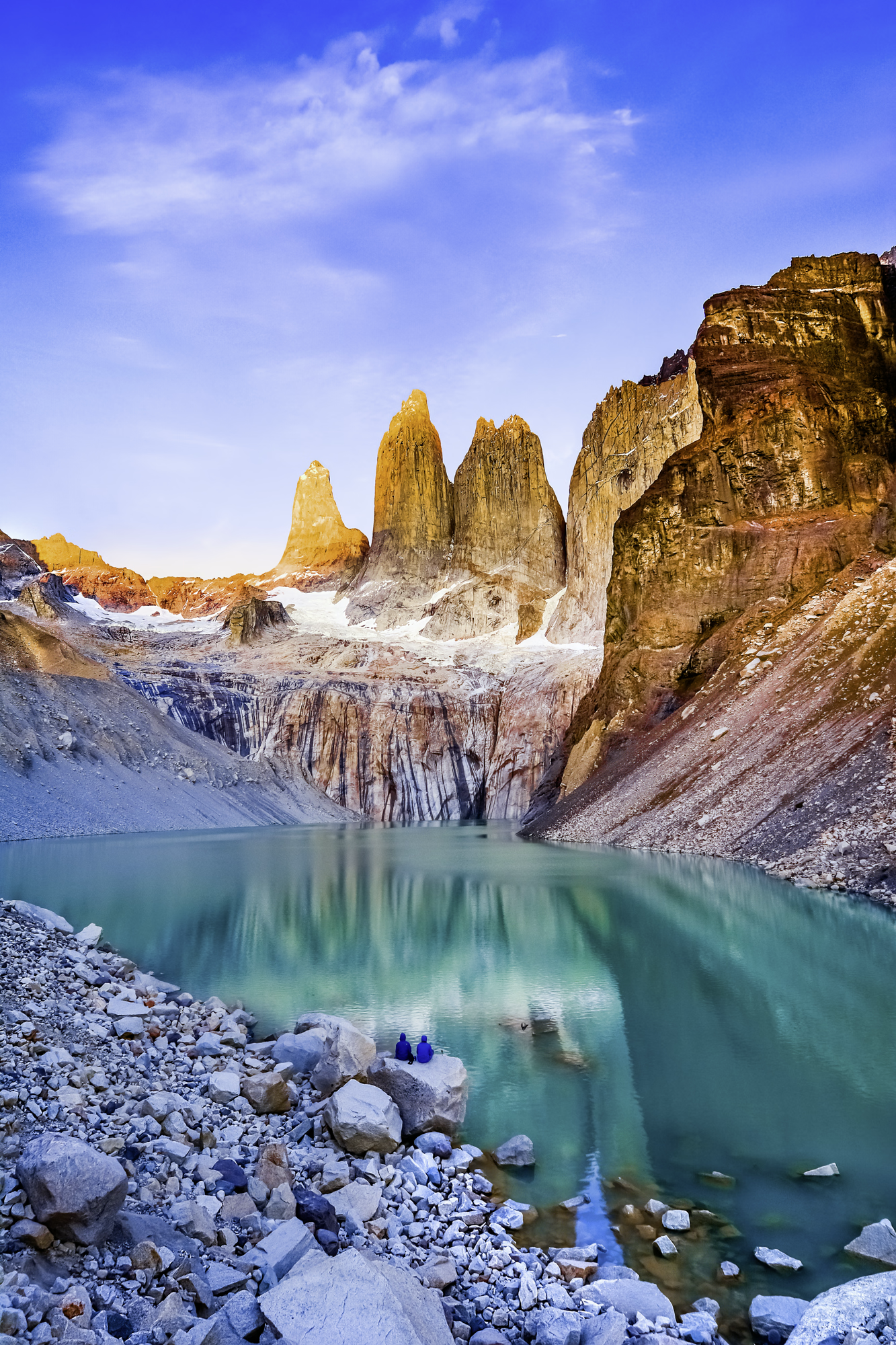
Chile's Lake District stretches across La Araucanía, Los Ríos, and Los Lagos, where active volcanoes rise above freshwater lakes and ancient temperate rainforest. Puerto Varas and Frutillar sit on Lake Llanquihue beneath the Osorno and Calbuco volcanoes, while Pucón and Villarrica provide access to Huerquehue National Park, hot springs, rivers, and the slopes of Villarrica Volcano. Farther south, Lake Ranco and private reserves such as Futangue protect quieter forests, waterfalls, and mountain trails.
At a glance
| Best for | Lakes, volcanoes, rainforest, hot springs, outdoor adventure, and regional food |
|---|---|
| Don't miss | Puerto Varas, Frutillar, Petrohué Falls, Pucón, Huerquehue National Park, and the hot springs |
| Recommended stay | 5 to 7 nights |
| Best area to stay | Puerto Varas or Frutillar, Pucón, and the Lake Ranco area |
| Pairs well with | Chiloé Island, Patagonia, Santiago & Central Chile, and Atacama Desert |
| Closest airport | El Tepual Airport in Puerto Montt (PMC) or La Araucanía Airport near Temuco (ZCO) |
| Best time to visit | October through April |
| Getting around | Private transfers and guided excursions |
| Budget | $$$ to $$$$ |
Why stay in the Lake District?
The Lake District is not a single lake or town. It is a long north-to-south region with several travel circuits. Around Lake Villarrica, Pucón combines adventure activities, hot springs, restaurants, and access to national parks. Around Lake Llanquihue, Puerto Varas has the widest hotel and dining selection, while Frutillar is known for preserved German-Chilean architecture and the Teatro del Lago.
The landscape is part of the Pacific Ring of Fire. Villarrica, Osorno, Calbuco, and other volcanoes dominate the horizon, while glacial lakes and fast rivers shape travel at lower elevations. Rainfall supports Valdivian temperate rainforest, an ecosystem of giant ferns, southern beech, alerce, and dense evergreen vegetation found in only a small part of the world.
Human history is equally important. Mapuche communities have lived across south-central Chile for centuries, and community-led visits introduce local food, weaving, medicinal plants, and relationships with the land. Later German immigration influenced architecture, farming, baking, and town planning around Lake Llanquihue, particularly in Frutillar, Puerto Octay, and Puerto Varas.
Our take: The strongest Lake District itineraries use two bases rather than trying to cover the region from one hotel. Puerto Varas or Frutillar suits Lake Llanquihue, Osorno, and Petrohué, while Pucón or Lake Ranco adds hot springs, forests, and more active excursions.
Is the Lake District a good fit?
- Enjoy lakes, volcanoes, forests, and changing mountain weather.
- Want a wide choice of hiking, rafting, kayaking, fishing, and horseback riding.
- Appreciate hot springs and lodge-based nature experiences.
- Are interested in Mapuche culture and German-Chilean heritage.
- Prefer green landscapes and smaller towns to major cities.
- Plan to continue to Chiloé or Patagonia.
Patagonia is a better choice for monumental trekking and glaciers, while Chiloé focuses more strongly on island culture, wooden churches, and maritime traditions. The Lake District has Chile's broadest mix of active excursions, lakeside towns, and comfortable nature lodges.
Best things to do
Explore Puerto Varas and Frutillar
Puerto Varas has restaurants, hotels, and a waterfront facing Osorno Volcano across Lake Llanquihue. Frutillar is quieter, with restored heritage buildings, gardens, and the Teatro del Lago, a major performing arts center built directly on the lakeshore.
Visit Petrohué Falls
The Petrohué River passes through channels of dark volcanic rock beneath Osorno Volcano. Water volume and color change with rainfall and glacial melt, making the falls especially dramatic after wet weather.
Navigate Todos los Santos Lake
This emerald lake lies between steep forested mountains within Vicente Pérez Rosales National Park. Boat trips reveal a less-developed side of the region and can be combined with Petrohué Falls or the village of Peulla.
Explore Pucón and Lake Villarrica
Pucón is the region's adventure center, with access to rivers, forest trails, hot springs, and the Villarrica Volcano. The town is lively in summer, while lodges outside the center have quieter settings and direct access to the countryside.
Hike in Huerquehue National Park
Trails climb through araucaria forest to high lakes and viewpoints across the Andes. The ancient umbrella-shaped araucaria trees are closely connected to Mapuche Pehuenche culture and are among southern Chile's most recognizable species.
Relax in natural hot springs
Geothermal activity has created numerous thermal pools east of Pucón, ranging from simple riverside baths to design-led complexes set within forested valleys. They are particularly welcome after hiking or on cool, rainy days.
Join a guided river excursion
The Trancura and other rivers support rafting, kayaking, and fishing for different experience levels. Professional operators match routes to water conditions, age, and ability rather than treating every river section the same way.
Explore Futangue Park
This private reserve near Lake Ranco protects more than 30,000 hectares of Valdivian forest, volcanic mountains, rivers, and lagoons. Guided hikes range from gentle forest walks to longer routes through remote Andean terrain.


Where to stay
Stay around Puerto Varas or Frutillar if you want lake views, restaurants, and access to Petrohué Falls, Osorno Volcano, and Todos los Santos Lake. Puerto Varas has more services and hotels, while Frutillar is quieter and has a stronger heritage and arts focus.
Stay near Pucón if hot springs, hiking, rafting, and Villarrica Volcano are the main priorities. Lodges outside town provide more space and views, while the center of Pucón is useful for travelers who want restaurants and shops nearby.
Stay near Lake Ranco if you prefer a remote reserve with guided trails and fewer day visitors. Futangue is useful as a self-contained nature stay between Pucón and Puerto Varas, although its location requires deliberate routing.
The Lake District is too large to explore well from one base. A typical itinerary combines three nights near Puerto Varas with three nights around Pucón or Lake Ranco, then continues to Chiloé or flies south toward Patagonia.
Our favorite hotels
Hotel AWA
Contemporary concrete and glass rise beside Lake Llanquihue at Hotel AWA. Rooms face the water and Osorno Volcano, with the property providing a polished base for exploring Chile’s lakes, forests, and volcanic landscapes.
&Beyond Vira Vira
Located on a working estate outside Pucón, &Beyond Vira Vira has six suites, 12 split-level villas, and a five-bedroom hacienda. Farm-to-table dining and a flexible program of hiking, rafting, horseback riding, cultural visits, and hot springs suit active couples and families.
Futangue Hotel & Spa
Futangue sits within a private reserve of temperate rainforest, lakes, and volcanic mountains in northern Patagonia. Guided hiking and nature excursions lead into landscapes rarely visited by travelers following the region’s standard routes.
Mari Mari Natural Reserve
Mari Mari occupies a remote Pacific coastline west of Puerto Varas, with private villas spread across a large natural reserve. Marine wildlife, coastal hiking, horseback riding, and boat excursions distinguish it from the inland lake and volcano properties.
Best time to visit
October through April has the longest days and the most reliable conditions for hiking, lake excursions, rafting, and exploring the towns. January and February are the busiest months, particularly in Pucón and around Lake Llanquihue.
Rain is possible throughout the year and is an essential part of the region's ecology. May through September is cooler and wetter, but hot springs remain appealing, forests are vivid, and ski areas operate during the austral winter when snow conditions allow.
Pair it with
- Chiloé Island for wooden churches, palafitos, seafood, wetlands, and distinct island traditions.
- Patagonia for Torres del Paine, glaciers, wildlife, and longer trekking routes.
- Santiago & Central Chile for city culture, Valparaíso, and the central valleys.
- Atacama Desert for salt flats, high-altitude lagoons, and a complete climatic contrast.
Getting there
The northern Lake District is accessed through La Araucanía Airport near Temuco, while Puerto Varas, Frutillar, and Lake Llanquihue are reached through El Tepual Airport in Puerto Montt. Private transfers connect the airports with lodges and allow multi-stop journeys through the region.
Approximate travel times:
- Puerto Montt Airport to Puerto Varas: 30 minutes
- Puerto Varas to Frutillar: 45 minutes
- Puerto Varas to Petrohué Falls: 1 hour
- La Araucanía Airport to Pucón: 1.5 hours
- Pucón to Puerto Varas: approximately 4 hours
- Puerto Varas to Futangue: 2.5 to 3 hours
For itineraries continuing to Chiloé, Puerto Varas is the most practical final base. Travelers heading to Patagonia can fly south from Puerto Montt or return to Santiago for onward connections, depending on the seasonal schedule.


Frequently asked questions
How many nights should I stay?
Allow five to seven nights if you want to experience more than one part of the region. Three nights near Puerto Varas and three nights around Pucón or Lake Ranco provide a useful contrast without spending every day in transit.
Should I stay in Puerto Varas or Pucón?
Choose Puerto Varas for Lake Llanquihue, Osorno Volcano, Petrohué Falls, Frutillar, and stronger dining options. Choose Pucón for hot springs, rafting, national parks, and a more active adventure program. Many itineraries include both.
Can I combine the Lake District with Chiloé?
Yes. Puerto Varas and Chiloé combine naturally because the island can be reached through Puerto Montt or by direct flight to Castro. Allow at least three nights on Chiloé rather than treating it as a rushed day trip.
Is the Lake District good for families?
Yes. Boat trips, short forest walks, farms, hot springs, rafting routes, and lakeside towns can be matched to different ages. &Beyond Vira Vira is particularly strong for families because of its large villas and varied guided program.
Can I climb Villarrica Volcano?
Summit access depends on volcanic activity, snow, wind, and local safety restrictions. When climbs operate, they require certified guides and suitable conditions. Alternative hikes and viewpoints remain available when summit routes are closed.
Will rain affect the trip?
Rain is common even in summer, but it rarely removes every option for the day. Lodges adjust activities around conditions, and hot springs, cultural visits, forest walks, and regional dining remain worthwhile in wet weather.
Do I need a guide?
Guides are recommended for national park hikes, volcano activities, river excursions, fishing, and Mapuche cultural visits. They manage safety and access while explaining the ecology and history behind landscapes that can otherwise appear deceptively simple.