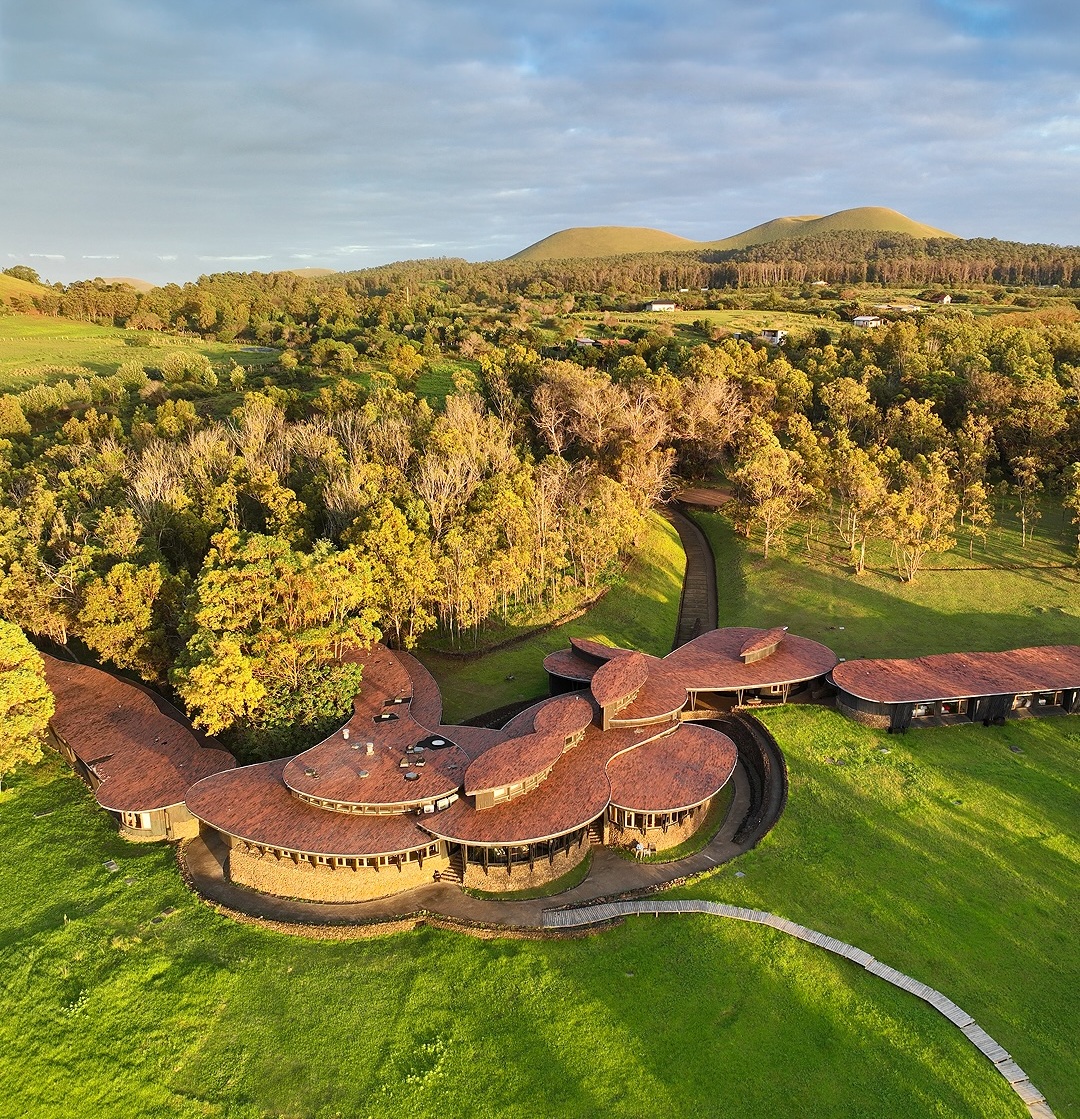
Day 7: Fly into the Pacific
Fly to Rapa Nui and settle into your hotel. Meet your local guide for an orientation to the island's geography and cultural protocols. Rapa Nui sits among the most isolated inhabited places on Earth, far out in the Pacific, and the island's Rapa Nui community maintains its own customs around visiting ancestral and sacred sites, which your guide will walk you through.
Day 8: Ahu Tongariki & Rano Raraku
Explore the island's major archaeological sites with a licensed local guide, from the quarry at Rano Raraku, where dozens of moai were carved and left mid-journey, to the fifteen restored moai standing at Ahu Tongariki. Many of the island's most significant sites sit inside Rapa Nui National Park, where access is regulated to help protect them, and Ahu Tongariki in particular is known for sunrise, when the moai stand in silhouette against the light.
Day 9: Volcanic landscapes & ceremonial sites
Visit Rano Kau's crater lake and the ceremonial village of Orongo, where your guide can walk you through the island's navigation history, its beliefs, and the events of its later, harder centuries. Orongo overlooks the small islets offshore where the island's birdman competition once took place, one of the more striking chapters your guide is likely to cover here.
Day 10: Rapa Nui beyond the monuments
Spend a final full day with your guide on smaller sites, coastal landscapes, and local food, with a beach stop at Anakena if the weather holds. Anakena's white coral sand and palm trees stand out against the volcanic rock that covers most of the island, and it's a natural place to end a day of exploring.
Day 11: Departure
Transfer to the airport for the flight back to mainland Chile or onward travel.