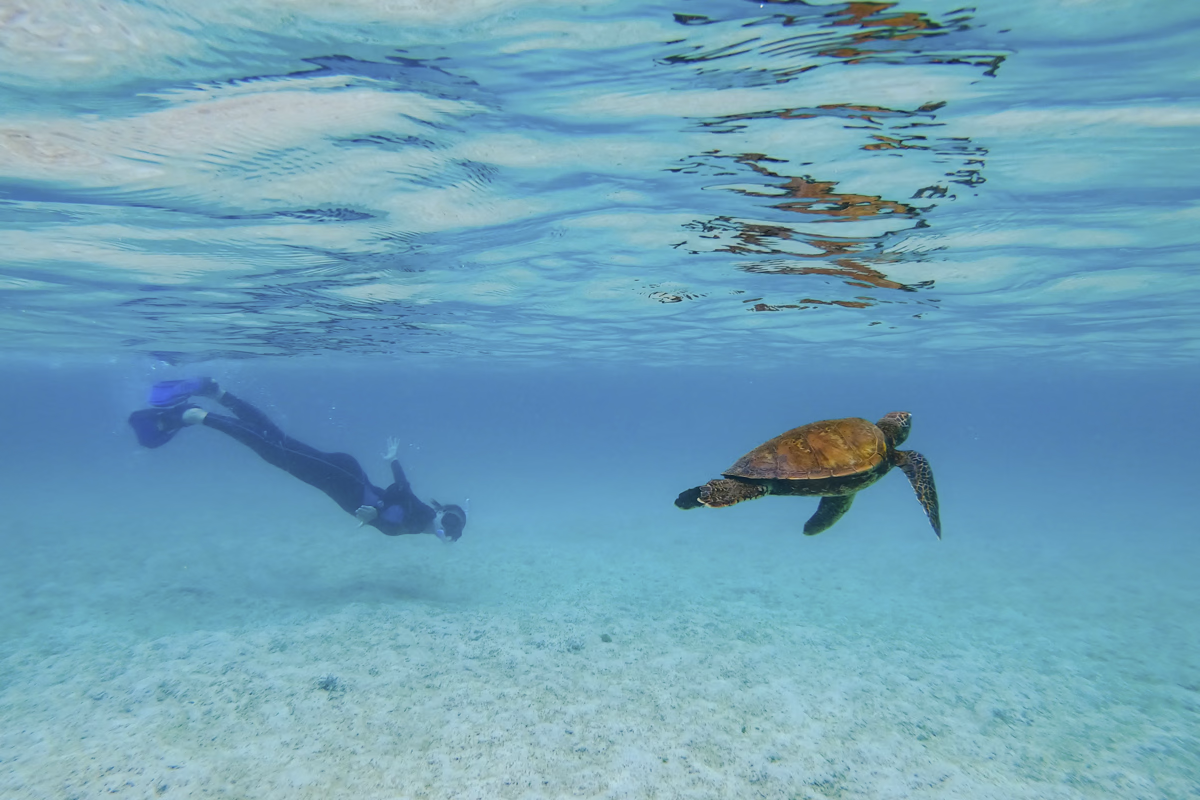
Here, on Darwin's islands, a sea lion may swim playful circles around you while you snorkel. A blue-footed booby might perform its exaggerated courtship dance a few yards from the trail, entirely unbothered by an audience. This is possible because Galápagos wildlife evolved for millions of years without meaningful land predators, so animals here don't treat people as a threat the way wildlife elsewhere does. That's the baseline experience an adventure-focused Galápagos trip is built to deliver, whether you get there by cruise ship or from a base on land.
The bigger decision, and the one most people get stuck on, is how to structure the trip itself. Cruise or land-based? Each gets you to different islands, on a different daily rhythm, at a different price. This guide covers both: what an actual day looks like on each, where the wildlife (including the islands' famous penguins) is concentrated, what the trip really costs in 2026, and how to decide, including when combining both styles is worth the extra planning.
Cruise and land trips compared
| Consideration | Cruise | Land-based |
|---|---|---|
| Wildlife access | Best for remote and uninhabited islands | Strong near inhabited islands, but fewer remote sites |
| Daily travel | Vessel moves overnight | More daytime boat transfers |
| Seasickness | More time aboard | Less overnight sailing, but day boats can still be rough |
| Flexibility | Fixed itinerary | More choice in hotels, restaurants, and free time |
| Physical pace | Often two excursions daily | Can be adjusted more easily |
| Local life | Limited time in towns | More interaction with island communities |
| Cost structure | Higher upfront price, more included | Lower starting price, more expenses paid separately |
| Best for | Wildlife-first travelers | Travelers wanting comfort, flexibility, and town life |
Galápagos cruise or land-based trip?
Choose a cruise if wildlife access and geographic range matter more to you than comfort or flexibility. A cruise is the only way to reach remote, uninhabited islands like Española, Genovesa, and Fernandina in a single trip, sites that hold species and colonies you won't see from a land base. You'll also get two guided excursions most days, hikes and snorkeling or panga rides, without any of the logistics falling on you.
Choose land-based if you dislike sleeping aboard a moving boat, want a larger room than a cabin allows, or want evenings that aren't dictated by a group itinerary. You'll trade some remote-island access for the ability to eat dinner where you want, skip an excursion without explaining why, and spend an evening in Puerto Ayora or Puerto Villamil instead of dining on a fixed schedule with the same group every night.
Consider a hybrid trip when your budget allows for it. A short cruise, four or five nights, followed by a few nights on land gives you the remote wildlife sites a cruise reaches plus room to slow down afterward instead of building your whole trip around excursions. It's the option we recommend most often for a first Galápagos trip when time and budget both allow, and it's the one most Galápagos guides skip entirely.
What a typical day looks like
A typical cruise day: early breakfast on board, a morning landing (wet or dry, depending on the site) followed by a guided hike, return to the vessel for lunch while it repositions, afternoon snorkeling or a panga excursion, a naturalist briefing before dinner, and overnight sailing to the next island while you sleep. That overnight sailing is the real advantage of a cruise: you cover serious distance while asleep instead of losing daylight hours to travel.
A typical land-based day: breakfast at the hotel on your own schedule, a transfer to the harbor, a full-day speedboat excursion to one or two wildlife sites, return to town in the late afternoon, and dinner wherever you want. Not every day is an excursion day either, most land itineraries build in time for the highlands, a beach, or exploring town on your own. Worth knowing going in: a land-based excursion day can mean an hour or more of travel time by boat each way to reach a site, since you're commuting from a fixed base rather than repositioning overnight. Some days that's a short hop. Trips out to Isabela's western sites are a longer haul.

How active is a Galápagos trip?
More demanding than a beach vacation, less demanding than a true adventure trip, and the difficulty varies by itinerary.
Landings come in two types. A dry landing puts you onto a dock or rocks with the panga crew's help; a wet landing means stepping into shin- or knee-deep water onto a beach, so you'll want shoes you don't mind getting wet and a free hand for balance. Getting in and out of the panga itself takes a crew member's hand and some core stability, more so with any swell.
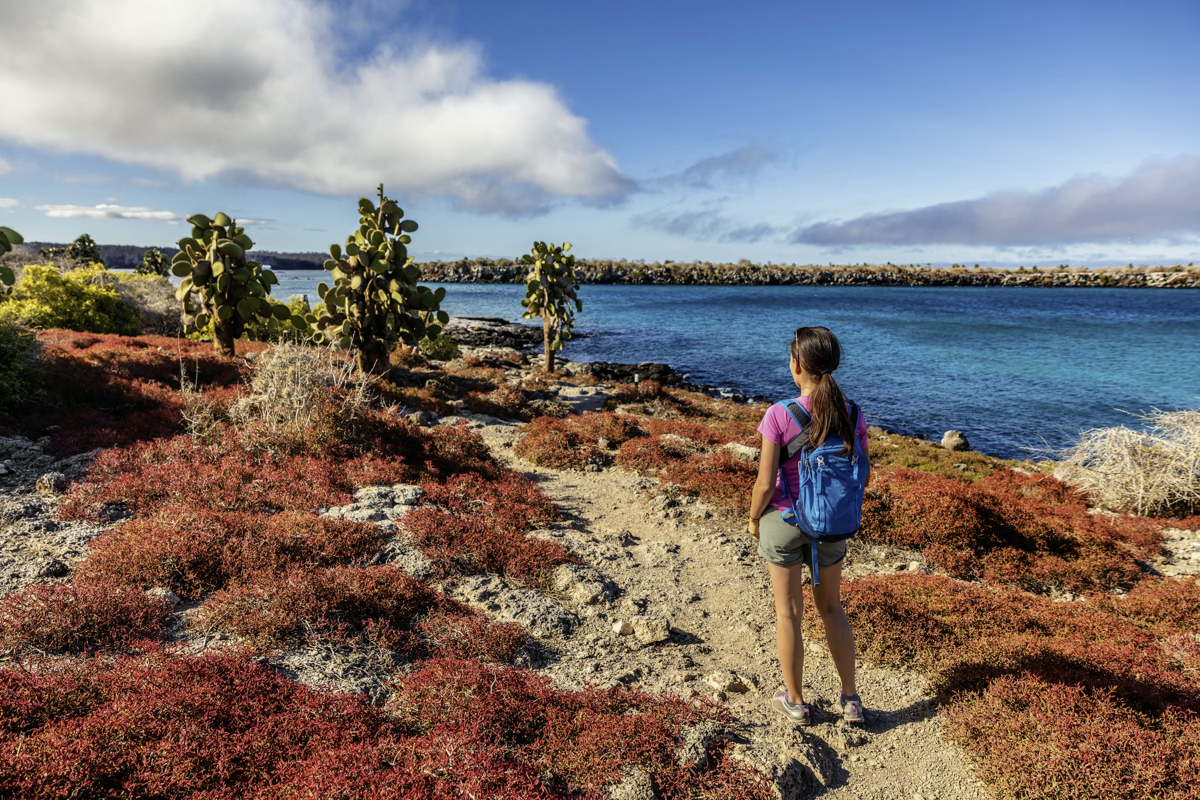
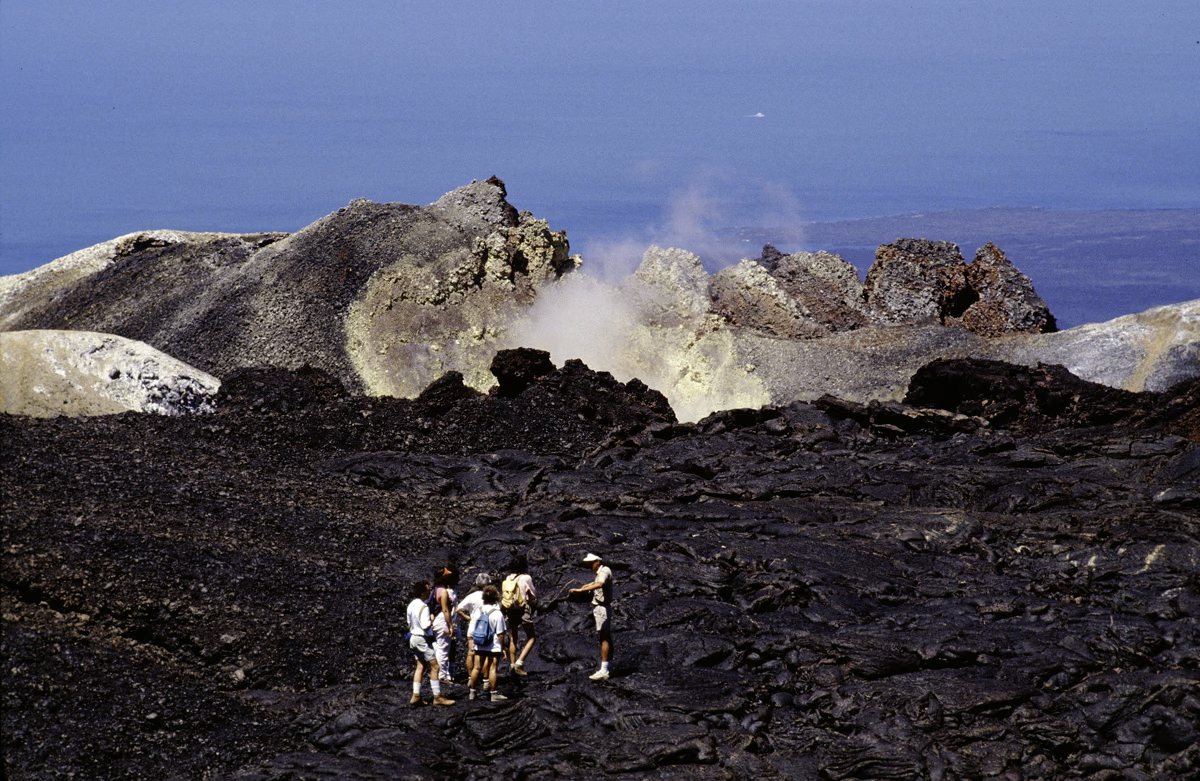
On land, trails cross uneven lava rock and loose volcanic gravel, with occasional short, steep sections, nothing technical, but not a boardwalk either. Sturdy closed-toe shoes are recommended.
In the water, snorkeling from a beach is the easier version, you wade in and can stand whenever you want. Snorkeling from a panga means a backward roll or ladder entry into open water with no bottom to stand on. Currents vary by site and season, calm enough for a first-timer at some, fast enough that your guide will brief you beforehand at others. Water temperature runs roughly 24 to 27°C (75 to 80°F) in the warm season, dropping to 16 to 24°C (61 to 75°F) in the cool season, cold enough that a wetsuit is worth renting even if you don't normally use one.
Seasickness is a serious factor on a cruise, less so on land, since day boats are shorter crossings rather than nights spent underway. If you're prone to it, ask about cabin location (lower and more central rolls less) and bring your own remedy.
Almost nothing on a standard itinerary is mandatory. If a hike or a snorkel doesn't appeal to you, or your mobility doesn't allow it, you can usually sit it out, though a land-based trip makes this easier to arrange than a fixed cruise schedule. You don't need to be a strong swimmer, but you should be a comfortable one: able to float, tread water, and swim a short distance without panicking if a current pushes you off course. Kids and older travelers do this trip regularly and well; the real limiting factors are balance on uneven ground and confidence in open water, not age itself.

Wildlife and where to find it
Different islands specialize in different species, which is the real argument for planning your itinerary around what you most want to see rather than picking a cruise or lodge first.
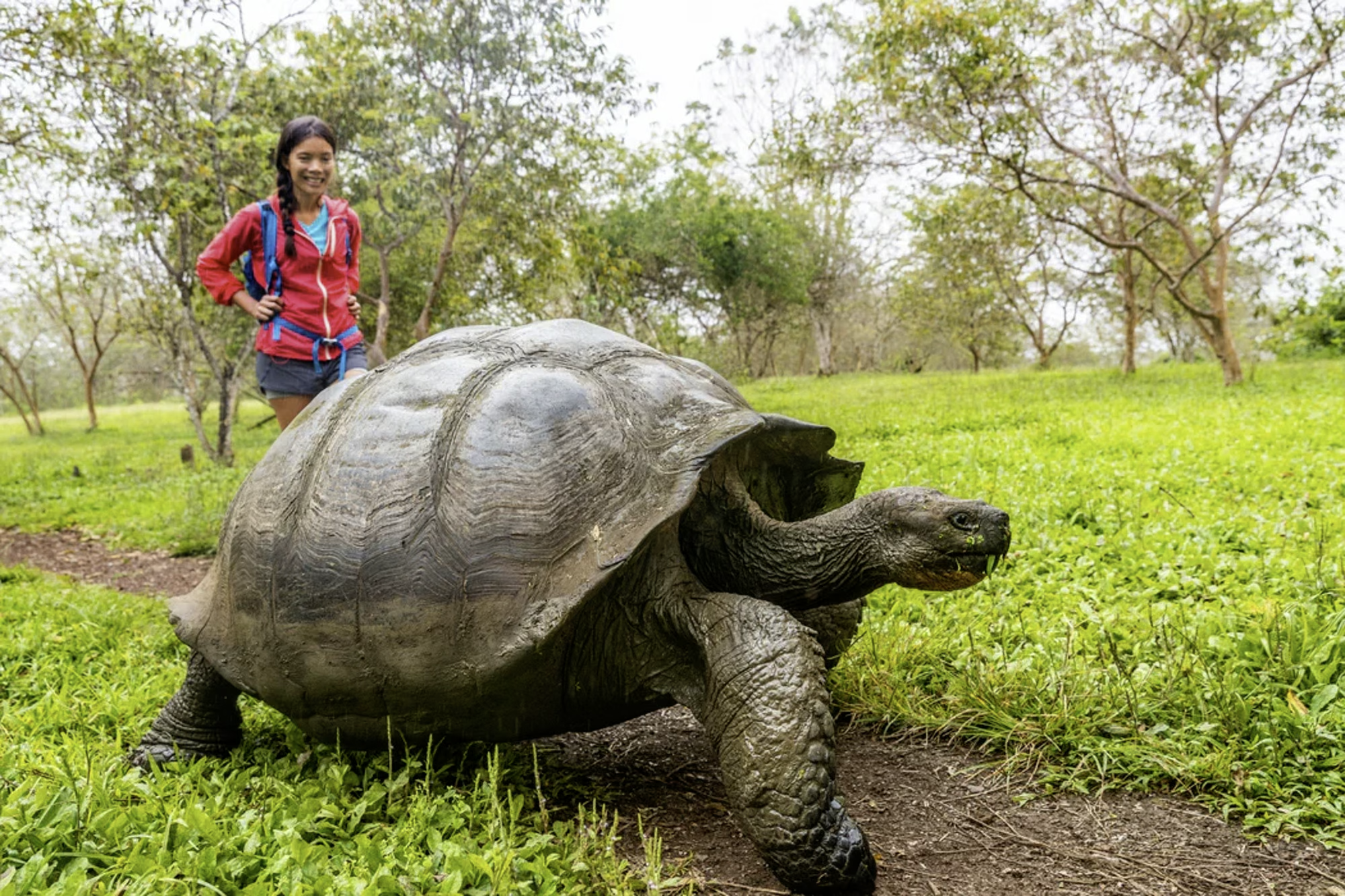
Española holds the only nesting colony of waved albatross on Earth, visible roughly April through December. Genovesa is the strongest bet for frigatebirds and red-footed boobies, plus short-eared owls that hunt storm petrels in daylight. Fernandina and western Isabela are where marine iguanas gather in the largest numbers, alongside flightless cormorants, found nowhere else on Earth. North Seymour is one of the most reliable spots for blue-footed booby courtship displays. Santa Cruz's highlands are where giant tortoises roam wild, grazing in the mist among volcanic pit craters. San Cristóbal has some of the archipelago's largest sea lion colonies, often close enough to town that you'll share the sidewalk with one.
A cruise can string several of these together in one trip since it reaches uninhabited islands a land base can't. A land-based trip from Santa Cruz or Isabela gets you strong wildlife too, tortoises, marine iguanas, sea lions, and (from Isabela) penguins, but Española's albatross and Genovesa's seabird colonies are effectively cruise-only.
Where to see Galápagos penguins
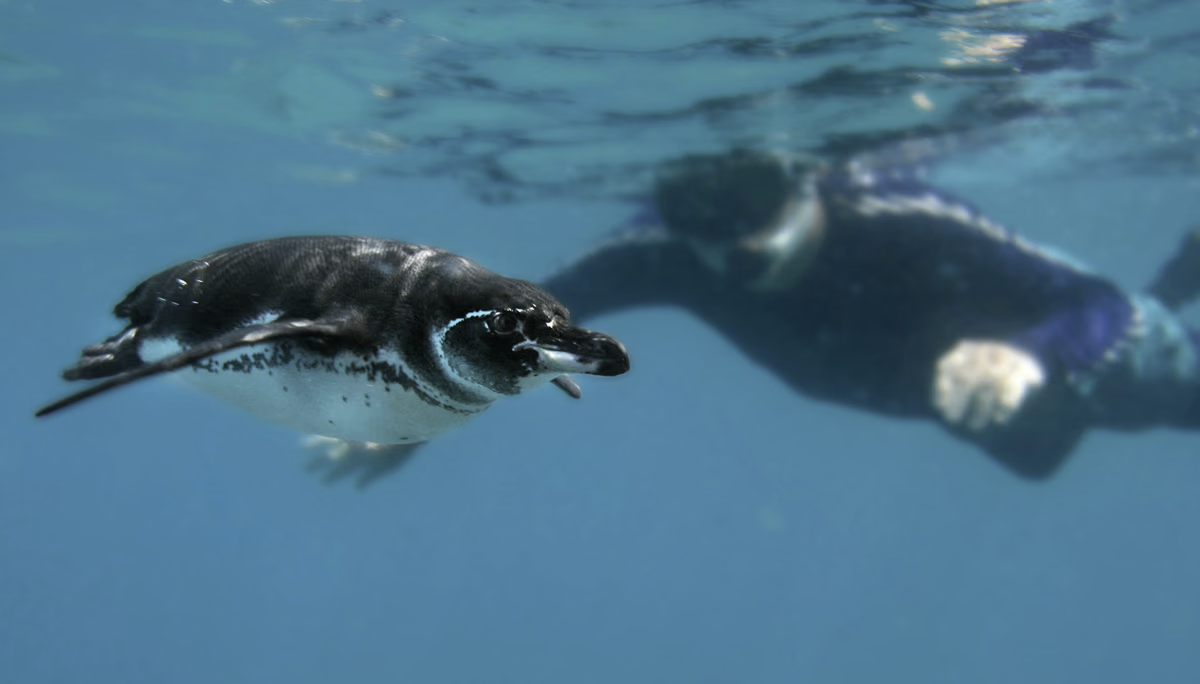
The Galápagos penguin is the only penguin species that lives on the equator, and swimming with one is different from anything else on an adventure-focused trip. Bartolomé Island, near Pinnacle Rock, is the classic sighting spot most cruise itineraries already build in. Western Isabela and Fernandina hold the largest colonies and carry penguins essentially year-round; a western itinerary generally gives you the strongest odds, particularly when Isabela and Fernandina are included. Puerto Villamil, on Isabela's southeast coast, is the easiest version of this: penguins gather right under the town's boardwalk, no boat required. Nesting season, roughly May through December, lines up with the cool, dry season and the coldest, most nutrient-rich water.
Conservation and responsible travel
Visitor sites have designated trails for a reason: keeping foot traffic on a fixed path is what lets wildlife stay this undisturbed generation after generation, not a rule for its own sake. Guides enforce a minimum distance from animals, generally six feet, because approaching or touching wildlife (even to help an animal that looks stuck or stranded) changes its behavior and can spread disease between species and even between islands. Food never comes off the boat or out of a bag near an animal, feeding wildlife trains it to associate people with an easy meal, which is exactly the kind of change that erodes the fearlessness that makes this place what it is.
Guides also have real authority to redirect a landing or cancel an activity on the spot, a nesting site that's more active than expected, weather that's turned, a trail that needs rest. That's not overcaution, it's the same judgment call that's kept these sites intact for decades.
Invasive species control affects you directly before you even land: bags are inspected and sometimes fumigated at the mainland airport, and you can't bring fresh fruit, seeds, or soil-covered gear between islands. It's a real inconvenience and it's the reason the islands don't have the same rat, goat, and plant invasions that have devastated other Pacific archipelagos.
Where this becomes a real choice rather than a rule you follow: which operator, vessel, and local suppliers you book with. Locally owned boats and lodges that hire Galápagos-based crew and guides put more of your trip's cost back into the islands' own economy and conservation programs, rather than a mainland or international operator's.
What a Galápagos trip costs
| Cost item | Typical range |
|---|---|
| Small-ship cruise, 5–8 days | $10,000–$20,000+ per person, all-inclusive |
| Land-based trip, 4–7 nights | $4,000–$12,000+ per person (nightly lodge rates roughly $800–$1,500+) |
| Domestic flight, mainland Ecuador to Galápagos | $400–$600 round-trip per person |
| Galápagos National Park entrance fee | $200 per adult, $100 per child (cash, paid on arrival) |
| Transit Control Card (TCT) | $20 per person |
| Gratuities | Roughly $20–$40+ per person, per day, split between crew and your naturalist guide (higher on luxury vessels) |
A few things move that range. Vessel or lodge category is the single biggest lever, an economy small ship and a Silver Origin-caliber luxury expedition are both "a cruise," but they're not close in price. Season matters too: April, May, September, and October (shoulder season) tend to run cheaper on both cruises and flights than the December–January and June–August peaks. And a few costs catch first-timers off guard because they're paid in cash on arrival rather than booked in advance: the park fee, the transit card, and gratuities all fall into that category, so budget cash alongside whatever you've prepaid.
When to visit
Warm season, December to May
Calmer seas and clearer water, generally the best underwater visibility of the year, with water temperatures around 24 to 27°C (75 to 80°F). This is peak season for bird and reptile courtship displays, land vegetation is greener, and rain arrives as brief, heavy showers rather than sustained overcast. It's the more comfortable season for snorkelers, photographers wanting bright conditions, and anyone prone to seasickness.
Cool season, June to November
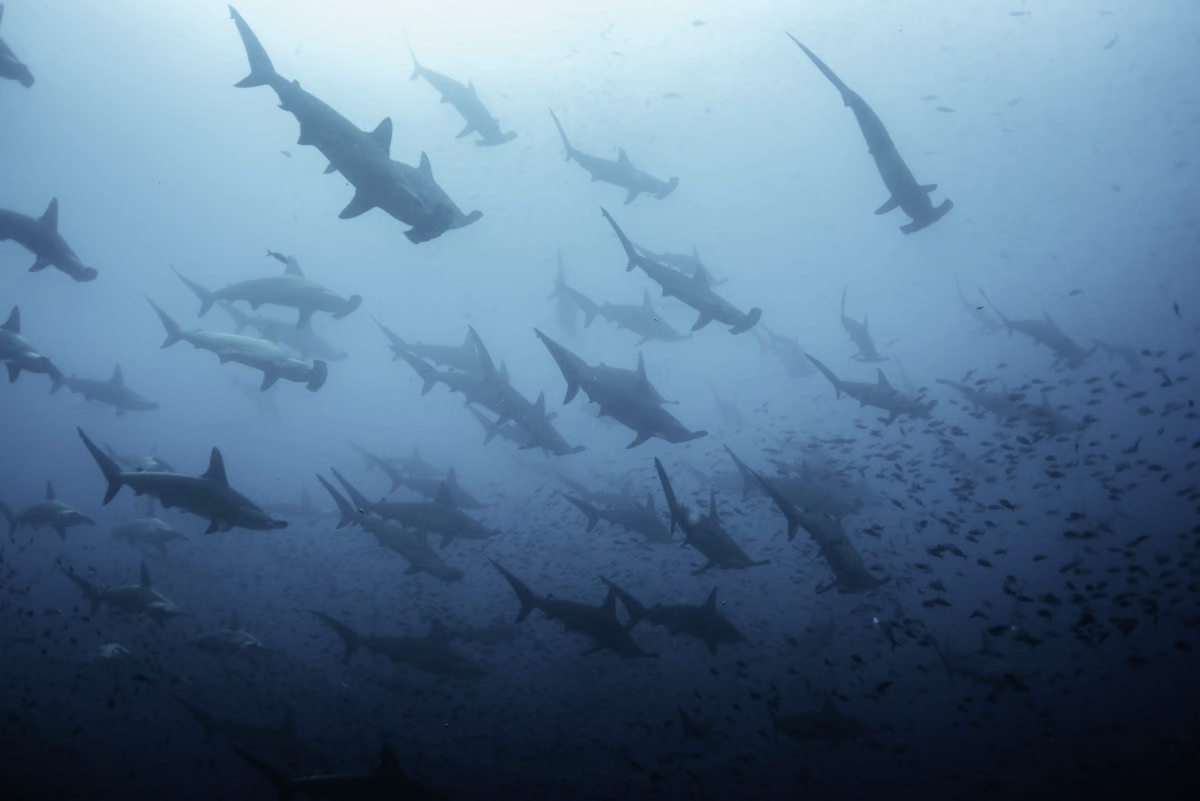
The Humboldt Current brings in colder, nutrient-rich water, water temperatures drop to 16 to 24°C (61 to 75°F), and that's what draws in the most marine life overall, this is when the big pelagic sightings (hammerheads, and occasionally whale sharks at the right sites) pick up. Visibility drops somewhat from plankton blooms, and mornings often bring garúa, a light coastal mist, especially in the highlands. Seas run choppier, which matters if you're sensitive to motion. This season suits divers and wildlife-first travelers more than it does snorkelers chasing perfect visibility.
Holiday weeks (Christmas, New Year's, Easter)
These weeks run the most expensive and the most booked-up regardless of season, plan six months or more ahead if your dates are fixed to one of these windows.

Frequently asked questions
Where can I snorkel with Galápagos penguins?
Bartolomé Island, Puerto Villamil on Isabela's southeast coast, and Las Tintoreras are the most consistent spots. Western Isabela and Fernandina hold the largest colonies and see penguins nearly year-round.
When is the best time to see Galápagos penguins?
Year-round, but nesting season (roughly May through December) coincides with the cool, dry season, when the Humboldt Current brings in the cold, nutrient-rich water that draws in the most marine life overall.
Do I need diving experience for a Galápagos adventure tour?
No. Most adventure-tour days combine guided hikes, snorkeling, and small-boat (panga) excursions, none of which require certification.
Is a cruise or a land-based tour better for an adventure-focused Galápagos trip?
Depends on how many remote islands you want to reach and how comfortable you are with a fixed schedule and nights aboard. If you can't decide, a short cruise plus a few nights on land is worth pricing out before you choose one over the other.
Choosing the right itinerary
The first decision is not which hotel or vessel to book. It is what you most want from the islands. Travelers who want the widest range of wildlife sites and don't mind a structured schedule will usually get more from a cruise. Those who prefer larger rooms, independent evenings, and fewer nights at sea may be happier staying on land.
From there, the itinerary should be built around the wildlife and landscapes that matter most to you. Penguins point toward Isabela, Fernandina, or Bartolomé. Giant tortoises can be seen on several islands, but the setting and experience vary. Some routes emphasize snorkeling, others include longer hikes or more time aboard.
There is no single best Galápagos itinerary. There is only the one that gives you the right islands, at the right pace, without paying for experiences that don't matter to you.