


Colombia is much larger than its most popular travel routes suggest. The Andes divide into three mountain ranges as they cross the country, placing Bogotá, Medellín, and the Coffee Region in distinct valleys and plateaus. The Caribbean coast lies far to the north, while the Amazon begins beyond the Andes in the southeast. Domestic flights are usually the most practical way to combine regions.
For a first trip, most travelers choose three contrasting areas. Bogotá or Medellín adds city life and cultural context, the Coffee Region brings rural landscapes and small towns, and Cartagena introduces Colombia’s Caribbean history. Tayrona and the Sierra Nevada can extend a coastal itinerary, while the Amazon is best treated as a separate three- or four-night experience.
Whether you are interested in food, architecture, coffee farms, hiking, wildlife, beaches, or contemporary culture, this guide will help you choose the regions that best match your travel style. Colombia’s UNESCO-listed Coffee Cultural Landscape spans productive mountain landscapes and historic towns across Caldas, Quindío, Risaralda, and Valle del Cauca.

Colombia destination finder
| If you're looking for... | We'd recommend... |
|---|---|
| Your first trip | Bogotá or Medellín with the Coffee Region and Cartagena |
| Luxury | Cartagena, the Coffee Region, Medellín, or the Caribbean coast |
| City and culture | Bogotá or Medellín |
| History | Cartagena, Bogotá, or Villa de Leyva |
| Colonial architecture | Cartagena, Villa de Leyva, Barichara, or Mompox |
| Food and restaurants | Bogotá, Cartagena, or Medellín |
| Coffee farms | The Coffee Region or the mountains outside Medellín |
| Mountain landscapes | The Coffee Region, Medellín & Antioquia, or the Andes around Bogotá |
| Hiking | Tayrona & the Sierra Nevada, the Coffee Region, or the Andes |
| Beaches | Tayrona & the Sierra Nevada or the Caribbean islands |
| Caribbean islands | Rosario Islands, Barú, San Andrés, or Providencia |
| Diving & snorkeling | Providencia, San Andrés, or the Rosario Islands |
| Wildlife | The Amazon, Tayrona & the Sierra Nevada, or Los Llanos |
| Birdwatching | The Sierra Nevada de Santa Marta, the Coffee Region, or the Amazon |
| Families | Bogotá or Medellín with the Coffee Region and Cartagena |
| Honeymoons | Cartagena with the Coffee Region, Tayrona, or the Caribbean islands |
| Off-the-beaten-path travel | The Amazon, Los Llanos, Mompox, or Colombia’s Pacific coast |
How should you divide your time?
Most international trips begin in Bogotá, Medellín, or Cartagena. Because Colombia’s main regions are separated by mountain ranges and long overland distances, domestic flights are often more useful than trying to create a continuous road itinerary.
As a general rule:
5–7 days: Two destinations
8–10 days: Three destinations
11–14 days: Three to four destinations
15+ days: Four or more destinations, including the Amazon, Caribbean islands, or another less-visited region
For a first visit, we usually recommend combining Bogotá or Medellín with the Coffee Region and Cartagena. This introduces three distinct sides of Colombia without adding too many internal flights. Travelers with more time can continue from Cartagena to Tayrona or add a dedicated stay in the Amazon.
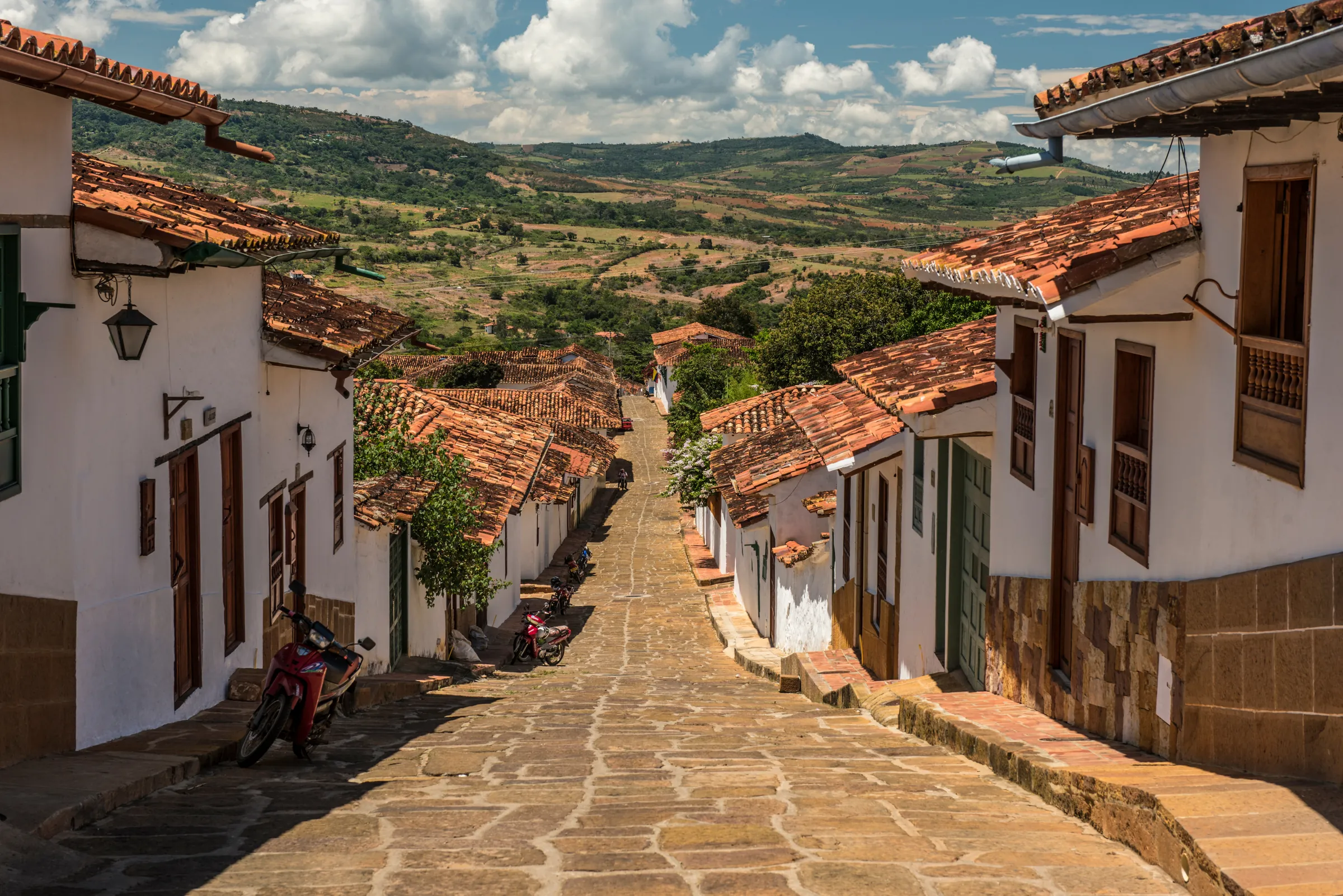
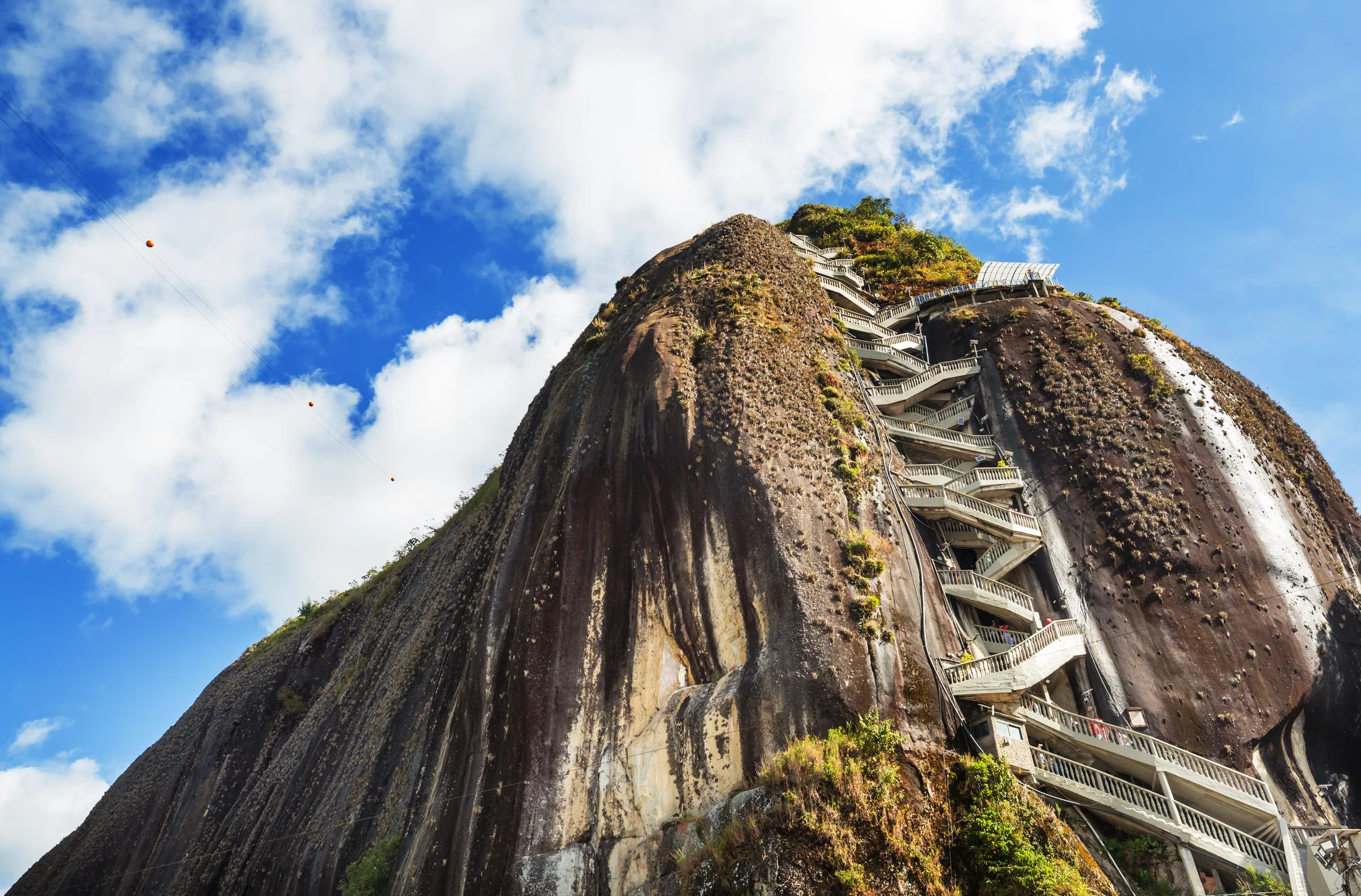

Colombia’s regions
Bogotá & the Eastern Andes
Bogotá sits on a high plateau in the Eastern Andes, more than 8,500 feet above sea level. The capital is Colombia’s largest city and its main center for museums, galleries, restaurants, and national history. La Candelaria contains colonial streets and institutions such as the Gold Museum and Botero Museum, while neighborhoods farther north have many of the city’s leading hotels and restaurants.
Bogotá works best for travelers interested in art, food, history, and contemporary Colombian culture. It can also be paired with Villa de Leyva, a preserved colonial town surrounded by high-altitude countryside, or used as the departure point for the Amazon and other parts of the country.
Explore Bogotá & the Eastern Andes →
Medellín & Antioquia
Medellín occupies the Aburrá Valley in a narrow section of the Central Andes. The city’s mild climate, museums, gardens, restaurants, and hillside neighborhoods make it more than a transportation stop, and its public transit network reaches parts of the valley that were once difficult to access.
The surrounding department of Antioquia adds traditional towns, coffee farms, reservoirs, and mountain scenery. Guatapé is the most common day trip, while longer stays can include rural lodges or historic towns such as Jardín. Medellín suits travelers who want a modern city combined with excursions into the countryside.

Coffee Region
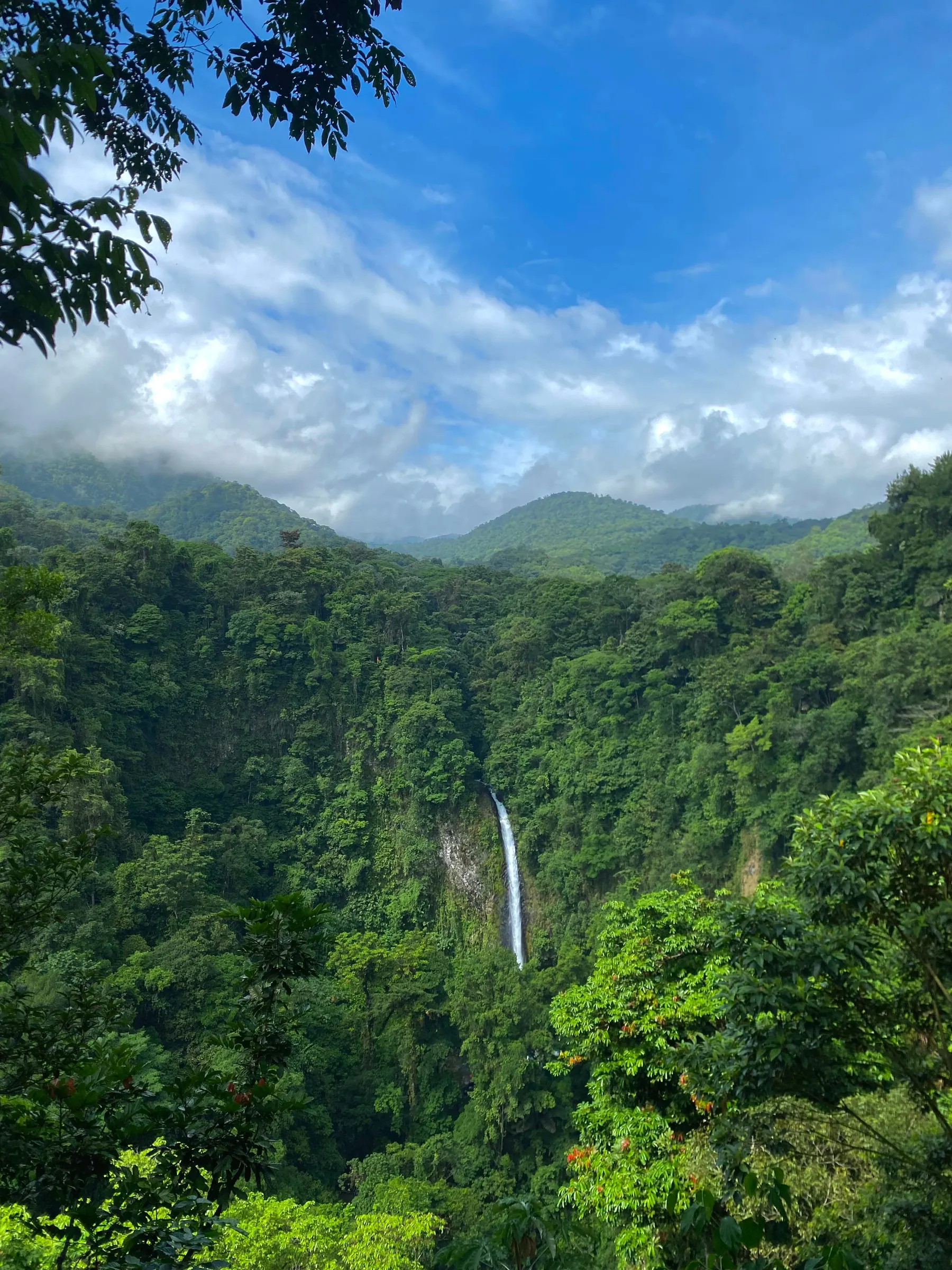
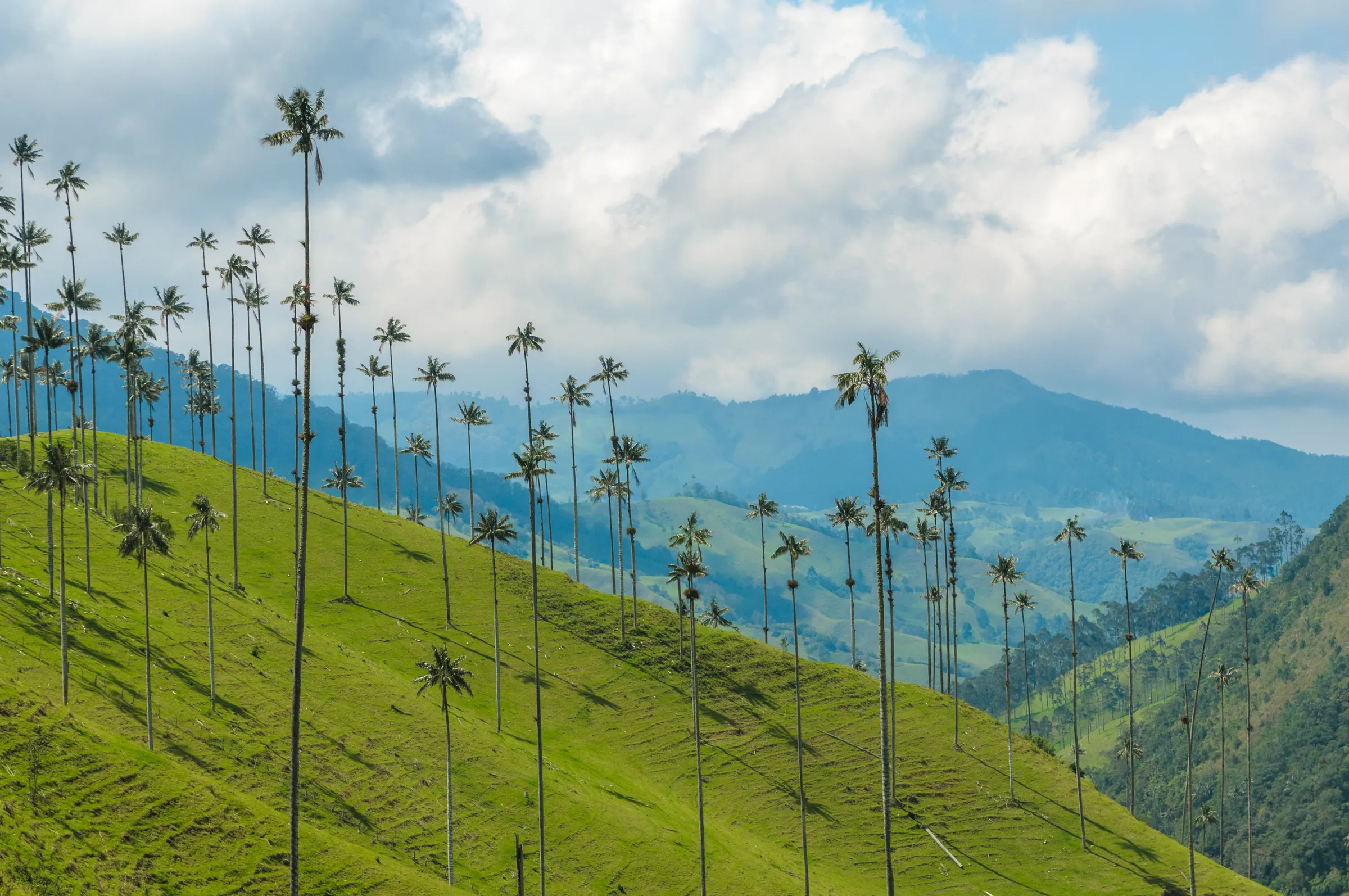
Colombia’s Coffee Region spreads across steep valleys and mountain slopes in the Central and Western Andes. Coffee farms, bamboo-framed houses, colorful towns, cloud forest, and stands of towering wax palms define the landscape. The UNESCO Coffee Cultural Landscape includes six agricultural areas and 18 urban settlements shaped by generations of small-scale coffee production.
Salento and the Cocora Valley are the region’s best-known destinations, but Filandia, Armenia, Pereira, Manizales, and the surrounding countryside support very different stays. Travelers can choose between working coffee farms, rural haciendas, village hotels, and more secluded mountain properties.
Cartagena & the Caribbean Islands
Cartagena’s walled city developed around one of the Spanish Empire’s most important Caribbean ports. Its fortifications, plazas, churches, and colonial buildings now form the historic core, with boutique hotels occupying many restored houses. Getsemaní sits just beyond the old walls, while modern waterfront districts extend south along the coast.
Cartagena is better for history, food, architecture, and nightlife than for a conventional beach stay. Travelers looking for clearer water and quieter surroundings can add Barú or the Rosario Islands, reached by boat from the city. The historic center and fortifications are recognized by UNESCO.
Tayrona & the Sierra Nevada
East of Cartagena, the Sierra Nevada de Santa Marta rises directly from Colombia’s Caribbean coast. Tayrona National Park protects forest, granite headlands, and beaches along its lower slopes, while mountain communities such as Minca sit in cooler forest above Santa Marta. The combination creates one of Colombia’s strongest regions for hiking, birdwatching, and time near the coast.
Accommodations are spread along the coastal road, in the foothills, and near the park entrances rather than concentrated in a single town. This region suits travelers who are comfortable with a more nature-focused stay and do not need the services or polished beaches of a traditional resort destination.
Explore Tayrona & the Sierra Nevada →
Colombian Amazon
Leticia is the main gateway to Colombia’s Amazon, reached by air from Bogotá. The city sits near the borders with Peru and Brazil, but the main reason to visit is to continue into the surrounding river system and rainforest. Lodges and small communities use boats as their principal form of transportation.
A stay here generally focuses on guided forest walks, river excursions, wildlife observation, and visits with local communities. The Amazon requires additional travel time and works best as a dedicated three- or four-night section rather than a quick extension to a city itinerary.

