

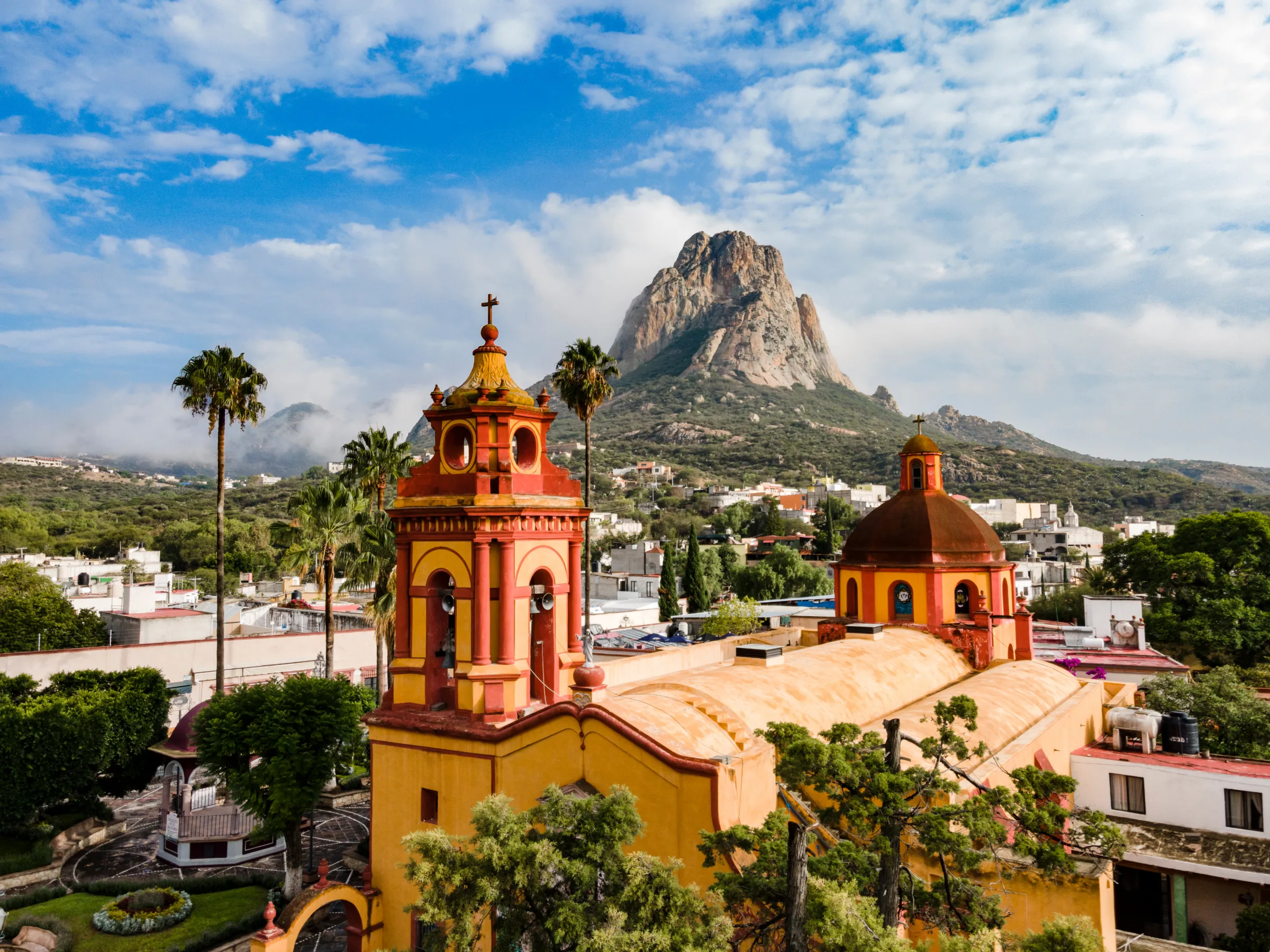
Querétaro's historic center is flatter and more orderly than Guanajuato or San Miguel de Allende, with plazas, churches, convents, mansions, and pedestrian streets extending east from the former Franciscan complex. The city's seventeenth- and eighteenth-century aqueduct remains its most recognizable landmark, while several buildings are closely linked to the independence movement, the Mexican-American War, and the fall of the Second Mexican Empire. Beyond the city, the state contains farms, cheese producers, haciendas, monoliths, and the Sierra Gorda.
At a glance
| Best for | Colonial architecture, independence history, food, haciendas, and easy walking |
|---|---|
| Don't miss | The aqueduct, Plaza de Armas, the convent of Santa Cruz, Casa de la Corregidora, and a regional farm or food day |
| Recommended stay | 2 to 4 nights |
| Best area to stay | The historic center |
| Pairs well with | San Miguel de Allende, Guanajuato, Mexico City, and the Querétaro countryside |
| Closest airport | Querétaro Intercontinental Airport (QRO) |
| Best time to visit | October through April for dry, mild weather |
| Getting around | Private transfers and guided walks |
| Budget | $$ to $$$ |
Why stay in Querétaro?
Querétaro played a central role in several periods of Mexican history. Meetings associated with the independence conspiracy took place here, Emperor Maximilian was tried and executed outside the center, and the 1917 Constitution was debated in the city. A guided route can connect these events through houses, theaters, convents, and civic buildings.
The aqueduct was completed in the eighteenth century to carry water into the city. Its long series of arches crosses a broad valley east of the center and can be viewed from several streets and hillsides, but the best interpretation comes from connecting it to the convent and water system it served.
The historic center contains a dense collection of Baroque church façades, carved stone houses, internal courtyards, and public plazas. It is more accessible on foot than several neighboring colonial cities, with fewer steep slopes and a grid that supports leisurely evening walks.
Querétaro's contemporary economy has expanded far beyond tourism, giving the city a strong local restaurant and café scene rather than a center dependent only on visitors. Traditional dishes coexist with bakeries, modern Mexican restaurants, and regional food businesses.
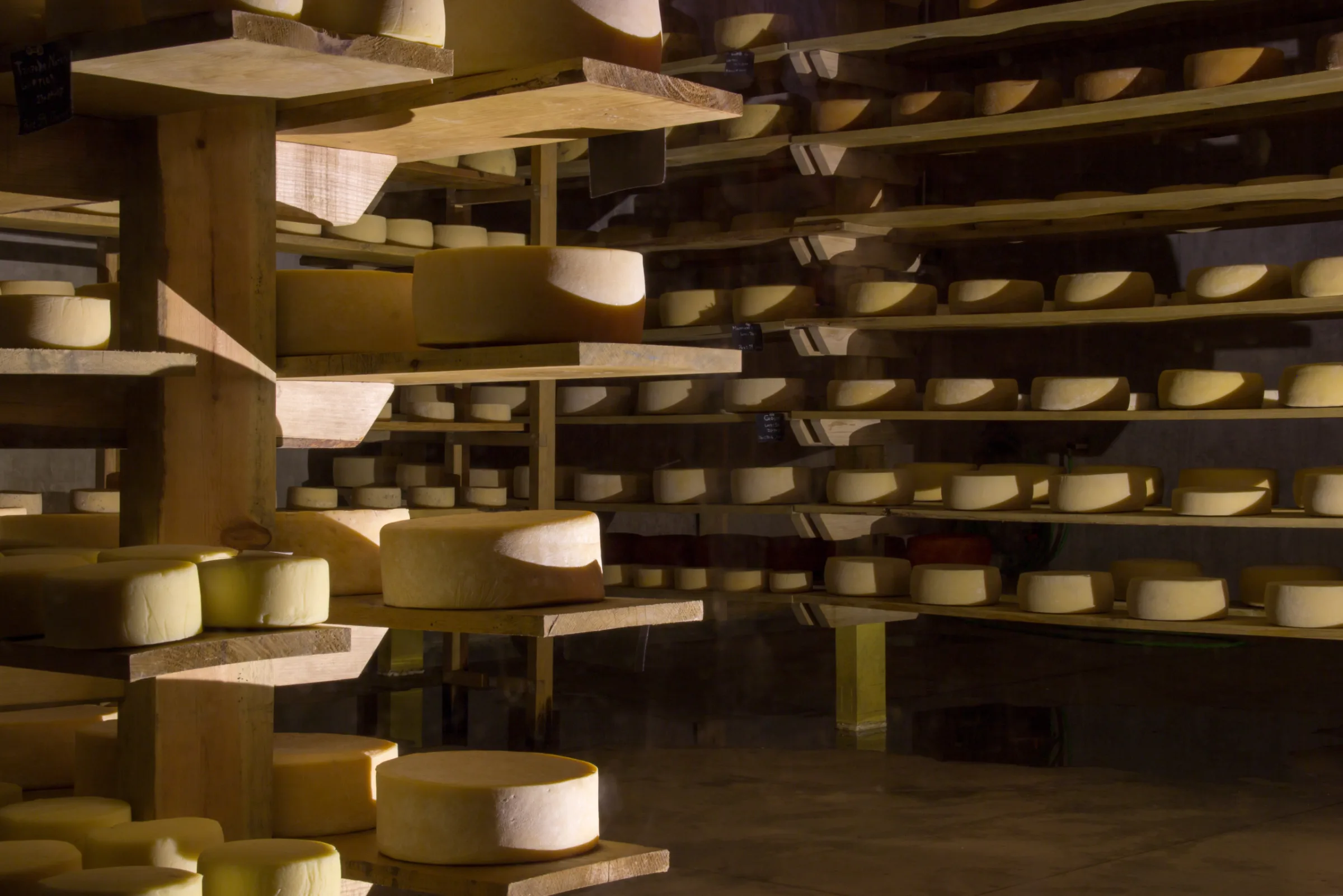
The surrounding high plateau supports cheese making, farming, orchards, and historic estates north and east of the city. It provides a worthwhile rural day when visits focus on production methods, landscape, and smaller family businesses.
Our take: use the city for two cultural days and add a third night for Bernal, farms, or a hacienda. Querétaro is especially useful for travelers who want a central Mexico city with less difficult walking than Guanajuato.
Is Querétaro a good fit?
- Enjoy colonial architecture and independence history.
- Want a walkable center with fewer steep streets.
- Are interested in regional food, cheese making, farms, and haciendas.
- Prefer an active local city to a destination built primarily around tourism.
- Want a logical stop between Mexico City and San Miguel de Allende.
- Need a city that suits older travelers or families.
San Miguel de Allende has a stronger luxury-hotel and gallery scene, while Querétaro provides deeper political history, easier walking, and a larger working-city atmosphere. Guanajuato is more visually dramatic but significantly steeper.
Best things to do
Walk the historic center
Begin at Plaza de Armas and continue through Andador 5 de Mayo, Jardín Zenea, churches, former convents, and restored houses. A private guide can organize the route around independence and constitutional history.
See the aqueduct
View the arches from street level and a hillside lookout, then connect the structure to the convent of Santa Cruz and the city's historical water supply.
Visit the convent of Santa Cruz
The complex contains courtyards, religious art, and the tree traditionally associated with cross-shaped thorns. Interpretation should include the site's military and political history.
Learn about the independence conspiracy
Casa de la Corregidora and nearby buildings illustrate Querétaro's role in the events leading to the 1810 uprising. Access to government buildings may depend on current operations.
Explore local food
Markets, bakeries, regional restaurants, and artisan food producers provide a broader view than a single formal dinner. A guided food experience can introduce enchiladas queretanas, gorditas, cheeses, and local sweets.
Visit the highland farms and cheese producers
Spend a day with selected farms, cheese makers, and small food producers rather than trying to cover a large number of commercial stops. Harvest and workshop activity vary by season.
Visit Bernal
The village sits below Peña de Bernal, one of the world's largest monoliths. Short walks, food, textile shops, and viewpoints make it a useful addition to a regional day.
Explore a historic hacienda
Properties around Jurica and the surrounding countryside reveal agricultural, religious, and industrial histories. Some now function as hotels, event spaces, or working farms.

Where to stay
Stay in the historic center for plazas, churches, restaurants, and evening walking. Boutique hotels occupy former houses with internal courtyards, and room size can vary considerably within the same property.
Stay near the aqueduct for quieter streets and a short transfer into the center. This area suits travelers who want contemporary rooms and easier vehicle access.
Stay at Hacienda Jurica when pools, gardens, family facilities, or an estate setting matter more than walking to the historic sites. The property lies north of the center and requires private transfers.
We prefer the center for a two-night cultural stay and a hacienda only when the hotel itself is part of a longer regional itinerary.
Our favorite hotels
Casa Santiago Hotel Boutique
Casa Santiago has 18 rooms in the historic center, with interiors incorporating work from Querétaro artisans. The property has central location and compact scale.
Hotel Criol
Hotel Criol has 24 rooms in a contemporary courtyard building a few blocks from Plaza de Armas. A small pool, modern architecture, and family-capable loft-style suites distinguish it from more formal colonial hotels.
Hacienda Jurica by Brisas
Hacienda Jurica has 239 rooms and suites in a large estate north of the center. The property has gardens, pools, tennis, and family facilities.
Best time to visit
October through April is generally dry, with warm days and cool nights. November through February can feel cold in courtyard buildings after sunset.
May is usually the hottest month. June through September brings afternoon rain, greener surroundings, and occasional disruption to rural roads or outdoor farm activities.
Pair it with
- San Miguel de Allende for galleries, design hotels, and a more visitor-focused historic center.
- Guanajuato for mining history, tunnels, theaters, and dramatic hills.
- Mexico City for major museums, food, and international connections.
- The Sierra Gorda for missions, mountains, and a longer nature route.
Getting there
Querétaro Intercontinental Airport handles domestic and selected international flights east of the city. Many travelers arrive by road from Mexico City or continue between Querétaro, San Miguel de Allende, and Guanajuato with private transfers.
Approximate travel times:
- Querétaro Airport to the historic center: 35 to 50 minutes
- Mexico City to Querétaro: 2.5 to 3.5 hours
- Querétaro to San Miguel de Allende: 1 to 1.5 hours
- Querétaro to Guanajuato: 2 to 2.5 hours
- Historic center to Hacienda Jurica: 25 to 40 minutes
- Querétaro to Bernal: 1 to 1.25 hours
Traffic leaving Mexico City and around industrial corridors can extend transfer times. We avoid scheduling a fixed historical visit immediately after a long road arrival.


Frequently asked questions
How many nights should I spend in Querétaro?
Two nights provide one full cultural day. Three or four nights allow Bernal, a hacienda, farm visits, or a slower exploration of the city's museums and food.
Is Querétaro worth visiting if I am going to San Miguel de Allende?
Yes. The cities have different strengths. Querétaro provides deeper political history, a major aqueduct, flatter walking, and a larger local economy, while San Miguel emphasizes galleries, boutique hotels, and visual atmosphere.
Is the historic center easy to walk?
It is one of the more manageable major colonial centers in central Mexico. Streets are mostly level compared with Guanajuato, although paving, curbs, and historic-building stairs still require attention.
Is the surrounding countryside worth a full day?
Yes for travelers interested in regional food production and rural landscapes. Select two or three strong farms, workshops, or cheese makers rather than moving rapidly between commercial stops.
Can I visit Bernal and regional producers on the same day?
Yes. The route is commonly combined, but the schedule should leave enough time for a village walk and one meaningful farm or workshop visit rather than a long checklist.
Is Querétaro suitable for families?
Yes. The walkable center, aqueduct, plazas, haciendas, farms, and Bernal work well across generations. Larger estate hotels provide pools and space when children need downtime.
Which airport should I use?
Querétaro Airport is closest, but flight availability may be limited. Mexico City and Bajío airports can also work depending on the wider route and direct-air options.
What should I pack?
Bring supportive walking shoes, layers for cool evenings, sun protection, and a compact rain jacket in summer. Smart-casual clothing is sufficient for the city's restaurants.


