

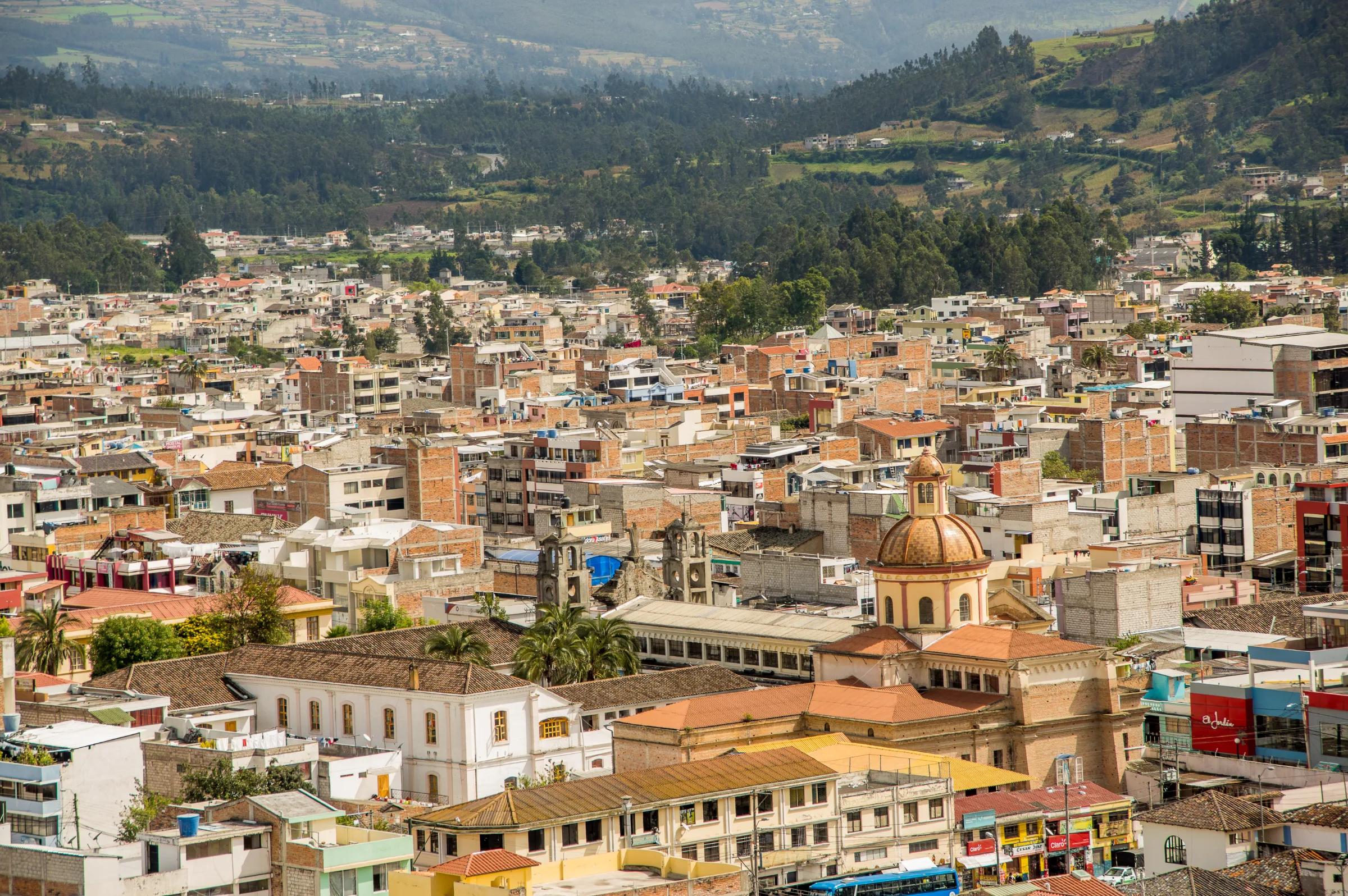
Otavalo is widely known for its market, but the surrounding province of Imbabura is what makes the region worth an overnight stay. Kichwa communities maintain distinctive textile, musical, agricultural, and commercial traditions around the lakes and volcanoes of northern Ecuador. Cuicocha fills a volcanic caldera below Cotacachi, Peguche is associated with weaving and a sacred waterfall, San Antonio de Ibarra is known for woodcarving, and rural haciendas preserve family histories that reach back through the republican, colonial, and sometimes pre-Hispanic periods.
At a glance
| Best for | Textiles, Indigenous culture, markets, crater lakes, haciendas, horseback riding, and village workshops |
|---|---|
| Don't miss | Otavalo Market, Cuicocha, Peguche, Cotacachi, a weaving workshop, and an overnight hacienda |
| Recommended stay | 2 to 4 nights |
| Best area to stay | A rural hacienda near Zuleta, San Pablo, or Cotacachi |
| Pairs well with | Quito, the Cloud Forests, and the Avenue of the Volcanoes |
| Closest airport | Mariscal Sucre International Airport (UIO) |
| Best time to visit | June through September and December through February for generally clearer highland weather |
| Getting around | Private transfers, guided village visits, walking, and horseback riding |
| Budget | $$ to $$$$ |
Why stay in Otavalo & Imbabura?
Otavalo's Plaza de los Ponchos is active throughout the week, with Saturday traditionally bringing the largest concentration of vendors and shoppers. Textiles remain central, but stalls also sell leather, jewelry, instruments, household goods, and products brought from other parts of Ecuador. A knowledgeable local guide helps separate regional work from mass-produced merchandise and can arrange visits directly with artisans.
The market is only one expression of Otavaleño enterprise. In communities such as Peguche, Agato, and Ilumán, families specialize in weaving, music, hat making, natural medicine, and other trades. Private visits can show how wool and cotton are prepared, dyed, and woven, while also discussing how modern workshops sell throughout Ecuador and internationally.
Cuicocha is a deep crater lake beneath Cotacachi Volcano, with two forested islands rising from the water. Short viewpoints, boat outings, and a demanding rim trail reveal a very different landscape from the market town. Nearby Cotacachi is known for leatherwork and has a quieter central plaza, restaurants, and small shops.
Imbabura also contains some of Ecuador's most characterful haciendas. Hacienda Zuleta remains a working farm with cheese production, horses, gardens, pre-Inca earthworks, and a condor conservation project. Other properties emphasize historic gardens, antiques, mountain views, or spa facilities, giving the region enough depth for several nights.
Our take: spend the first day around Otavalo, Peguche, and the artisan villages, then devote a second day to Cuicocha or the activities of a rural hacienda. The region becomes far more interesting once the market is placed within the wider cultural and volcanic landscape.
Is Otavalo & Imbabura a good fit?
- Want to meet artisans and understand how textiles are produced.
- Prefer a rural hacienda to another city hotel.
- Enjoy markets, crater lakes, gardens, and mountain scenery.
- Are interested in Kichwa culture and contemporary Indigenous enterprise.
- Like horseback riding, walking, birding, or farm experiences.
- Want a quieter mainland stay before or after the Galápagos.
Travelers interested only in shopping can visit from Quito, but those who stay overnight gain access to the countryside, early market hours, longer community visits, and the region's best hotels.
Best things to do
Explore Otavalo Market
Visit with a guide who can explain the origins of different textile styles, introduce trusted artisans, and leave enough independent time for browsing. The produce and food areas add context beyond the better-known handicraft stalls.
Meet weavers in Peguche and nearby communities
Family workshops demonstrate carding, spinning, natural dyes, backstrap weaving, and modern looms. These visits also show how Otavaleño makers have adapted traditional skills to international markets.
Visit Peguche Waterfall
A short forest walk leads to a waterfall that has ceremonial importance for local Kichwa communities, particularly around Inti Raymi. Respectful interpretation matters because the site is more than a scenic stop.
Explore Cuicocha
Walk to viewpoints above the caldera, take a boat across the lake, or complete part of the crater rim with a guide. Weather changes quickly, and the full circuit is a substantial high-altitude hike rather than a casual stroll.
Spend time in Cotacachi
Cotacachi is known for leather workshops and sits close to Cuicocha. The town suits lunch, small-scale shopping, and a calmer afternoon after the busier market in Otavalo.
Stay at a working hacienda
Ride Andean horses, visit dairy operations, walk among pre-Inca earthworks, explore gardens, or learn about condor conservation. Each hacienda has a different history, so the property should be chosen for its activities rather than location alone.
Visit San Antonio de Ibarra
This town has a long tradition of woodcarving and religious sculpture. Workshop visits can show the progression from raw wood to carved and painted figures, including the continuing demand for church art.
Explore the lakes of Imbabura
San Pablo, Yahuarcocha, and Cuicocha occupy different volcanic and cultural settings. Private touring can combine viewpoints, short walks, village meals, and birdlife rather than treating the lakes as brief roadside photographs.


Where to stay
Stay near Zuleta if you want a working farm, horses, walking trails, condor conservation, and a deeply rural setting. This area is farther from central Otavalo but provides the most complete destination-hacienda experience.
Stay near San Pablo Lake for gardens, mountain views, and shorter access to Otavalo and Peguche. Historic properties here work well for families and travelers who want several room categories without sleeping in town.
Stay in Cotacachi for Cuicocha, leather workshops, restaurants, and a quieter small-town base. La Mirage provides the region's strongest traditional spa-hotel experience.
Stay in central Otavalo only when immediate market access matters most. A town hotel allows early and evening walks around the market but provides less space and fewer on-site activities than the haciendas.
Our favorite hotels
Hacienda Zuleta
This 21-room working hacienda occupies a large highland estate associated with the family of former Ecuadorian president Galo Plaza. The property has horses, dairy production, gardens, pre-Inca earthworks, extensive trails, and a condor project.
Hacienda Cusín
Hacienda Cusín has 28 rooms and cottages across gardens near San Pablo Lake, plus additional group accommodation in a separate former monastery building. Antiques, fireplaces, mature planting, and is close to Otavalo suit travelers who want a historic country-house setting.
La Mirage Garden Hotel & Spa
La Mirage has 23 rooms and suites in extensive gardens in Cotacachi. Its full-service spa, formal dining, peacocks, and is close to Cuicocha distinguish it from the more agricultural haciendas.
Hacienda Pimán
This 17-room property lies in a secluded valley beyond Ibarra, with rooms divided between the restored manor and separate villas. It works best for travelers seeking quiet, birdlife, and dramatic dry-Andean scenery rather than immediate access to the market.
Best time to visit
June through September is generally the driest period, with cool nights and stronger chances of clear views of Imbabura, Cotacachi, and Cayambe. December through February can also bring settled mornings, although highland weather remains variable.
Rain is more frequent from March through May and October through November. Showers often develop later in the day, so markets, hikes, and crater viewpoints are best scheduled in the morning.
Pair it with
- Quito for colonial architecture, museums, and international flight connections.
- The Cloud Forests for hummingbirds, waterfalls, and lower-elevation biodiversity.
- The Avenue of the Volcanoes for Cotopaxi, Quilotoa, and Chimborazo.
- The Galápagos Islands for a cultural mainland contrast to the archipelago.
Getting there
Otavalo and Imbabura are reached by road from Quito or Mariscal Sucre International Airport. The main route crosses the equator and continues through Cayambe, but traffic around towns and market days can extend journey times.
Approximate travel times:
- Quito Airport to Otavalo: 1.5 to 2 hours
- Quito historic center to Otavalo: 2 to 2.5 hours
- Otavalo to Peguche: 15 minutes
- Otavalo to Cuicocha: 35 to 50 minutes
- Otavalo to Hacienda Zuleta: 45 to 60 minutes
- Otavalo to Hacienda Pimán: 1 to 1.5 hours
We often use the equator, Cayambe, or an artisan visit to break up the transfer from Quito. Market-day traffic and mountain weather should be considered when connecting directly to a flight.

Frequently asked questions
Is Otavalo worth more than a day trip?
Yes. Two or three nights allow time for the market, artisan communities, Cuicocha, and a rural hacienda. A day trip usually compresses the region into shopping and several hours of driving.
Which day is best for Otavalo Market?
The market operates throughout the week, with Saturday traditionally the largest day. Weekdays are calmer and can be better for conversations with artisans, while Saturday provides the greatest scale and variety.
Is everything at the market made locally?
No. The market includes regional handicrafts, products from elsewhere in Ecuador, and mass-produced goods. A local guide or direct workshop visit helps identify materials, techniques, and the origin of individual pieces.
Should I stay at Hacienda Zuleta or closer to Otavalo?
Choose Zuleta for horses, farm life, trails, condor conservation, and a destination stay. Choose San Pablo, Cotacachi, or central Otavalo for shorter access to the market, Cuicocha, and village workshops.
How difficult is the Cuicocha hike?
The full crater rim is a demanding high-altitude walk with sustained climbs and changing weather. Shorter viewpoint walks and boat outings are available for travelers who want the scenery without committing to the full circuit.
Is the region suitable for families?
Yes. Textile demonstrations, farm animals, horses, markets, waterfalls, and lakes appeal to a wide range of ages. The exact hacienda and activities should be matched to children's riding experience and tolerance for longer road journeys.
Can I buy textiles directly from artisans?
Yes. Private visits to family workshops are one of the best ways to purchase work with clear provenance and to understand the time, materials, and skill involved. Payment methods vary, so carrying some cash is useful.
What should I pack?
Bring layers, rain protection, sun protection, comfortable walking shoes, and a warmer layer for hacienda evenings. Rural properties can feel cold after sunset even when daytime temperatures are mild.


