

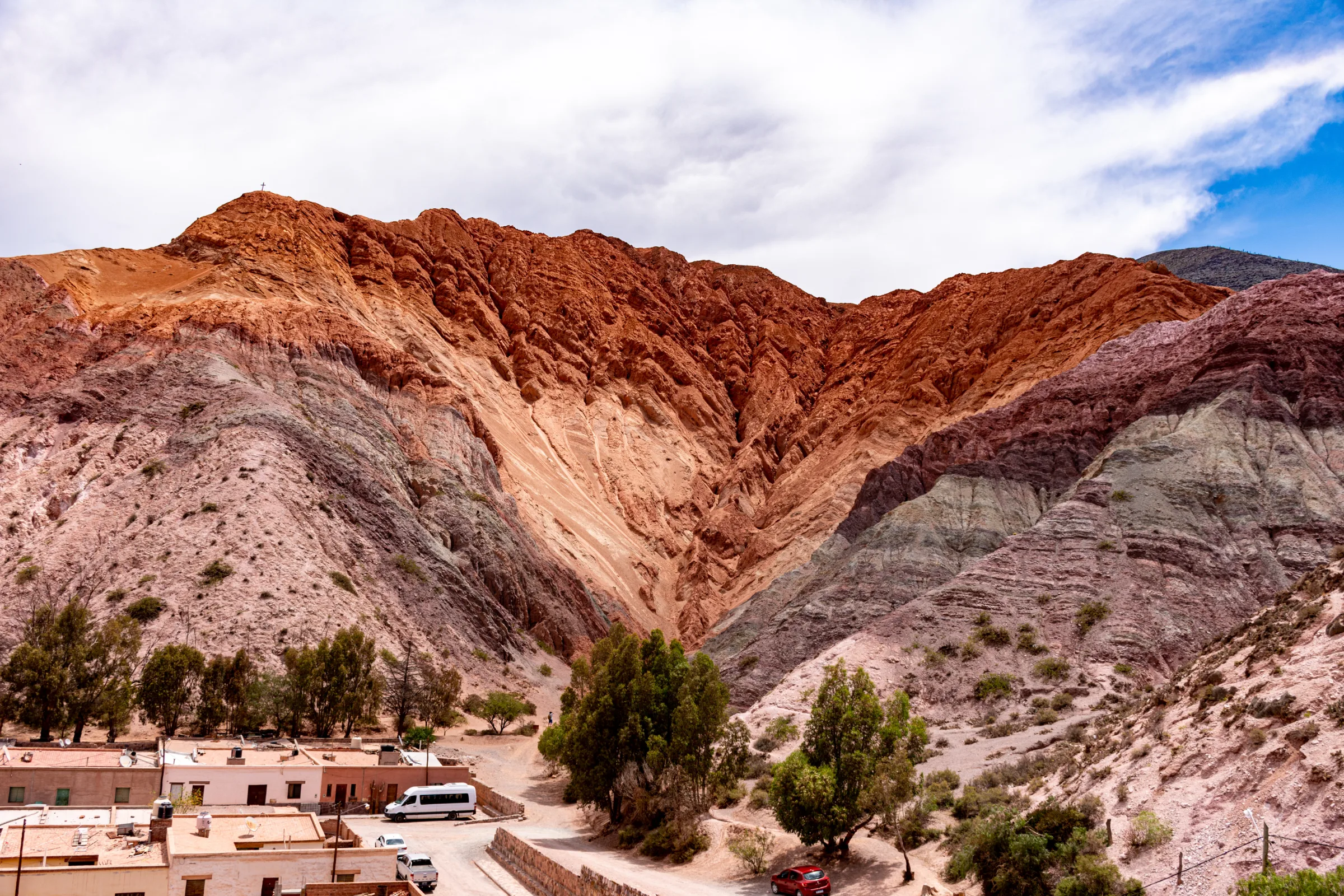
Northwest Argentina spans colonial cities, cactus-filled valleys, high-altitude salt flats, multicolored mountains, Indigenous communities, and some of the world's highest vineyards. Salta and Jujuy form the core of most itineraries, with routes extending through Cafayate, Cachi, Purmamarca, Tilcara, Humahuaca, and Salinas Grandes. Distances are substantial, elevations change quickly, and the scenery shifts from green cloud forest to dry puna, so the region works best as a carefully paced journey rather than a series of long day trips.
At a glance
| Best for | Andean culture, desert scenery, colonial towns, high-altitude agriculture, archaeology, and photography |
|---|---|
| Don't miss | Salta, Cafayate, Purmamarca, the Quebrada de Humahuaca, and Salinas Grandes |
| Recommended stay | 6 to 9 nights |
| Best area to stay | Salta, Cafayate, and Purmamarca |
| Pairs well with | Buenos Aires, Mendoza Wine Country, Iguazú Falls, and the Atacama Desert |
| Closest airports | Martín Miguel de Güemes International Airport (SLA) and Gobernador Horacio Guzmán International Airport (JUJ) |
| Best time to visit | April through November |
| Getting around | Private transfers and guided overland touring |
| Budget | $$ to $$$$ |
Why stay in Northwest Argentina?
The northwest is one of Argentina's most culturally and geographically distinctive regions. Spanish colonial architecture remains visible in Salta, but the wider landscape reflects much older Andean histories, Indigenous traditions, and trade routes that long predate the modern border with Bolivia and Chile.
South of Salta, the road to Cafayate passes through the Quebrada de las Conchas, where wind and water have carved red sandstone into amphitheaters, fins, and deep ravines. Cafayate itself is a high-altitude agriculture region best known for Torrontés, along with Malbec, Cabernet Sauvignon, and smaller experimental plantings. Continuing through the Calchaquí Valleys brings remote villages, adobe churches, cardón cactus, and broad mountain basins.
North of Salta, Jujuy's Quebrada de Humahuaca follows a historic Andean corridor through Purmamarca, Tilcara, Maimará, and Humahuaca. The valley is recognized by UNESCO for its cultural landscape and long history of settlement and exchange. Beyond Purmamarca, the road climbs sharply to the puna and Salinas Grandes, where the white salt basin sits at more than 11,000 feet above sea level.
The region's food is another reason to travel slowly. Empanadas salteñas, tamales, humitas, Andean potatoes, quinoa, goat, llama, local cheeses, and high-altitude agricultures reflect both Indigenous and colonial influences. Markets and family-run kitchens often explain the destination better than formal sightseeing alone.
Our take: allow enough time for at least three bases. Salta, Cafayate, and Purmamarca create a strong first journey, with Cachi or a night at Salinas Grandes added when you have eight or nine nights. Trying to cover the same route from Salta creates too many hours in transit.
Is Northwest Argentina a good fit?
- Enjoy dramatic desert and mountain landscapes.
- Want Indigenous and colonial history in the same itinerary.
- Prefer overland journeys with frequent scenic stops.
- Are interested in high-altitude agriculture and regional food.
- Like small towns, markets, archaeology, and local crafts.
- Can adapt to altitude, dry air, and large temperature changes.
Mendoza is more polished and concentrated around wine estates. Northwest Argentina is broader, more rugged, and more culturally layered, with high passes and remote valleys forming as much of the experience as the hotels. It suits travelers who value the journey between destinations and do not mind changing bases several times.
Best things to do
Explore colonial Salta
Walk around Plaza 9 de Julio, visit the cathedral and historic cabildo, and spend time at the Museo de Arqueología de Alta Montaña. The museum's collection explains Inca presence in the region and the significance of high-mountain ceremonial sites.
Follow the Quebrada de las Conchas
The route between Salta and Cafayate passes through red-rock formations, dry river valleys, and geological viewpoints. A private guide helps connect the landscape to the region's climate, erosion, and settlement history.
Explore Cafayate's vineyard landscapes
Visit historic estates, irrigation channels, and vineyard landscapes to understand how agriculture developed in this high-altitude valley. One substantial estate visit and a long lunch usually create a better day than several brief stops.
Travel through the Quebrada de Humahuaca
Purmamarca, Tilcara, Maimará, and Humahuaca reveal different layers of the valley's architecture, archaeology, markets, and Andean culture. The Hill of Seven Colors is the best-known formation, but the wider corridor deserves several days.
See Salinas Grandes
The road from Purmamarca climbs through the Cuesta de Lipán to a vast high-altitude salt basin. Bright light, wind, and elevation make timing important, and an overnight camp creates a quieter experience than a short midday stop.
Visit the Pucará de Tilcara
This reconstructed pre-Hispanic settlement stands above the Quebrada de Humahuaca and helps explain the valley's strategic importance. Visit with a guide for archaeological context and wider views across the surrounding hills.
Explore the Calchaquí Valleys
Cachi, Molinos, Seclantás, and the surrounding valleys contain adobe architecture, cardón cactus, artisan workshops, and long sections of Route 40. The roads are scenic but slow, making an overnight journey essential.
Learn about regional food and crafts
Visit markets, family kitchens, textile workshops, or ceramic studios to understand ingredients and techniques that remain central to local life. Private introductions are especially useful in smaller communities where tourism is not organized around formal attractions.

Where to stay
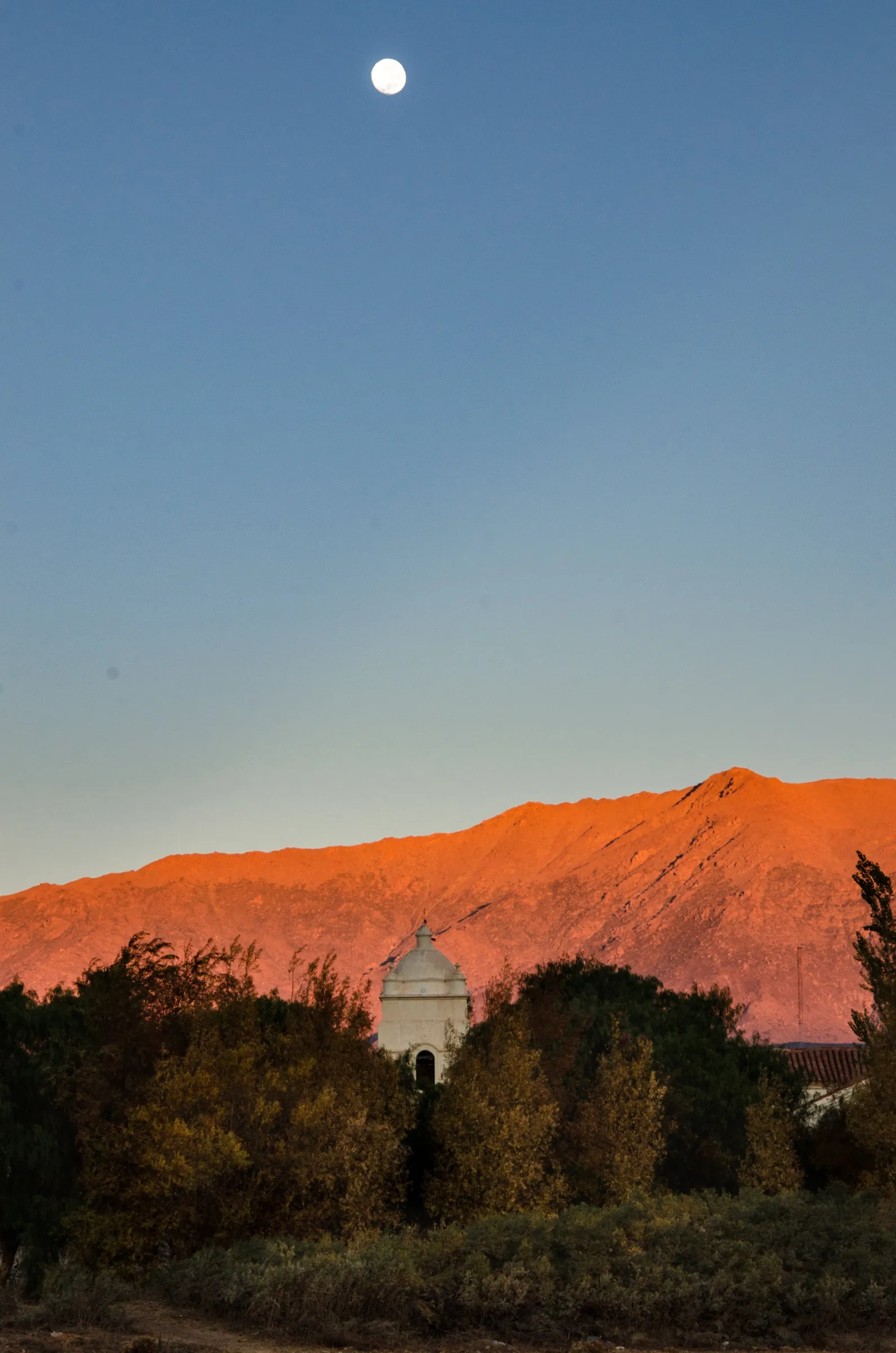
Stay near Salta at the beginning or end of the journey for airport access, colonial architecture, museums, and a comfortable transition into the region. A countryside estancia outside the city works better than a central hotel when gardens, quiet, and mountain views are priorities.
Stay in Cafayate for high-altitude agriculture, the Quebrada de las Conchas, and the southern Calchaquí Valleys. Two or three nights allow one in-depth estate day and one scenic excursion without repeating the long transfer from Salta.
Stay in Purmamarca or Tilcara for the Quebrada de Humahuaca and Salinas Grandes. Purmamarca is smaller and closer to the salt-flat road. Tilcara has more restaurants, archaeology, and a central position for exploring the wider valley.
A night in Cachi or at Salinas Grandes is worthwhile for travelers with more time. These stops reduce overland hours and create access to the landscape before day visitors arrive or after they leave.
Our favorite hotels
House of Jasmines
This 14-room estancia sits on more than 100 hectares outside Salta, about ten minutes from the airport. The property has mountain views, gardens, a spa, riding, and a quiet rural setting.
Patios de Cafayate
Patios de Cafayate occupies an estate founded in 1892 beside Bodega El Esteco. Its 32 rooms surround courtyards and gardens, placing guests within a historic agricultural property close to both Cafayate town and the Quebrada de las Conchas.
Grace Cafayate
Set within the La Estancia de Cafayate development, Grace combines contemporary rooms and villas with vineyard and mountain views. The property has 52 rooms, suites, and villa accommodations.
El Manantial del Silencio
This colonial-style hotel stands just outside Purmamarca at the base of the Hill of Seven Colors. The property has eighteen rooms, one suite, a separate two-bedroom house, gardens, a pool, and a small spa.
Pristine Salinas Grandes Luxury Camp
Pristine sits about five miles inside the Salinas Grandes, with domes designed for the high-altitude salt-desert environment. The remote location, Andean food, sunset light, and exceptionally dark night sky justify an overnight stay for travelers comfortable above 11,000 feet. The property has 4 dome suites. The camp accepts guests age 12 and older.
Best time to visit
April through November brings the driest conditions across much of Salta and Jujuy. Days are often clear, nights can be cold, and the strongest temperature differences occur at high altitude. June through August is popular but can be very cold before sunrise and after sunset.
December through March is the summer rainy season. Storms can affect roads and visibility, especially in remote valleys, but the landscape becomes greener and water on the Salinas Grandes can create a reflective surface. Travel remains possible with more flexibility in the schedule.
Pair it with
- Buenos Aires for museums, architecture, restaurants, and tango.
- Mendoza Wine Country for a contrast between high-altitude agriculture regions.
- Iguazú Falls for subtropical rainforest after the dry Andean northwest.
- The Atacama Desert for a cross-border journey through the high Andes.
Getting there
Salta and Jujuy both have airports with domestic connections, although many travelers arrive in Salta and depart from Jujuy or reverse the route. Private overland travel is central to the experience because the main landscapes and villages lie between the cities.
Approximate travel times:
- Salta Airport to central Salta: 20 to 30 minutes
- Salta to Cafayate: 3 to 3.5 hours
- Salta to Cachi: 3.5 to 4.5 hours
- Salta to Purmamarca: 3 to 3.5 hours
- Purmamarca to Salinas Grandes: 1.25 to 1.5 hours
- Purmamarca to Tilcara: 30 minutes
- Purmamarca to Jujuy Airport: 1 to 1.5 hours
Road quality and travel times vary, and some scenic routes are unpaved. We use experienced regional drivers, build in time for altitude adjustment, and avoid combining the longest road segments with fixed afternoon flights.

Frequently asked questions
How many nights should I stay?
Plan six to nine nights. Six nights cover Salta, Cafayate, and Purmamarca at a steady pace. Eight or nine allow time for Cachi, Tilcara, Humahuaca, or an overnight stay at Salinas Grandes.
Should I visit both Salta and Jujuy?
Yes. Salta contributes colonial architecture, museums, Cafayate, and the Calchaquí Valleys. Jujuy brings the Quebrada de Humahuaca, Purmamarca, Tilcara, and Salinas Grandes. Together they create a much more complete trip.
Will altitude be a problem?
Salta and Cafayate are moderate in elevation, but roads to Salinas Grandes and parts of the puna climb above 11,000 feet. Most travelers manage well with gradual pacing, hydration, lighter meals, and limited exertion on the first high-altitude day.
Do I need to change hotels often?
Yes, but the changes reduce daily driving. Salta, Cafayate, and Purmamarca are the most useful core bases. Adding Cachi or Salinas Grandes creates a more immersive route when the trip is long enough.
Is the region suitable for families?
Yes, particularly for families with older children interested in landscapes, archaeology, markets, riding, and local food. Long road days and altitude need to be considered for younger children, and a private vehicle allows more flexibility.
What should I pack?
Bring layers for strong temperature changes, sun protection, a hat, comfortable walking shoes, lip balm, and a light rain layer. A warmer jacket is important at altitude and from June through August.
Can I combine the northwest with the Atacama Desert?
Yes, but the overland route crosses very high terrain and depends on border operations, weather, and road conditions. It is best treated as a guided expedition with enough time for altitude adjustment rather than a simple transfer.
Is Northwest Argentina mainly about vineyards?
No. Cafayate's vineyards are one part of a broader journey through Indigenous culture, archaeology, salt flats, colonial towns, desert geology, markets, and mountain landscapes.


