

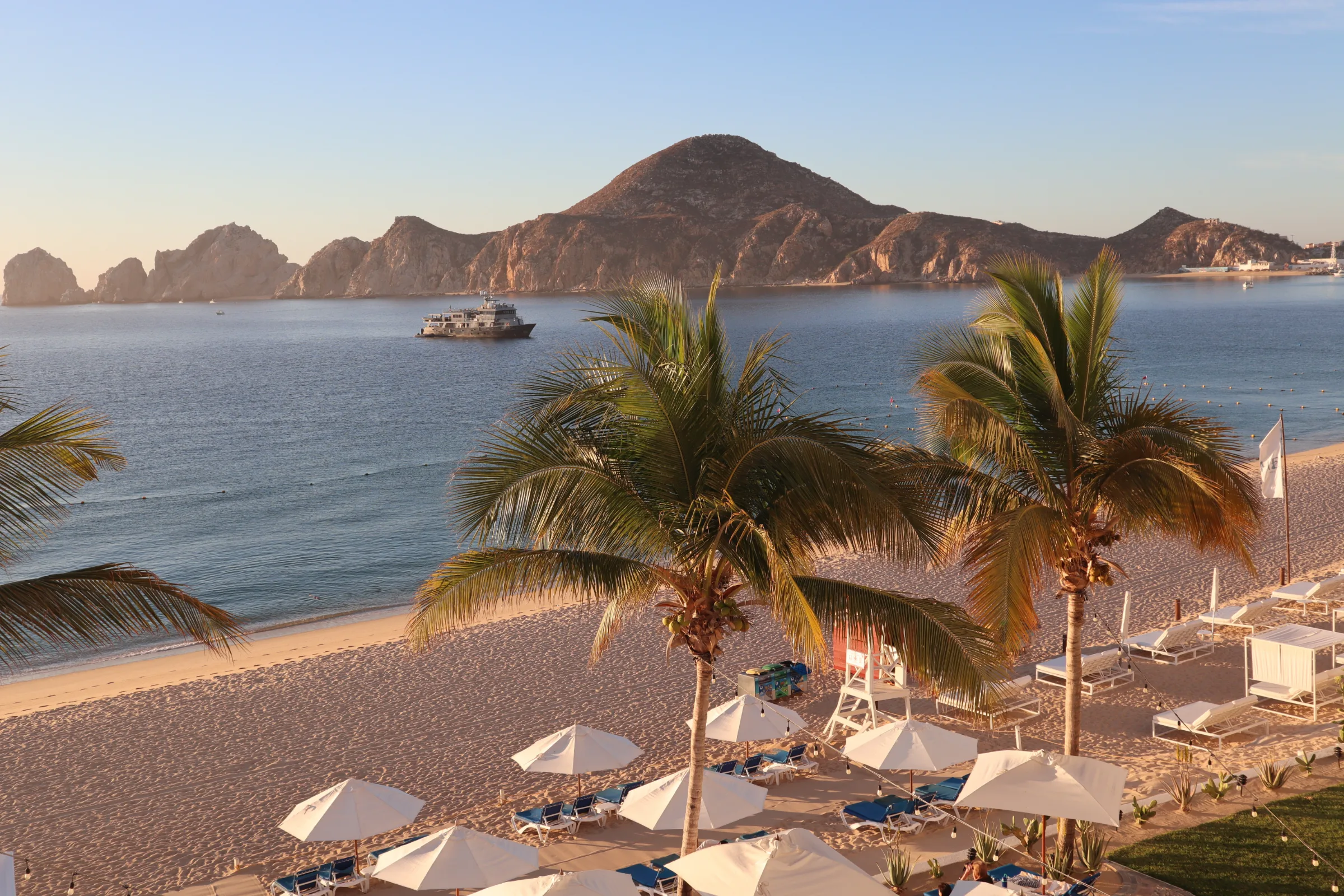
Los Cabos occupies the southern tip of the Baja California Peninsula, where desert slopes descend toward the Sea of Cortez and Pacific Ocean. San José del Cabo has a historic center, galleries, and a quieter town character, while Cabo San Lucas is built around a marina, nightlife, and the rock formations at Land's End. The Tourist Corridor between them contains most of the region's large resorts, and the East Cape extends toward a less-developed coast with reefs, fishing communities, and exposed desert.
At a glance
| Best for | Luxury resorts, desert scenery, golf, spas, boating, couples, families, and winter sun |
|---|---|
| Don't miss | Land's End from the water, San José del Cabo, a desert or mountain experience, one marine day, and time outside the resort |
| Recommended stay | 5 to 8 nights |
| Best area to stay | San José for culture, the Corridor for resorts, or Cabo San Lucas for marina activity |
| Pairs well with | La Paz, Todos Santos, and a longer Baja California Sur route |
| Closest airport | Los Cabos International Airport (SJD) |
| Best time to visit | November through April for dry weather and cooler temperatures |
| Getting around | Private transfers, chartered boats, and guided desert excursions |
| Budget | $$$ to $$$$ |
Why stay in Los Cabos?
The Los Cabos coastline is visually dramatic but not uniformly safe for swimming. Open Pacific swell, steep shore break, currents, and submerged rocks affect many resort beaches. Hotels with reliable swimmable coves should be selected deliberately when daily ocean swimming is a priority.
San José del Cabo preserves a central plaza, mission church, galleries, restaurants, and low buildings beyond the resort corridor. The weekly art walk operates seasonally, but the district is worth exploring at other times when galleries and studios are quieter.
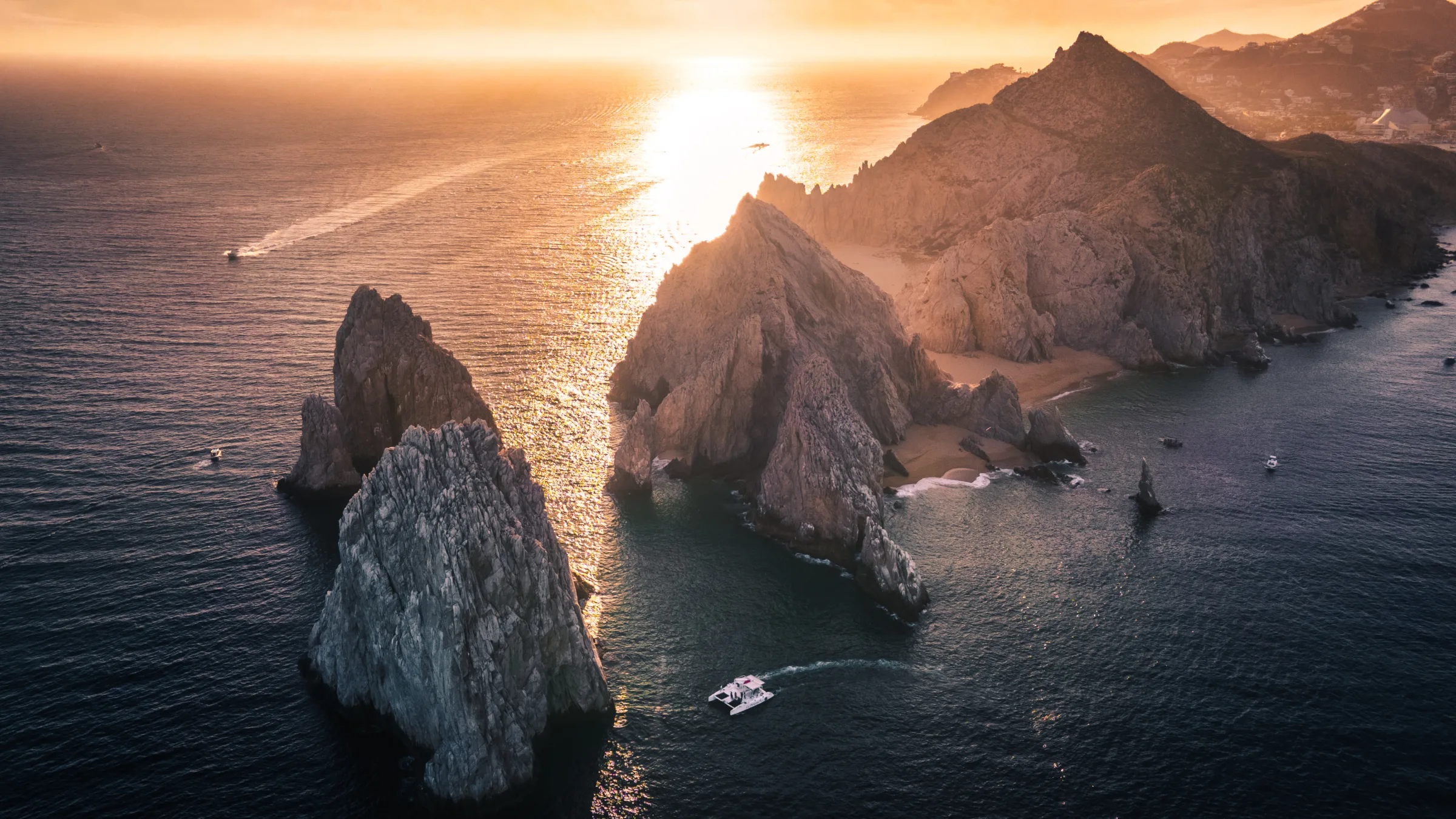
Cabo San Lucas has a different identity centered on its marina, boat traffic, nightlife, cruise arrivals, and the granite formations at Land's End. The Arch, sea-lion areas, beaches, and Pacific meeting point are best viewed from a small private vessel outside peak harbor congestion.
The desert is as important as the coast. Arroyos, cactus forest, granite mountains, seasonal watercourses, farms, and small communities support hiking, naturalist walks, and cultural visits. Outdoor activity should begin early because heat and sun exposure increase quickly.
Seasonal humpback and gray whale activity, dolphins, rays, sea turtles, and pelagic fish may be encountered in regional waters. Observation rules, species, and seasons vary, and sightings are never guaranteed.
Los Cabos has one of Mexico's largest concentrations of high-end resorts. The strongest properties differentiate themselves through beach conditions, architecture, room count, privacy, and access to San José or Cabo San Lucas rather than amenities alone.
Our take: select the resort according to beach and location, not only brand. San José adds culture and galleries, the Corridor provides broad resort choice, and Cabo San Lucas suits travelers who want marina energy.
Is Los Cabos a good fit?
- Want a high-service resort in a desert-and-sea landscape.
- Need strong options for honeymoons, families, villas, or groups.
- Enjoy golf, spas, boating, and winter wildlife seasons.
- Want direct flights from many North American cities.
- Can accept that many beaches are not safe for swimming.
- Prefer resort facilities to a compact walkable beach town.
La Paz provides a smaller city and stronger Sea of Cortez nature focus, while Todos Santos centers on art, farms, and boutique hotels. Los Cabos has the broadest resort inventory and the most developed visitor infrastructure.
Best things to do
See Land's End from the water
A private boat can circle the Arch, granite formations, beaches, and the point where Pacific and gulf conditions meet. Departure timing should avoid the busiest marina period.
Explore San José del Cabo
Walk the plaza, mission district, galleries, shops, and local streets with a guide who can connect the town's missionary, ranching, and modern tourism history.
Spend time in the desert
Naturalist-led walks can focus on cactus, geology, arroyos, birds, and adaptation to scarce water. Early departures and moderate routes are best in warm weather.
Join a responsible seasonal whale outing
Authorized operators maintain approach distances and interpret migration and behavior. No trip can guarantee a close encounter.
Visit the East Cape
The coast north of San José includes quieter beaches, small communities, fishing areas, and access toward Cabo Pulmo. Road and sea conditions determine what is practical in one day.
Explore regional food and farms
Farm and market experiences can introduce Baja produce, seafood, ranching, water constraints, and the rapid change surrounding San José.
Play golf in a coastal desert setting
Courses occupy varied terrain along the Corridor and East Cape. Tee times, heat, wind, and transport should be built into the itinerary rather than added casually.
Choose a genuinely swimmable bay
Palmilla, Chileno, and selected coves are known for more protected water under suitable conditions. Daily flags and local safety advice remain essential.


Where to stay
Stay near San José del Cabo for galleries, restaurants, farm experiences, and a quieter town atmosphere. Hotels range from urban boutiques to East Cape and Corridor resorts.
Stay along the Tourist Corridor for the widest choice of full-service resorts, golf, villas, and large beaches. The exact kilometer position determines transfer time to both towns.
Stay in Cabo San Lucas for marina access, nightlife, restaurants, and boat departures. Urban and resort noise can be significant near the center.
Stay on the East Cape for privacy, newer low-density resorts, desert, and access toward marine reserves. Outside dining and town visits require longer transfers.
Our favorite hotels
One&Only Palmilla
One&Only Palmilla has 174 rooms, suites, and villas on a historic resort estate above one of the region's best-known swimmable coves. The property has low-rise hacienda architecture, a chapel, family facilities, and strong privacy.
Las Ventanas al Paraíso, A Rosewood Resort
Las Ventanas has 84 suites and villas on the Tourist Corridor. Highly personalized service, large accommodations, and several pools define the stay, while the open beach is better for views than routine swimming.
Chileno Bay Resort & Residences
Chileno Bay has approximately 92 guest rooms and villas beside a protected bay on the Corridor. Direct access to calmer water and contemporary family facilities distinguish it from resorts on exposed beaches.
Zadún, a Ritz-Carlton Reserve
Zadún has 115 rooms, suites, and villas on the East Cape near San José. Private plunge pools in many categories, broad residences, and a quieter coastal position suit travelers seeking a modern low-density resort.
Best time to visit
November through April is generally dry, sunny, and comfortable, with cool desert evenings and strong demand during holidays. Winter overlaps with seasonal whale activity.
May and June become hotter but can remain dry. July through October brings greater humidity, tropical-storm risk, and the highest summer temperatures, with some restaurants and activity schedules reduced.
Pair it with
- La Paz for Espíritu Santo, whale shark conservation, a local waterfront, and a quieter city.
- Todos Santos for art, farms, boutique hotels, and Pacific surf landscapes.
- A longer East Cape stay for reefs, desert, and lower-density coast.
- Mexico City for museums, architecture, and a cultural contrast.
Getting there
Los Cabos International Airport sits north of San José del Cabo and serves the entire region. Cabo San Lucas also has a smaller airport used mainly for private and selected regional aviation.
Approximate travel times:
- Los Cabos Airport to San José del Cabo: 20 to 35 minutes
- Los Cabos Airport to Palmilla: 25 to 40 minutes
- Los Cabos Airport to Chileno Bay: 35 to 55 minutes
- Los Cabos Airport to Cabo San Lucas: 40 to 70 minutes
- San José del Cabo to Cabo San Lucas: 35 to 60 minutes
- Los Cabos Airport to Todos Santos: 1.25 to 1.75 hours
Corridor construction and peak arrival periods can extend transfer times. We confirm beach conditions and the resort's exact location before finalizing the hotel.

Frequently asked questions
How many nights should I stay in Los Cabos?
Five nights provide four full resort and excursion days. Seven or eight nights allow both towns, marine activity, desert touring, and several unstructured resort days.
Should I stay near San José or Cabo San Lucas?
Choose San José for galleries, a quieter center, and farm experiences. Choose Cabo San Lucas for marina activity and nightlife. Corridor resorts provide privacy between the two.
Can I swim at every resort beach?
No. Many beaches have strong shore break and currents. Select a property with a protected cove when swimming is essential, and follow daily flags.
When can I see whales?
Humpback whale outings generally operate during the official winter season. Gray whales are more closely associated with Pacific lagoons farther north. Sightings are never guaranteed.
Is Los Cabos suitable for families?
Yes. Major resorts provide children's programs, villas, pools, and varied activities. Beach safety and long sun exposure require careful daily planning.
Is the East Cape worth visiting?
Yes for travelers interested in quieter coast, desert, marine habitat, and lower-density resorts. Travel times and road conditions increase beyond the main Corridor.
Do I need to leave the resort?
The best properties can support a full stay, but San José, desert landscapes, farms, and regional marine areas provide a more complete understanding of Baja California Sur.
What should I pack?
Bring strong sun protection, lightweight layers, a warmer evening layer in winter, walking shoes for desert terrain, and secure footwear for boats and beaches.


