


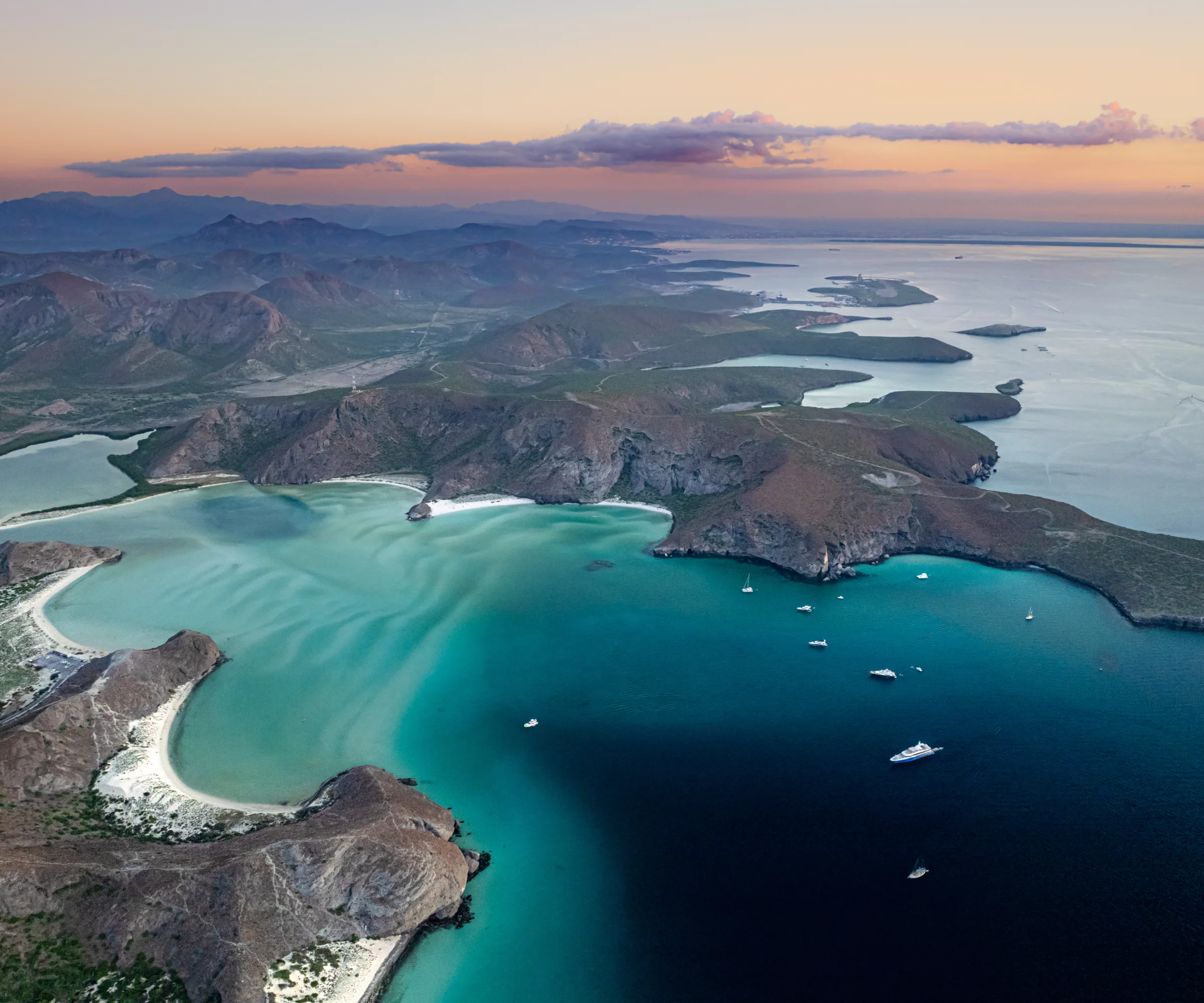
La Paz sits on a broad bay on the Sea of Cortez, backed by arid mountains and a desert peninsula. The city is the capital of Baja California Sur but feels smaller and less resort-dominated than Los Cabos. Its malecón, historic center, markets, museums, marinas, and restaurants provide a local base for exploring Espíritu Santo, Balandra, coastal wetlands, fishing communities, and protected marine habitat.
At a glance
| Best for | Marine wildlife, island excursions, kayaking, beaches, food, desert scenery, and small-scale city stays |
|---|---|
| Don't miss | Espíritu Santo, Balandra, the malecón, a naturalist-led marine day, and time in the historic center |
| Recommended stay | 4 to 6 nights |
| Best area to stay | The malecón and historic center for city life, or Puerta Cortés for a resort setting |
| Pairs well with | Los Cabos, Todos Santos, and a longer Baja California Sur route |
| Closest airport | La Paz International Airport (LAP), with Los Cabos Airport serving broader routes |
| Best time to visit | November through April for cooler weather; marine seasons vary by species |
| Getting around | Private transfers, authorized boats, kayaks, and guided desert excursions |
| Budget | $$ to $$$$ |
Why stay in La Paz?
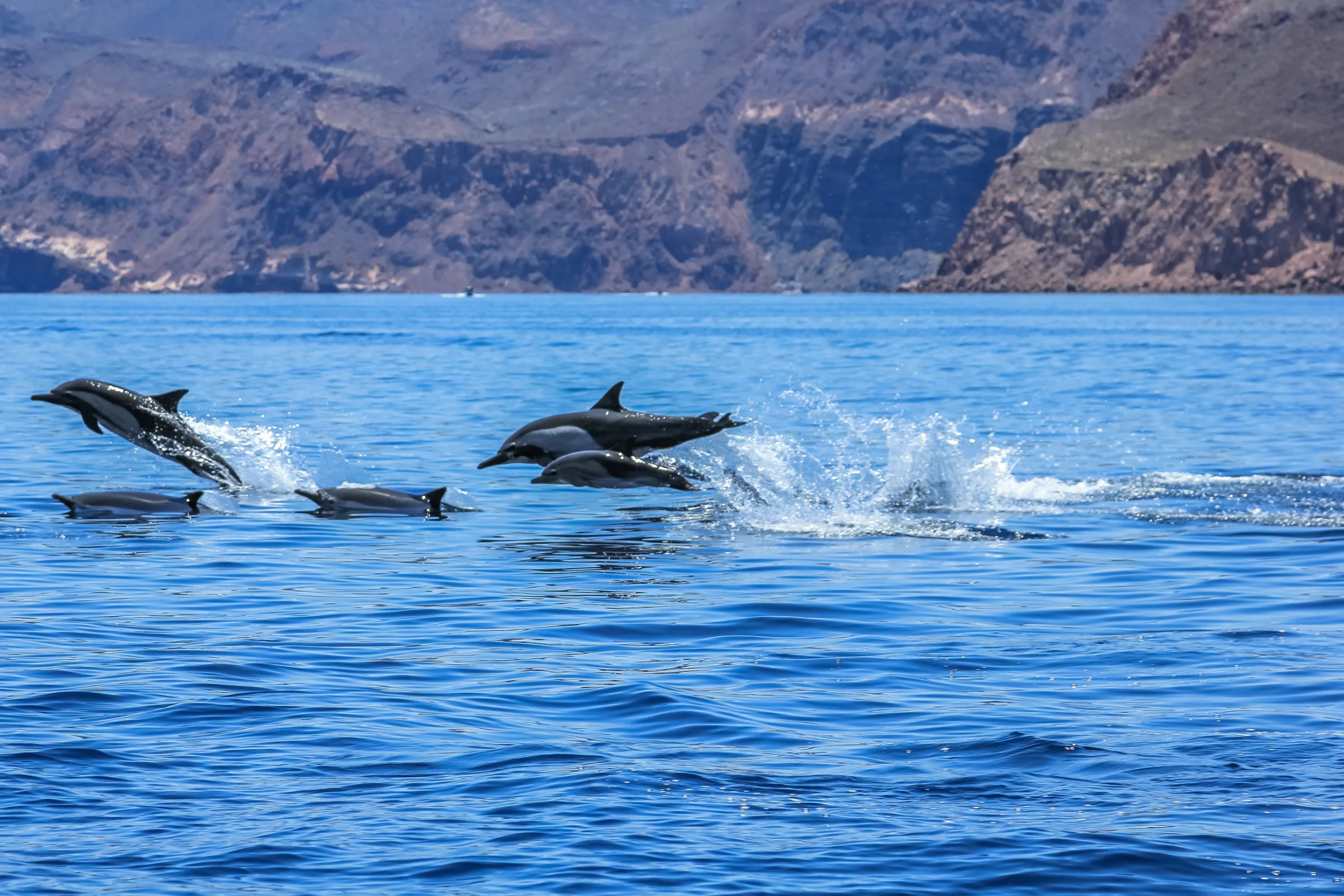
The Sea of Cortez supports islands, reefs, seagrass, deep channels, whale migration routes, sea-lion colonies, rays, sharks, turtles, seabirds, and many fish species. The value of La Paz lies in experienced naturalists and regulated access, not guaranteed close encounters.
Espíritu Santo is a protected island complex north of the city, known for volcanic geology, coves, desert vegetation, birds, and marine life. Authorized day trips vary by season, wind, and current, with long periods spent on open water.
Balandra is a shallow bay surrounded by desert hills and mangroves. Visitor capacity and access systems have changed over time to protect the site, so current reservations, time slots, and boat rules should be confirmed.
Seasonal whale shark activity occurs in the Bay of La Paz under a regulated observation program. Official opening dates, search zones, capacity, and daily operating decisions depend on animal presence and environmental conditions.
The malecón brings city life to the waterfront through public art, beaches, cafés, cyclists, families, and evening walks. A few blocks inland, museums, markets, historic buildings, and independent restaurants reveal the city's regional role beyond tourism.
La Paz is warmer than many travelers expect, and summer heat can be extreme. Winter water and wind can also feel cool, making season-specific packing essential.
Our take: choose La Paz for marine ecology and a real waterfront city rather than a conventional resort strip. Build in one weather buffer because wind can alter every boat plan.
Is La Paz a good fit?
- Want naturalist-led marine experiences.
- Prefer a smaller city to a large resort corridor.
- Enjoy kayaking, boating, beaches, and desert landscapes.
- Want a strong addition to Los Cabos or Todos Santos.
- Can accept seasonal wildlife rules and weather-dependent outings.
- Value conservation over guaranteed animal contact.
Los Cabos has more resorts, golf, and direct flights, while La Paz provides stronger access to the central Sea of Cortez and a more local urban atmosphere. Todos Santos focuses on art, farms, and the Pacific coast.
Best things to do
Explore Espíritu Santo
A licensed operator can combine geology, birds, beaches, snorkeling where permitted, and interpretation of the protected area. Routes change with wind and seasonal wildlife rules.
Visit Balandra responsibly
Enter under current capacity and access rules, avoid mangroves and sensitive shallows, and use only permitted areas. A boat view can be preferable when land access is full.
Walk the malecón
The waterfront is most active in the morning and around sunset, with public sculpture, city beaches, cafés, and views across the bay.
Join the regulated whale shark program
When officially open, authorized operators search designated zones and follow strict timing and distance rules. No sighting can be promised.
Kayak a protected bay
Guided paddling provides quiet access to shallow water, mangrove edges, and desert coast. Wind can increase quickly, making early departures preferable.
Explore the historic center and museums
The cathedral area, art museum, cultural buildings, markets, and nearby streets provide context for the state capital and regional history.
Spend a beach day north of the city
The Pichilingue road reaches several bays with different depth, facilities, and wind exposure. Local advice helps identify the best conditions.
Experience La Paz through food
Seafood, ranching traditions, regional produce, bakeries, and contemporary restaurants can be explored through markets and independent businesses rather than resort dining alone.


Where to stay
Stay along the malecón or in the historic center for evening walks, restaurants, museums, and a local city atmosphere. Traffic and waterfront activity can create noise in front-facing rooms.
Stay at Puerta Cortés for a marina, golf, beach club, pools, and a resort-style setting north of town. The historic center requires a private transfer.
Stay north of the city only when a small beach property or marine departure point is the priority. Independent dining and services become limited.
We prefer a central hotel for first-time visitors and a Puerta Cortés extension for travelers who want several resort days.
Our favorite hotels
Baja Club
Baja Club has 32 rooms in a restored 1910 mansion and contemporary addition directly on the malecón. The property has a central courtyard, rooftop pool, and immediate city access.
Hotel Indigo La Paz Puerta Cortés
Hotel Indigo occupies the Puerta Cortés marina and resort development north of town, with a beach club, pools, golf access, and Sea of Cortez views. It suits families and travelers prioritizing resort facilities over central walking.
Hotel Catedral La Paz
Hotel Catedral has 70 rooms surrounding a bright internal courtyard near the city's cathedral and art museum. A rooftop pool and central location provide strong value for travelers focused on marine excursions and evening walks.
Best time to visit
November through April brings cooler air, lower humidity, and many of the region's major wildlife seasons. Wind and water temperature can be cool, particularly in midwinter.
May and June become hot but can provide good marine conditions. July through October is extremely hot and within the tropical-storm season, with some activity schedules reduced.
Pair it with
- Los Cabos for major resorts, golf, desert excursions, and broad flight access.
- Todos Santos for Pacific scenery, art, farms, and boutique hotels.
- The East Cape for reefs, fishing communities, and a quieter coast.
- A longer Baja road itinerary for gray-whale lagoons and desert missions.
Getting there
La Paz Airport handles domestic and selected international service. Many travelers use Los Cabos Airport and continue overland, particularly when direct flights to La Paz are limited.
Approximate travel times:
- La Paz Airport to the malecón: 20 to 30 minutes
- La Paz Airport to Puerta Cortés: 30 to 45 minutes
- Los Cabos Airport to La Paz: 2.25 to 3 hours
- La Paz to Balandra: 30 to 45 minutes
- La Paz to Todos Santos: 1 to 1.5 hours
- La Paz to Cabo San Lucas: 2 to 2.5 hours
Boat departures can change with wind and official wildlife decisions. We avoid booking the only priority marine excursion on the final morning.
Frequently asked questions
How many nights should I stay in La Paz?
Four nights provide three full days for Espíritu Santo, Balandra, and the city. Five or six nights allow a weather buffer and additional marine or desert activity.
When is whale shark season?
The regulated season usually falls within the cooler half of the year, but official opening and daily operation depend on animal presence and government rules. Sightings are not guaranteed.
Can I swim with sea lions?
Access and in-water rules vary by season and colony to protect breeding and young animals. Follow the authorized operator and current protected-area restrictions.
Is Balandra always open?
No. Capacity systems, time slots, weather, and conservation decisions can affect access. Confirm current requirements before departure.
Is La Paz suitable for families?
Yes. The malecón, protected bays, boat days, museums, and resort options work well for families. Boat duration, wind, and swimming ability should guide excursions.
Should I stay downtown or at Puerta Cortés?
Choose downtown for restaurants and evening walks. Choose Puerta Cortés for a marina, pools, beach club, and a more self-contained resort experience.
Is La Paz hotter than Los Cabos?
Both are hot desert destinations, but local wind, bay position, and season create differences. La Paz can be extremely hot in summer and cooler on the water in winter.
What should I pack?
Bring strong sun protection, secure boat footwear, a wind layer for winter marine days, lightweight clothing, and a reusable bottle. A dry bag is useful on island excursions.


