


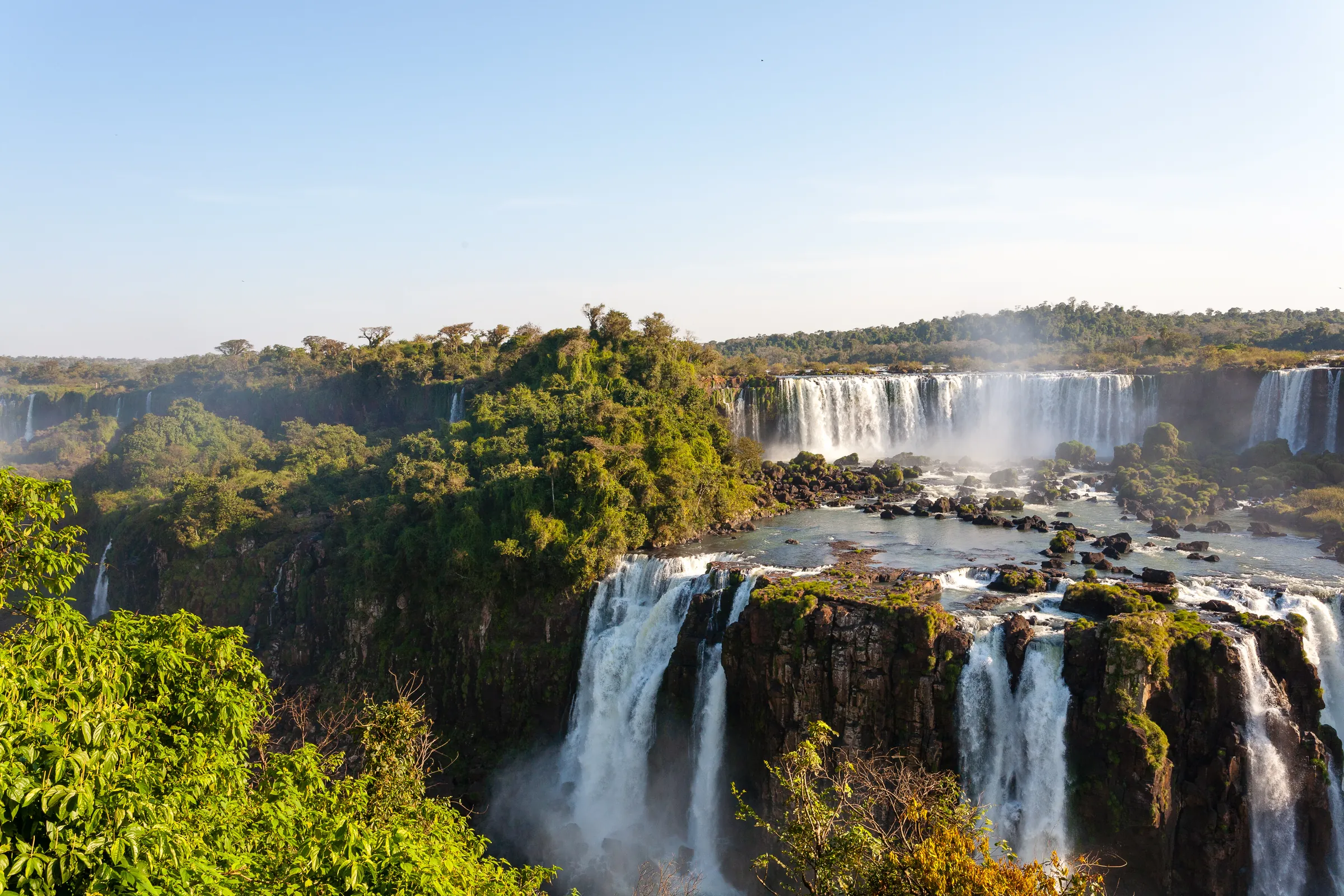
Iguazú Falls is a vast system of cascades spread across the border between Argentina and Brazil, surrounded by protected Atlantic Forest. The Argentine side places visitors above, below, and beside the water through a network of walkways, and the Brazilian side creates the broadest panoramic view. A three-night stay allows time for both countries, changing river conditions, and the wildlife that lives beyond the most famous viewpoints.
At a glance
| Best for | Waterfalls, rainforest, wildlife, photography, and short nature-focused stays |
|---|---|
| Don't miss | Devil's Throat, the Upper and Lower Circuits, the Brazilian panorama, and rainforest wildlife |
| Recommended stay | 3 nights |
| Best area to stay | Inside Iguazú National Park or in the surrounding Atlantic Forest |
| Pairs well with | Buenos Aires, Iberá Wetlands, Northwest Argentina, and Rio de Janeiro |
| Closest airport | Cataratas del Iguazú International Airport (IGR) |
| Best time to visit | March through May and August through November |
| Getting around | Private transfers and guided park visits |
| Budget | $$$ to $$$$ |
Why stay at Iguazú Falls?
The scale of Iguazú is difficult to understand from a single viewpoint. The Argentine park contains several separate circuits reached by trails and an ecological train. The Upper Circuit looks across the crests of multiple falls, the Lower Circuit descends closer to the river, and the long walkway to Devil's Throat ends above the system's most powerful section.
The Brazilian park provides a different perspective. Its main path faces the wider line of waterfalls across the river, allowing visitors to understand the full shape of the landscape. Crossing the border takes time, but the two sides are complementary rather than repetitive.
Iguazú National Park protects one of the remaining sections of the Upper Paraná Atlantic Forest, an ecosystem very different from the Andes, pampas, and Patagonia. Toucans, coatis, monkeys, butterflies, lizards, and many bird species are regularly seen around the trails, although wildlife should never be fed or approached.
The falls change with rainfall and river volume. High water creates extraordinary force and mist but can temporarily close individual walkways or boat operations. Lower water reveals more rock and clearer separation between cascades. Neither condition is inherently better, and every visit depends on the river at that moment.
Our take: stay three nights and use two full days. Visit the Argentine side in depth, see the Brazilian panorama, and choose a lodge that adds rainforest interpretation rather than treating Iguazú as a rushed stop between flights.
Is Iguazú Falls a good fit?
- Want one of South America's most powerful natural landmarks.
- Enjoy rainforest, birds, butterflies, and wildlife photography.
- Prefer accessible walkways to demanding hiking.
- Can handle heat, humidity, stairs, and substantial walking.
- Want a destination that works in a short three-night window.
- Are interested in seeing the falls from both Argentina and Brazil.
Patagonia requires more time, flights, and active planning. Iguazú is easier to add to a broad Argentina itinerary and creates an immediate contrast with Buenos Aires or the dry northwest. The experience is popular and can be busy, so early starts and thoughtful hotel selection matter.
Best things to do
Walk the Upper Circuit
Elevated walkways cross above several sections of the falls, providing wide views over the river and close perspectives at the brink. The route is generally less strenuous than the Lower Circuit and is best early in the day.
Explore the Lower Circuit
The Lower Circuit descends through the forest to viewpoints nearer the base of several waterfalls. Stairs, humidity, and spray make it more physically demanding, but the lower angle communicates the height and force of the water.
Visit Devil's Throat
An ecological train and long walkway lead to the edge of the largest single drop in the system. Water levels and maintenance can affect access, so current park conditions should be checked before each visit.
See the Brazilian panorama
The Brazilian side faces the Argentine waterfalls across the gorge and creates the clearest overview of the entire system. Border formalities make this a separate excursion even though the two park entrances are geographically close.
Take a guided rainforest walk
A naturalist guide shifts attention from the water to the Atlantic Forest, identifying birds, insects, plants, and animal tracks. Private reserves and lodge trails can be quieter than the main national park circuits.
Photograph birds and butterflies
Toucans, parrots, hummingbirds, raptors, and large concentrations of butterflies make Iguazú rewarding beyond landscape photography. Early morning brings cooler conditions and often stronger wildlife activity.
Visit the falls during the full moon
On selected nights around the full moon, the Argentine park may operate a limited evening program to Devil's Throat. It is weather-dependent, capacity is restricted, and reservations should be treated as a bonus rather than the foundation of the trip.
Learn about Guaraní culture
Community-led visits can introduce Guaraní history, forest knowledge, language, and contemporary life. The strongest programs are developed with the community and avoid presenting living culture as a performance for visitors.


Where to stay
Stay inside Iguazú National Park when immediate access and views of the falls are the priority. The location reduces transfer time and allows guests to experience the park setting before and after many day visitors, although the hotel is larger than the region's private lodges.
Stay at a small rainforest lodge for private guiding, tailored excursions, and more time learning about the Atlantic Forest. These properties sit outside the park and require transfers to the main circuits, but the wider experience is more personal.
Stay in the Iryapú forest area near Puerto Iguazú for jungle surroundings, resort facilities, and access to town. Hotels here work particularly well for families and travelers who want pools, several dining choices, or a lower price point than the top private lodges.
We do not choose a hotel solely by its distance from the park entrance. The best option depends on whether the trip centers on falls access, private naturalist guiding, family facilities, or a broader rainforest program.
Our favorite hotels
Awasi Iguazú
Fourteen private villas hide within Atlantic rainforest near Iguazú Falls. Each receives a dedicated guide and vehicle, allowing excursions to include the falls as well as quieter forest, river, and cultural sites across the region.
Gran Meliá Iguazú
The only hotel inside Argentina’s Iguazú National Park faces the falls directly from rooms, terraces, and its large infinity pool. Immediate access allows travelers to reach the trails before many outside visitors arrive.
Pristine Iguazú Luxury Camp
This six-suite camp stands within the Puerto Bemberg Natural Reserve above the Paraná River, about an hour from the main falls. It is best for travelers who want several nights of forest trails, regional food, and river scenery rather than spending every day on the busiest park circuits.
Loi Suites Iguazú
Loi Suites has 160 rooms linked by raised walkways within the Iryapú forest. The property has multiple pools, a spa, large rooms, family facilities, and a location about fifteen minutes from the falls.
Best time to visit
Iguazú is open year-round and receives rain in every season. March through May and August through November often bring a useful combination of warm temperatures, strong water volume, and manageable humidity. Conditions can still change quickly.
December through February are hot, humid, and busy around holiday periods. June and July are generally cooler and can be pleasant for walking, although river volume is determined by rainfall across a much larger watershed rather than the weather on the day of the visit.
Pair it with
- Buenos Aires for architecture, food, museums, and tango.
- Iberá Wetlands for a longer wildlife journey through northeastern Argentina.
- Northwest Argentina for a contrast between subtropical forest and high desert.
- Rio de Janeiro for a two-country itinerary with direct regional air connections when schedules align.
Getting there
Cataratas del Iguazú International Airport serves the Argentine side, with most travelers arriving from Buenos Aires. Foz do Iguaçu International Airport serves Brazil. Crossing between countries requires passports, immigration formalities, and enough time for traffic and border queues.
Approximate travel times:
- Iguazú Airport to the Argentine park entrance: 15 to 20 minutes
- Iguazú Airport to Puerto Iguazú: 25 to 35 minutes
- Puerto Iguazú to the Argentine park: 25 to 35 minutes
- Puerto Iguazú to the Brazilian park: 45 to 75 minutes, including the border
- Argentine park to Brazilian park: 45 to 90 minutes, including the border
- Puerto Iguazú to Awasi Iguazú: approximately 20 minutes
We schedule the longer park day on the Argentine side and keep border crossings away from tight flight departures. Park circuits and walkways can close temporarily, so guides confirm current access and adjust the order of activities.

Frequently asked questions
How many nights should I stay?
Plan three nights. That creates two full days for the Argentine circuits and the Brazilian panorama. Two nights can work with well-timed flights, but it leaves little flexibility for weather, border delays, or temporary walkway closures.
Should I visit both sides of the falls?
Yes. The Argentine side creates the most immersive experience through several circuits above and below the falls. The Brazilian side provides the strongest panoramic view across the wider system.
Which hotel has the best location?
Gran Meliá has the closest access because it sits inside the Argentine national park. Awasi provides the most private and tailored program. The better choice depends on whether falls views or private guiding matters more.
How much walking is involved?
A full Argentine park day can include several miles of walking, stairs, and long periods outdoors in heat and humidity. Routes can be shortened, and the Upper Circuit is generally easier than completing every section of the Lower Circuit.
Will I get wet?
Mist reaches several viewpoints, especially when water levels are high. Boat excursions create much heavier spray. Bring quick-drying clothing and protect cameras and phones from moisture.
Is Iguazú suitable for families?
Yes. The walkways, ecological train, wildlife, and dramatic views appeal to a wide age range. Strollers and mobility needs require route planning because some sections include stairs or longer distances.
Are wildlife sightings guaranteed?
No, but coatis, butterflies, toucans, and other birds are commonly seen. Monkeys and less visible forest species depend on timing and luck. Animals should never be fed, even when they approach visitor areas.
Do I need a visa or special documents for the Brazilian side?
Entry requirements depend on nationality and can change. Every traveler needs the correct passport and any required authorization before the trip, even when crossing only for a day visit.


