

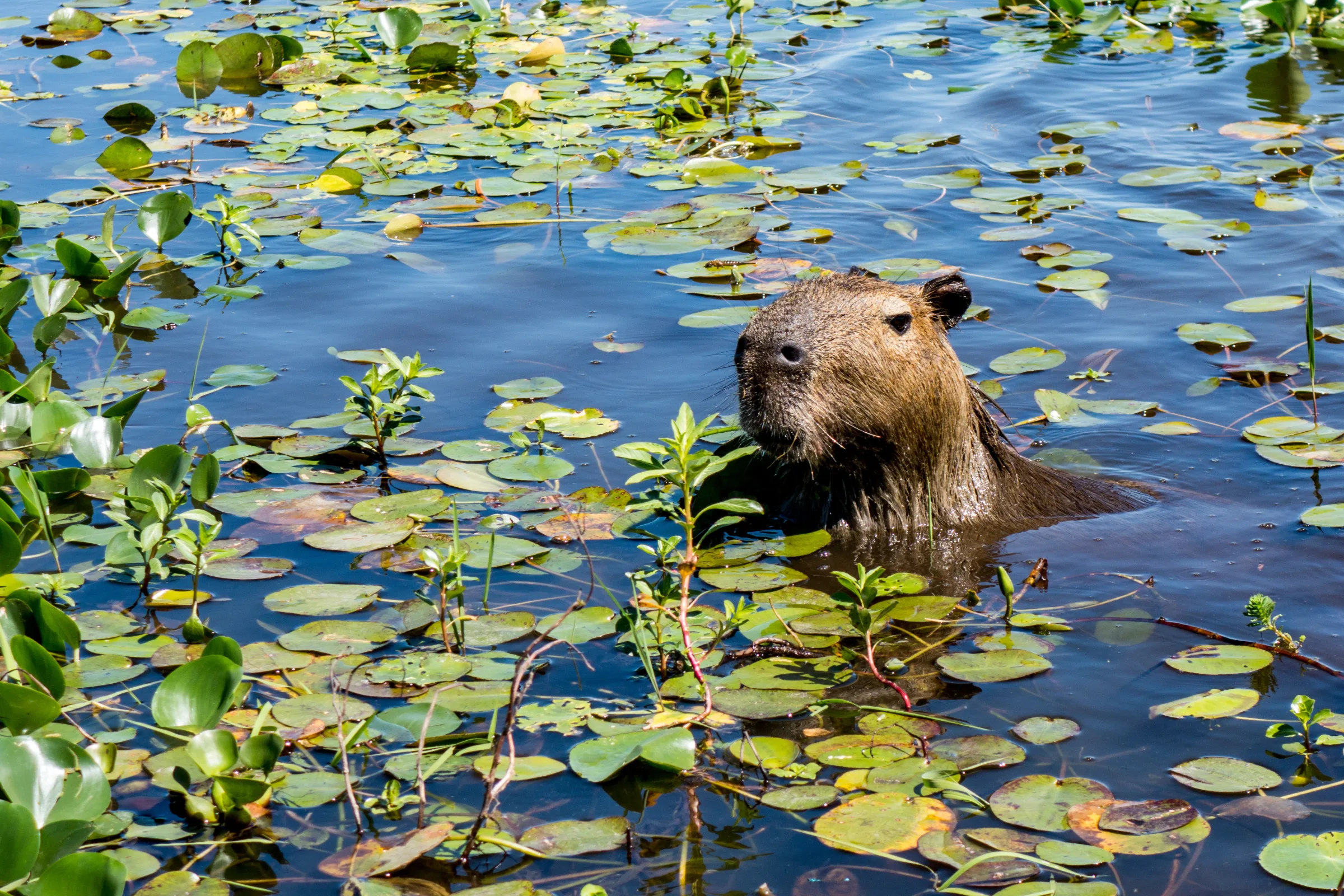
The Iberá Wetlands form a vast mosaic of lagoons, marshes, floating vegetation, grasslands, and gallery forest in Corrientes Province. Wildlife is unusually visible: capybaras graze beside tracks, caimans rest along the water, marsh deer move through reeds, and hundreds of bird species occupy the open wetlands. Small lodges provide the guides, boats, vehicles, and local knowledge needed to understand a protected area with several separate gateways.
At a glance
| Best for | Wildlife, birdwatching, conservation, photography, riding, and quiet nature lodges |
|---|---|
| Don't miss | Boat safaris, capybaras, caimans, marsh deer, giant anteaters, and dawn birding |
| Recommended stay | 3 to 4 nights |
| Best area to stay | Colonia Carlos Pellegrini, Uguay, or the northern wetlands near Puerto Valle |
| Pairs well with | Iguazú Falls, Buenos Aires, and Northwest Argentina |
| Closest airports | Posadas Airport (PSS) or Corrientes Airport (CNQ), depending on the lodge |
| Best time to visit | April through November |
| Getting around | Lodge transfers and guided boat, vehicle, walking, and riding excursions |
| Budget | $$$ to $$$$ |
Why stay in the Iberá Wetlands?
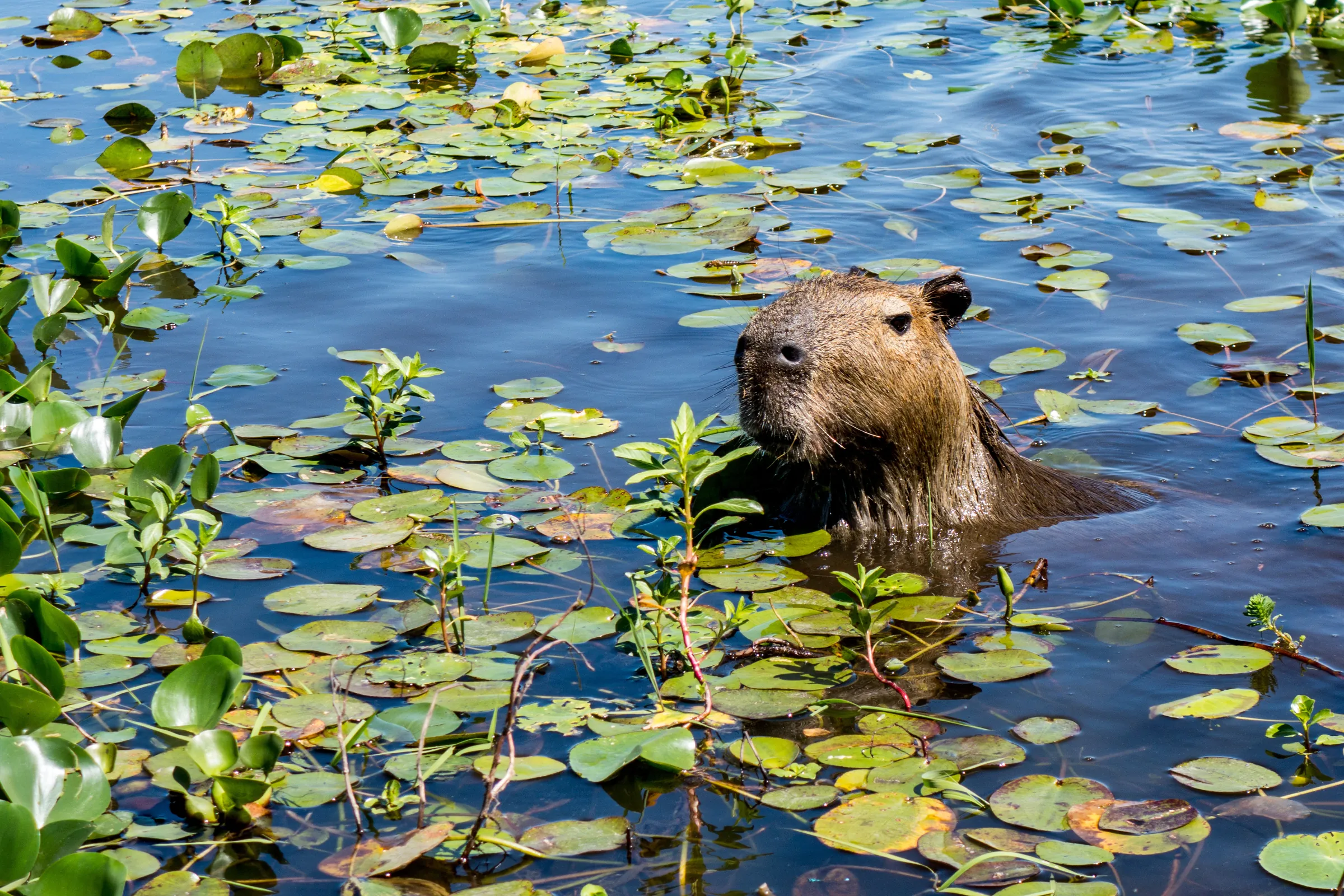
Iberá is Argentina's strongest destination for accessible wildlife viewing. The open habitat makes many animals easier to observe than in dense rainforest, and sightings often begin before an excursion leaves the lodge. Capybaras, caimans, marsh deer, black howler monkeys, foxes, rheas, and a remarkable variety of waterbirds are among the species visitors may encounter.
The wetlands are also one of South America's most important conservation stories. Former ranchland has been restored, and rewilding programs have returned species that had disappeared locally, including giant anteaters, red-and-green macaws, and jaguars. Guides explain how habitat protection, local communities, tourism, and species reintroduction interact.
Colonia Carlos Pellegrini is the best-known base, with access to Laguna Iberá and several small lodges. Rincón del Socorro lies in a private reserve near the Uguay gateway and is closely connected to rewilding work. Puerto Valle sits on the Paraná River at the northern edge of the wider wetland system and has a shorter transfer from Posadas Airport.
Days are paced around wildlife activity. Dawn and late afternoon are strongest for boat safaris, walks, photography, and drives. Midday is quieter and better used for lunch, a pool, reading, or watching birds and capybaras around the grounds.
Our take: choose the lodge by access point and conservation program, not by star rating alone. Three or four nights allow repeated wildlife outings in different habitats, which is far more rewarding than trying to visit Iberá as a quick extension from another city.
Are the Iberá Wetlands a good fit?
Iberá is a strong choice if you:
- Want wildlife viewing without a demanding expedition.
- Enjoy birds, mammals, photography, or conservation.
- Prefer small lodges and quiet evenings.
- Are comfortable traveling overland to a remote region.
- Like boat trips, nature walks, riding, and open landscapes.
- Want a less visited alternative to South America's better-known wetlands.
Iguazú is centered on a famous landmark and dense subtropical forest. Iberá is slower and more intimate, with repeated wildlife encounters across open water and grassland. The two combine particularly well because the ecosystems and daily experience are completely different.
Best things to do
Take a boat safari
Small boats move through lagoons and channels where caimans, capybaras, marsh deer, herons, storks, kingfishers, and raptors can be observed at water level. Early morning and late afternoon bring softer light and more activity.
Go on a wildlife drive
Open tracks through grassland and palm savanna are productive for foxes, rheas, deer, giant anteaters, and large groups of capybaras. Guides use tracks, calls, and recent sightings to decide which habitats to search.
Learn about rewilding
Visit conservation areas or speak with guides involved in species restoration. Iberá has become an international reference point for returning locally extinct animals and rebuilding complete ecosystems.
Walk through gallery forest
Forest trails create opportunities to see black howler monkeys, woodpeckers, smaller birds, butterflies, and plants that differ from the open marsh. Walks are usually gentle but can be hot and muddy after rain.
Go birdwatching at dawn
More than 400 bird species have been recorded across the wider region. Specialist guiding can focus on wetland birds, grassland species, raptors, parrots, or photography from carefully chosen positions.
Ride with local gauchos
Horseback excursions cross shallow water, grassland, and ranch tracks, drawing on skills developed in Corrientes over generations. Routes can be adapted for beginners as well as experienced riders.
Explore by kayak or canoe
Paddling allows a quiet approach to sheltered channels and birdlife. Water level, wind, wildlife conditions, and lodge location determine where nonmotorized excursions are feasible.
Join a night safari
After dark, guides search for owls, frogs, nightjars, foxes, caimans, and other nocturnal wildlife. Night drives and walks vary by lodge and weather, and sightings are never guaranteed.


Where to stay
Stay near Colonia Carlos Pellegrini for direct access to Laguna Iberá, a choice of small lodges, and the region's most established visitor infrastructure. This is the classic Iberá experience, but the overland transfer is long and road conditions can affect timing.
Stay at Rincón del Socorro near Uguay for a private-reserve setting, exceptional wildlife around the lodge, and a strong connection to conservation and rewilding. It is the best option for travelers who prioritize field experiences over polished resort facilities.
Stay at Puerto Valle for the simplest access from Posadas, larger rooms, gardens, a pool, and a combination of Paraná River and wetland excursions. Its location suits families and travelers who want a shorter transfer than Colonia Carlos Pellegrini.
Because Iberá has several gateways, lodge selection determines the airport, transfer, and activity program. Properties should not be mixed casually within a short stay, as moving between sectors can consume most of a day.
Our favorite hotels
Rincón del Socorro
This former cattle ranch became a private nature reserve and one of the central bases for Iberá's rewilding work. The restored estancia, bungalows, organic gardens, and wildlife-rich grounds create the region's most conservation-focused stay, with guided outings by boat, vehicle, foot, and horseback.
Puerto Valle Hotel de Esteros
Puerto Valle has 13 rooms on a historic 1868 estancia beside the Paraná River, about 55 kilometers from Posadas Airport. The property has private access to Laguna Valle, large gardens, pool, nursery, and family-friendly activity program.
Aguapé Lodge
Aguapé has 12 simple rooms near the lagoon at Colonia Carlos Pellegrini and a private pier for wetland excursions. It is a strong choice for travelers who care more about guides, wildlife, and direct access than elaborate room design.
Irupé Lodge
Irupé stands close to the lagoon in Colonia Carlos Pellegrini, with standard and superior rooms, a pool, library, and organized nature activities. The property has 9 accommodations. The inventory includes a family suite.
Best time to visit
April through November brings cooler, drier conditions and is generally the most comfortable period for wildlife outings. Winter mornings can be cold, but afternoons are often mild, insects are less intense, and open grasslands remain productive for viewing.
December through March are hot, humid, and stormier. The wetlands are lush and bird activity can be excellent, but midday heat is substantial and heavy rain may affect unpaved access roads. Lodge programs adapt around conditions.
Pair it with
- Iguazú Falls for waterfalls and Atlantic Forest after several days in open wetlands.
- Buenos Aires for a cultural stop before or after the remote nature experience.
- Northwest Argentina for a longer itinerary contrasting marshes with high desert.
Getting there
There is no single airport for Iberá. The correct route depends entirely on the lodge. Puerto Valle is normally reached from Posadas. Colonia Carlos Pellegrini and Rincón del Socorro may be accessed from Posadas, Corrientes, or regional airstrips through prearranged lodge logistics.
Approximate travel times:
- Posadas Airport to Puerto Valle: 45 minutes to 1 hour
- Posadas Airport to Colonia Carlos Pellegrini: 3.5 to 5 hours
- Corrientes Airport to Colonia Carlos Pellegrini: 4 to 5 hours
- Mercedes to Colonia Carlos Pellegrini: 2 to 3 hours
- Colonia Carlos Pellegrini to Rincón del Socorro: approximately 1.5 to 2.5 hours, depending on road conditions
Many access roads are unpaved and can change after heavy rain. We confirm the lodge's current transfer plan, use suitable vehicles, and avoid scheduling a remote road transfer immediately before a nonrefundable flight.

Frequently asked questions
How many nights should I stay?
Plan three to four nights. This allows several boat, vehicle, walking, or riding excursions at different times of day. Two nights leave little flexibility if rain or wind changes the activity plan.
Which part of Iberá should I visit?
Colonia Carlos Pellegrini has classic lagoon access and several small lodges. Rincón del Socorro is strongest for rewilding and private-reserve wildlife. Puerto Valle has the shortest transfer from Posadas and more full-service facilities.
What wildlife might I see?
Common sightings can include capybaras, caimans, marsh deer, black howler monkeys, foxes, rheas, and many waterbirds. Giant anteaters and other reintroduced species are possible but less predictable. Jaguars are present in the wider ecosystem but should never be expected on a short visit.
Is Iberá suitable for families?
Yes. Boat safaris, capybaras, caimans, riding, and lodge pools work well for children who enjoy nature. Long transfers and heat need consideration, and Puerto Valle generally has the easiest logistics for younger families.
Do I need to be very active?
No. Much of the wildlife viewing takes place by boat or vehicle, and walks can be short and level. Riding, paddling, and longer hikes are optional and depend on the lodge.
How does Iberá compare with the Pantanal?
Iberá is smaller in scale and receives fewer international visitors. It has excellent visible wildlife, intimate lodges, and a particularly important rewilding story. The Pantanal supports a wider safari industry and is better known for specialized jaguar trips.
What should I pack?
Bring lightweight neutral clothing, a warm layer for winter mornings, sun protection, rain protection, closed walking shoes, insect repellent, and binoculars. A camera with a moderate telephoto lens is useful because many animals are visible at close to medium distance.
Can I combine Iberá with Iguazú Falls?
Yes. The pairing is one of Argentina's strongest nature itineraries. Transfers may involve a long overland day or regional flights, so the route should be built around lodge access rather than assumed to be a quick connection.


