

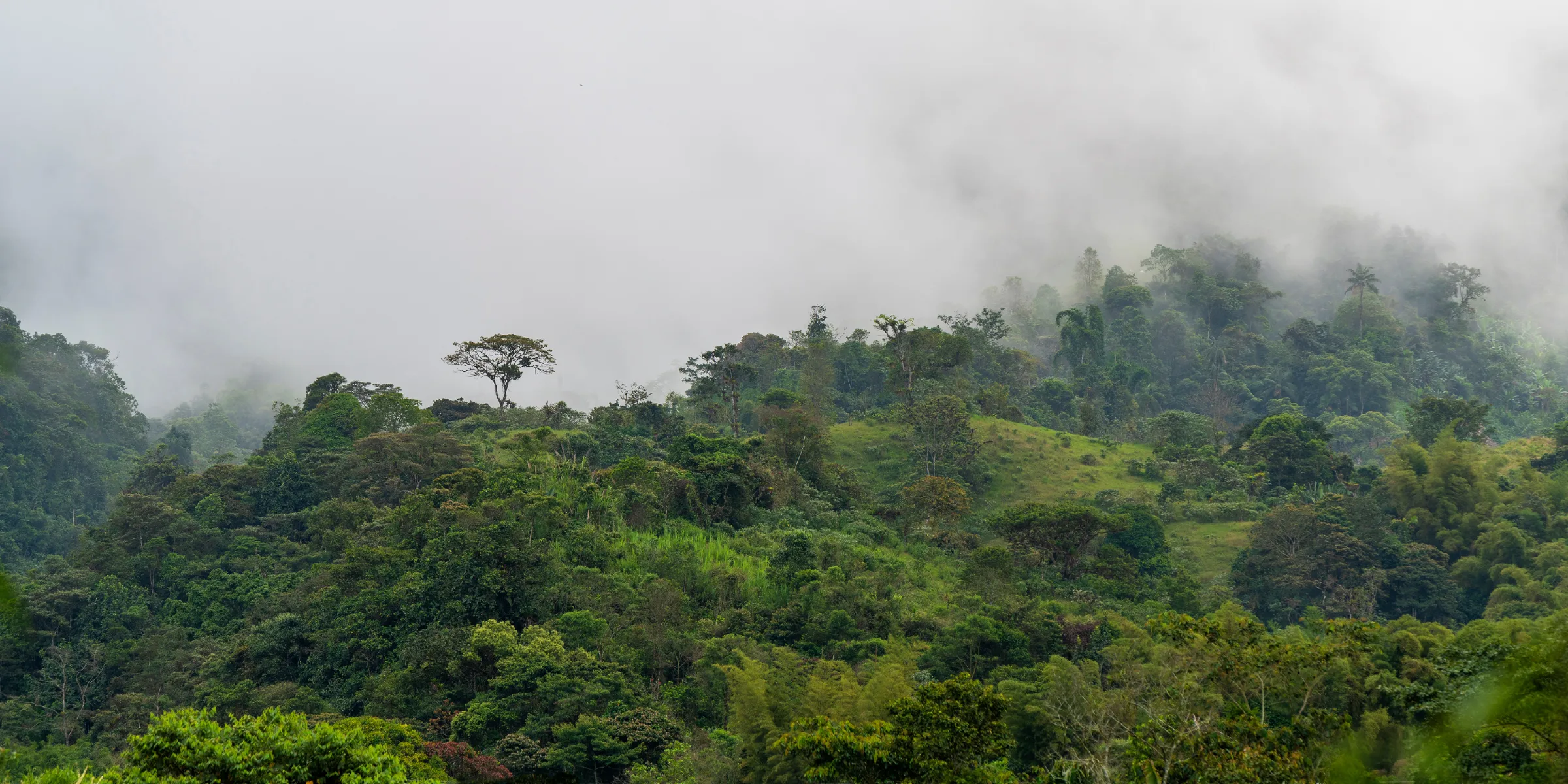
Ecuador's western Andean slopes descend through cloud forest before reaching the Pacific lowlands, creating rapid changes in elevation, rainfall, vegetation, and wildlife. Around Mindo and the Chocó Andino Biosphere Reserve, hummingbirds gather at feeders, tanagers move through mixed flocks, orchids grow beside forest trails, and rivers cut through steep green valleys. Farther west, private reserves protect lower-elevation Chocó forest with species that are not found in the high Andes or Amazon.
At a glance
| Best for | Birdwatching, hummingbirds, orchids, waterfalls, photography, conservation, and gentle nature |
|---|---|
| Don't miss | A hummingbird garden, cock-of-the-rock display, canopy observation, forest walks, and a private reserve |
| Recommended stay | 3 to 5 nights |
| Best area to stay | Mindo for variety and accessibility, or Mashpi for an all-inclusive private reserve |
| Pairs well with | Quito, Otavalo & Imbabura, the Galápagos Islands, and the Avenue of the Volcanoes |
| Closest airport | Mariscal Sucre International Airport (UIO) |
| Best time to visit | Year-round, with clearer conditions often occurring from June through November |
| Getting around | Private transfers, guided forest walks, observation towers, aerial systems, and short boat or cable crossings |
| Budget | $$ to $$$$ |
Why stay in Ecuador's Cloud Forests?
The cloud forest begins remarkably close to Quito, but the ecosystem feels entirely different from the dry high valley around the capital. Moist air rises from the Pacific, condenses against the Andes, and supports mosses, bromeliads, tree ferns, orchids, and an exceptional concentration of birds.
Mindo is the best-known gateway because it combines birding lodges, waterfalls, small reserves, cacao producers, butterfly gardens, and a town with independent restaurants. Specialist guides can move between elevations to search for different species, including toucans, tanagers, antpittas, motmots, and dozens of hummingbirds.
The Chocó Andino extends beyond Mindo into a much larger mosaic of private reserves, farms, and protected forest. Mashpi occupies a lower and wetter section where wildlife includes howler monkeys, capuchins, frogs, butterflies, and birds associated with the highly endemic Chocó region.
Cloud-forest travel does not need to be built entirely around a species list. Short trails, observation platforms, waterfalls, aerial systems, gardens, and slow mornings near feeders work well for couples and families with mixed interests.
Our take: choose Mindo for flexible touring, specialist birding, and access to several independent reserves. Choose Mashpi for a secluded lodge where guides, meals, transportation, and activities are organized as one complete program.
Are Ecuador's Cloud Forests a good fit?
The Cloud Forests are a strong choice if you:
- Enjoy birds, plants, insects, and close observation of nature.
- Want a wildlife destination within a few hours of Quito.
- Prefer cool green forest to the heat and humidity of the Amazon.
- Like small lodges, private reserves, and conservation stories.
- Want activities that can be adapted to different fitness levels.
- Are comfortable with rain, mist, mud, and early departures.
Serious birders can spend a week moving between elevations, while general nature travelers can gain a strong introduction in three nights. The destination is less suitable for travelers who expect consistently clear mountain views or conventional resort entertainment.
Best things to do
Watch hummingbirds at close range
Feeders and flowering gardens attract many species that differ by elevation and habitat. Guides help identify subtle markings, flight patterns, and territorial behavior that can be difficult to distinguish without experience.
Visit a cock-of-the-rock display
Male Andean cocks-of-the-rock gather at traditional display sites around dawn. Visits begin early and require quiet observation, but the birds' calls, color, and courtship behavior make this one of Mindo's signature experiences.
Walk with a specialist bird guide
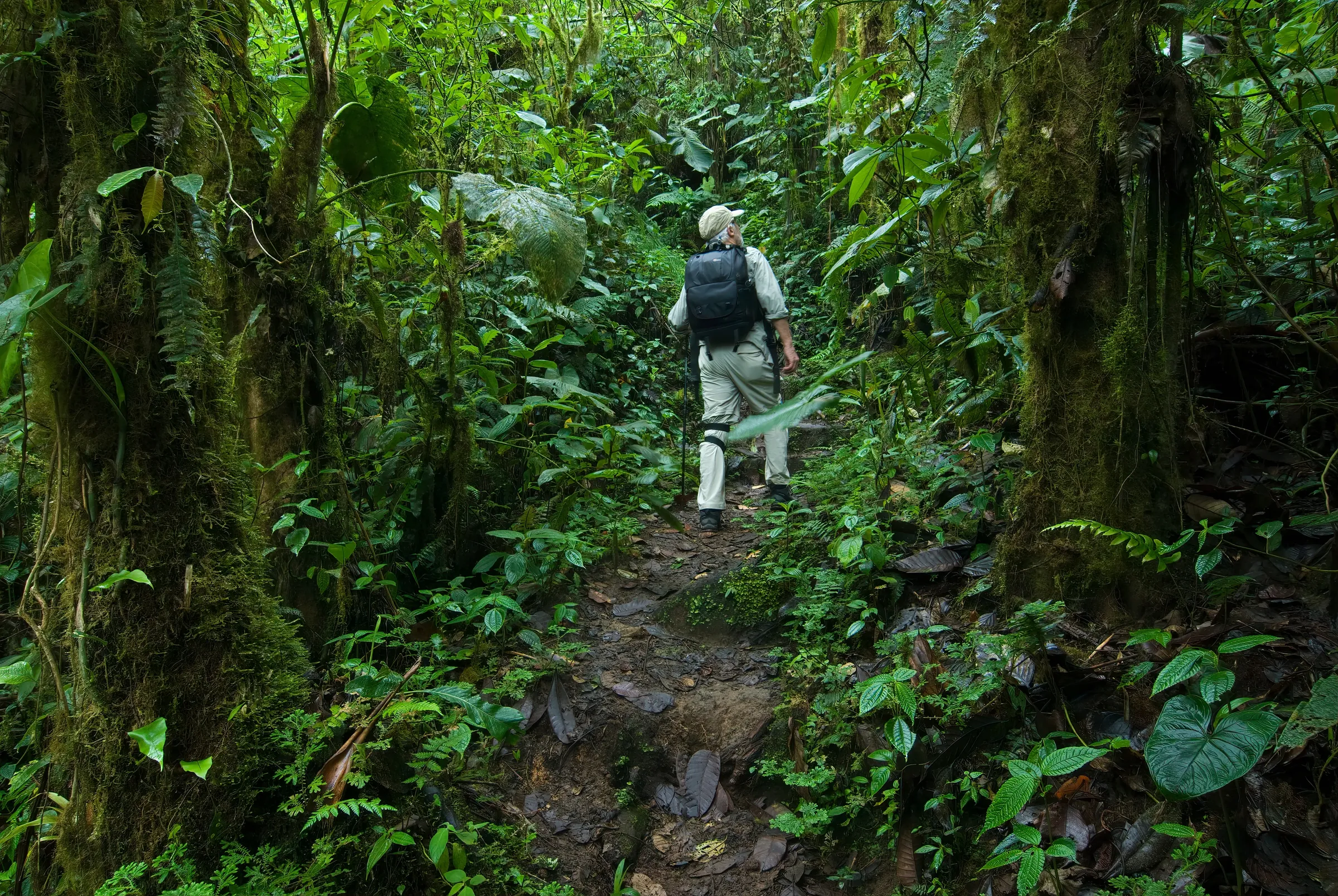
Private guiding allows the route to change according to fruiting trees, mixed flocks, recent sightings, and the group's interests. Even non-birders benefit from guides who can interpret plants, insects, frogs, and forest ecology.
Explore waterfalls and river valleys
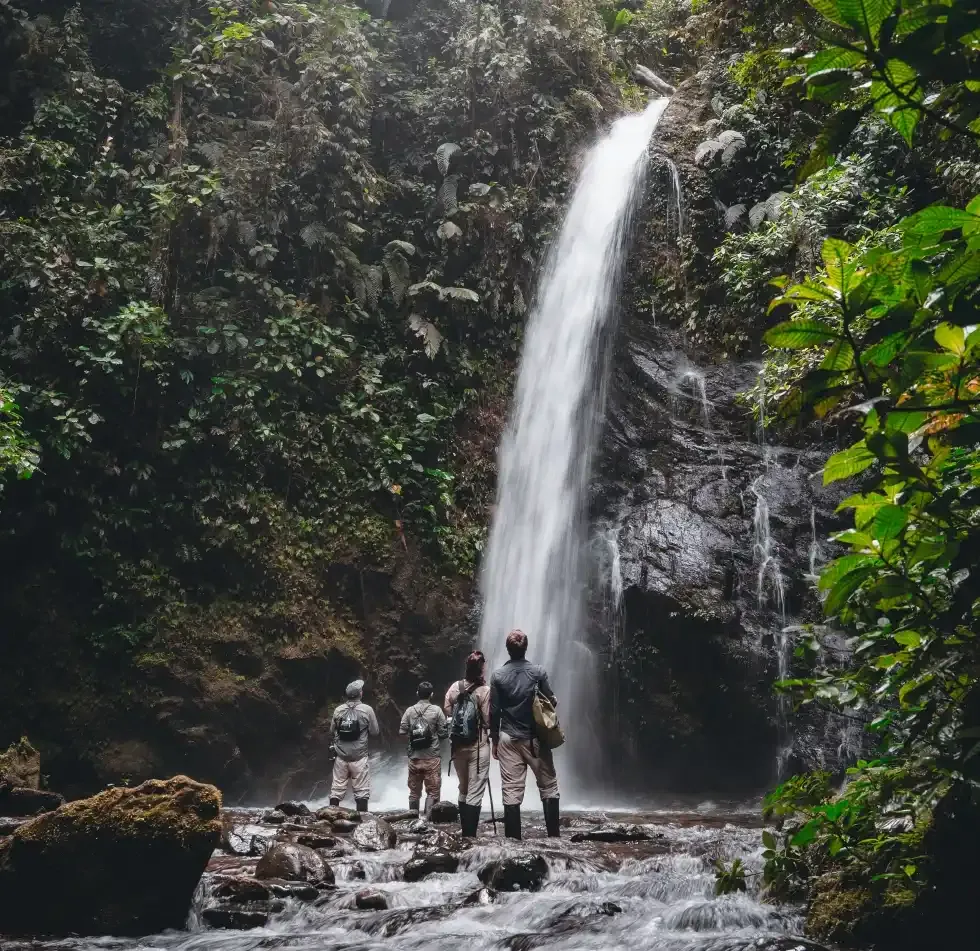
Trails around Mindo lead through humid forest toward a series of waterfalls. Conditions can be slippery, and access may involve cable crossings or steep paths, so routes should be selected according to mobility and recent rain.
Search for orchids and bromeliads
The western slopes support a remarkable variety of epiphytes, many of which flower seasonally or are easily overlooked. Botanical walks focus on pollination, water storage, and the relationships between plants, insects, and birds.
Experience Mashpi's aerial systems
Observation towers, an open-air forest gondola, and a pedal-powered canopy bicycle provide elevated views across the reserve. These systems reveal the upper forest without requiring a technical climb.
Learn how Ecuadorian cacao is produced
Small producers around Mindo demonstrate fermentation, drying, roasting, grinding, and tasting. A good visit explains how cacao varieties and post-harvest methods affect flavor rather than presenting chocolate only as a finished product.
Take a night walk
Frogs, moths, insects, spiders, and other nocturnal species become active after dark. Cloud-forest night walks are generally cooler than Amazon outings but still require rain protection and shoes with grip.

Where to stay
Stay near Mindo if you want access to several reserves, independent guides, waterfalls, cacao experiences, and restaurants in town. Properties range from simple birding lodges to comfortable forest hotels with feeders and private trails.
Stay at Mashpi if you want a remote, high-service lodge within a private reserve. The drive is longer and the program is structured around the property's guides, activities, and meals, but the reserve reaches lower-elevation Chocó habitats not typically included in a short Mindo stay.
Stay in the Tandayapa or Bellavista area for specialist birding at a higher elevation than central Mindo. These lodges suit travelers who prioritize species diversity, early starts, and long periods at feeders over access to town.
We generally recommend one base for general nature travelers and two reserves for serious birders. Moving between elevations can add many species, but frequent hotel changes are unnecessary for a three-night introduction.
Our favorite hotels
Mashpi Lodge
Floor-to-ceiling glass brings the cloud forest into nearly every part of Mashpi Lodge, set within a private reserve northwest of Quito. Guided walks, waterfalls, observation platforms, and an aerial forest gondola reveal the extraordinary biodiversity surrounding the contemporary building.
Bellavista Cloud Forest Lodge
Bellavista has 16 rooms divided among a geodesic dome, forest rooms, and separate houses within a private reserve above Mindo. The property has extensive trails, active feeders, and specialist guides.
Sachatamía Lodge
Sachatamía occupies a private reserve close to Mindo, with hummingbird feeders, forest trails, an indoor pool, and a traditional lodge atmosphere.
Séptimo Paraíso
Séptimo Paraíso has 30 rooms within a large private reserve near Mindo. Its trail network, birding program, pool, and range of room categories work especially well for families and small groups.
Best time to visit
The cloud forest can be visited throughout the year, and rain is part of the ecosystem in every month. December through May is generally wetter, with greener forest, active amphibians, and more frequent afternoon or evening showers.
June through November often brings somewhat drier conditions and firmer trails, although mist and rain remain possible. Bird activity is strongest early in the day regardless of season, making sunrise departures worthwhile.
Pair it with
- Quito for architecture, museums, and an urban contrast only a few hours away.
- Otavalo & Imbabura for textiles, crater lakes, and highland haciendas.
- The Galápagos Islands for a second wildlife region with completely different species and landscapes.
- The Avenue of the Volcanoes for páramo, volcanic peaks, and horseback riding.
Getting there
Mindo and the Chocó Andino are reached by road from Quito or the airport. Mashpi lies on a more remote route northwest of the capital, and most stays include coordinated transfers because the final roads are winding and services are limited.
Approximate travel times:
- Quito to Mindo: 2 to 2.5 hours
- Quito Airport to Mindo: 2.5 to 3.5 hours
- Mindo to Bellavista: 45 to 75 minutes
- Quito to Mashpi Lodge: 3.5 to 4.5 hours
- Mindo to Mashpi Lodge: 2.5 to 3.5 hours
- Mindo to Otavalo: 3.5 to 4.5 hours
Heavy rain, fog, and road work can extend transfers. We avoid tight same-day flight connections after remote reserves and use morning travel when possible.

Frequently asked questions
Should I stay in Mindo or at Mashpi?
Choose Mindo for several independent reserves, specialist birding, cacao, waterfalls, and a wider range of hotel prices. Choose Mashpi for a secluded private reserve with a complete guiding, dining, and activity program.
How many nights should I stay?
Three nights provide two full days for a general nature itinerary. Four or five nights allow different elevations, repeat birding sessions, and more flexibility around rain. Dedicated birders may stay longer or divide time between two reserves.
Do I need to be a serious birder?
No. Hummingbirds, waterfalls, orchids, butterflies, canopy activities, and night walks appeal to general nature travelers. Specialist guides can adjust the level of identification and technical detail to the group.
Will it rain throughout the stay?
Rain and mist are possible in every season, but showers often leave long usable periods. Activities are scheduled early, adjusted around conditions, and supported by covered observation areas at many lodges.
How does the cloud forest differ from the Amazon?
The cloud forest is cooler, steeper, and closer to Quito, with exceptional bird and plant diversity across changing elevations. The Amazon is hotter, more humid, and explored more extensively by river and canoe.
Is the region suitable for families?
Yes. Feeders, waterfalls, butterflies, cacao, canopy systems, and short walks work well for children. Lodges differ in minimum ages and trail difficulty, so the property should be matched to the family.
What should I pack?
Bring a waterproof jacket, quick-drying layers, shoes with strong grip, binoculars, insect repellent, and a dry bag or waterproof cover for electronics. A light warm layer is useful at higher reserves.
Can I visit Mindo as a day trip?
It is possible, but the best bird activity occurs early and the round trip from Quito is long. At least two nights provide a much better introduction and reduce the amount of time spent on winding roads.


