

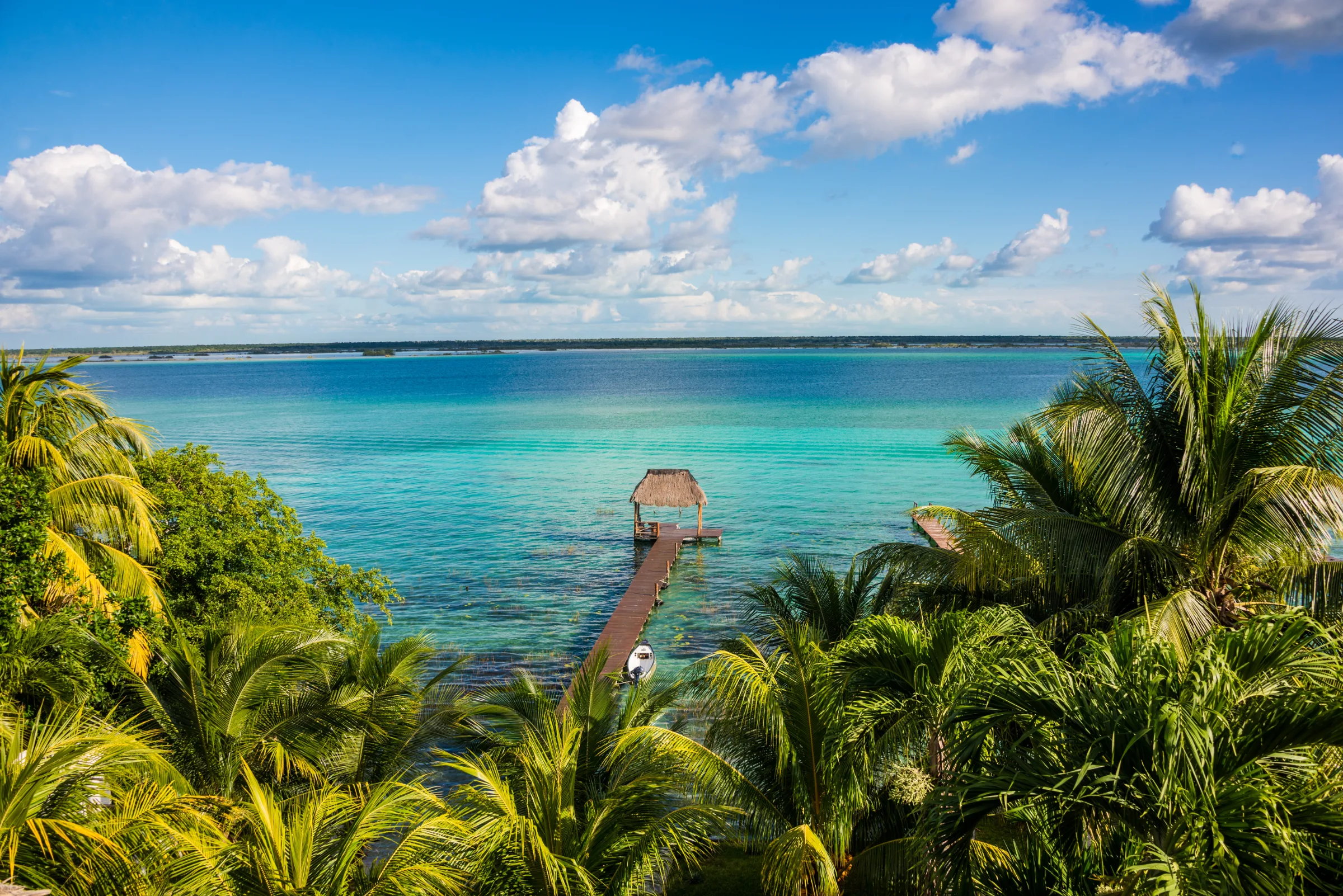
Bacalar Lagoon extends for more than 40 miles through southern Quintana Roo, fed by groundwater moving through the Yucatán Peninsula's limestone system. Depth, mineral content, vegetation, and sunlight produce the changing blue tones associated with the lagoon. The shoreline contains the town of Bacalar, cenotes, mangroves, stromatolite formations, small hotels, and private residences, but increasing development has made responsible water use and habitat protection essential.
At a glance
| Best for | Freshwater scenery, kayaking, sailing, wellness, quiet couples' trips, and low-impact nature |
|---|---|
| Don't miss | A guided lagoon outing, Fort San Felipe, a sunrise paddle, responsible stromatolite interpretation, and time in Bacalar town |
| Recommended stay | 3 to 5 nights |
| Best area to stay | Lagoonfront south of town for quiet or near the center for restaurants and the fort |
| Pairs well with | Mérida, Valladolid, Campeche, Palenque, and the southern Riviera Maya |
| Closest airport | Chetumal International Airport (CTM), with Tulum International Airport (TQO) serving broader routes |
| Best time to visit | November through April for generally drier weather |
| Getting around | Private transfers, non-motorized water activities, and guided lagoon excursions |
| Budget | $$ to $$$$ |
Why stay in Bacalar Lagoon?
Bacalar is freshwater, not a Caribbean bay. The lagoon's clear water sits within a fragile karst system connected to underground flows and cenotes. Pollution, shoreline construction, boating pressure, and storm runoff can affect water quality, making hotel and operator practices central to the trip.
Stromatolites are living layered formations created by microbial communities over long periods. They are ecologically sensitive and must not be stood on, touched, anchored beside, or treated as ordinary rocks.
Fort San Felipe was built in the eighteenth century to defend the settlement and inland trade routes. The small museum and elevated position explain the region's history of Maya resistance, colonial expansion, piracy, and conflict with British settlements to the south.
Boat and paddle routes may include the Canal de los Piratas, deep cenotes, mangrove edges, and broad open water. Wind can build during the day, so early excursions are often calmer and more comfortable.
Bacalar town remains small compared with the Riviera Maya. Restaurants, parks, and local businesses cluster around the center, while many of the strongest hotels sit several miles south and operate as self-contained retreats.
Our take: choose a hotel with credible wastewater and shoreline practices, and spend at least one morning on the lagoon before day visitors arrive. The destination is best when the schedule remains light.
Is Bacalar Lagoon a good fit?
- Want calm freshwater scenery rather than an ocean resort.
- Enjoy kayaking, sailing, birdlife, and quiet mornings.
- Prefer low-rise hotels and wellness-focused stays.
- Want a restorative stop on a longer Yucatán route.
- Are comfortable with limited nightlife and fewer full-service resorts.
- Value conservation and low-impact water activities.
Isla Holbox provides a coastal island and wildlife focus, while Bacalar is quieter, freshwater, and more closely tied to cenotes and wetlands. Tulum has far greater restaurant and nightlife development but also heavier traffic and beach variability.
Best things to do
Explore the lagoon with a responsible guide
A small-group or private outing can explain water depth, cenotes, mangroves, stromatolites, and regional history. Operators should avoid anchoring near sensitive formations and respect no-motor zones.
Paddle at sunrise
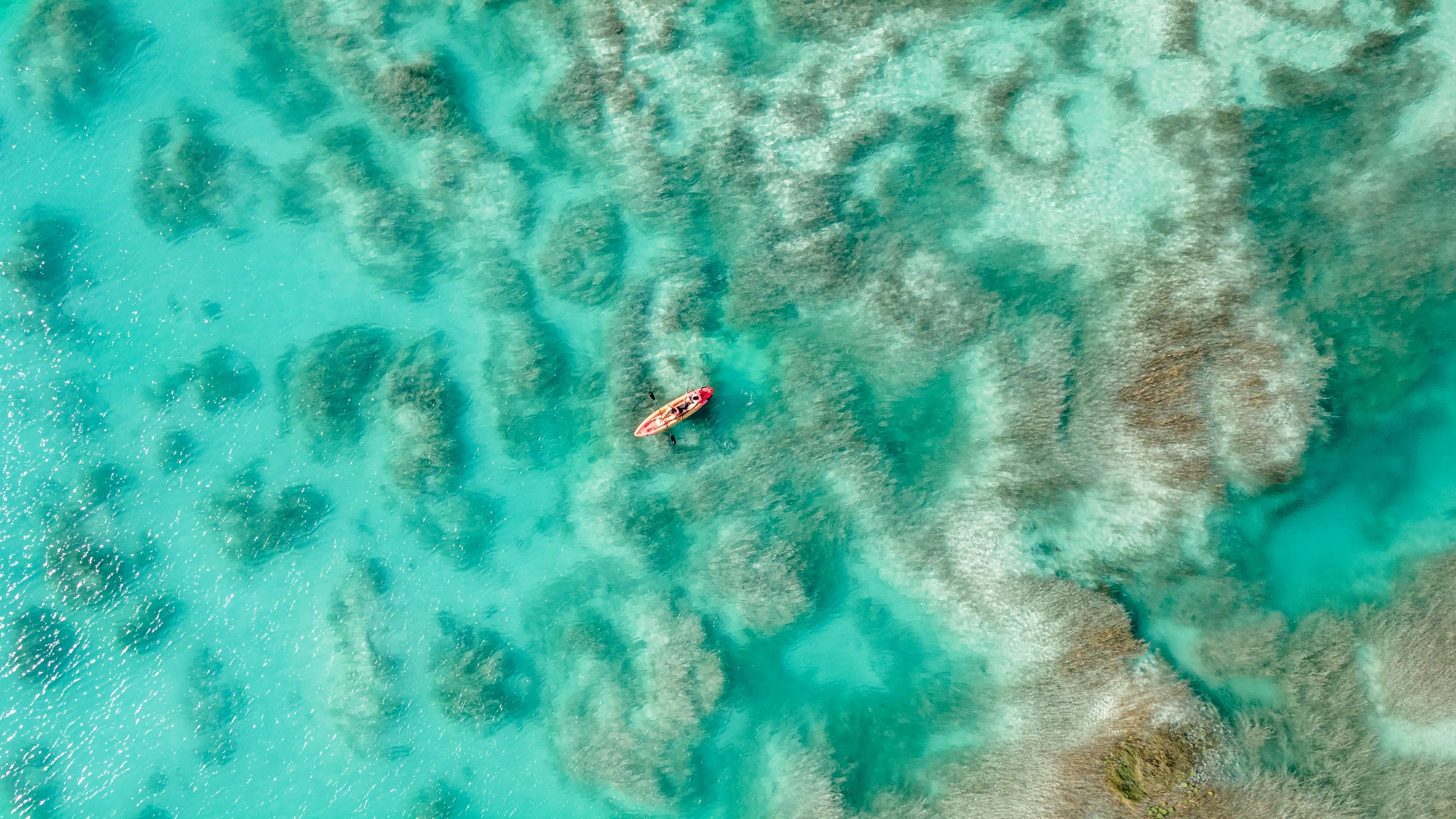
Early kayaking or paddleboarding often brings calmer wind, softer light, and fewer boats. Life jackets and local guidance remain important even when the water appears still.
Visit Fort San Felipe
The fort and museum provide historical context for Bacalar's strategic location and long relationship with the Belizean borderlands.
See the Canal de los Piratas
The shallow channel marks an old water connection and trade route. Visits should focus on history and landscape rather than crowded group activities.
Learn about stromatolites
A knowledgeable naturalist can explain how microbial communities create the formations and why physical contact, anchoring, and contaminated water threaten them.
Explore Bacalar town
Walk around the main square, fort, small streets, and local restaurants to see the settlement beyond lagoonfront hotels.
Visit a cenote
Several deep cenotes connect visually or hydrologically with the lagoon. Swimming rules, depth, currents, and access differ, so each site should be evaluated individually.
Spend an unstructured lagoon day
The destination benefits from open time for reading, swimming in permitted areas, or using hotel kayaks. A full schedule can undermine the quiet that makes Bacalar distinctive.

Where to stay
Stay south of Bacalar town for quiet lagoon frontage, low-density hotels, and broad water views. Restaurants and the fort require a private transfer, so the hotel dining program matters.
Stay near the town center for independent restaurants, the fort, and easier evening movement. Central shoreline can be busier and has less privacy than remote properties.
Stay on the western shore only after confirming road access and transfer times. Some properties feel secluded but require longer journeys along narrow local roads.
We favor a lagoonfront retreat for three or four nights, with one planned town evening rather than daily transfers.
Our favorite hotels
Our Habitas Bacalar
Along the shores of Bacalar Lagoon, Habitas places low-rise rooms among jungle with communal spaces facing the water. Kayaking, paddleboarding, wellness, and outdoor dining keep most of the stay tied to the lagoon itself.
Boca de Agua
Elevated wooden treehouses disappear into the vegetation beside Bacalar’s lagoon at Boca de Agua. The low-impact design preserves much of the existing landscape, while swimming, paddling, and time on the water remain central to how the property works.
Casa Hormiga
Casa Hormiga has 18 rooms near central Bacalar, arranged around dense gardens and two pools.
Best time to visit
November through April is generally drier, with warm days and cooler evenings. Winter fronts can bring wind and temporary drops in temperature, especially on the open lagoon.
May through October is hotter, wetter, and more humid, with tropical-weather risk and occasional changes in water clarity after heavy rain. Storms can interrupt boat schedules and road access.
Pair it with
- Mérida and Valladolid for Yucatecan food, archaeology, and colonial cities.
- Campeche for fortifications, Gulf history, and Edzná.
- Palenque for rainforest and Classic Maya archaeology.
- Playa del Carmen, Akumal & Tulum for Caribbean beaches and coastal sites.
Getting there
Chetumal is the closest airport, while Tulum and Cancún offer broader flight networks farther north. Bacalar is reached by private road transfer from the airport or other Yucatán destinations.
Approximate travel times:
- Chetumal Airport to Bacalar: 35 to 50 minutes
- Tulum Airport to Bacalar: 2.5 to 3.5 hours
- Cancún Airport to Bacalar: 4.5 to 5.5 hours
- Bacalar to Mahahual: 1 to 1.5 hours
- Bacalar to Valladolid: 3.5 to 4.5 hours
- Bacalar to Campeche: 5.5 to 7 hours
Road, weather, and border-area traffic can change transfer times. We avoid a long northbound drive immediately after a morning water excursion.

Frequently asked questions
How many nights should I stay in Bacalar?
Three nights provide two full days for the lagoon and town. Four or five nights suit travelers who want a restorative pace, wellness, or several quiet mornings on the water.
Can I swim anywhere in the lagoon?
No. Follow hotel and guide instructions because depth, boat traffic, water quality, and protected zones vary. Some shorelines are private or ecologically sensitive.
Can I touch the stromatolites?
No. Do not stand on, touch, or anchor near them. They are living formations that can be damaged by physical contact and pollution.
Is Bacalar suitable for families?
Yes, particularly for families comfortable around deep water. Choose a family-friendly hotel, use life jackets, and confirm whether specific wellness properties set minimum ages.
Is the lagoon always bright blue?
No. Color changes with sun, cloud, depth, wind, sediment, and recent rain. Photographs often represent the clearest conditions rather than a constant appearance.
Should I choose a boat, kayak, or sailboat?
A guided sail or small boat covers more distance, while kayaks and paddleboards provide a quieter close-to-shore experience. Conditions and conservation rules should determine the choice.
Is Bacalar a beach destination?
It is a freshwater lagoon rather than an ocean beach. Hotels use docks, decks, lawns, and small shoreline areas instead of broad Caribbean sand.
What should I pack?
Bring strong sun protection, lightweight clothing, a light rain layer, water shoes, insect repellent, and a reusable water bottle. Avoid bringing products that could contaminate the lagoon.


