


One of our favorite things about Mexico is that some of the best and clearest water for swimming is underground.
Throughout the Yucatán Peninsula, cenotes are limestone formations, sinkholes and chambers that have been used as a water source for millennia. More than just that, they were sacred to the ancient Maya, who held rain ceremonies, offerings, and other rituals within them, believing that the cenotes were the passage to Xibalba, the Maya underworld.
When it comes to choosing which cenote to visit today, most people are thinking of the ‘gram (or maybe TikTok, we’re old), but there are lots to choose from, and the choice can be overwhelming. Some are better for families, some are great for diving, and some require ladders, life vests, or an accompanying guide. The geography matters, too. Some are shadowy caves, while others are open, with sunlight filtering in through the vines.
We’ll walk you through our favorites and help you pick a few to visit.
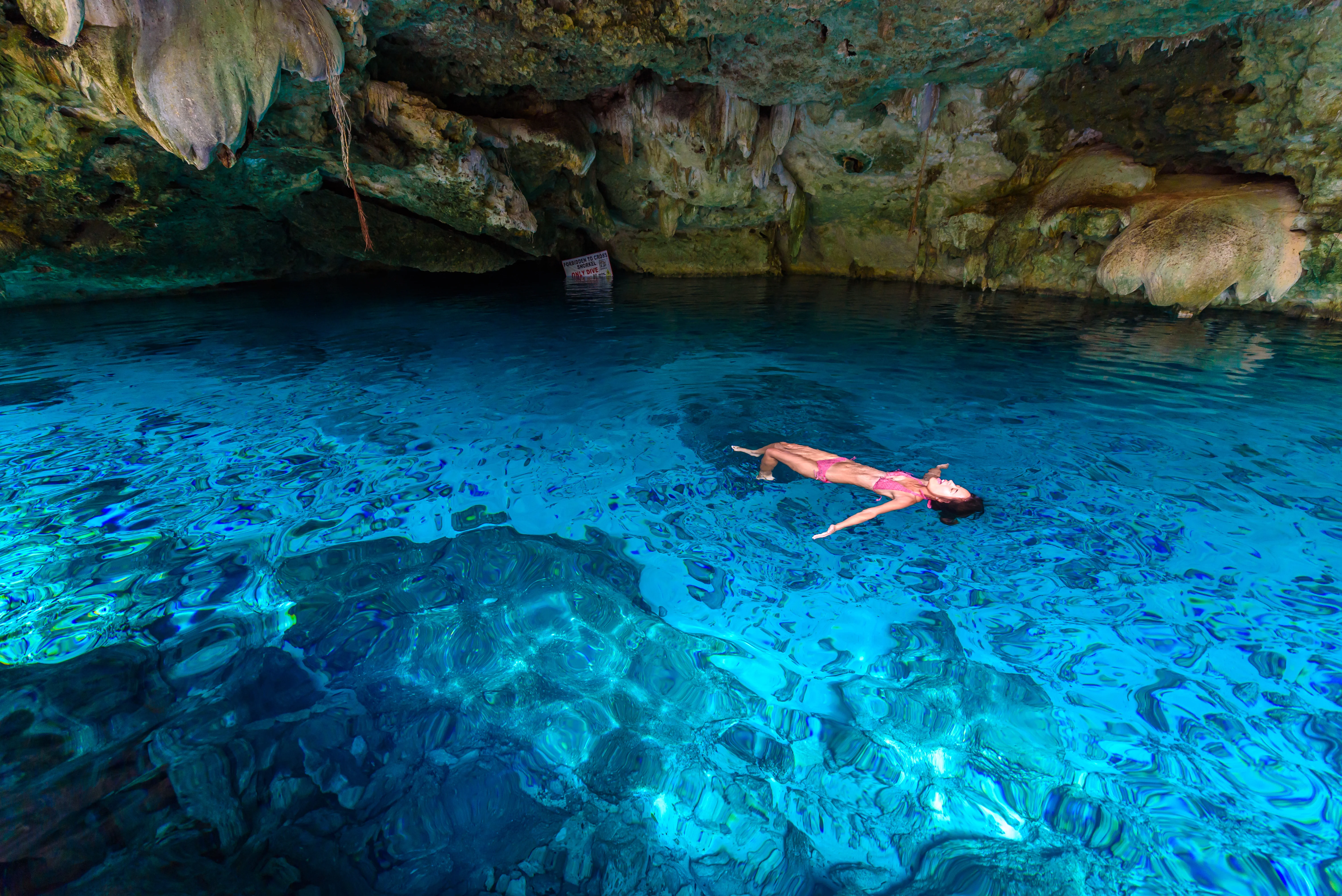
What is a cenote?
The Yucatán Peninsula consists mainly of limestone. Rainwater that fell over thousands of years helped form underground caves and rivers by dissolving the limestone.
When a section of a cave ceiling collapses, it opens up to the water table underneath. This is how a cenote forms.
The word cenote is derived from the Yucatec Maya word ts'ono'ot, which means well. There are many cenotes. In the area around Mérida, they occur along an arc known as the Ring of Cenotes. The history of this area is fascinating. The arc of cenotes follows the outline of the Chicxulub crater, formed when an asteroid struck Earth and caused the extinction of the dinosaurs about 66 million years ago. The cracked rock in the area helped surface water penetrate underground. For this reason, many villages south of Mérida have cenotes nearby.
Guests are likely to see three types:
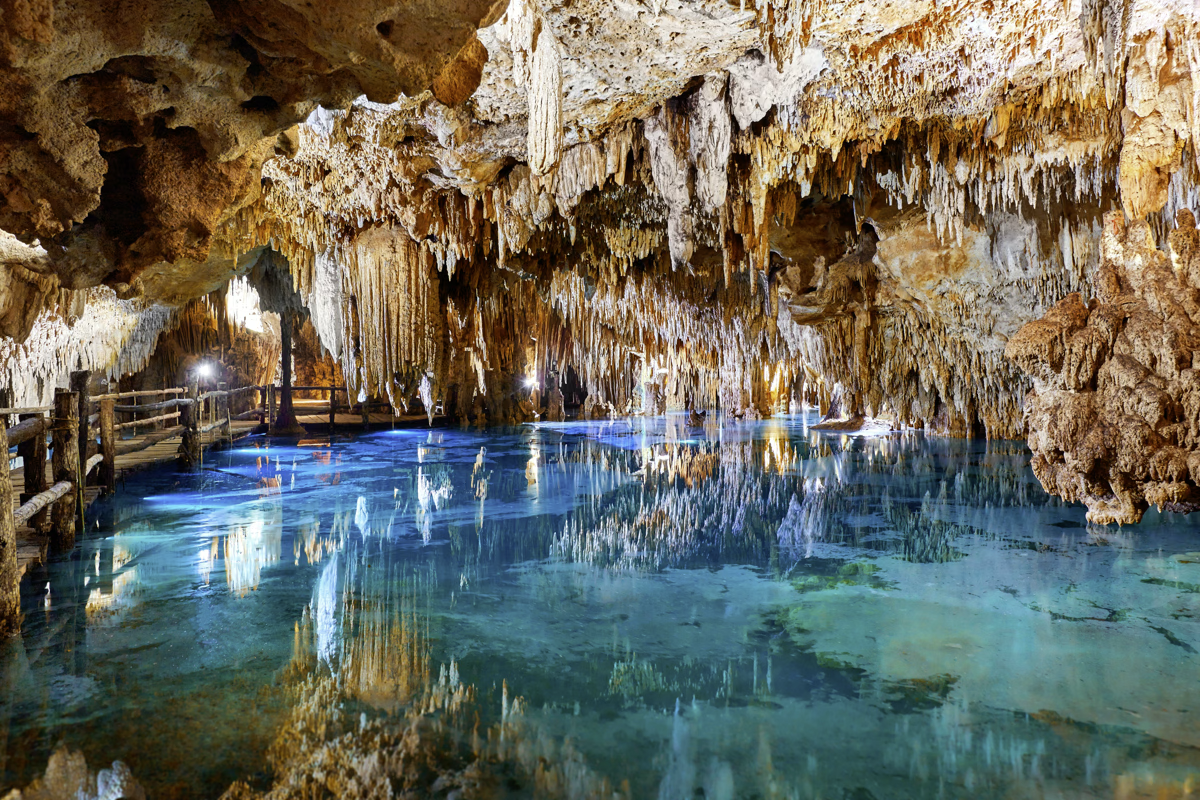
- Cave cenotes have most of their original limestone ceiling. Features of a cave cenote include stalactites and deep pools of water in enclosed spaces with little light.
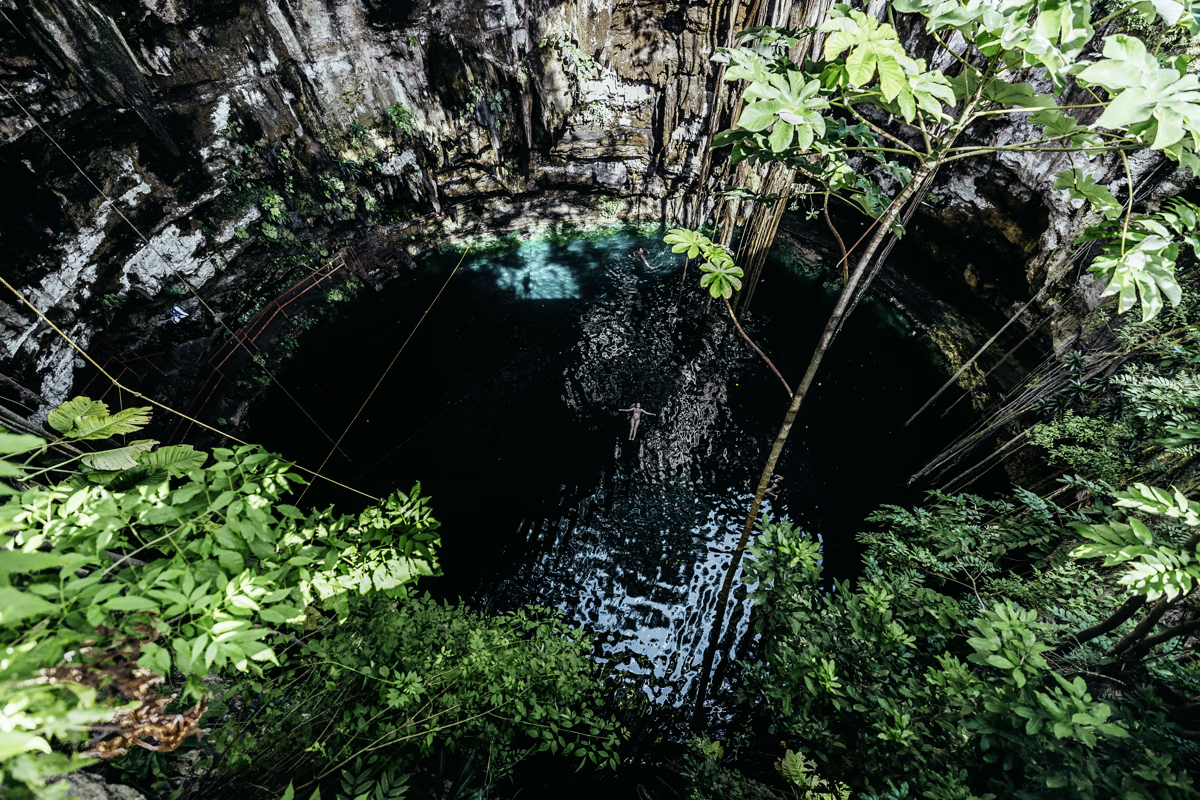
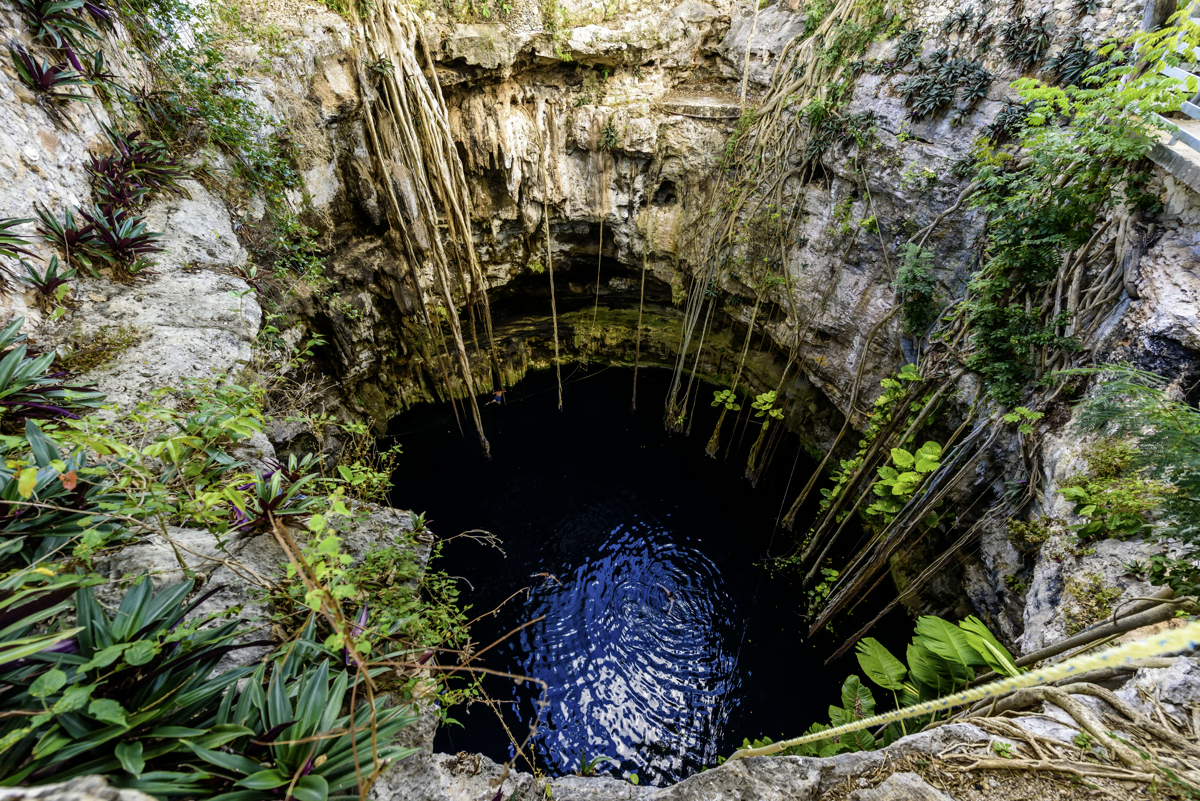
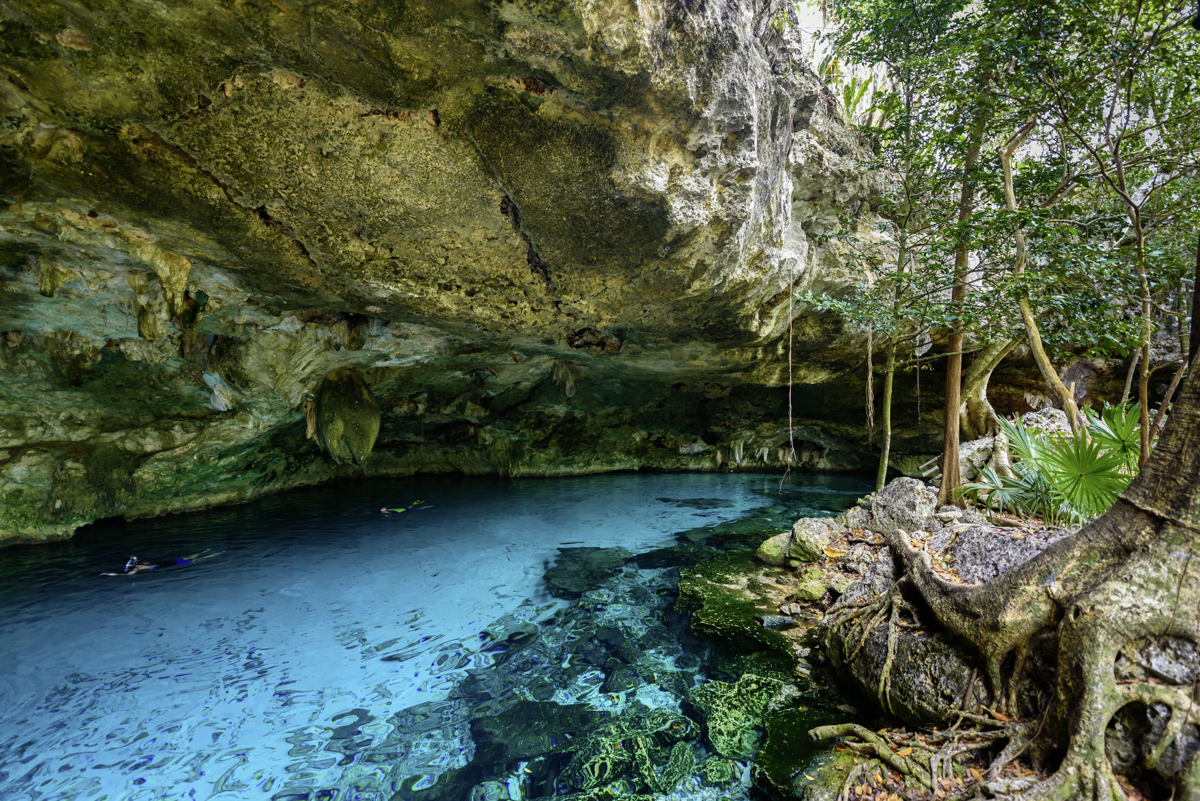
- Semi-open cenotes are partially open to the surface and contain plant life and roots.
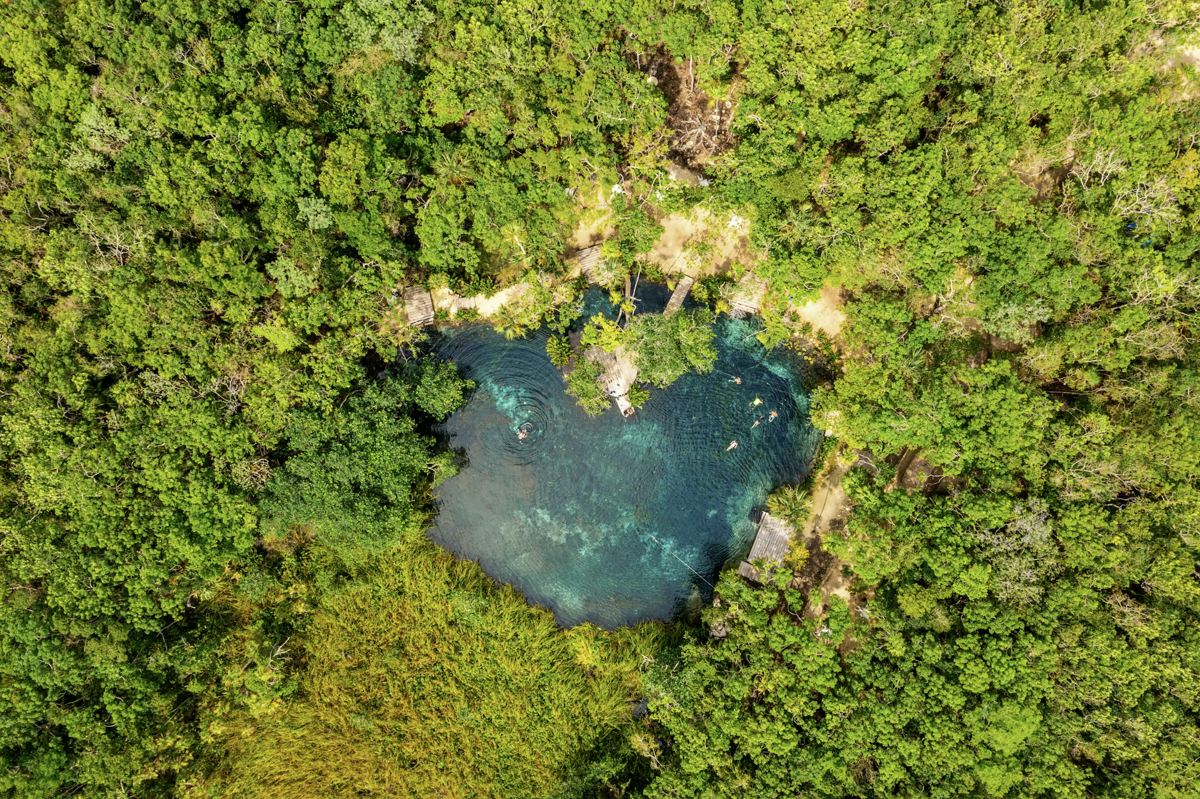
- Open cenotes have little or no ceiling. These sites look like natural ponds and may have more light exposure.
The type of cenote affects its suitability for different uses. Open cenotes are more suitable for recreational swimming and family activities. Closed cenotes may be more interesting to sightseers, scuba divers, photographers, and others.
Tulum, Mérida or Valladolid: eenie meenie minie moe
If cenotes are a priority, there are three home bases to consider: Tulum, Mérida and Valladolid. They’ve each got their trade-offs. Tulum is generally busier and more touristy, and along with the crowds come higher costs. Cenotes in Tulum and the Riviera Maya have more amenities (changing rooms, equipment rentals, tour guides, etc.), and they’re popular with tourists because they’re easy to get to. There are also some notable diving cenotes in this area.
Choose Tulum if you:
- Want a beach destination with easy access to cenotes
- Only have a short amount of time for your trip (closer access to the international airport)
- Want accessible snorkeling or diving activities
- Prefer developed facilities
Valladolid, on the other hand, sits inland in the north of the peninsula, roughly halfway between Cancún and Mérida. There are lots of cenotes nearby, many of which are privately owned with fewer amenities for visitors (think just showers and stairs leading into the cave), though some of the more established locations have restaurants, pools, and changing rooms.
Choose Valladolid if you:
- Want variety (both semi-open cenotes and closed caverns)
- Prefer inland to coastal
- Have time for at least a three-night stay
- Like visiting smaller community tourism sites
Mérida is only a couple of hours’ drive from Valladolid, but it’s still worthy of its spot on our list. Southeast of Mérida along the Ring of Cenotes, Homún and Cuzamá are two small villages that sit within a small area peppered with closed cenotes with unique features: stalactites, single light sources, rickety ladders that you must descend and ascend for access, or even one that’s only reachable by horse-drawn carriage on former henequen plantation routes through a thorn forest. If you’ve got an adventurous spirit, these ones are for you.
Choose Mérida if you:
- Love history (you can stay on a restored henequen hacienda and get a taste of 19th-century Yucatán)
- Imagine full days exploring cenotes
- Want to avoid crowds
- Want a real thrill (again, the adventurous spirits)
For most visitors, we recommend a split stay to get the best of both worlds: time on the Caribbean coast and a few days inland.
Best cenotes near Tulum
Gran Cenote
Gran Cenote is a popular swimming and snorkeling destination near Tulum. Boardwalks through jungle vegetation provide access to clear water enclosed by limestone walls.
With its location close to Tulum and on-site facilities, Gran Cenote is popular with families and other groups traveling with children. The site is crowded at times. To avoid the crowds while swimming, go early in the day.
Gran Cenote is located approximately 4 kilometers west of the town of Tulum and on the same road as Cobá. The site is accessible by bike for the more active traveler. Two areas at Gran Cenote include an open-air pool with full sun exposure and a cave with overhanging stalactites. Freshwater turtles can often be seen sunning on rocks at Gran Cenote; they are best viewed in the early morning before other visitors arrive.
You will find snorkeling equipment, lockers, life vests, and showers at the cenote. Take a shower before entering the water and wait to apply sunscreen until after swimming to protect the cenote.
Dos Ojos
Dos Ojos gets its name from two sinkholes, or “eyes,” that have an underwater cave system belowground. Sunlight shines through the sinkholes onto the water below, revealing underwater caves and other rock formations. Swimming and snorkeling are possible at Dos Ojos. Guided tours of the underwater caverns are available to certified divers.
Dos Ojos is located roughly 20 minutes north of Tulum, on the road to Akumal. Dos Ojos is a section of Sac Actun, one of the world's longest underwater cave systems. Dos Ojos has two openings about 40 meters apart. The larger Blue Eye is suitable for snorkeling; the smaller Black Eye is darker and deeper. One of the diving routes surfaces inside an air-filled chamber inhabited by hundreds of bats.
The water temperature stays around 25°C throughout the year. It is so clear that visitors say it feels like floating in air. Dos Ojos is located within a larger cenote park that contains other cenotes, such as El Pit. A half-day trip to multiple sites is possible at this location.

Cenote Azul
Cenote Azul is an open-air cenote near Playa del Carmen with no caves or enclosed areas but lots of shallow, sunny water. Families often visit this cenote.
Located 25 minutes south of Playa del Carmen and 40 minutes north of Tulum, Cenote Azul sits just off the highway. Most areas in the cenote are shallow, a meter or less, though some areas reach depths of about 10 meters, and a 4-meter-high jumping ledge is available for more adventurous swimmers. Small fish might nibble on your toes if you’re standing still. Not everyone likes that!
Facilities are minimal, including restrooms, cold-water showers, a snack bar, and rentals for life vests and snorkels. Take cash, as cards aren’t accepted.
Cenote Calavera
To visit Cenote Calavera, you enter through openings in the limestone that lead into a circular underground chamber with small patches of sunlight. There are no shallow areas in Cenote Calavera, so it is more suitable for confident swimmers.
Calavera means skull. Viewed from above, the cenote's three openings, including a larger one and two smaller ones, resemble the features of a skull. The cenote is also known as the Temple of Doom. Calavera is about 10 minutes from downtown Tulum.
You can either jump directly into the cenote from the entry platform, which is 2.5 meters above the water's surface, or use a wooden ladder. The maximum depth of the cenote is 15 meters. There is a wooden swing over the water that tourists enjoy having their photo taken on. Sunbathing areas, a bar, and shower facilities are available near the cenote. To avoid other tourists, consider visiting at the cenote's opening time or in the afternoon, after 3 p.m.
Top cenotes near Valladolid
Cenote San Lorenzo Oxman
Cenote Oxman is located on the property of a former hacienda near Valladolid. Tropical plant roots extend from the top of the cenote down to the water. Amenities at the cenote include a rope swing, a restaurant, and a separate swimming pool, making it possible to enjoy a full day of activities. To avoid crowds while swimming, visit early in the morning or later in the afternoon.
It's just a short drive from Valladolid, and you can also ride your bike there if you have the energy. A staircase takes you down into the cenote, which has deep, blue water. Life jackets are mandatory for all swimmers. Some admission packages include access to the hacienda pool and a credit for food or beverages, and visitors often stay for lunch.
Cenote Xkeken
Xkeken, or Dzitnup, is a cave cenote with stalactites and a hole in the ceiling. At various times of the day, sunlight filters through the hole and into the cenote's blue waters.
Xkeken is about a 10-minute drive west of Valladolid, in Dzitnup cenote park, which includes Cenote Samulá. Visitors to Xkeken descend a staircase through a small tunnel and then enter a cavern with low-hanging stalactites. Limited light in the cavern makes the light coming in through one opening in the ceiling particularly notable. Life jackets are required. Avoid touching the cave formations.
Samulá is nearby. It's a bigger cave with blue water, hanging tree roots, and its own opening overhead. You can buy a ticket for both caves.
Xcanahaltun
Xcanahaltun is a cave cenote east of Valladolid with a large chamber and small opening. Like Oxman and Xkeken, it offers underground swimming, but it is less developed and receives fewer visitors than other cenotes. It is an option for those seeking a quieter swimming experience.
About 30 kilometers northeast of Valladolid, near the village of Yalcobá, Xcanahaltun is about a 35- to 45-minute drive. Wooden stairs lead visitors down about six meters to a large, circular cave space with sunlight streaming in. Kayaks are available for rent and can be paddled in the cenote, an unusual experience for visitors to a cenote. Life jackets and personal storage lockers are provided at the site.
Secreto Maya is close by, making it possible to visit both attractions in one day.
Secreto Maya
Secreto Maya is a private property offering cenote access and other amenities, about 40 to 50 minutes northeast of Valladolid, close to Yalcobá. Secreto Maya and Xcanahaltun can be visited on the same day trip. The open cenote at Secreto Maya has a large, deep pool and vines hanging over turquoise water. Jumping platforms and a rope swing are available for those who want to try them. Visitors who prefer to skip the jumps can wear a life jacket and float.
The site has changing rooms, a restaurant and bar, hammocks, and a swimming pool. Visitors can spend an afternoon at the site after a swim. There is a small hotel on-site, and hotel guests can visit the cenote after day visitors have left. Traditional temazcal ceremonies are offered with advance reservations.
Hours and other services may differ. Check before visiting.
Cenote Suytun
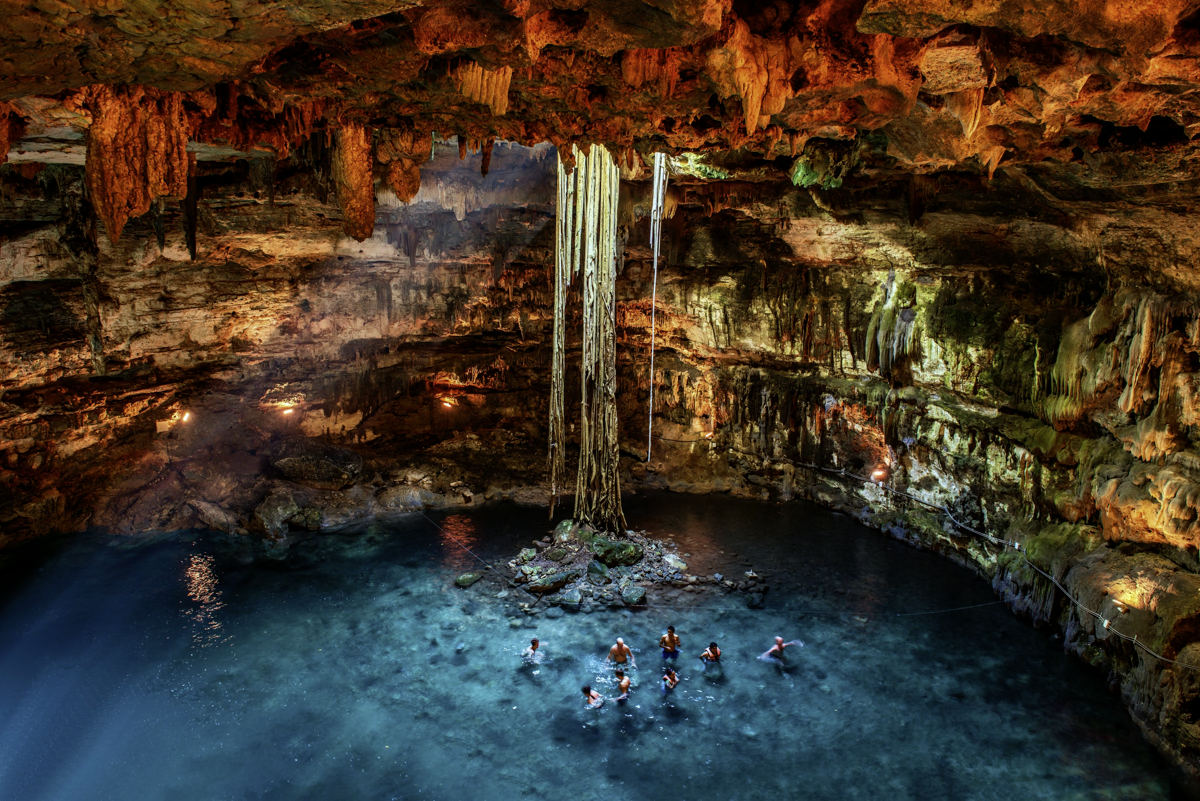
Suytun is an underground cenote on the east side of Valladolid that you have probably seen on the internet. A circular stone path leads to the middle of the cave. Around noon, a single ray of sunlight shines through an opening in the cave ceiling onto the path. (Yes, tourists come here to take photos.)
Suytun is about a 10-minute drive from Valladolid. The best time of day to see the famous beam of light is from noon to 2 p.m. The beam is easier to see in the presence of some mist or dust. Many photos you find online have been retouched, so keep your expectations realistic.
The water in this cave is shallow, about a few meters deep in many areas, and life jackets are required for swimming. Jumping is not permitted. During busy times, a few hundred people visit the cave, and the line for the stone walkway is long. Facilities include a restaurant, changing rooms, and lockers. Visitors should bring cash.
If you want to take the classic photo, go in the late morning and expect to wait. To avoid crowds while swimming, consider visiting in the early morning or another off-peak time when fewer people will be present.
Cenote Ik Kil
Ik Kil is a popular cenote near Chichén Itzá, about a 40-minute drive west of Valladolid. Features include an open-air pool with hanging plant life and carved stone steps leading to a swimming platform.
It is 3 kilometers from the archaeological site. The pool measures 60 meters at its widest point. The vertical distance from the top to the water below is about 26 meters, and the pool is about 40 meters deep. The longest roots extending from the top edge toward the water are about 20 meters long. Sunlight shines into the pool at midday.
Everyone must wear a life jacket to swim here. There are two low jumping platforms. Other amenities include changing rooms, lockers, showers, a buffet restaurant, and cabins for overnight stays, which can be useful for getting to Chichén Itzá early.
Ik Kil is a common lunch spot for bus tours to Chichén Itzá. Its peak hours are around noon. The best times to visit for swimming are early in the day or later in the afternoon, after bus tour groups have departed.
Best cenotes near Mérida
Santa Bárbara (Homún)
There are multiple cenotes on the Santa Bárbara grounds that can be accessed by a trail suitable for walking or biking. Other amenities and services include lifeguards, life jackets, bathrooms, and a restaurant offering Yucatecan cuisine. Santa Bárbara is an option for families visiting Homún.
The property has several cenotes with different features, including Cascabel, Chaksikín, Xooch, and Pool Cocom. Cascabel is enclosed, Xooch is semi-open, and Pool Cocom is open to the sky. Check which cenotes are included in your chosen package. The trail connecting the sites is several kilometers long and can be explored by bicycle or with the site's transport.
Life jackets are provided and required for all swimmers. Lunch packages are also available for day visits. Expect to spend at least half a day and visit early to avoid large tour groups from Mérida.
Hacienda Mucuyché
Mucuyché is a restored former henequen plantation in the municipality of Abalá, south of Mérida. A waterway connects its two cenotes, allowing visitors to swim between them. Guided visits include the plantation and cenotes. Reservations are necessary.
It is about an hour to an hour and fifteen minutes from downtown Mérida. Cenote Carlota is a partially open cenote with stone stairs leading to the water. Cenote Azul Maya is a cave cenote covered with stalactites. Swimming between Cenote Carlota and Cenote Azul Maya through the narrow channel is a popular activity.
Guided tours run at scheduled times and typically last two to three hours. Tours include information about the hacienda before visitors enter the cenotes. More Spanish tours are available than English tours. Inquire about language options and tour times when making reservations. Meals and time by the pool are available after your tour.
Cenotes at a glance
| Cenote | Base | Type | Best for |
|---|---|---|---|
| Gran Cenote | Tulum | Semi-open | First cenote, snorkeling, families |
| Dos Ojos | Tulum | Cave | Cave snorkeling, cavern diving |
| Cenote Azul | Riviera Maya | Open | Families, relaxed swimming |
| Cenote Calavera | Tulum | Cave | Confident swimmers |
| Oxman | Valladolid | Semi-open | Couples, photography, a long lunch |
| Xkeken & Samulá | Valladolid | Cave | Comparing two caves in one stop |
| Zací | Valladolid (in town) | Semi-open | A quick swim between other plans |
| Xcanahaltun | Valladolid | Cave | Travelers with a driver and time |
| Secreto Maya | Valladolid | Open | Jumping, rope swing, a slow afternoon |
| Suytun | Valladolid | Cave | Photography |
| Ik Kil | Chichén Itzá | Open | Pairing with the ruins |
| Santa Bárbara | Mérida (Homún) | Cave, semi-open & open | Families, several cenotes in one place |
| Hacienda Mucuyché | Mérida | Cave & semi-open | A hacienda day, swimming between cenotes |
| Cuzamá | Mérida | Cave | Adventurous swimmers, horse-cart ride |
Which cenote should I visit during my trip?
For families
Cenote Azul is one of the most accessible cenotes on the Riviera Maya. Its open water and shallow areas make it a good choice for family travelers. Another good option is Gran Cenote, which offers amenities but is more crowded.
Zací is located in Valladolid, so travelers won’t need to go into rural areas to visit this cenote. Life jacket, age, and other requirements vary by cenote.
Santa Bárbara, located outside Mérida, is a popular destination for families, offering services such as lifeguards, life jackets, and meals on-site.
For couples
Near Valladolid, Oxman and Xkeken are popular choices for couples. Oxman has vegetated areas and overhanging tree roots. Xkeken has a mystical atmosphere, with limestone formations around the cenote and a narrow beam of light shining through.
Neither cenote stays quiet all day, so visiting either in the morning will give you more privacy.
If you’re looking for a more leisurely, romantic atmosphere, you might want to book a stay at a converted hacienda near Mérida. You can swim at Mucuyché in the morning, have lunch, and relax by the pool in the afternoon.
For photographers
Semi-open cenotes have dramatic features, including shadows cast by rocky walls and sunlight streaming in. Oxman, Xkeken, Samulá, and Ik Kil are popular photography destinations.
Light conditions vary daily and by season. Midday light penetrates the enclosed cenotes well, but this is also a popular time for tours.
If you plan to bring anything other than a cell phone, be aware that some cenotes charge fees for professional camera gear and photography, and some prohibit tripods.
For snorkeling
Gran Cenote and Dos Ojos are popular snorkeling sites near Tulum. Open and partially open cenotes have more sunlight and fewer overhead rock formations than fully enclosed cave cenotes.
Swim only in designated swimming areas, and follow the on-site rules for equipment and life jackets.
For certified divers
The caves near Tulum, including Dos Ojos, El Pit, and Angelita, are advanced dive sites. Dive conditions and hazards within the cenotes include overhead environments, low visibility, and areas where saltwater and freshwater mix. Local operators can help you choose a dive site appropriate for your certification and previous diving experience.
For fewer people
The cenotes around Valladolid tend to attract fewer tour groups than cenotes near Tulum and Chichén Itzá.
Still, weekends, holidays, and busy travel seasons bring other visitors to the cenotes, so don’t expect to have them all to yourself. For your best chance at a quieter visit, hire a knowledgeable private driver with up-to-date information about opening times and tour groups in the area. That local knowledge is more helpful than a list of supposedly secret spots you pulled off the internet.
Homún and Cuzamá are other good day-trip destinations during the week. International tours from the coast typically don’t go beyond Chichén Itzá, so these villages tend to be less crowded.
What is the best time to visit a cenote?
Try getting there early. Most tour groups arrive after breakfast and stay until about noon.
Weekdays are less busy than weekends, particularly at cenotes visited by local families. You can’t rely on avoiding crowds in the late afternoon, as some tour groups visit cenotes after an archaeological tour.
November through April is the dry season. The weather is more predictable during these months, but there are also more visitors. May through October brings fewer tourists, higher humidity, and occasional rain showers.
The water temperature is about 24–25°C (75–77°F) year-round. Swimming on a warm day in May is very refreshing. In the cooler months, you may want to bring a warm layer to wear after your swim, since cave chambers can feel chilly once you’re out of the water.
How many cenotes should you visit in a single day?
Two to three is usually enough.
Even when cenotes look close to one another on a map, driving times can be longer than expected. Each visit also takes time for changing, showering, taking photos, getting into the water, swimming, and getting out. Visiting more than three in a single day might leave you more exhausted than refreshed.
Our favorite cenote days usually include two different spots: a fully enclosed cave cenote in the morning, a break for lunch, and then a semi-open or hacienda cenote in the afternoon.
The exception is Homún, where the cenotes are closely spaced and mototaxi drivers can take you between them. You can easily add a fourth (or even fifth) stop here.
What to pack for a cenote visit
Bring only what you need:
- Swimsuit worn under clothing
- Quick-dry towel
- Mexican pesos in cash
- Water shoes with good traction
- Rash guard or other sun-protective swimwear
- Reusable water bottle
- Dry bag for your phone
- Snorkeling mask, if fit is important to you
Leave jewelry and other valuables at the hotel, since not every cenote has lockers.
Most cenotes ask visitors to shower before entering the water. Do not use sunscreen, lotion, makeup, or insect repellent unless the operator says it’s allowed.
Is it safe to swim in cenotes?
Conditions vary between cenotes. Follow the posted rules and choose a site suited to your swimming ability and mobility.
Some of these sites have low steps and guardrails. Others have steep, rough wooden stairs and wet, rocky, dark areas with deep water. At some sites, you aren’t required to wear a life jacket. At others, you must wear one.
Non-swimmers can visit many cenotes, provided they take steps to ensure their safety, including choosing the site carefully and wearing a life jacket. Children visiting cenotes should be supervised by an adult, even when wearing life jackets.
Do not enter restricted cave areas, climb rock formations, or jump from structures that are not specifically designated for jumping.
How to visit cenotes responsibly
Cenotes are freshwater features of the peninsula, not just swimming areas.
Shower before entering the water, and keep lotions, sunscreen, insect repellent, and hair products out of the cenote. Do not touch cave formations such as stalactites, which take thousands of years to grow and cannot be replaced.
Do not bring food near the water, and do not feed the fish, turtles, or other wildlife. Follow photography guidelines and be quiet in enclosed spaces, particularly at community-owned cenotes that have cultural or ceremonial significance.
Visiting community-owned cenotes benefits local communities.
The same aquifer provides water for most residents of the peninsula, including people in Mérida and rural communities near the cenotes. What washes off you can end up in someone’s drinking water.
Do you need a tour guide to see a cenote?
Many cenotes are accessible by rental car to independent travelers. Visiting on your own suits adventurous travelers who aren’t bothered by limited signage and changing opening hours at cenotes and other rural destinations.
A private driver offers more flexibility than a group tour and makes it easier to visit multiple properties, especially in the Valladolid area, where a one-day itinerary might include two cenotes, a meal, and other rural stops.
Guides can share information about the caves, help with family travel and suggest ways to combine cenotes with archaeological sites. They can also lead snorkeling trips. Cavern and cave diving always requires a professional operator.
Getting between the regions
Tulum to Valladolid by car takes about 1.5 hours. Valladolid to Mérida takes about 2 hours, and Chichén Itzá is between the two cities.
The Tren Maya runs from Cancún Airport to Valladolid and Chichén Itzá, as well as Mérida. Traveling to these inland destinations by train may be convenient if you have minimal luggage. If you’re coming from Tulum, the train route to Valladolid and other inland destinations includes a northern leg to Cancún Airport. Private transportation from Tulum to Valladolid is quicker and lets you stop at a cenote on the way.
Frequently asked questions about cenotes
What cenote is the best in Mexico?
Everyone has their personal favorites. Dos Ojos is great for cavern diving and snorkeling. Cenote Azul is a beloved favorite for swimming. Oxman has a wide opening and hanging roots. Cenote Xkeken is more cave-like.
Your favorite will vary too, based on swimming and physical ability, group size, and other activity plans.
Are the cenotes in Valladolid better than those close to Tulum? What about Mérida?
Valladolid has many cave, hacienda, and community-operated cenotes. Tulum has more developed beach tourism and specialized scuba diving operators.
If cenotes are your primary interest, consider staying a few nights in Valladolid rather than making day trips from the coast to multiple sites.
Mérida is your base for the Ring of Cenotes. Homún and Cuzamá, about an hour from the city, have a dense cluster of cave cenotes that see fewer international tour groups, so they’re a great pick if you want quieter, more adventurous swims.
Can I go to a cenote if I cannot swim?
Some cenotes accommodate non-swimmers, but not every site is suitable. Confirm that the site has stable entry points, life jackets, and supervised swimming areas, and follow staff guidance.
Can children swim in cenotes?
Children are allowed at many managed cenotes, though age restrictions and life jacket requirements may apply. Shallow areas of open cenotes are generally safer for children than cave cenotes.
Is sunscreen permitted in cenotes?
Many cenotes prohibit sunscreen and other skin care products, including so-called reef-safe and biodegradable products. Consider wearing sun-protective clothing when you’re out of the water, and shower before entering.
How long should you stay at a cenote?
Expect to spend 90 minutes to two hours at a cenote. Large hacienda properties that offer meals or other amenities, such as hiking trails and a second pool, can take half a day.
What is the cost to visit a cenote?
It depends. Small, independently operated cenotes may charge a small cash fee. Popular cenotes near Tulum and hacienda cenotes that offer meals, lockers, and life vests may have higher fees. Carry pesos in small bills, since many rural cenotes only accept cash.
Can you tour cenotes from Cancún?
Yes. The cenotes around Tulum and south of Playa del Carmen are closest to Cancún. It may be best to spend a night or more away from the coast to visit the hacienda and cave cenotes around Valladolid.
How cold is the water in a cenote?
Water temperatures in cenotes are typically about 24–25°C (75–77°F) year-round. The water is refreshing in warm weather and slightly cooler in cave cenotes, where sunlight doesn’t reach.
What is the Ring of Cenotes?
The Ring of Cenotes is an arc of cenotes south and east of Mérida, tracing the edge of the buried Chicxulub crater. Homún and Cuzamá are right on it, which is why you’ll find so many cenotes close together here.
Plan a Yucatán trip with cenotes
Osaviva designs custom Mexico itineraries for couples, families, and private groups. We’ll help you plan coastal and inland stays, private transportation, local guides, and cenote visits that match your group’s swimming ability and sense of adventure.
Start with a 30-minute consultation and let us know how you’d like to experience the Yucatán.

