


Costa Rica is one of the easiest countries in Latin America in which to build a trip around wildlife, but what you see depends on where you go, when you travel, and whether or not you hire a guide. Sloths and monkeys turn up in several regions without much effort, though sloths aren't always easy to spot. Sea turtles come ashore on a defined nesting calendar. The resplendent quetzal favors the cool, wet air of the cloud forests, and Corcovado is remote, but worth the journey for the density of its ecosystem. Still, even there in the most remote of wilds, you aren't likely to spot a jaguar.
We've been designing trips around Costa Rica's wildlife for over a decade, and the sightings below split cleanly into two groups: the ones you can plan around with confidence, and the ones that are mainly luck, no matter how good your guide is. This guide covers both, region by region, along with when to go, how each experience fits into a longer itinerary, and how to enjoy wildlife responsibly.
Within Costa Rica, roughly six percent of the world's species can be found, and the country protects about a quarter of its land, according to the country's tourism institute, ICT. That includes rainforest, cloud forest, wetland canal, and coastline.
For a broader sense of when to visit by month across the whole country, our month-by-month Costa Rica weather guide covers general climate patterns. The timing notes below are specific to each animal, which sometimes runs against the general dry-season/green-season advice.
Wildlife at a glance
| Animal | Where to see it | Best time | How likely you are to see it |
|---|---|---|---|
| Sloths | Manuel Antonio | Year-round, mornings best | Good odds with a spotting-scope guide |
| Nesting sea turtles | Tortuguero | July–October (green), March–May (leatherback) | Good odds on a licensed night tour in season, not guaranteed on any single night |
| Scarlet macaws | Corcovado, Manuel Antonio | Year-round | Good odds, especially near Beach Almond trees |
| Tapirs | Corcovado | December–April, drier trails | Possible, not guaranteed |
| Jaguars | Corcovado | Year-round | Rare. Most visitors see tracks or sign, not the cat |
| Resplendent quetzals | Monteverde | February–May, breeding season | Good odds with an early guided walk in season |
| Howler and capuchin monkeys | Cahuita | Year-round | Reliable |
| Red-eyed tree frogs & nocturnal wildlife | Arenal | May–November, rainy season | Good odds on a guided night walk after rain |
| Humpback whales | Marino Ballena / Uvita | July–October and December–April | Good odds on a boat tour in season |
How to view wildlife responsibly
- Never touch, feed, call to, or bait an animal to get it to appear. A fed animal loses its wariness of people, which puts it at greater risk once the tour leaves.
- Skip flash photography around nocturnal animals and nesting turtles. Use red light instead. Sudden light disorients the animals, and for hatchlings it can send them crawling the wrong direction, away from the sea.
- Keep a respectful distance, even when an animal approaches you first.
- Book with trained, licensed naturalist guides. Costa Rica's official tour guide directory is a reasonable place to start if you're vetting one yourself.
- Be wary of any wildlife attraction built around handling animals, guaranteed selfies, or captive collections. These aren't wildlife viewing, whatever they're marketed as.
- Accept that a responsible guide may choose not to approach an animal at all, even one you're eager to see up close.
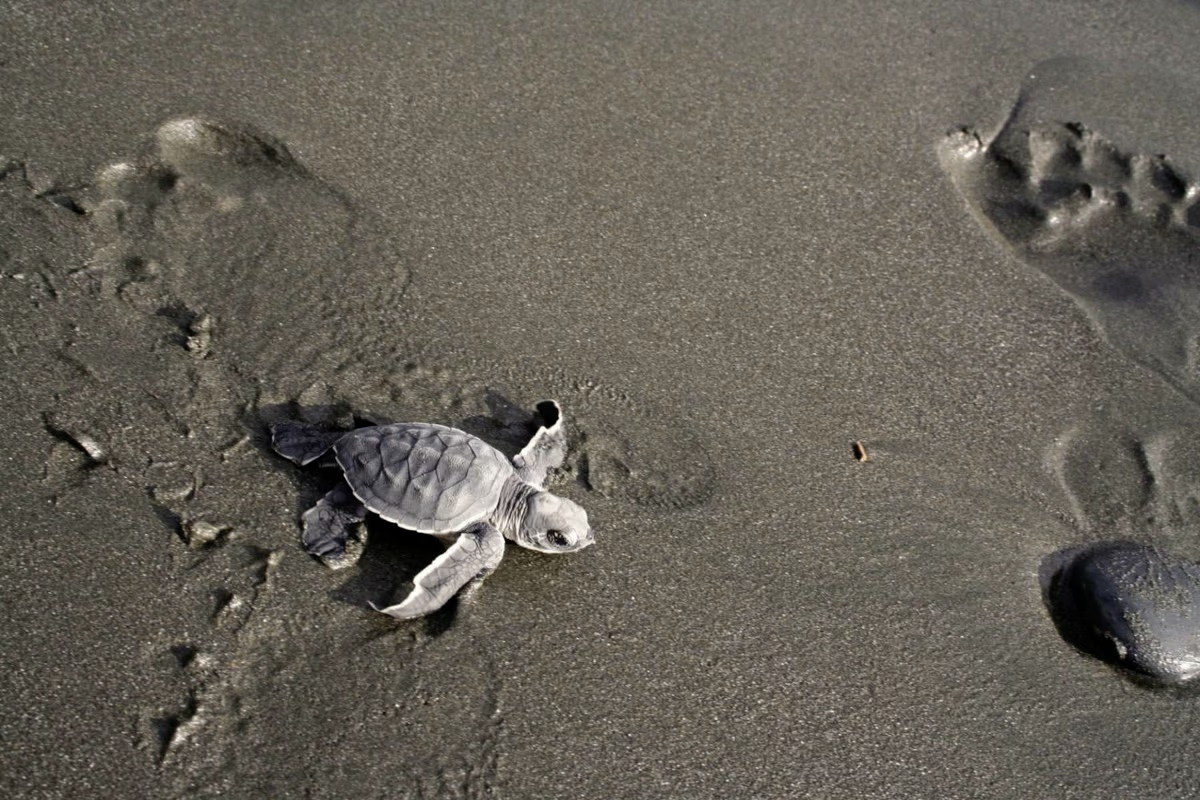
Sea turtles in Tortuguero
Where to go: Tortuguero National Park, on Costa Rica's Caribbean coast, reachable only by boat or small plane through a network of jungle canals.
What you may see: Green sea turtles nesting, peaking July through September, and leatherbacks arriving earlier, from March into May. Nesting and hatching are two different events on different timelines, and neither can be promised on a specific night. Beyond turtle season, the canals themselves carry sloths, caimans, monkeys, and a wide range of birds, which makes Tortuguero worth visiting even outside the nesting months.
When to travel: July to September for green turtles, March to May for leatherbacks. Every night tour here runs under local regulation: guides carry only red lights, no flash photography, no touching a turtle or blocking her path back to the water.
How it fits into a trip: Two to three nights, boat-in/fly-in lodges only, no roads. It pairs naturally with a Caribbean-coast routing through Cahuita, or with Arenal via the canal-and-road connection north.
Our Undiscovered Caribbean itinerary threads Tortuguero into a longer Caribbean coast route.
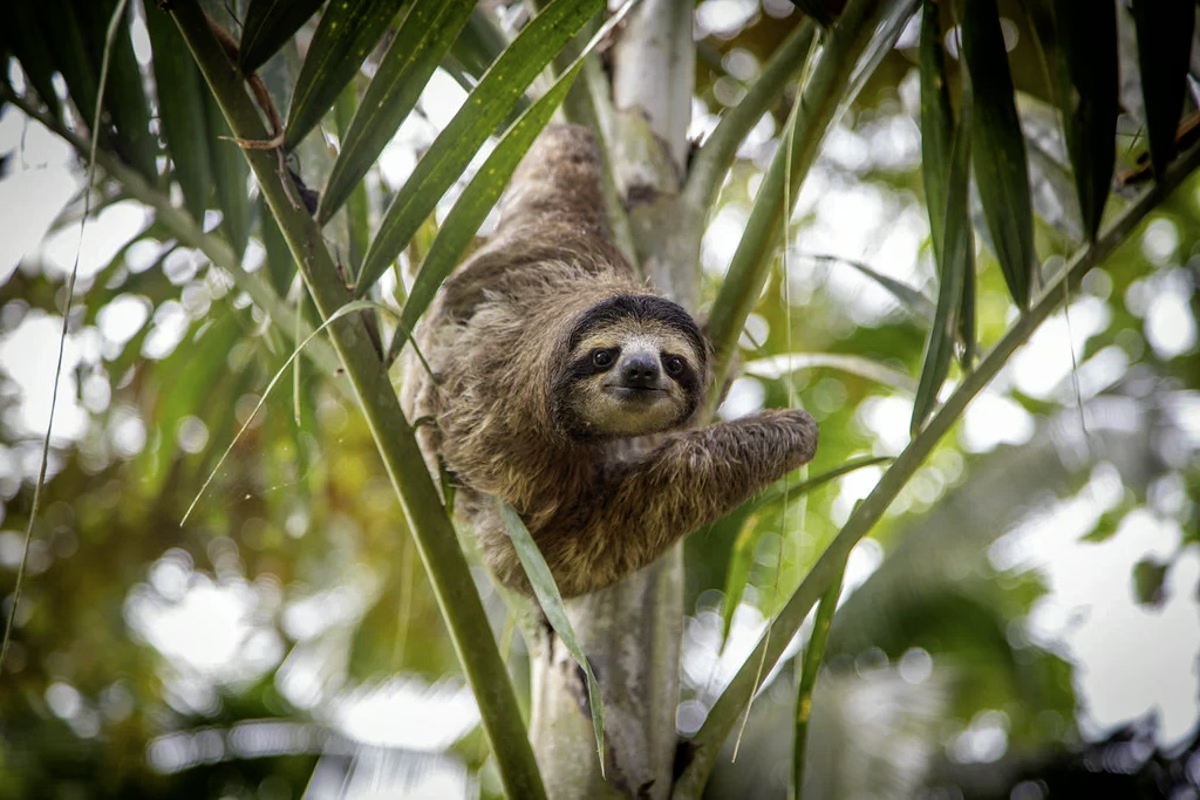
Sloths in Manuel Antonio
Where to go: Manuel Antonio National Park, where rainforest trail runs straight into white sand beach.
What you may see: Two-toed and three-toed sloths, usually resting in cecropia trees just off the trail, along with capuchin monkeys and iguanas.
When to travel: Year-round, with mornings the best window before the heat and the crowds build.
The tradeoff: Manuel Antonio is also the most visited park in the country. That convenience, beach and wildlife in one compact park, is exactly why it draws the crowds it does. If you'd rather trade some of that convenience for a quieter park, several other regions on this list offer wildlife with far fewer people around. If you'd rather not choose, Manuel Antonio remains the easiest single stop to combine both.
How it fits into a trip: Two to three nights, easy to build around a family itinerary given the short trails and beach access. Book a naturalist guide with a spotting scope rather than relying on luck. And skip the urge to approach a sloth for a closer photo. Guides know the angles that don't require it.
Our Luxe Family: Volcano & Coast itinerary is built around this kind of easy, guided wildlife access.

Tapirs, scarlet macaws and elusive cats in Corcovado
Where to go: Corcovado National Park on the remote Osa Peninsula, the largest national park in the country and one of the most biodiverse patches of forest anywhere.
What you may see: Scarlet macaws are a near-certainty, especially near coastal Beach Almond trees. Baird's tapirs turn up with real but unpredictable frequency, sometimes wandering onto the beach at dawn. Jaguars are the animal everyone asks about and the one we're most careful not to oversell. They're solitary, wide-ranging, and rarely seen even by rangers who work here full time. What a guide can usually show you is sign: a fresh track, scat, a claw mark on a tree. Jaguars are currently listed as Near Threatened, with the species already gone from close to half its historic range, which is part of why Corcovado's strict permit system exists in the first place.
When to travel: December through April for drier, more accessible trails. May through November brings the green season, with richer wildlife activity but muddier, harder going. Either way, this is a multi-day-hike destination, not a drive-in park.
How it fits into a trip: Reaching Sirena Ranger Station, the heart of the park, takes real effort: a long hike, a river crossing, or a small charter flight. Daily visitor permits are capped, which is good for the wildlife and means you should book well ahead. Plan on three or more nights given the travel time in and out, and know that the long hikes and remote lodges make this a better fit for capable adult travelers than for young children or anyone with mobility limits.
Our Wild Southern Pacific itinerary bases you near Corcovado's edge, with access to its trails and wildlife corridors without requiring you to camp inside the park itself.

Quetzals and birdlife in Monteverde
Where to go: Monteverde Cloud Forest Reserve, cool and often misted-in along the continental divide, with more than 400 recorded bird species.
What you may see: Toucans, hummingbirds, and a wide range of other birdlife show up on almost any guided morning walk, no special timing required. The resplendent quetzal is a different proposition. Sightings depend on the breeding season, on which wild avocado trees happen to be fruiting that week, and on a guide who tracks both.
When to travel: February through May for the best quetzal odds, year-round for general bird diversity. A private early-morning guide is worth booking even if you don't consider yourself a birder. Monteverde rewards patience regardless of whether the quetzal shows up.
How it fits into a trip: Two nights is usually enough. It pairs well with Arenal (a few hours by road or a shorter boat-and-taxi combination across Lake Arenal) or with a Manuel Antonio stop further south.
Our Adventure & Adrenaline itinerary includes Monteverde alongside the region's canopy and hiking activities.
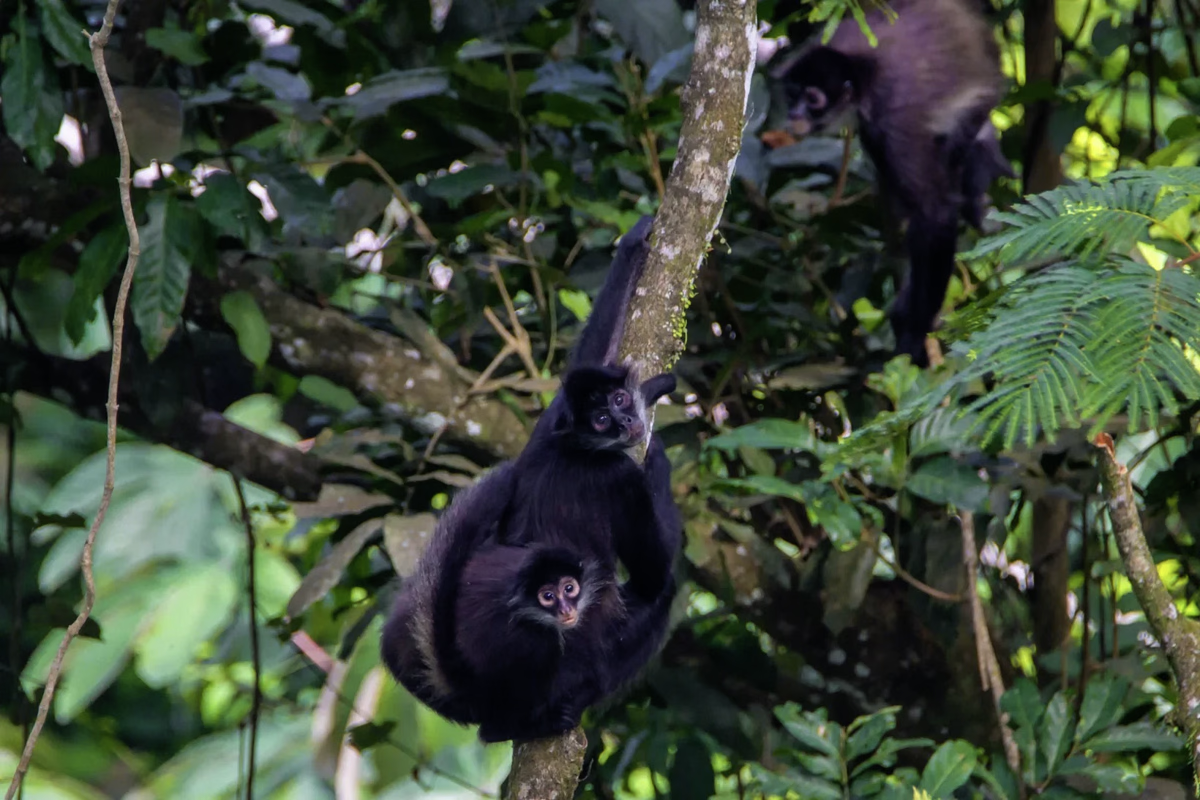
Howler monkeys and coastal wildlife in Cahuita
Where to go: Cahuita National Park, a relaxed, donation-entry park on the Caribbean coast with an Afro-Caribbean cultural identity distinct from the Pacific side.
What you may see: Howler monkeys are heard before they're seen, their calls carrying through the canopy well before dawn. Capuchins are the more visible ones, moving through the trees close to the trail, with spider monkeys further back in the forest.
When to travel: Year-round, with June and September often running drier on the Caribbean coast than the rest of the calendar.
How it fits into a trip: One to two nights is typical, usually as a stop along a Caribbean-coast route with Tortuguero or Puerto Viejo. Store food securely and never feed the monkeys. Capuchins in particular are quick, and an animal that learns to expect food from visitors becomes a problem for the next visitor, and eventually for itself.
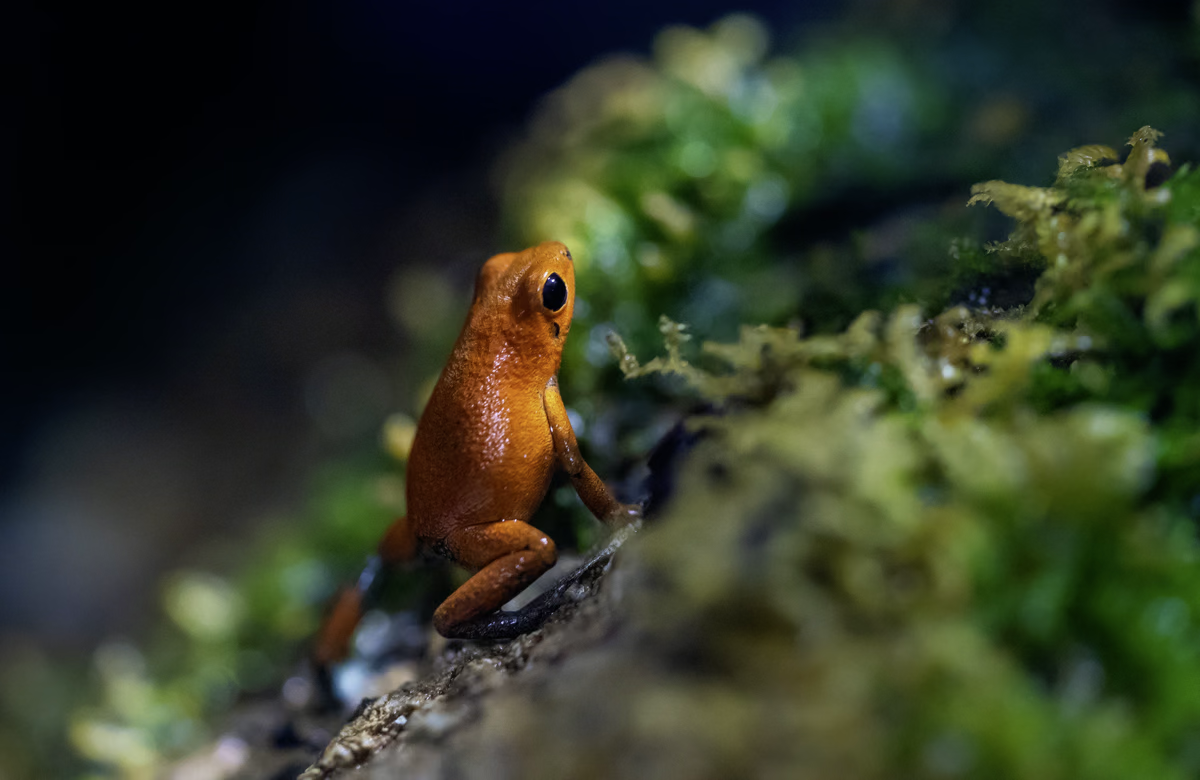
Nocturnal wildlife in Arenal
Where to go: The Arenal Volcano area in the northern lowlands, where night walks reveal a side of the rainforest that daytime visitors miss entirely.
What you may see: Red-eyed tree frogs are the animal most people come for, often visible in clear view after rainfall, but a good night walk turns up far more: poison dart frogs, sleeping birds tucked into leaves, insects that only appear after dark, and the occasional snake. None of it is guaranteed on any given night. All of it is more likely with a guide who knows where to shine a light.
When to travel: May through November, during the rainy season, when the forest is most active after dark. Wear closed-toe shoes and expect muddy trails.
How it fits into a trip: Two to three nights, often the first stop after arriving from San José given the drive time. It combines easily with Monteverde or with a Caribbean-coast extension toward Tortuguero.
Our Jungle & Beach Retreat itinerary includes an Arenal base with guided night walks built in.
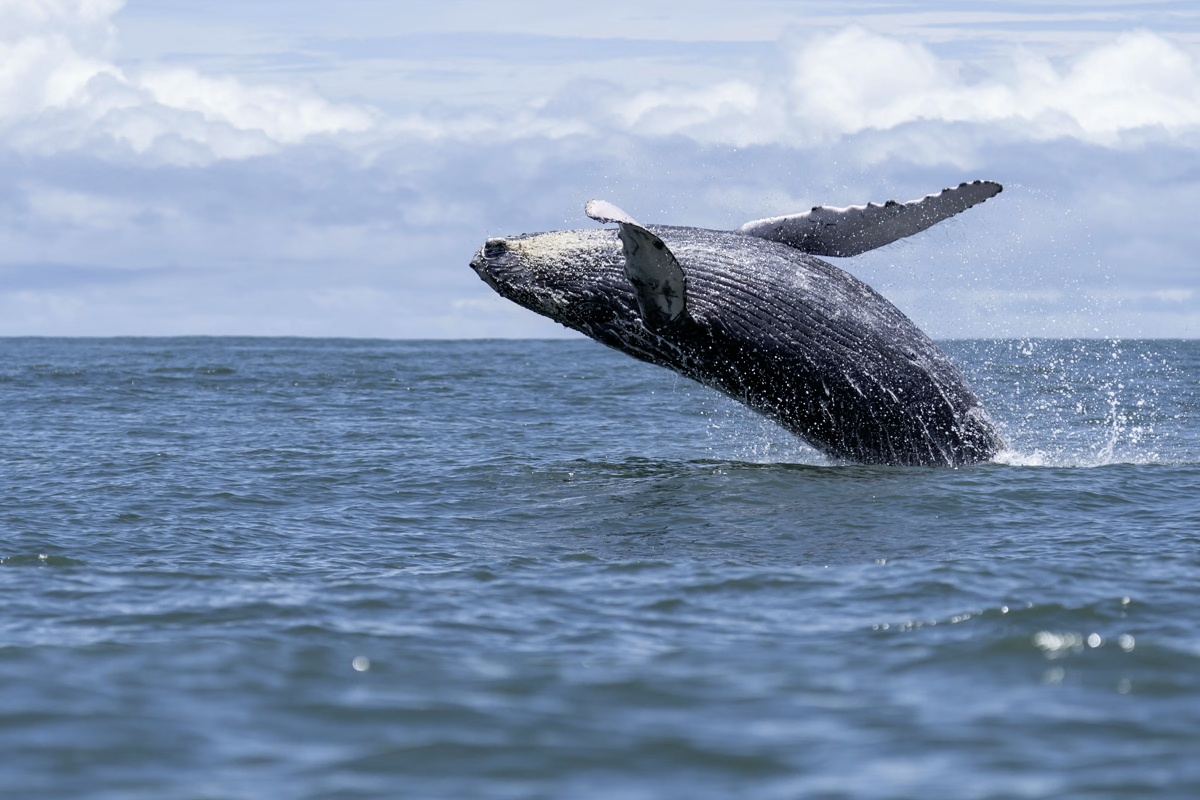
Humpback whales on the South Pacific coast
Where to go: Marino Ballena National Park, near the town of Uvita on the South Pacific coast, named for the sandbar that forms a whale's-tail shape at low tide.
Humpback whales visit this coast seasonally, but timing and sightings vary. Choose dates and an operator based on current local conditions, and ask about responsible viewing practices. Dolphins and seabirds can add to the experience, though wildlife sightings are never guaranteed.
When to travel: July through October for the better-documented season, with December through April as a second, generally quieter window.
How it fits into a trip: Two to three nights based in Uvita or the wider Costa Ballena area. This pairs naturally with a Corcovado or Osa Peninsula trip, since both sit in the same southern Pacific region and are often combined on the same route.
For more on this stretch of coast, including where to stay, see our Top 7 Best Wildlife Destinations in Costa Rica, which covers Marino Ballena in more depth.

Which Costa Rica wildlife region is right for you?
Not every region belongs on the same trip, and the right combination usually comes down to how much time you have and what you're willing to trade for it.
First-timers and families tend to do best pairing Manuel Antonio with Arenal: short drives, easy trails, and reliable sightings without much advance planning. Travelers who want the country's most serious wildlife density, and are willing to hike for it, are better served by Corcovado, paired with a few days on the South Pacific coast around Marino Ballena rather than squeezed into a shorter loop. If turtle nesting season lines up with your travel dates, Tortuguero and Cahuita combine well along the Caribbean coast and reward a slower pace. Birders get more out of a dedicated Monteverde stop with a private early guide than a rushed half-day stopover between other destinations.
We build Costa Rica itineraries around this kind of routing regularly, and we're glad to help you figure out which combination fits your dates, your travel style, and who's coming with you.

Frequently asked questions
What's the best time of year to see wildlife in Costa Rica?
It depends on the animal. Quetzals peak February to May, green turtles July to September, leatherbacks March to May, and Arenal's frogs and nocturnal wildlife are most active May through November. December through April gives you the driest, most accessible trails for Corcovado, while humpback whales split across two windows: July to October and December to April. There isn't one month that maximizes everything at once.
Can you guarantee seeing a jaguar in Costa Rica?
No, and any guide who implies otherwise is overselling it. Jaguars are solitary and rarely seen even in Corcovado, their best-known habitat in the country. What you're realistically visiting for is the ecosystem itself, along with tracks, scat, and other sign that a skilled guide can read. Treat a direct sighting as a bonus, not the point of the trip.
Do I need a guide to see sloths, turtles, or quetzals?
Not strictly, but it changes the experience substantially. A trained naturalist knows which trees are fruiting, which cecropia a sloth has been using, and how to read the subtle signs an untrained eye walks past. For sea turtles specifically, a licensed guide isn't optional. Independent night visits to nesting beaches aren't permitted.
Is it possible to see humpback whales in Costa Rica?
Yes, particularly around Marino Ballena National Park near Uvita, which sees two separate humpback migrations across the year rather than one short season. A boat tour with a reputable, permitted operator during either window gives you a realistic chance.
Which national park in Costa Rica has the best wildlife?
There isn't a single answer, since parks specialize. Corcovado has the greatest range and density, including jaguars and tapirs. Monteverde is strongest for birdlife. Tortuguero and Marino Ballena are built around specific marine animals: sea turtles and humpback whales. Manuel Antonio is the easiest all-around stop if you want wildlife and beach time in one place.
How many days should I budget for a Costa Rica wildlife trip?
For a single region done properly, two to three nights. A trip covering several regions, say Arenal, Monteverde, and a Pacific or Caribbean coast stop, generally needs ten to fourteen days once you account for driving distances and the fact that Costa Rica's roads are slower than the map distances suggest. Corcovado alone is worth three or more nights given how long it takes to reach.
Plan a Costa Rica trip built around wildlife
A wildlife-focused trip to Costa Rica works best when it's built around real seasons, real regions, and guides who know both well, rather than a checklist of animals to collect. Tell us which sightings matter most to you, and we'll route a trip around the regions and seasons that give you the best chance at seeing them, along with everything else that makes the days in between worth it too.

