


With a little something for everyone, from ancient ruins to volcanic peaks, Maya chocolate to rainforest hideaways, Guatemala is a near-ideal destination for travelers looking for something just slightly off the beaten path, with a rich cultural history and no shortage of stunning landscapes. Still, it is not quite as well known as neighboring Belize or Costa Rica, but it is quickly moving up the list. With romantic colonial cities brimming with charm and verdant jungle, it will not stay a secret for long.
But in a country so expansive, how do you decide what to see or do? Here are our top picks.
Guatemala’s best activities at a glance
| Experience | Region | Time needed | Planning note |
|---|---|---|---|
| Roast marshmallows on Pacaya Volcano | Near Antigua | Half day | Go with an authorized guide. The marshmallow trick works off the volcano’s own geothermal heat, not exposed lava, and visible flowing lava is never guaranteed. |
| Overnight Acatenango trek | Near Antigua | 2 days, 1 night | A serious, cold-weather climb to around 13,000 feet. Book a licensed operator and confirm current park access before you commit. |
| Sunrise from Temple IV, Tikal | Petén | Sunrise plus most of the day | Requires a separate sunrise ticket and a guide arranged in advance. Entry is around 4:00 a.m. |
| Chichicastenango Market | Western Highlands | Half or full day | Market days are Sunday and Thursday. Arrive early for breakfast and to beat the crowds. |
| Kayak Lake Atitlán | Lake Atitlán | Two to four hours | Mornings are calmest. Casa Palopó is a standout for a lake-view stay afterward. |
| Sunrise from Indian’s Nose | Lake Atitlán | Early half day | Go with a community guide who knows the route and current access. |
| Salsa at Las Palmas, Antigua | Antigua | Evening | Live salsa runs several nights a week; confirm the current schedule before you plan your evening around it. |
| Coffee farm tour | Near Antigua | Half day | Go with a grower-led visit rather than a generic tasting; ask how the tour fee is shared with the farm. |
| Maya chocolate | Antigua or Lake Atitlán | 1 to 2 hours | Choose ChocoMuseo for a hands-on, family-friendly workshop, or a traditional Maya workshop for cultural context over craft. |
| Semuc Champey | Alta Verapaz | Full day, or overnight from Lanquín | A serious detour for adventurous travelers. No luxury lodging nearby; fly by helicopter to skip the overland drive. |
| Town-hop Lake Atitlán by boat | Lake Atitlán | Full day | Public lanchas connect the villages; pick two or three towns rather than trying to see all of them in one day. |
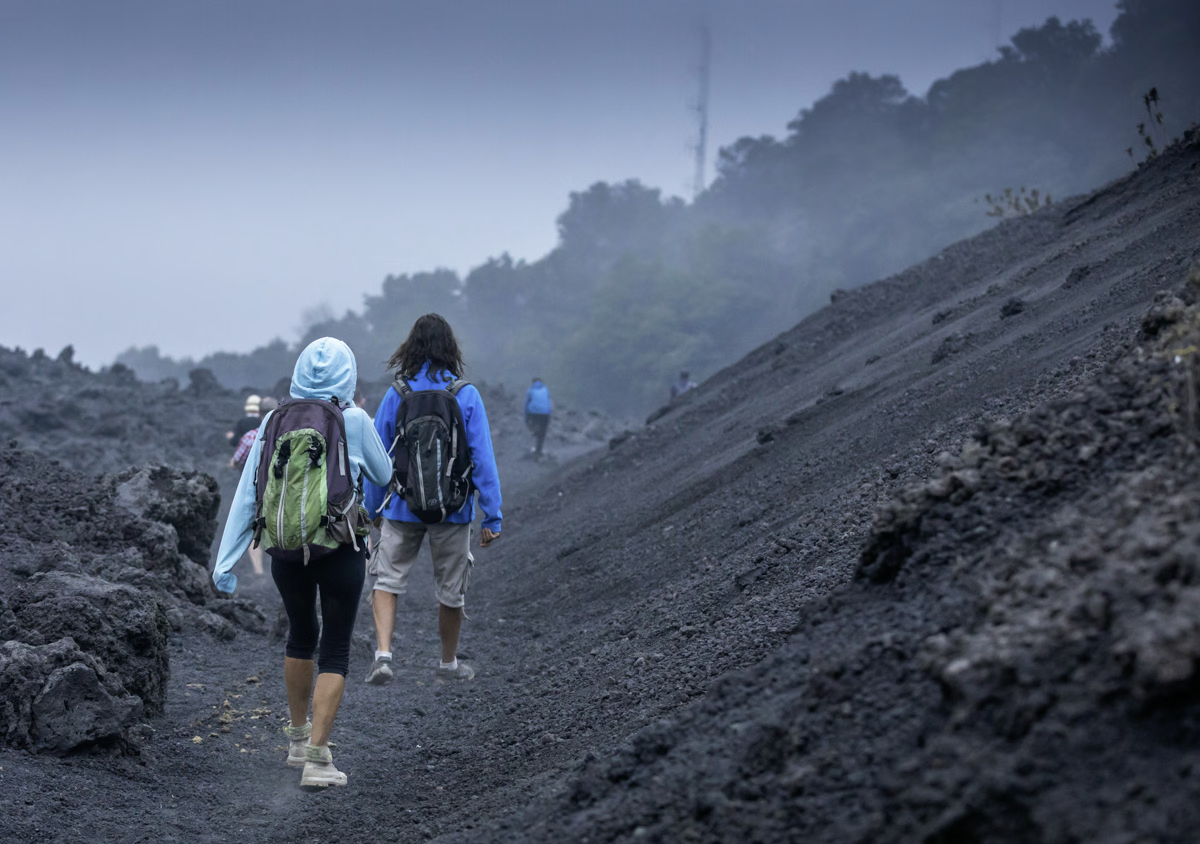
Roast marshmallows on an active volcano
Often an unexpected highlight for visitors, it is no accident that trekking Pacaya Volcano is one of the most popular activities in Guatemala. Though the ascent may seem daunting, it is short, and the views along the way provide plenty of opportunities for photo and water breaks. The effort is worth it when you reach the top. The summit boasts sweeping panoramic views, best enjoyed at sunset, and there is nothing quite like roasting a celebratory marshmallow over ground still warm from the lava flowing beneath it.
Want more than an afternoon on the volcano? Acatenango’s overnight hike is the classic upgrade, and a genuinely tough one: a two-day, one-night trek of around 12 miles round trip, climbing from roughly 7,900 feet to a summit near 13,000 feet, with camp temperatures that can drop below freezing. The payoff is watching neighboring Volcán de Fuego glow and rumble through the night. Night incandescence is common, though a full lava show depends on Fuego’s activity cycle and isn’t guaranteed on any given night. Go with a licensed operator, since access rules and approved routes on Acatenango have changed more than once recently and a good guide will know the current status.
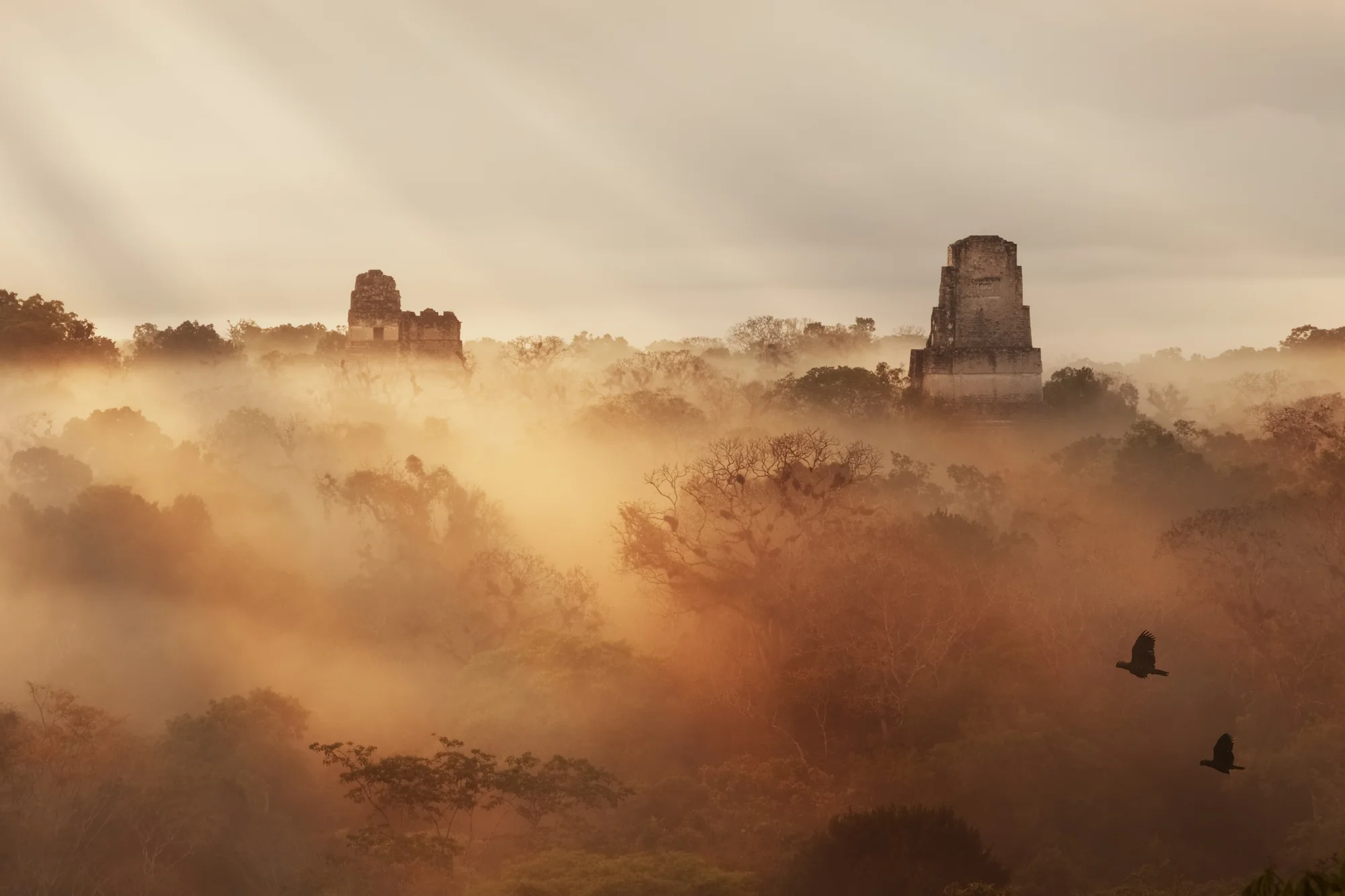
Watch the sunrise from Tikal’s Temple IV
In the heart of the Guatemalan jungle, half buried beneath earth and trees, the ancient Maya city of Tikal is one of the most spectacular archaeological sites on Earth. The vast complex warrants at least a full day of exploration, beginning with a sunrise witnessed from atop Temple IV, also known as the Temple of the Two-Headed Snake. At over 230 feet tall, it is the tallest structure in Tikal. The climb is steep and heart-pounding, but the reward is silence, mist, and a sky slowly turning pink as the sun rises over the jungle canopy. Movie buffs may recognize the view from Star Wars: A New Hope, where the Millennium Falcon appears above the forested temples below.
Sunrise access requires a separate ticket and a guide arranged in advance, with entry around 4:00 a.m., so book both before you arrive.
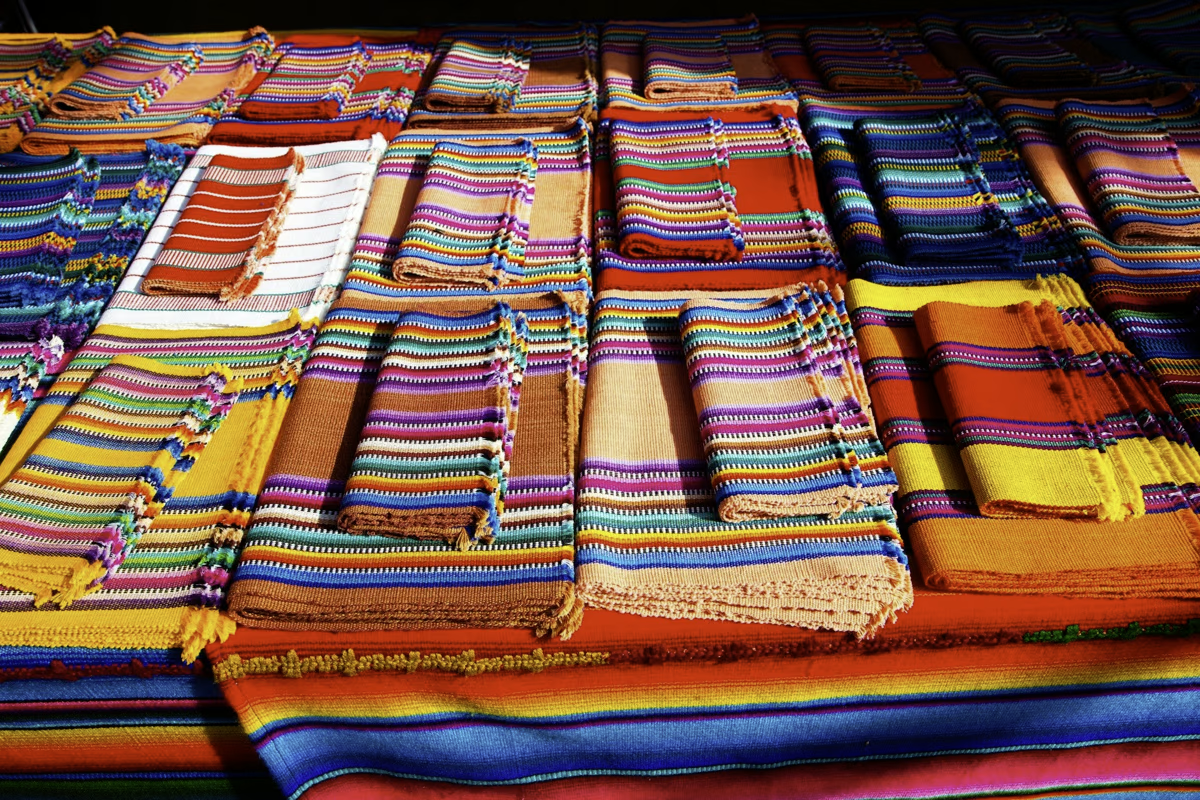
Have breakfast at Chichicastenango Market
On Sundays and Thursdays, thousands of Maya vendors from across Guatemala gather in the highland town of Chichicastenango to sell everything from fresh produce to colorful handicrafts. It is the largest outdoor market in the Americas and a lively, sensory experience. Arrive early to beat the crowds, enjoy a traditional Guatemalan breakfast with local coffee, and spend some time people watching before wandering through the stalls.
Catholic and Maya spiritual practices coexist at the market, and ceremonies at Santo Tomás Church may be underway while you’re there. Ask before photographing people, worship, homes, or working spaces, and let a guide from the area point out what’s open to the public and what isn’t.
Learn how Maya communities use chocolate
Chocolate has roots in Guatemala that go back long before it became a bar you unwrap. ChocoMuseo in Antigua is where we send most clients: a hands-on, bean-to-bar workshop where you grind cacao and make your own chocolate, and a good, family-friendly pick if the group wants something to do with their hands.
For a different, quieter kind of visit, look for a traditional Maya chocolate workshop instead of a cacao ceremony marketed to tourists, the two are not the same thing, and a lot of what gets sold as an "authentic Maya cacao ceremony" is really a modern wellness product with a Maya label on it. What you actually want is a family or cooperative that shows you how cacao has been prepared and used, historically and today, rather than one built around you making the chocolate yourself. It is less hands-on and less interesting for kids, but it gives adults and cultural travelers real context.
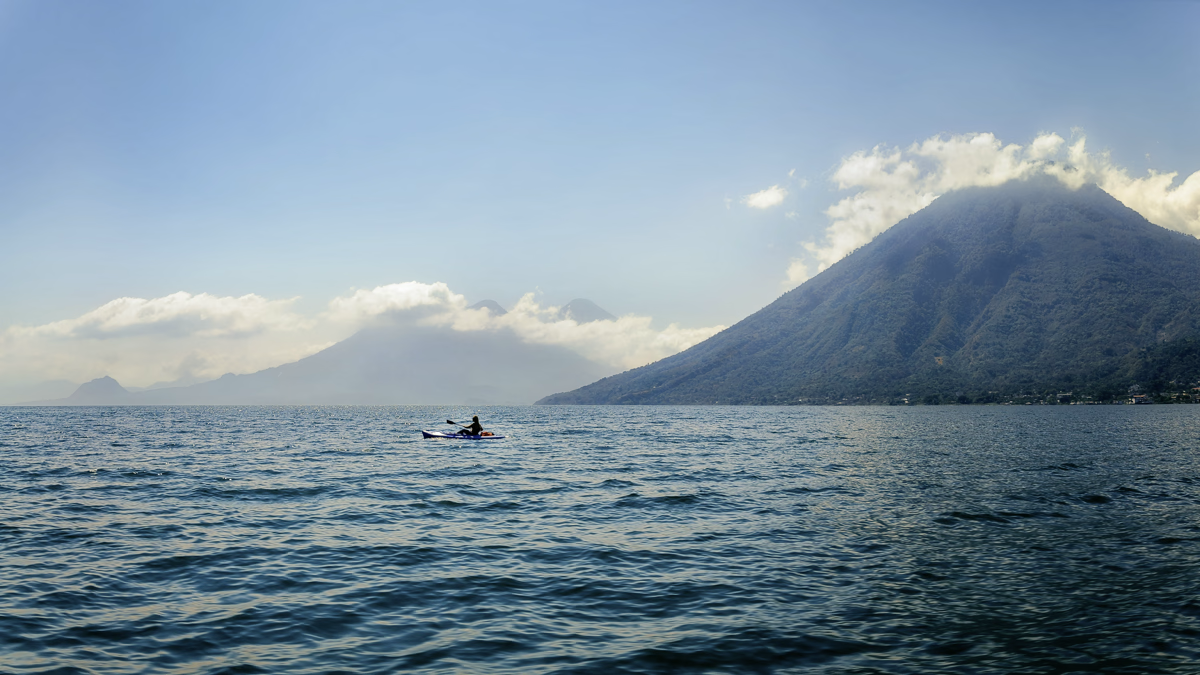
Kayak the volcanic crater at Lake Atitlán
Some guidebooks suggest Lake Atitlán is a destination best suited for just a few days, but the reality is far richer. The lake is expansive, serene, and ringed by more than a dozen villages, each with its own character. Kayaking is one of the most rewarding ways to explore, especially around San Pedro. Paddle between towns, drift along quiet shores, or simply float and take in the surrounding volcanoes and light.
For an elevated stay, Casa Palopó offers breathtaking lake views, bold design, and intimate luxury, perfect for unwinding after a day on the water. If you’d rather be able to walk into cafés, shops, and village life, a hotel closer to one of the lakeside towns is the better call.
Town-hop Lake Atitlán by boat
Kayaking shows you the lake. Hopping between villages by public lancha shows you how different its towns actually are from each other, and it is worth picking two or three rather than rushing all of them into one day.
Panajachel is the gateway, the most developed town on the lake, with the services and infrastructure the smaller villages don’t have. San Pedro La Laguna is the social hub, backpacker-heavy, with hostels, Spanish schools, and nightlife. San Juan La Laguna is the quieter, more deliberate stop, home to the weaving and coffee cooperatives already covered in our Indigenous-led experiences guide. San Marcos La Laguna has become the lake’s wellness town, yoga studios, meditation, plant-based cafés. Santiago Atitlán is the deepest cultural stop of the five, a working Tz’utujil town rather than a tourist one, known for its market and for Maximón, a folk saint venerated in a home that changes each year.
Take in a sunrise from the Rostro Maya
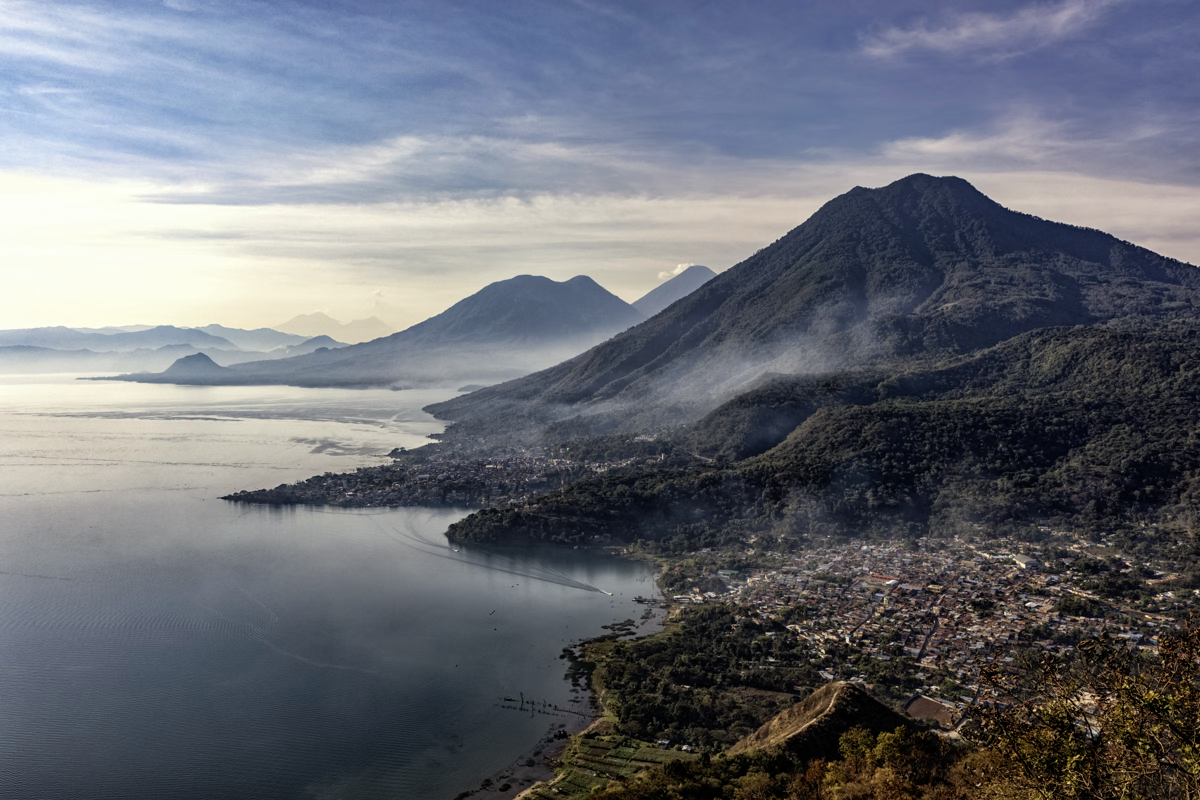
For one of the most memorable sunrises in Guatemala, set your alarm early and climb the Indian’s Nose on the northwest shore of Lake Atitlán. Arrive in darkness above a moonlit lake, with the lights of San Pedro and San Juan glowing below. As dawn approaches, the volcanic chain stretching toward El Salvador slowly emerges. Few views are as rewarding as this one.
Go with a community guide for this one. The trails cross community land, access arrangements can change, and a local guide knows the current route in the dark, while keeping more of the fee within the communities managing the experience.

Swim the pools of Semuc Champey
Semuc Champey, the stepped turquoise limestone pools near Lanquín, is one of the most photographed spots in Guatemala, and one of the least suited to a luxury itinerary. This is a pick for adventurous travelers, not everyone. There is no luxury lodging near the pools, most of the accommodation is backpacker-style, and the food ranges from fine to genuinely bad. The pools themselves are worth the trade-off: layered, brilliantly blue-green, and unlike anything else on this list.
The overland route from Antigua or Lake Atitlán runs four to five hours each way, which is why most people either commit to an overnight in Lanquín or skip it. For travelers who want the pools without the drive or the hostel stay, a helicopter transfer there and back is available and turns Semuc Champey into a long day trip instead of a multi-day detour.

Dance salsa in colonial Antigua
No visit to Guatemala is complete without time in Antigua. This UNESCO-recognized city is known for its cobblestone streets, colorful colonial architecture, and warm, welcoming atmosphere. It is often a traveler’s first stop and frequently the place they dream of returning to. After dark, Antigua’s lively salsa scene comes alive, particularly at Las Palmas, which runs live salsa several nights a week and free lessons earlier in the evening for anyone who wants them. The exact nightly lineup shifts, so confirm the current schedule once you’re in town.
Pair it with a food and walking tour through Antigua’s historic center earlier in the day if your group wants a quieter complement to the evening, dinner, coffee, and chocolate stops woven in with the colonial architecture and church ruins.
Tour a coffee farm outside Antigua
Guatemala is a serious coffee-growing country, and a farm visit is worth far more when it is led by the people who actually grow it. Near Antigua, De La Gente arranges visits with coffee growers in San Miguel Escobar, who walk you through the fields and processing steps before finishing the visit at home over coffee. It is a working farm, not a tasting room, and the conversation covers land, harvest timing, labor, and the price volatility that shapes a grower’s year as much as the crop itself.
If your route runs through Lake Atitlán instead, Cooperativa La Voz Que Clama en el Desierto in San Juan La Laguna is the equivalent stop, a cooperative of 162 producer families that has welcomed visitors since 2006. Either way, ask how the tour fee is split with the farm rather than assuming it stays local.

How to combine these Guatemala experiences
Seven nights: Antigua and Lake Atitlán
Spend three nights in Antigua and four at Lake Atitlán. That covers Pacaya, an Antigua evening, kayaking, the Indian’s Nose, and a Chichicastenango visit when the market day lines up. This route skips Tikal, since adding Petén would turn a short trip into a string of transfers, and it skips the Acatenango overnight unless the group specifically wants that extra day of hard hiking.
Nine to ten nights: Antigua, Lake Atitlán and Tikal
Use three nights in Antigua, three at Lake Atitlán, and two or three in Petén, with the last night built around flights or connections. A domestic flight between Guatemala City and Flores is the practical way to fit in Tikal without losing a full day each way by road.
Twelve nights: Add another side of Guatemala
With twelve nights, you can slow the pace, add the Acatenango overnight, spend a day or two around Semuc Champey, or extend into Yaxhá, Río Dulce, Livingston, or another highland region. Pick one addition rather than trying to fit everything into the same route, and treat Semuc Champey as its own decision: it suits adventurous travelers more than a luxury-focused trip, and a helicopter transfer can turn it into a long day instead of an overnight in Lanquín.
Chichicastenango has to be locked in first, since the market only runs Sunday and Thursday. Tikal flights, hotel availability, and your sunrise day can then get built around it.
When to visit Guatemala for these activities
November through April is the driest stretch across Antigua and the western highlands, with clearer mornings and easier trail conditions. Demand peaks around Christmas, New Year, Easter, and international school breaks.
May through October brings greener hillsides, fewer visitors outside holiday periods, and rain that usually builds later in the day. Pacaya and the Indian’s Nose call for more flexibility when trails are wet. Tikal stays hot and humid year-round, and even a dry-season sunrise can vanish behind fog or cloud.
Practical planning notes
- Road journeys in Guatemala often take longer than the distance suggests, especially between Antigua, Chichicastenango, and Lake Atitlán.
- Use private transfers or a trusted driver when you’re coordinating market days, early hikes, and luggage between regions.
- Book Tikal sunrise access and an authorized guide in advance. The special ticket doesn’t automatically include a guide.
- Check Pacaya’s current volcanic status before you leave, and be ready for the route to change for safety.
- Acatenango’s access rules have shifted more than once recently, including a park closure and reopening with restricted routes in 2026. Book with an operator who can confirm current status.
- Use community guides for the Indian’s Nose and other trails that cross locally run land.
- Build at least one unscheduled half day into Antigua and Lake Atitlán, rather than turning every morning into an early start.
- Semuc Champey adds real driving time (four to five hours each way from Antigua or Atitlán) unless you fly. Confirm which one the group actually wants before it goes on the itinerary.
- A coffee farm visit and a chocolate workshop both fit naturally into an Antigua day alongside Pacaya or salsa; don’t stack all three into one afternoon.
These activities vary a lot in physical demand. Salsa and an early market visit are flexible; kayaking depends on water confidence; Pacaya and the Indian’s Nose both involve uneven walking; Tikal can mean several hours in heat and humidity; and the Acatenango overnight is a genuine physical undertaking, cold, steep, and at altitude. A private itinerary can keep the same regions while swapping a climb for a scenic viewpoint, cultural visit, or boat day.

Frequently asked questions about things to do in Guatemala
Can you see flowing lava at Pacaya Volcano?
Sometimes, but it’s never guaranteed, and you shouldn’t approach active flows if you do see them. The standard hike focuses on solidified lava fields, warm ground, and views from authorized areas.
What’s the difference between Pacaya and the Acatenango overnight hike?
Pacaya is a half-day hike most fitness levels can manage, with a good chance to roast a marshmallow over warm volcanic ground. Acatenango is a full overnight expedition to a high, cold camp, considerably harder, and the reward is watching Fuego glow through the night rather than anything happening on Pacaya itself.
Is the Tikal sunrise tour worth the early start?
Yes, if you value the sound and atmosphere of the forest before regular opening. Clear views aren’t guaranteed, so plan a slower day afterward rather than another long excursion.
Which day is Chichicastenango Market?
Sunday and Thursday. Vendors start early, and if you arrive before the larger tour groups, the market’s easier to take in.
How many nights should you spend at Lake Atitlán?
Three nights is a good minimum. Four or five gives you time for kayaking, a sunrise hike, village visits, and an afternoon without scheduled activities.
Is the Indian’s Nose the same as Rostro Maya?
Yes. Both names refer to the same ridge and sunrise viewpoint above the northwest side of Lake Atitlán, and local tourism organizations increasingly use Rostro Maya.
Are these experiences suitable for families?
Many are, but age and stamina matter. Tikal, Chichicastenango, kayaking, and Antigua adapt easily for kids. Pacaya calls for an honest look at steep ground and early starts, and the Acatenango overnight isn’t a fit for most families given the cold, altitude, and physical demand.
Is Semuc Champey worth the detour?
If you're an adventurous traveler, yes. It's a harder sell on a luxury-focused trip, since there's no upscale lodging nearby and the food is inconsistent. A helicopter transfer solves the travel-time problem but not the accommodation gap, so it still suits a certain kind of traveler more than others.
Should I do ChocoMuseo or a traditional chocolate workshop?
They serve different purposes. ChocoMuseo is hands-on and family-friendly, you make your own chocolate. A traditional Maya workshop is quieter and less interactive, but gives adults and cultural travelers real context on how chocolate has actually been used, rather than a tourist-facing "ceremony."
Planning a Guatemala trip with Osaviva
Ready to plan your Guatemala adventure? Osaviva specializes in Guatemala travel packages and tour packages that blend these highlights with seamless logistics, private guides, and stays at top boutique properties. Get in touch to craft your perfect trip.

