


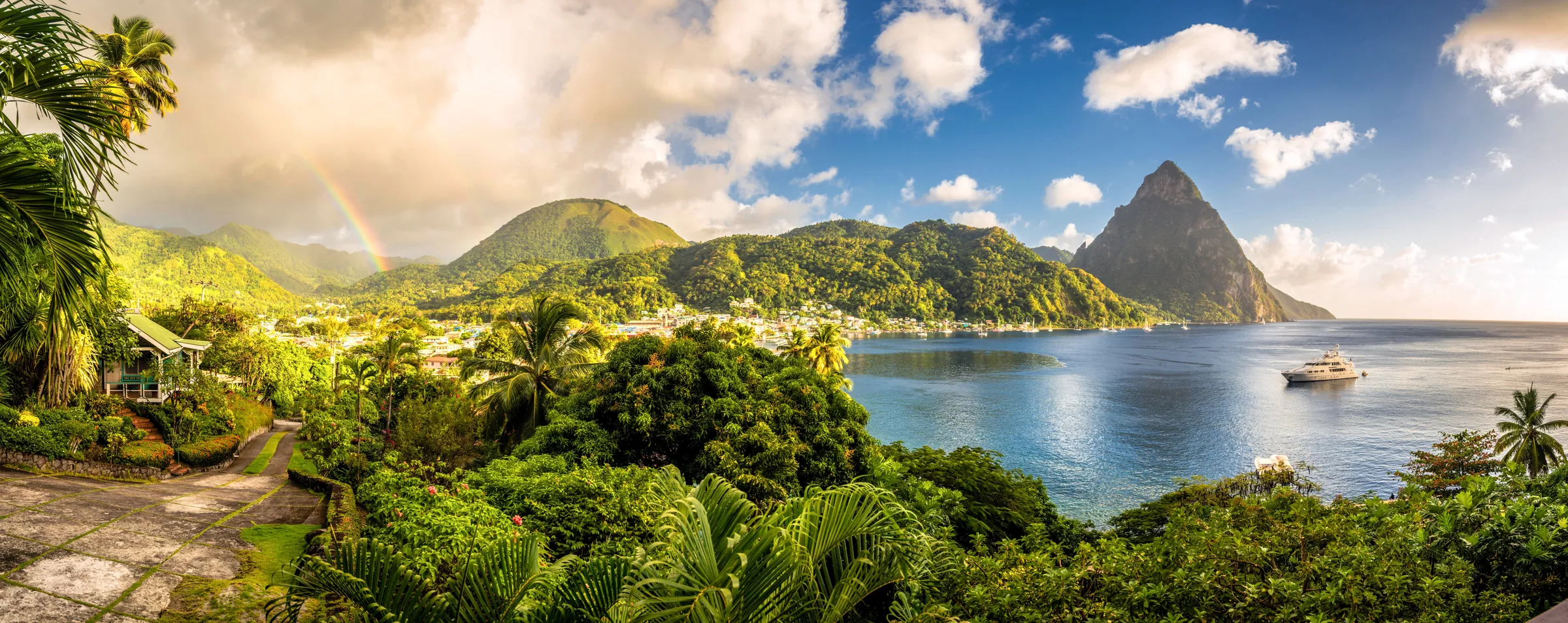
St. Lucia rises steeply from the Caribbean, with volcanic peaks, forested valleys, narrow coastal roads, and beaches set between headlands. The Pitons dominate the southwest around Soufrière, where many of the island's most distinctive hotels are built into hillsides or former estates. The north is more developed, with Rodney Bay, Cap Estate, Pigeon Island, marinas, and a larger choice of independent restaurants. Marigot Bay sits between the two and provides a sheltered harbor setting.
At a glance
| Best for | Mountain views, honeymoons, rainforest, waterfalls, sailing, spas, and active beach trips |
|---|---|
| Don't miss | The Pitons, Soufrière, Sulphur Springs, a rainforest or waterfall excursion, and a day on the water |
| Recommended stay | 5 to 8 nights |
| Best area to stay | Soufrière for scenery or Cap Estate and Rodney Bay for northern beaches and restaurants |
| Pairs well with | Dominica, Martinique, Barbados, or the Grenadines |
| Primary airport | Hewanorra International Airport (UVF), with George F. L. Charles Airport (SLU) for regional flights |
| Best time to visit | December through April for drier weather, with lush conditions and fewer visitors in late spring |
| Getting around | Private transfers, water taxis, chartered boats, and guided excursions |
| Budget | $$$ to $$$$ |
Why stay in St. Lucia?
The Pitons are not only a viewpoint but part of a larger volcanic landscape around Soufrière. Gros Piton can be climbed with a guide, while Petit Piton is significantly more technical and not appropriate for a casual hike. The surrounding area contains marine reserves, reefs, waterfalls, botanical gardens, mineral springs, and beaches formed from volcanic sand.
Soufrière's hotels are among the Caribbean's most architecturally distinctive. Several rooms are designed without a fully enclosed fourth wall, using elevation and trade winds to frame the Pitons. This creates dramatic views but also means exposure to humidity, insects, sound, and changing weather, so travelers should understand the room design before booking.
Sulphur Springs occupies the collapsed volcanic area near Soufrière, with steaming vents, mineral-rich pools, and interpretation of the island's geothermal activity. The experience can be busy, but private timing and a knowledgeable guide provide more context than a brief mud-bath stop.
Northern St. Lucia has a different character. Rodney Bay contains restaurants, shops, a marina, and Reduit Beach. Cap Estate is more residential and includes coves, golf, and smaller luxury resorts. Pigeon Island combines military history, walking trails, beaches, and views across to Martinique on clear days.
Our take: first-time couples often gain the most from Soufrière, while families and travelers who want independent restaurants may prefer the north. A split stay works when the trip is at least seven nights and the two hotels provide genuinely different settings.
Is St. Lucia a good fit?
- Want mountain scenery alongside beach and marine activities.
- Enjoy rainforest, waterfalls, sailing, and guided hiking.
- Are planning a honeymoon or milestone trip.
- Appreciate small resorts with private pools and dramatic architecture.
- Want both active and restorative days.
- Can accept winding roads and variable transfer times.
Travelers who need long, flat beaches directly outside every hotel should compare locations carefully. Many of St. Lucia's most scenic properties occupy steep terrain and use stairs, shuttles, or separate beach facilities.
Best things to do
Explore Soufrière and the Pitons
Visit viewpoints, the waterfront, historic estates, and communities around the UNESCO-listed Pitons. Private guiding helps connect geology, colonial history, agriculture, and the modern tourism economy.
Climb Gros Piton
The guided route is strenuous, steep, and exposed in sections, with a substantial elevation gain in tropical heat. It suits fit travelers who begin early and understand that the summit view depends on cloud.
Visit Sulphur Springs
Walk near the geothermal area with an authorized guide, then use designated mineral pools if desired. Early visits reduce crowds and allow more time for interpretation of the caldera and volcanic activity.
Walk through rainforest and gardens
Trails and private estates reveal ferns, palms, tropical flowers, birds, and agricultural crops. Routes range from short botanical walks to longer forest hikes that require shoes with grip.
Swim near a waterfall
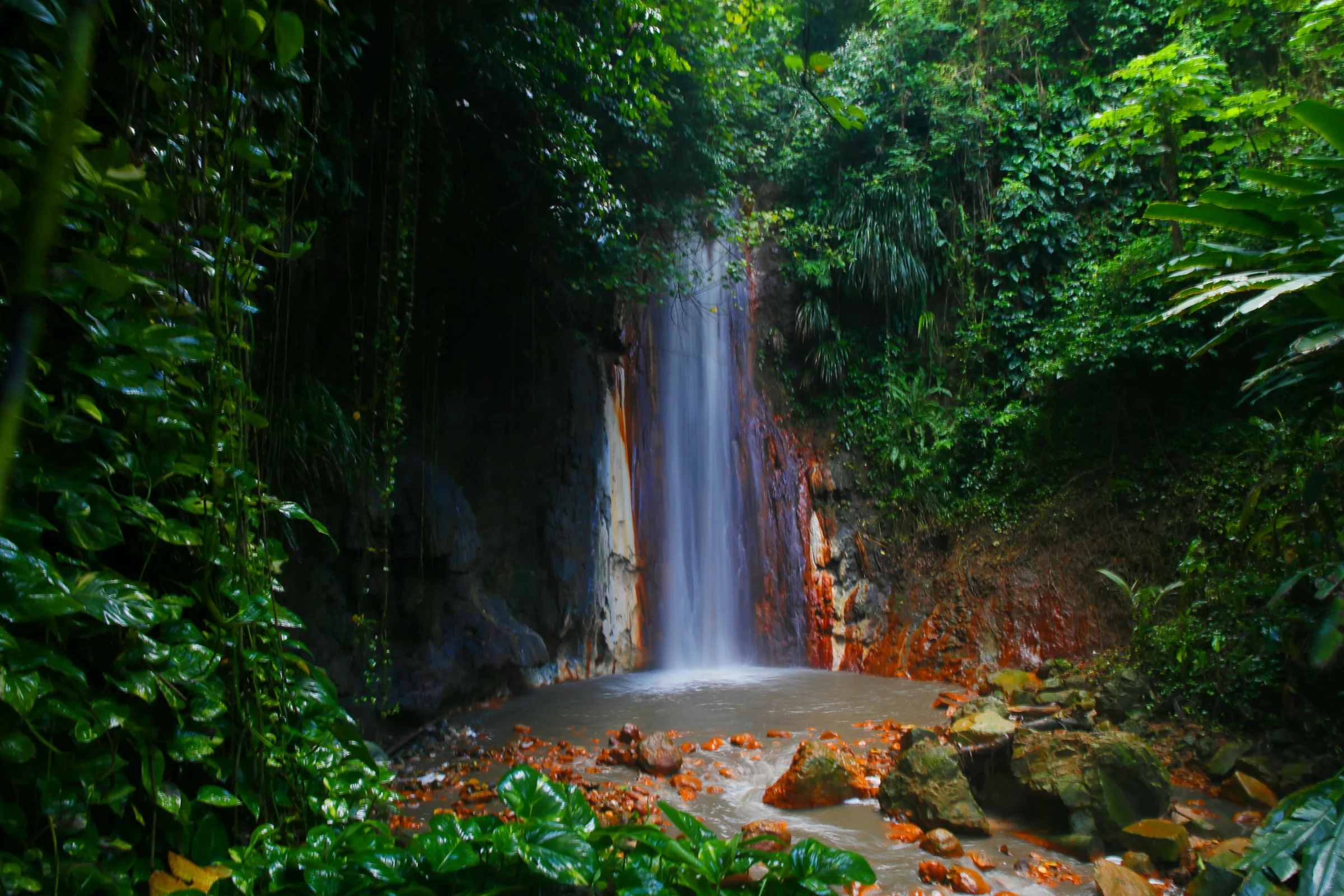
Several waterfalls around Soufrière and the interior have accessible pools or viewing areas. Water flow, crowd levels, and walking conditions change after rain, so the guide should choose the site on the day.
Sail along the west coast
A private catamaran or motorboat reveals the steep coastline and provides access to snorkeling, small bays, and views of both Pitons from the water. Routes can link northern hotels with Soufrière without using the winding coastal road.
Visit Pigeon Island
Trails climb through the remains of British military fortifications above beaches and the northern coast. The site suits families because the visit can combine history, a short hike, and swimming.
Experience local food and cacao
Estate visits and small restaurants can introduce cacao production, Creole cooking, tropical produce, seafood, and coal-pot techniques. The strongest experiences explain agriculture and preparation rather than only presenting finished dishes.

Where to stay
Stay around Soufrière for the Pitons, volcanic landscapes, rainforest, waterfalls, and the island's most dramatic hotel views. Properties range from hillside resorts to beachfront estates, and room accessibility varies considerably.
Stay in Cap Estate for quieter northern coves, golf, villas, and small luxury hotels. Stay in Rodney Bay for a broad beach, marina, restaurants, shops, and easier evening movement outside the resort.
Stay in Marigot Bay for a sheltered harbor, yacht activity, and a central west-coast position. The bay is visually striking, but the beach is small and most island excursions still require road or boat transfers.
We recommend a split stay only when there are at least seven nights. Four nights in Soufrière and three in the north create a useful contrast without turning the trip into a sequence of hotel changes.
Our favorite hotels
Jade Mountain
Jade Mountain has 29 open-sided sanctuaries on a steep hillside above Anse Chastanet, each oriented toward the Pitons and many with large private infinity pools. The architecture and view define the experience, but the stairs and open-air rooms are not suited to every traveler. The property has 29 open-air sanctuaries. Twenty-four have private infinity pools.
Ladera Resort
Ladera has 37 open-wall suites, many with private plunge pools, on a forested ridge between the Pitons. The adults-only setting, high elevation, and immediate access to rainforest views distinguish it from St. Lucia's beachfront resorts.
Sugar Beach, A Viceroy Resort
Sugar Beach has approximately 130 rooms, cottages, bungalows, and residences across a 100-acre former sugar estate between the Pitons. The property has direct beach access, extensive family facilities, and a full spa.
Cap Maison
Cap Maison has 49 rooms, suites, and villas on a cliff at the northern end of St. Lucia. The property has a small beach, rooftop pools in selected suites, and is close to Rodney Bay restaurants.
Best time to visit
December through April is generally the driest period, with lower humidity and the strongest hotel demand. Festive weeks and the winter sailing season require early booking.
May and June are warmer and greener with fewer visitors. Tropical storms are possible from June through November, with the greatest seasonal risk generally occurring from August through October. Rain is often heavier around Soufrière and the forested interior than along parts of the north coast.
Pair it with
- Dominica for more demanding hiking, wildlife, and a less resort-oriented nature trip.
- Martinique for French Caribbean food, towns, and ferry connections.
- Barbados for a flatter island with broader dining and heritage touring.
- The Grenadines for small-island sailing, reefs, and private resorts.
Getting there
Hewanorra International Airport in the south handles most long-haul flights, while George F. L. Charles Airport near Castries handles regional services. Transfers to Soufrière are shorter from Hewanorra, while northern hotels are closer to George F. L. Charles. Helicopter and boat transfers may be available according to schedule and weather.
Approximate travel times:
- Hewanorra Airport to Soufrière: 45 to 75 minutes
- Hewanorra Airport to Rodney Bay or Cap Estate: 1.5 to 2.5 hours
- George F. L. Charles Airport to Rodney Bay: 20 to 35 minutes
- George F. L. Charles Airport to Soufrière: 1.5 to 2 hours
- Soufrière to Marigot Bay: 45 to 75 minutes
- Soufrière to Rodney Bay by private boat: approximately 1 to 1.5 hours, depending on vessel and sea conditions
Roads are winding, and weather or local traffic can extend transfers. We avoid tight flight connections after a cross-island journey and confirm whether hotel rooms require substantial stairs before finalizing the property.
Frequently asked questions
Should I stay in Soufrière or the north?
Choose Soufrière for the Pitons, rainforest, volcanic sites, and distinctive hillside hotels. Choose the north for restaurants, marinas, gentler resort terrain, and a broader range of beaches. A split stay suits trips of seven nights or more.
How many nights should I stay?
Five nights provide a focused stay in one region. Seven or eight nights allow both Soufrière and the north, with time for sailing, hiking, and a quiet resort day.
Are open-wall hotel rooms comfortable?
They provide exceptional views and natural ventilation but also admit insects, humidity, light, and outside sounds. Travelers who need full air-conditioning, dark rooms, or sealed spaces should choose a conventional enclosed room.
Is Gros Piton difficult to climb?
Yes. The route is steep and strenuous in heat and humidity. A local guide is required, and the hike is best started early. Travelers should not confuse it with a casual scenic walk.
Is St. Lucia suitable for families?
Yes. Beachfront estates, sailing, waterfalls, gardens, and short nature walks work well for families. Some hillside resorts are adults-only or have extensive stairs, so hotel choice matters.
Are the beaches volcanic?
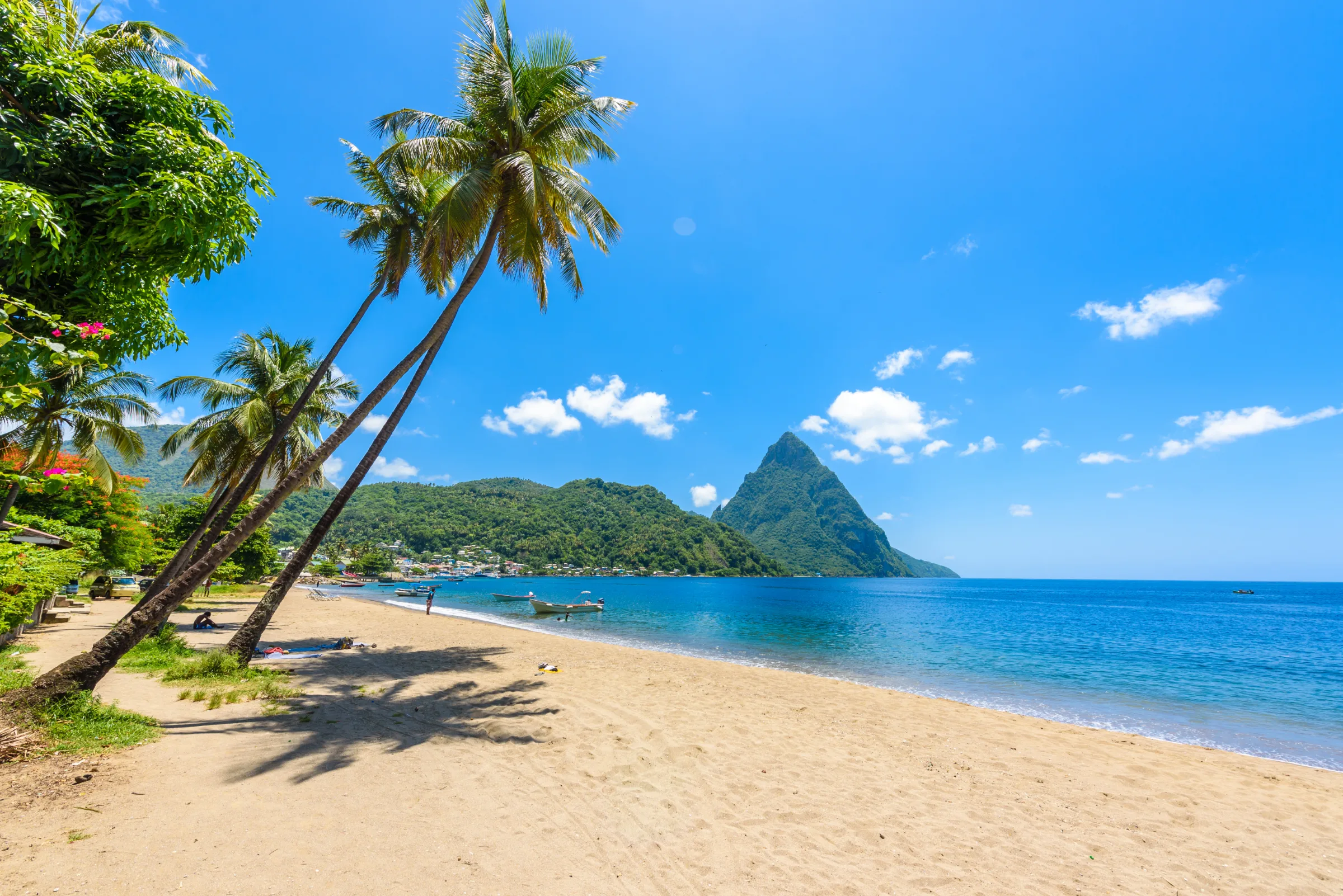
Several southwestern beaches have dark or mixed volcanic sand, while northern beaches are generally lighter. Beach size and water conditions vary by bay, and some scenic hotels sit above rather than directly on the sand.
Can I travel between resorts by boat?
Private water transfers are possible along the west coast when sea conditions and hotel docks allow. They can reduce road time and provide a scenic arrival, but luggage and mobility arrangements should be confirmed.
What should I pack?
Bring lightweight clothing, strong sun protection, a light waterproof layer, insect repellent, water shoes, and supportive footwear for trails. A small day bag is useful for boat and waterfall excursions.


