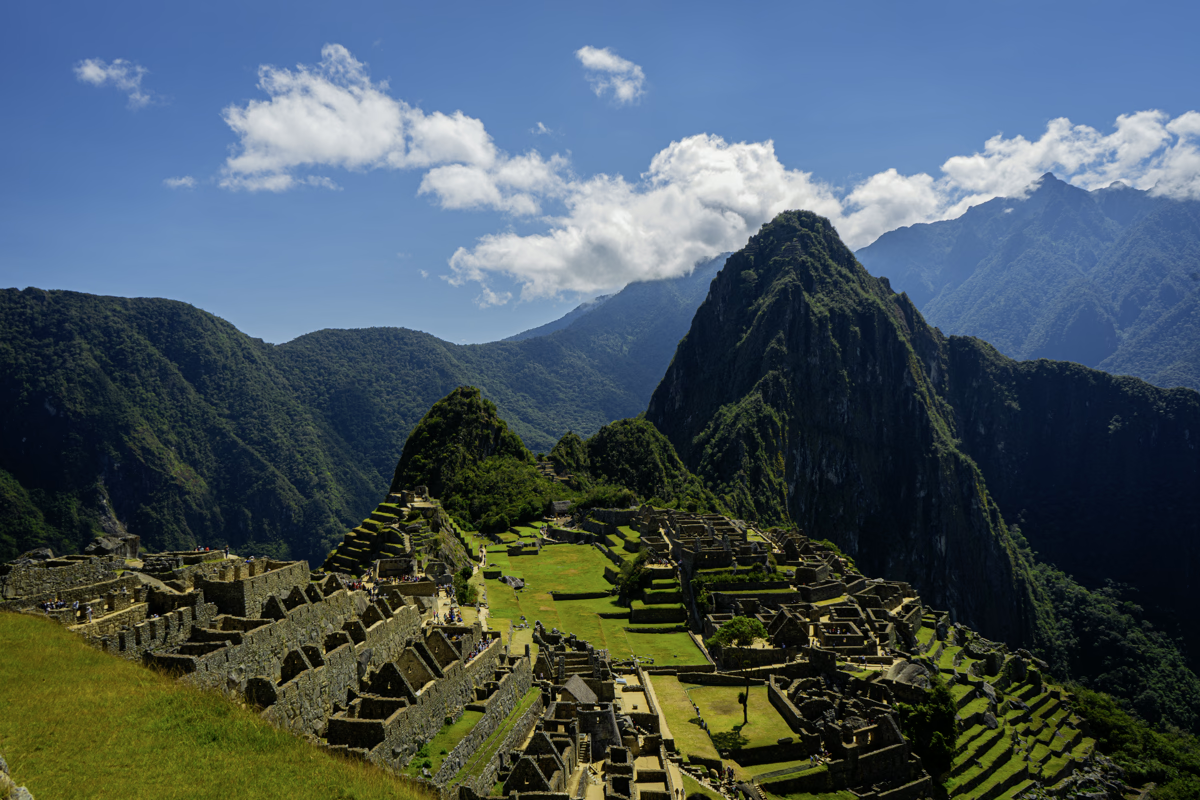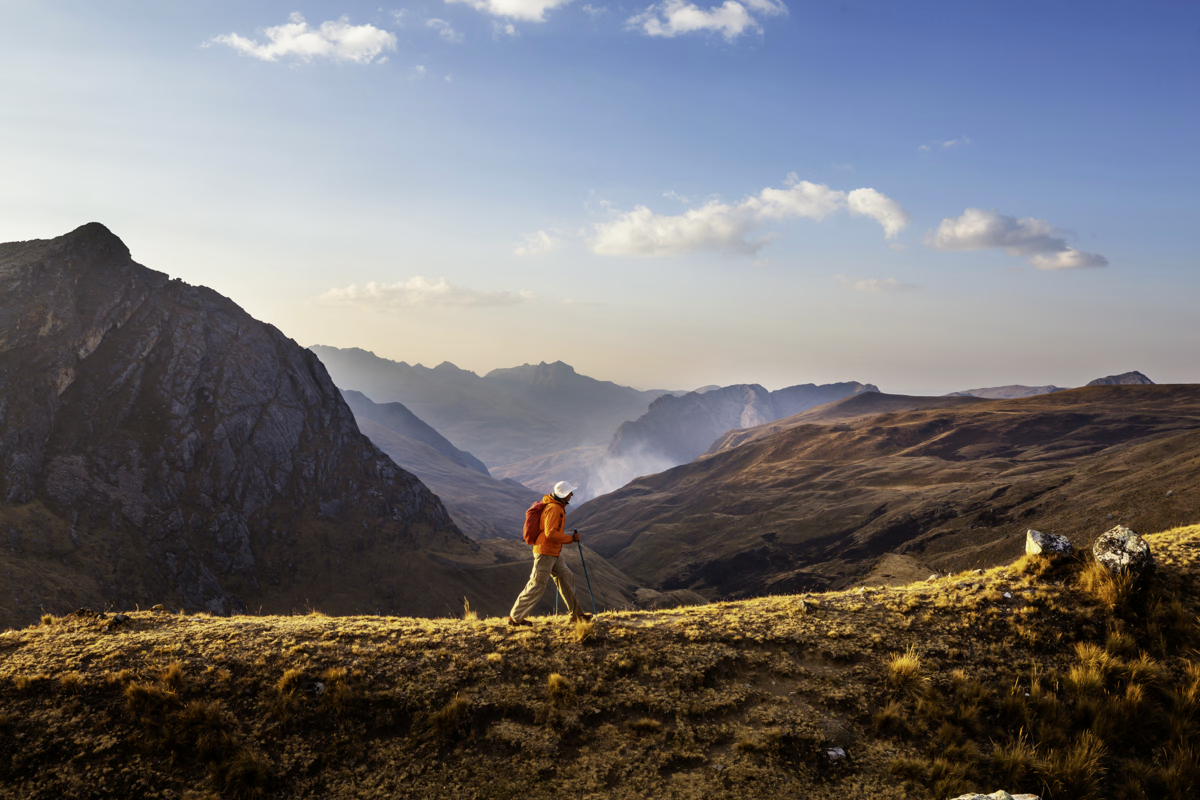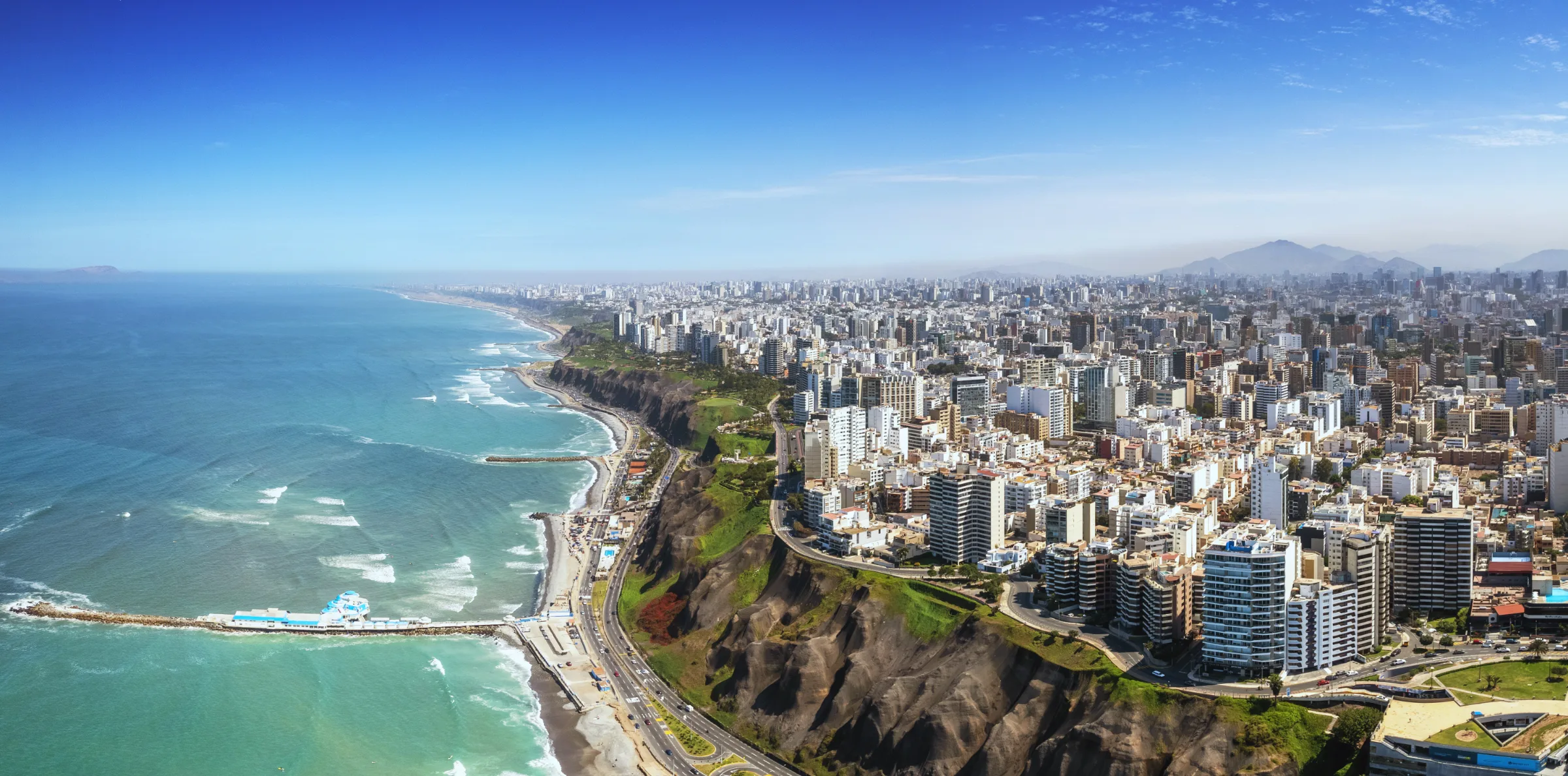
Lima is a desert capital built above the Pacific Ocean, where pre-Columbian archaeological sites, colonial churches, twentieth-century houses, contemporary galleries, and ambitious restaurants exist within the same metropolitan area. Miraflores and Barranco draw most visitors, but the historic center, Pueblo Libre, San Isidro, and the coastal cliffs each reveal a different period of the city's history. Treating Lima only as an airport connection misses one of Peru's most culturally layered destinations.
At a glance
| Best for | Food, museums, archaeology, art, architecture, design, and Pacific views |
|---|---|
| Don't miss | Barranco, the Larco Museum, Miraflores, the historic center, Huaca Pucllana, and a guided culinary experience |
| Recommended stay | 2 to 3 nights |
| Best area to stay | Barranco or Miraflores, with San Isidro for quieter full-service hotels |
| Pairs well with | Every Peru itinerary, especially Cusco, the Amazon, and Northern Peru |
| Closest airport | Jorge Chávez International Airport (LIM) |
| Best time to visit | December through April for clearer skies; May through November for cooler touring weather |
| Getting around | Private transfers, guided walks, and short neighborhood explorations on foot |
| Budget | $$ to $$$$ |
Why stay in Lima?
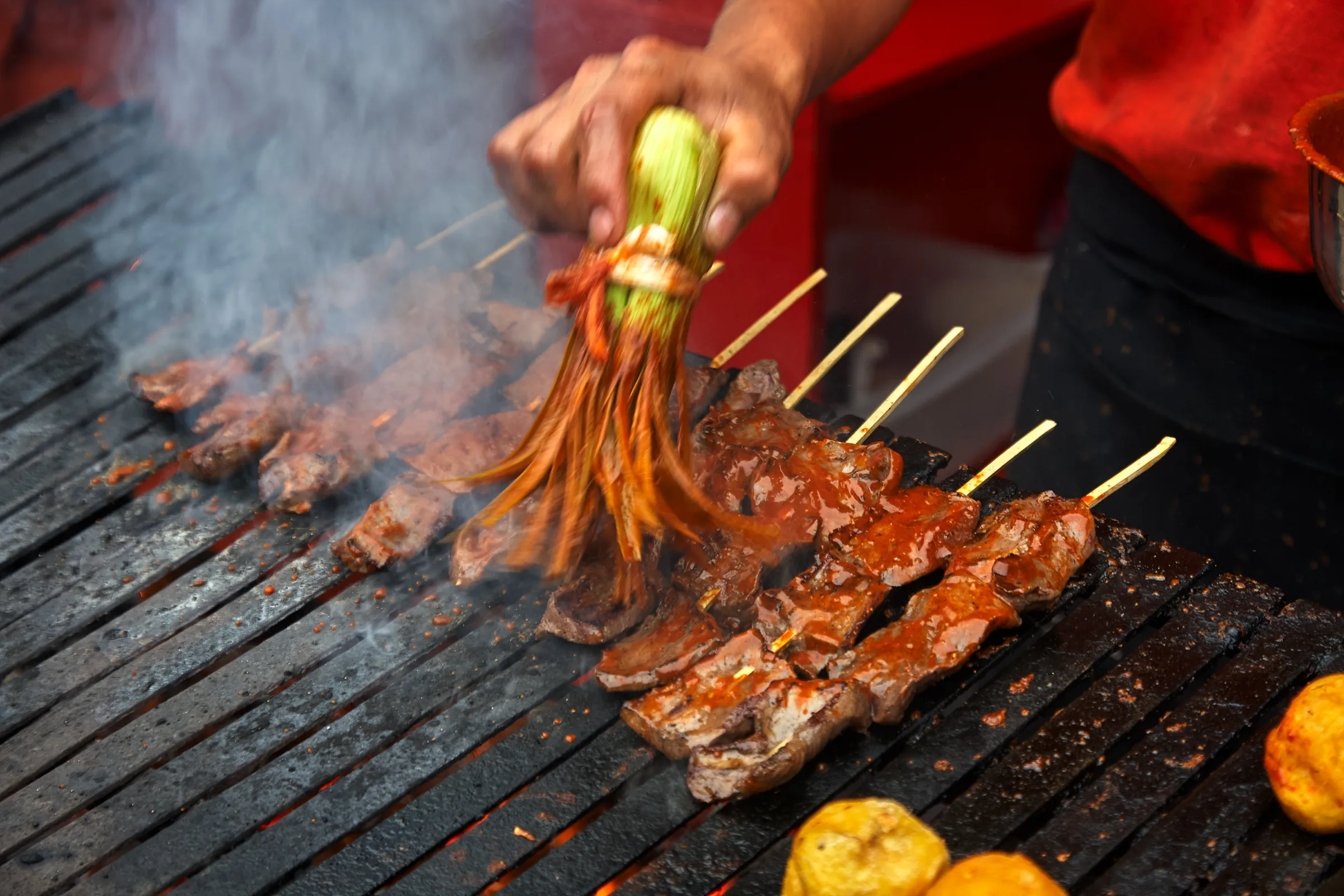
Lima's food scene draws international attention because it brings together coastal seafood, Andean crops, Amazonian ingredients, Chinese-Peruvian chifa, Japanese-Peruvian Nikkei cooking, Afro-Peruvian traditions, and regional dishes from across the country. Reservations at the best-known restaurants can be difficult, but the city's culinary strength is not limited to tasting menus. Markets, cevicherías, bakeries, anticucho stands, neighborhood restaurants, and pisco bars all belong in a well-planned stay.
The city was important long before the Spanish foundation of 1535. Huaca Pucllana rises among modern buildings in Miraflores, Huaca Huallamarca stands in San Isidro, and the larger complex at Pachacamac lies south of the city. The Larco Museum organizes thousands of years of Peruvian history through ceramics, metalwork, textiles, and its visible storage galleries.
Barranco preserves republican-era houses, small museums, galleries, studios, and street art near the ocean. Miraflores has the broadest range of hotels, restaurants, parks, and coastal paths. The UNESCO-listed historic center contains convents, churches, carved balconies, and civic buildings that explain Lima's colonial and republican importance.
The coast changes with the seasons. Summer brings brighter skies and warmer evenings, while much of winter is marked by garúa, the low cloud and mist typical of Lima's desert coast. The subdued light can surprise first-time visitors, but it rarely prevents museum visits, food experiences, or neighborhood walks.
Our take: plan two full days, reserve one important meal in advance, and divide the rest between archaeology, art, and a guided walk through Barranco or the historic center. Lima works best when it is treated as a destination rather than an overnight before Cusco.
Is Lima a good fit?
- Plan trips around food, art, architecture, or archaeology.
- Want context before visiting the Andes or northern archaeological sites.
- Enjoy boutique hotels in historic houses.
- Prefer a city stay with ocean views and neighborhood walks.
- Want museums that explain Peru's cultures across several millennia.
- Appreciate a mix of formal dining and casual local food.
Travelers seeking beaches for swimming and resort days should look elsewhere because Lima's coastline is urban, the water is cool, and many beaches are rocky. Its strengths are cultural and culinary, with the Pacific serving as a dramatic backdrop rather than a tropical beach experience.
Best things to do
Explore Barranco
Walk among restored republican houses, galleries, workshops, street art, and the lanes around the Puente de los Suspiros. A guide can explain how a former seaside resort became the center of Lima's contemporary creative scene.
Visit the Larco Museum
The museum's collection spans thousands of years of pre-Columbian history and is arranged in a way that gives first-time visitors clear cultural and chronological context. The open storage galleries contain tens of thousands of additional objects.
Experience Lima through food
Combine a market visit, a chef-led lunch, a neighborhood food walk, or a cooking class with one carefully chosen dinner. The aim is to compare traditions and ingredients rather than move from one famous dining room to another.
Tour the historic center
Visit the Plaza Mayor, cathedral, convents, and streets lined with enclosed wooden balconies. A private guide is valuable because the area's architecture is tied closely to colonial government, religion, trade, and repeated earthquake reconstruction.
Visit Huaca Pucllana
This adobe ceremonial complex was constructed centuries before the Inca and now sits within Miraflores. The contrast between the stepped pyramid and the surrounding city makes Peru's long urban history immediately visible.
Walk the Miraflores cliffs
Parks and paths run above the Costa Verde, with broad views across the Pacific and access to cafés, gardens, and public art. The route is especially pleasant in summer or late afternoon when the cloud layer lifts.
Explore Lima's art collections
Choose among the Museo de Arte de Lima, the Pedro de Osma collection, the Museum of Contemporary Art, and smaller galleries in Barranco. Together they connect ancient material culture, colonial art, republican history, and current Peruvian practice.
Visit Pachacamac
South of central Lima, Pachacamac was a major pilgrimage center used by several cultures over many centuries. Its temples, plazas, and museum make a rewarding half-day excursion for travelers interested in archaeology beyond the Inca period.


Where to stay
Stay in Barranco if you want galleries, independent restaurants, restored houses, and evening walks through Lima's most visually distinctive neighborhood. The hotel selection is smaller than in Miraflores, but the strongest properties have genuine architectural character and place you close to the district's cultural life.
Stay in Miraflores for the widest choice of hotels, coastal parks, restaurants, and services. It is the most practical neighborhood for first-time visitors and families, with easier access to the Malecón and shorter transfers to many culinary experiences.
Stay in San Isidro for quieter residential streets, business-class hotels, fine dining, and access to Huaca Huallamarca. It has fewer visitor attractions within immediate walking distance but suits travelers who value larger rooms, spas, and calm evenings.
We generally avoid staying near the airport unless a connection is extremely short. The airport is separated from the main visitor neighborhoods by traffic, and the time saved in the morning rarely compensates for missing an evening in Barranco or Miraflores.
Our favorite hotels
Hotel B
Hotel B has 20 rooms in a restored Belle Époque mansion in Barranco. The property has private art collection, rooftop terrace, library bar, and immediate access to galleries.
Atemporal
Atemporal contains only six rooms in a 1940s house in Miraflores. The small scale, residential setting, garden, and house-style service suit couples who prefer privacy and local character over a traditional lobby, spa, or large restaurant.
Miraflores Park, A Belmond Hotel, Lima
This 87-room all-suite hotel overlooks the Pacific at the southern end of Miraflores. A rooftop pool, larger rooms, spa facilities, and quick access to both Miraflores and Barranco distinguish it from Lima's smaller boutique properties.
Villa Barranco by Ananay Hotels
Villa Barranco has 20 rooms in a restored early twentieth-century residence near the ocean. The property has original mosaics, woodwork, balconies, and a rooftop terrace.
Best time to visit
December through April is Lima's warmest and clearest period, with brighter skies, more reliable sunsets, and lively coastal parks. January through March can be humid, particularly during midday, but evenings are pleasant for outdoor dining.
May through November is cooler and frequently overcast because of coastal garúa. The cloud layer is most persistent from June through September, yet temperatures remain mild and the city's restaurants, museums, and archaeological sites are active year-round.
Pair it with
- Cusco, the Sacred Valley & Machu Picchu for Inca archaeology and Andean culture.
- The Peruvian Amazon for rainforest wildlife and naturalist-led exploration.
- Arequipa & Colca Canyon for colonial architecture, volcanoes, and condors.
- Lake Titicaca for island communities and high-altitude lake landscapes.
- Northern Peru for Moche, Chimú, and Chachapoya archaeology.
Getting there
Jorge Chávez International Airport is Peru's main international and domestic hub. The airport lies west of the principal visitor neighborhoods, and transfer times vary considerably with traffic. Domestic flights to Cusco, Arequipa, Juliaca, Puerto Maldonado, Iquitos, Trujillo, Chiclayo, and other regional gateways normally depart from the same airport.
Approximate travel times:
- Lima Airport to Miraflores: 45 to 90 minutes
- Lima Airport to Barranco: 50 to 100 minutes
- Miraflores to Barranco: 15 to 25 minutes
- Miraflores to the historic center: 35 to 60 minutes
- Miraflores to the Larco Museum: 30 to 50 minutes
- Miraflores to Pachacamac: 45 to 75 minutes
We allow generous transfer time before flights because peak traffic can extend journeys unexpectedly. For itineraries beginning at altitude, one or two nights in Lima also create a more comfortable transition after an international arrival.

Frequently asked questions
How many nights should I stay?
Plan two to three nights. Two nights work when flight times create nearly two full days. Three nights allow a slower food-focused itinerary, the historic center, Barranco, and one major museum or archaeological excursion.
Should I stay in Barranco or Miraflores?
Choose Barranco for art, historic houses, boutique hotels, and a stronger neighborhood identity. Choose Miraflores for a wider range of rooms, coastal parks, family-friendly facilities, and easier access to services. The districts are close enough to visit each other easily outside peak traffic.
How far in advance should restaurants be booked?
Reserve globally known tasting-menu restaurants as soon as dates are confirmed. Many excellent neighborhood restaurants require less notice, so a balanced plan leaves room for spontaneous lunches, cevicherías, bakeries, and market visits.
Is Lima sunny year-round?
No. Summer, roughly December through April, has the brightest weather. From late autumn through spring, low coastal cloud and mist are common. The gray sky is typical of Lima's desert climate and does not mean heavy rain is expected.
Is Lima a beach destination?
Not in the resort sense. The city has beaches below the cliffs, but the Pacific is cool, surf conditions vary, and many sections are rocky. The coast is better for views, walking, surfing with a reputable instructor, and seaside dining than for a classic tropical beach stay.
Do I need a guide?
A guide adds the most value in the historic center, at Pachacamac, and during food or architecture-focused experiences. Barranco and the Miraflores Malecón also reward independent time once transfers and restaurant reservations are arranged.
Is Lima suitable for families?
Yes. The Larco Museum, coastal parks, cooking classes, archaeology, street art, and flexible food experiences work well for families. Private guiding allows visits to be shortened around traffic, meals, and younger travelers' attention spans.
Should I stay near the airport before an early flight?
Only when the departure is extremely early or the connection is short. For most itineraries, staying in Miraflores or Barranco provides a better final evening, with a private transfer scheduled early enough to account for traffic.