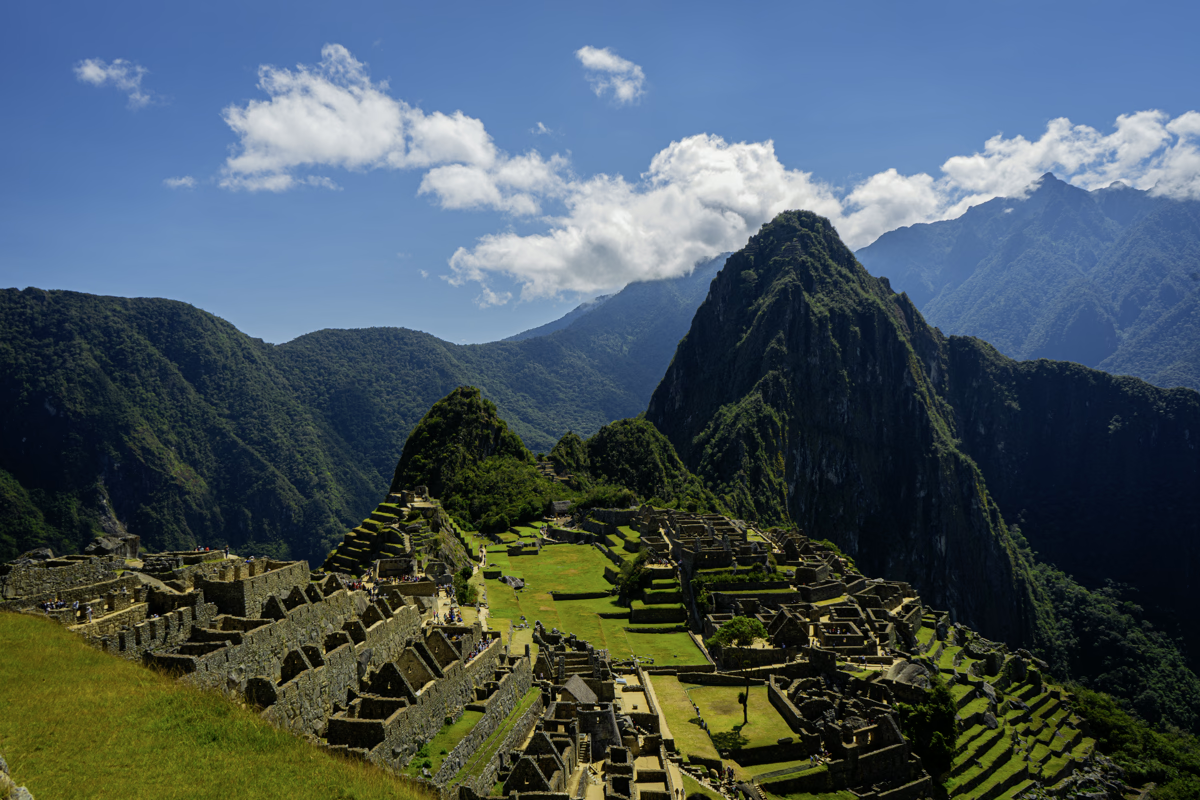
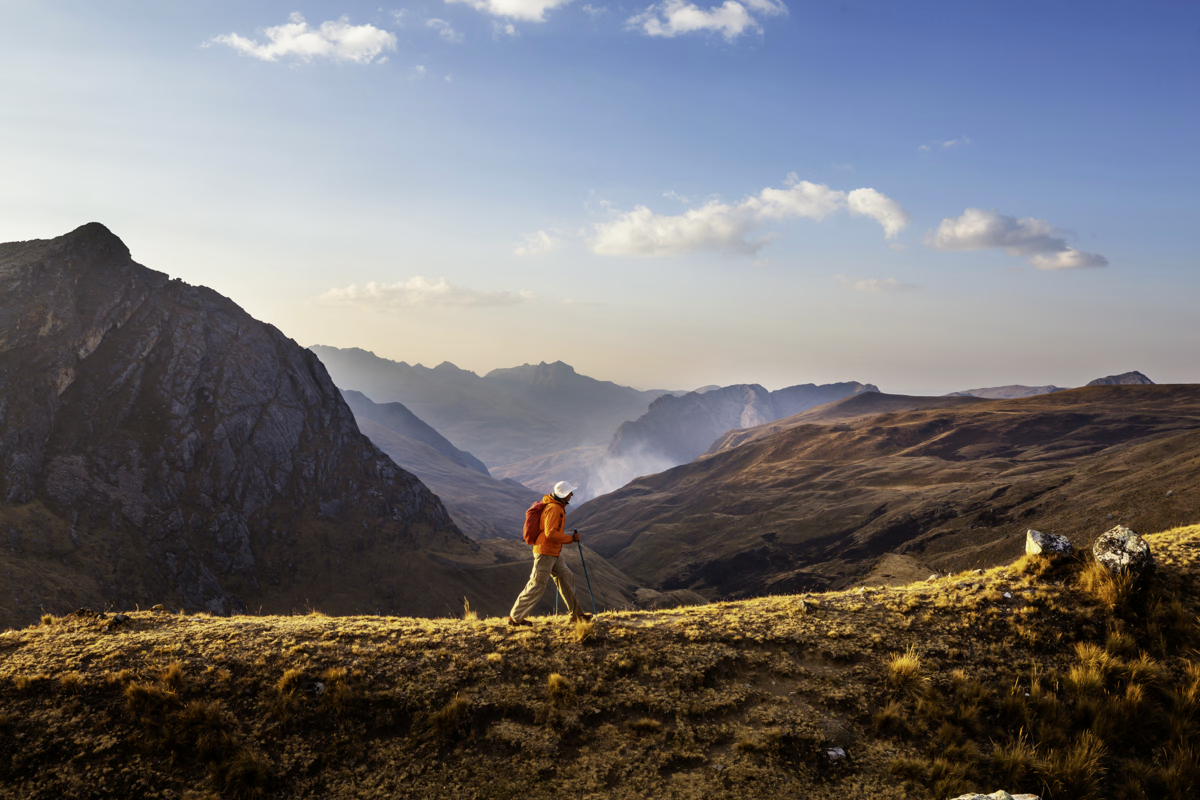
Cusco, the Sacred Valley & Machu Picchu form the cultural heart of a first trip to Peru. Cusco preserves Inca stonework beneath colonial churches and mansions, the Sacred Valley follows the Urubamba River through agricultural terraces and Quechua communities, and Machu Picchu occupies a forested ridge where the Andes descend toward the Amazon basin. The region rewards careful pacing because its major sites sit at different elevations and require a combination of private transfers, trains, guided walks, and timed admissions.
At a glance
| Best for | Inca archaeology, Andean landscapes, living culture, textiles, hiking, and historic hotels |
|---|---|
| Don't miss | Machu Picchu, Ollantaytambo, Pisac, Sacsayhuamán, Moray, and Cusco's historic center |
| Recommended stay | 6 to 8 nights |
| Best area to stay | The Sacred Valley first, followed by Cusco and one night near Machu Picchu |
| Pairs well with | Lima, the Peruvian Amazon, Arequipa & Colca Canyon, and Lake Titicaca |
| Closest airport | Alejandro Velasco Astete International Airport (CUZ) |
| Best time to visit | April through October, with May through September bringing the driest weather |
| Getting around | Private transfers, trains, guided walks, and selected hikes |
| Budget | $$$ to $$$$ |
Why stay in Cusco, the Sacred Valley & Machu Picchu?
This is not one destination but a sequence of places that explain the rise of the Inca state and the cultures that continue to live in the Andes. Cusco stands at approximately 11,150 feet above sea level, the central Sacred Valley is considerably lower, and Machu Picchu sits lower still at about 7,970 feet. Beginning in the valley gives many travelers a gentler introduction to altitude before they sleep in Cusco.
The Sacred Valley deserves several days of its own. Pisac combines terraced ruins with a market town, Ollantaytambo retains an Inca street plan and monumental hillside complex, and the circular terraces at Moray show how carefully Andean societies studied microclimates and agriculture. The salt pans at Maras remain in use, with thousands of shallow pools descending along the hillside.
Cusco brings Inca and Spanish colonial history into direct contact. The precisely fitted walls of Qorikancha survive beneath the Convent of Santo Domingo, large Inca stones appear throughout the historic center, and nearby Sacsayhuamán demonstrates masonry on a far larger scale. Museums, workshops, restaurants, and markets add context beyond the major archaeological sites.
Machu Picchu requires advance planning because entry is divided into timed circuits, each with a defined route through the sanctuary. The correct circuit depends on whether your priority is the classic elevated view, closer study of the urban sector, or a longer mountain hike. Train schedules, bus tickets, guide arrangements, and hotel choices should be built around the confirmed admission rather than booked separately.
Our take: stay at least three nights in the Sacred Valley, two or three in Cusco, and one near Machu Picchu. This avoids repeated backtracking, supports acclimatization, and leaves room for experiences that are lost when the entire region is compressed into a few long days.
Is Cusco, the Sacred Valley & Machu Picchu a good fit?
- Want to understand Inca history through several complementary sites.
- Enjoy mountain scenery, archaeology, textiles, and local food.
- Prefer private guiding and a carefully paced itinerary.
- Are comfortable with stone steps, uneven paths, and changing elevations.
- Want a choice between gentle cultural touring and more demanding hikes.
- Appreciate historic hotels, rural lodges, and train journeys.
Travelers who want a single resort stay may find the logistics complex, but those willing to move between two or three bases gain a much fuller understanding of the region. The Sacred Valley is quieter and more rural than Cusco, while Cusco has the strongest restaurant, museum, and evening scene.
Best things to do
Explore Cusco's historic center
Walk from the Plaza de Armas to Qorikancha, San Blas, and the streets lined with surviving Inca walls. A private guide can connect the city's pre-Hispanic foundations, colonial architecture, religious art, and modern Quechua identity.
Visit Sacsayhuamán and the nearby sites
Sacsayhuamán's massive zigzag walls sit above Cusco and contain some of the largest stones used in Inca construction. Visits are often combined with Qenqo, Puka Pukara, and Tambomachay for a broader look at ceremonial and defensive landscapes.
Spend time in Pisac
The archaeological complex climbs high above the valley through terraces, residential sectors, and ceremonial areas. In the town below, the market is a useful place to meet artisans and compare regional weaving, ceramics, and food products.
Explore Ollantaytambo
Ollantaytambo retains narrow stone streets, canals, and an urban plan dating to the Inca period. The hillside temple complex also played a role in the resistance against Spanish forces, making it one of the valley's most historically layered stops.
Visit Moray and the Maras salt pans
Moray's concentric terraces create a series of distinct growing conditions, while nearby Maras contains thousands of salt pools supplied by a mineral spring. The two sites work well together because they demonstrate different forms of environmental knowledge and land use.
Visit Machu Picchu with a private guide
A knowledgeable guide explains the site's urban layout, agricultural terraces, water channels, sacred spaces, and relationship to the surrounding peaks. The route is determined by the circuit on your ticket, so planning begins with the view and sectors you most want to see.
Hike part of the Inca trail network
Options range from a one-day approach through the Sun Gate to multi-day treks with camping or lodge accommodation. Less crowded routes through the Lares region can combine mountain walking with village visits and textile traditions.
Meet Andean weavers and food producers
Community-led visits can include natural dye demonstrations, backstrap weaving, potato cultivation, corn varieties, and traditional cooking. The strongest experiences are small, locally managed, and designed around genuine exchange rather than staged shopping stops.

Where to stay
Stay in the Sacred Valley at the beginning of the trip if you want lower sleeping elevations, larger rural properties, gardens, mountain views, and direct access to Pisac, Moray, Maras, and Ollantaytambo. Urubamba and the surrounding countryside have the widest choice of upscale lodges, while Ollantaytambo is useful for travelers prioritizing early trains and historic streets.
Stay in Cusco for museums, architecture, restaurants, markets, and evenings within the historic center. Hotels range from restored colonial houses with a handful of suites to full-service properties in former monasteries and mansions. Rooms facing internal courtyards are often quieter than those overlooking busy streets.
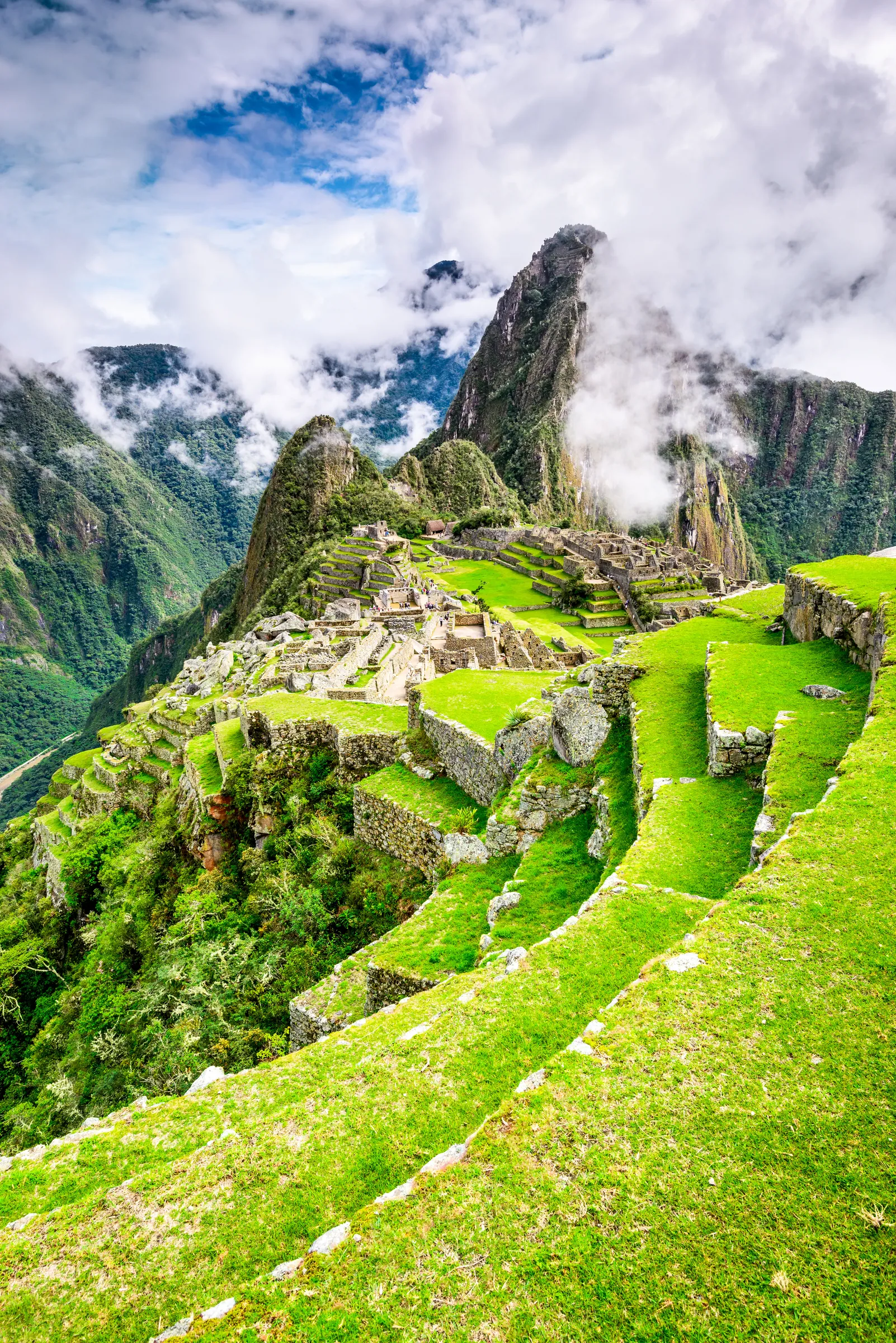
Stay near Machu Picchu for one night if you want a less rushed visit or two entries on different circuits. Aguas Calientes has the largest selection of hotels, restaurants, and train times. Sanctuary Lodge is beside the entrance and removes the morning bus journey, but its location and limited room count place it among the region's most expensive stays.
We generally divide the trip between the Sacred Valley, Cusco, and one night near Machu Picchu. Returning to Cusco immediately after a full sanctuary visit is possible, but it creates a long day and leaves little flexibility if trains are delayed.
Our favorite hotels
Explora Valle Sagrado
Explora's 50 rooms sit on a 32-hectare estate near Urquillos, with broad views across fields and mountain slopes. Guided explorations are included, and the restored Casa de Baños Pumacahua contains the spa, making this our preferred lodge for travelers who want active days planned directly from the hotel.
Inkaterra Hacienda Urubamba
This 36-room property combines a main hacienda with private casitas across approximately 100 acres in the Sacred Valley. Its working farm, mountain views, and in-house excursions suit travelers who want a quieter property with a strong connection to Andean agriculture.
Monasterio, A Belmond Hotel, Cusco
Set in a former monastery beside the Seminary of San Antonio Abad, Monasterio has 122 rooms and suites around stone courtyards. Original colonial art, a central location, and larger public spaces distinguish it from Cusco's smaller mansion hotels.
Inkaterra La Casona
Inkaterra La Casona has just 11 suites in a restored colonial house on Plaza de las Nazarenas. The property has deep stone walls, carved doors, fireplaces, and a quiet internal courtyard.
Sanctuary Lodge, A Belmond Hotel, Machu Picchu
Sanctuary Lodge has 31 rooms and is the only hotel beside the entrance to Machu Picchu. The defining advantage is location: guests can reach the gate without the bus from Aguas Calientes and return to the hotel between scheduled activities.
Best time to visit
May through September is the driest period, with clear mornings, cool nights, and the greatest demand for trains, guides, and Machu Picchu admissions. June through August are especially busy, so hotel and ticket planning should begin well in advance.
April and October are strong shoulder-season months. Landscapes are greener than in the middle of the dry season, and rainfall is usually less persistent than from December through March. The wet season can bring cloud, rain, and occasional transport disruption, but archaeological sites remain open unless authorities announce a specific closure.
Pair it with
- Lima for coastal cuisine, museums, architecture, and a lower-elevation arrival.
- The Peruvian Amazon for wildlife and rainforest after the Andes.
- Arequipa & Colca Canyon for volcanic landscapes, colonial architecture, and condors.
- Lake Titicaca for island communities and high-altitude lake scenery.
Getting there
Most travelers fly from Lima to Cusco and continue by private transfer into the Sacred Valley. Machu Picchu is reached by train to Aguas Calientes followed by a shuttle bus, or by a permitted trek that enters through part of the Inca trail network. Luggage allowances on trains are limited, so larger bags are normally stored at the previous hotel or transferred separately.
Approximate travel times:
- Lima to Cusco: 1 hour 20 minutes by air
- Cusco Airport to the central Sacred Valley: 1 to 1.5 hours
- Cusco Airport to Cusco's historic center: 20 to 35 minutes
- Cusco to Ollantaytambo: 1.5 to 2 hours
- Ollantaytambo to Aguas Calientes: 1.5 to 2 hours by train
- Aguas Calientes to Machu Picchu: 25 to 30 minutes by shuttle bus
Weather, rail operations, road traffic, and timed entry rules can affect the sequence. We confirm Machu Picchu admission first, then build trains, guides, transfers, and hotels around that reservation.


Frequently asked questions
How many nights should I stay?
Plan six to eight nights. Three nights in the Sacred Valley, two or three in Cusco, and one near Machu Picchu create a comfortable first itinerary. Add time for a longer trek, a second sanctuary entry, or deeper community-based experiences.
Should I visit the Sacred Valley before Cusco?
For many travelers, yes. Much of the Sacred Valley sits lower than Cusco, so beginning there can make the first days more comfortable. It also places Pisac, Moray, Maras, and Ollantaytambo closer to the hotel.
How far in advance should Machu Picchu be booked?
Book as early as possible once dates are firm. Admissions are sold by date, time, and circuit, and the most requested routes can sell out well ahead of travel. Train seats and the smallest hotels also become limited during the dry season.
Which Machu Picchu circuit should I choose?
The best circuit depends on whether you prioritize the classic elevated panorama, the main urban structures, or an additional mountain hike. Because each route covers different sectors, the ticket should be selected with your guide or travel planner rather than chosen only by entry time.
Do I need to hike to reach Machu Picchu?
No. Most visitors take the train to Aguas Calientes and a shuttle bus to the entrance. Hiking routes are optional and range from a one-day approach to multi-day treks requiring permits, porters, and advance preparation.
How serious is the altitude?
Altitude affects travelers differently. A gradual itinerary, hydration, lighter activity on arrival, and time in the Sacred Valley before Cusco are sensible precautions. Anyone with health concerns should discuss high-altitude travel with a medical professional before departure.
What should I pack?
Bring layers for cold mornings, strong sun, afternoon cloud, and rain. Supportive walking shoes, a light waterproof shell, sun protection, and a small day bag are useful year-round. Temperatures change quickly between valleys, exposed ruins, and evening streets.
Is the region suitable for families?
Yes, especially for school-age children interested in history, trains, engineering, and outdoor activity. The pace should include rest time, shorter site visits, and realistic expectations for stone steps and elevation. Private guiding makes it easier to adjust each day.