


Picture yourself moving quietly through the rainforest, the world around you pausing to take notice. Or drifting in the Caribbean, feeling the gentle shift of water as something large glides below. These are the moments that make wildlife travel in Central America feel truly unforgettable.
Central America is nature's crossroads, a narrow bridge between continents that rose from the sea and now holds about 7% of the world's biodiversity. This region is small enough to look like you might be able to explore it in a single trip (but spoiler alert, you can't), yet wild enough to surprise you again and again.
Taking a photo of a sunbathing iguana is simple, but the best wildlife moments happen when visitors are still, sit back, and observe. This guide brings together some of the best wildlife experiences across Central America and the Caribbean, arranged by ecosystem. From misty cloud forests to vibrant coral reefs, let's find the adventures that speak to you.
Rainforest wildlife experiences in Central America
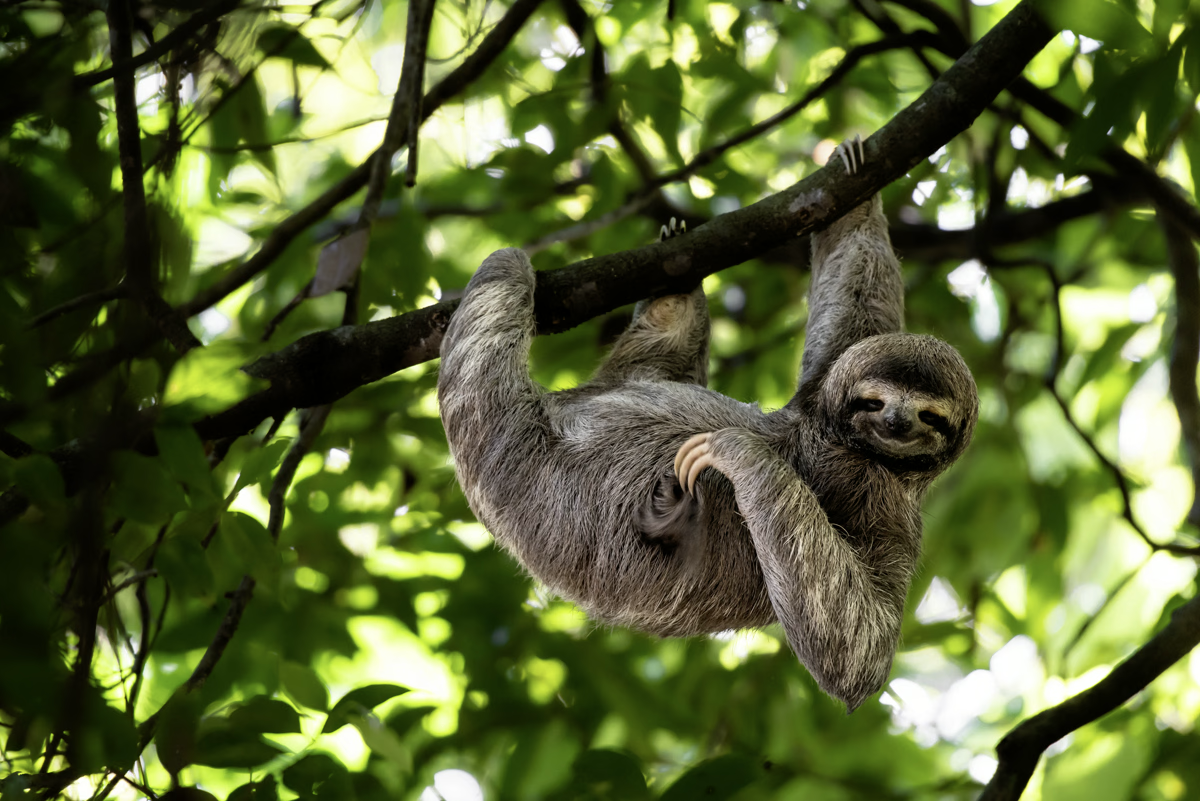
Sloths in the canopy
Near Manuel Antonio, sloths hang in the heights of the canopy, nearly invisible among the tangled leaves and vines. A green coating of algae grows on their fur, allowing them to blend in even more. Their famous stillness is a survival instinct. Since they eat mostly low-calorie leaves that take weeks to digest, their metabolism is very slow, so they move only when they have to.
From the deck of a private rainforest lodge, try not to look for movement. Instead, look for still, dark shapes, often rounded, that block the sunlight. The three-toed sloth has a bandit-like mask, while the two-toed sloth has a rounded, upturned nose. Sloths are not easy to see; you're most likely to spot one with a local naturalist guide who knows the forest well.
Expert insight: Sloths are most active at dawn and dusk. Midday sightings are usually just sleeping forms high in the canopy.
The jaguar's shadow
Jaguars are currently listed as Near Threatened, with the species already eradicated from close to half of its historic range. In the Cockscomb Basin in Belize, fresh tracks reveal a wide, trapezoidal pad, larger than any of the other big cats in this area. It's clear evidence that one of the rainforest's most elusive apex predators passed this way.
Night hikes with a skilled local guide turn the forest floor into a story laid out in mud. Every print, scat, and claw mark is a clue as you move quietly through the darkness, learning to read the signs these solitary cats leave behind. While it's unlikely you'll have the chance to see a jaguar (they're rarely seen), it's remarkable to remember that you are walking the same trails as one of the Americas' most powerful and elusive predators.

The jungle's alarm clock: howler monkeys
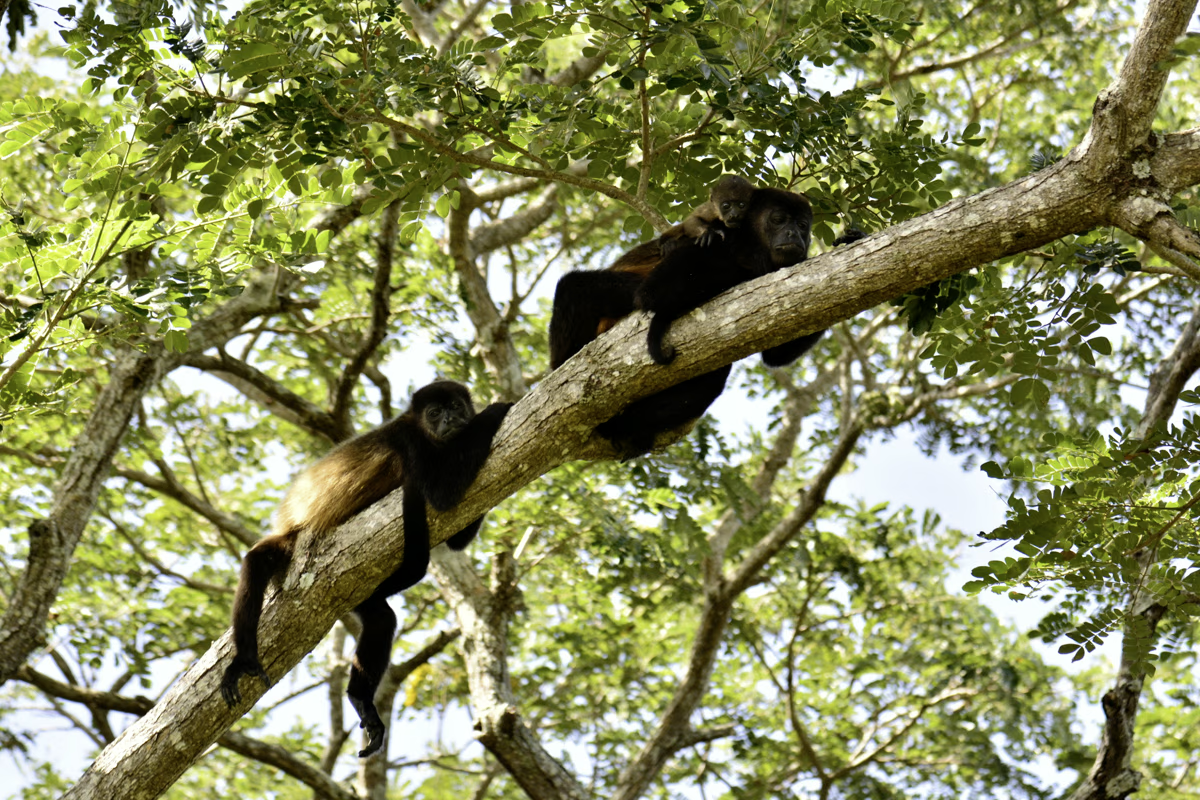
The deepest roar in the forest belongs to the howler monkey, a thunderous, primal call that can carry for miles through the dense canopy. In places like Tikal, this sound serves as nature's alarm clock, echoing long before first light as males assert their territory and greet the dawn.
Even though their roar sounds aggressive, howler monkeys are calm, and spend most of their day digesting tough leaves in peaceful family groups.
On the tapir's trail
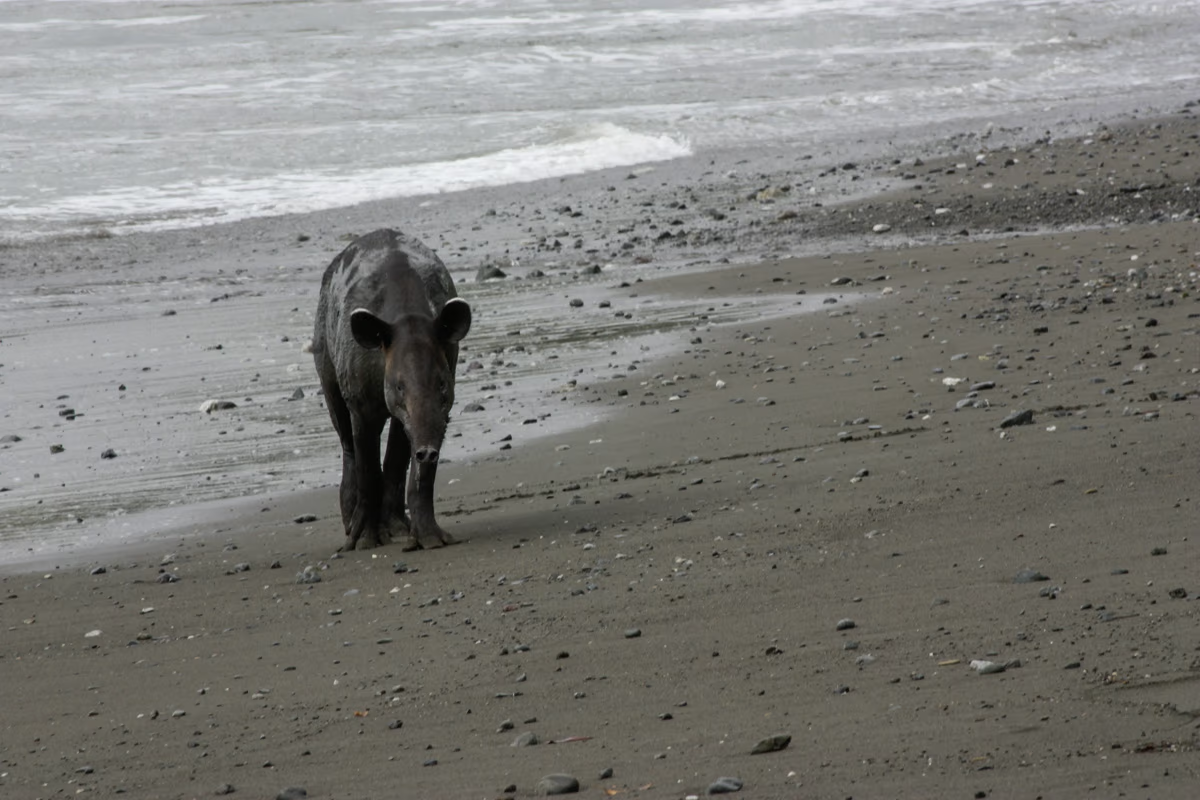
A Baird's tapir in Corcovado feels like a visitor from another age: a living relic of prehistoric times with its long, flexible snout and sturdy, barrel-shaped body. These gentle giants occasionally wander onto the beach at dawn, cooling themselves in the gentle surf or foraging along the edge of the rainforest.
It takes effort to make your way to Sirena Ranger Station in Corcovado, but that inconvenience is part of what keeps the Osa Peninsula so wild. Strict daily permits and guided walks from remote lodges mean you will have a rare experience that few others get, and the wildlife gets the protection it needs. Beyond the park, a large network of private landowners and lodges have their own wildlife reserves, extending the protected area much further along the peninsula than just in the boundaries of Corcovado (though Corcovado is also the largest national park in Costa Rica).
Expert insight: Corcovado's remote location and strict daily visitor limits protect its wildlife. This makes it one of the most pristine destinations for serious observers seeking ethical wildlife encounters.
Still waters & watching crocodile eyes
Along Tortuguero's winding canals, American crocodiles and smaller spectacled caimans bask like ancient statues on the muddy banks. An open mouth might look daunting, but it's just their way of cooling down, venting excess heat in the tropical sun.
At night, everything changes. Shine a light across the water, and you'll spot dozens of glowing eyes staring back at you, silent evidence of predators resting just out of sight, only a few meters from your boat.
Discover more of Costa Rica's rainforest and cloud forest wildlife for yourself.

Marine encounters in the Caribbean & Central America
Whale sharks at Gladden Spit
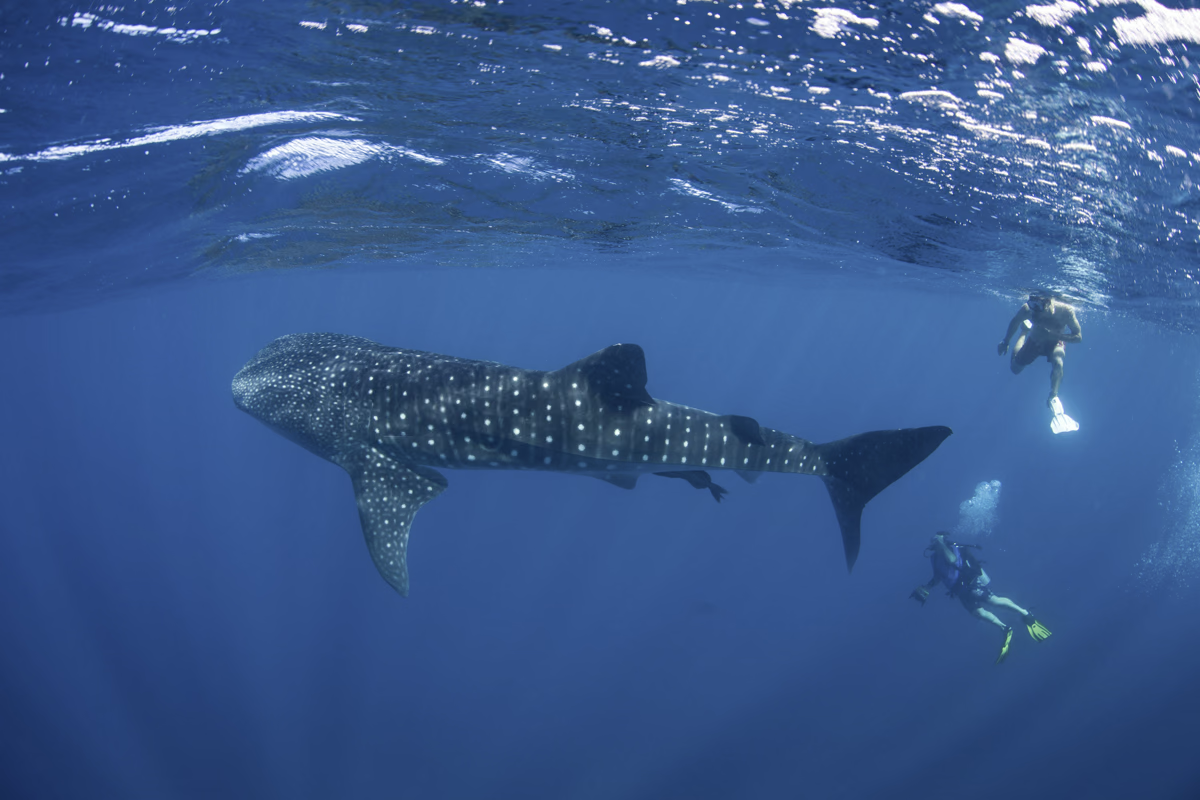
At Gladden Spit, whale sharks can be spotted from March to June, especially around the full moons. Clouds of nutrient-rich eggs released during the annual Cubera Snapper spawn create a temporary feast that draws these gentle giants to the surface in impressive numbers.
Whale shark encounters must be accompanied by a certified guide. The experience is regulated by Belize's Fisheries Department, who sets and enforces distance rules, and rules around how many visitors may go out at any given time, among other requirements. Guests must not chase or crowd the whale sharks. Stay parallel, keep your distance, and let the shark decide how long the encounter lasts.
Expert insight: Whale shark encounters in Belize depend entirely on lunar cycles and the snapper spawn. For a more reliable whale shark experience, consider visiting Mexico’s Isla Holbox in August.
The arribada: Olive Ridley turtles in Ostional
Few experiences match the raw wonder of the Arribada. On the darkest nights, during the wet season in Ostional, thousands of Olive Ridley turtles storm the beach in chaotic, synchronized waves, their bodies carving deep tracks in the sand as they come ashore to nest.
In Tortuguero, green sea turtles arrive in smaller groups, and even smaller numbers of hawksbill and leatherback turtles can be found nesting among the beaches during different times of year.
Guides use only red lights during turtle nesting activities, since white light can confuse turtles and hatchlings and throw off their sense of direction.

Watching for whales in Dominica
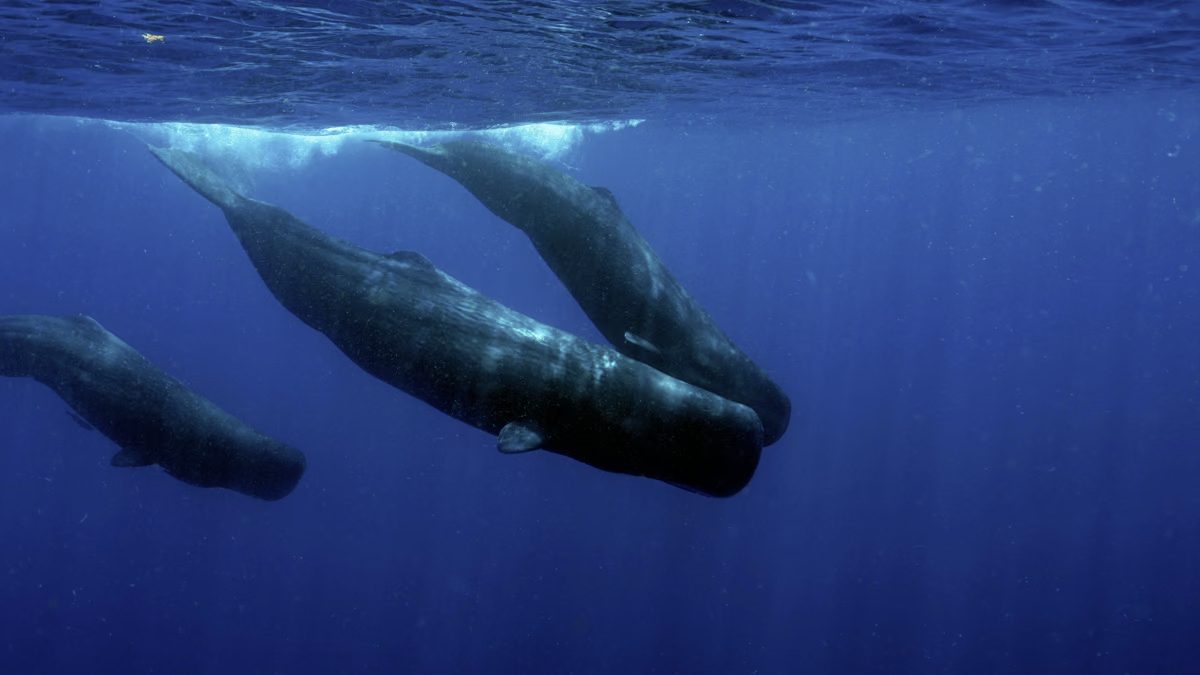
Just offshore from Dominica, the seafloor plunges straight down, creating a natural deep-water sanctuary. Sperm whales live here all year, huge forty-ton shapes that rest at the surface. From November to March, humpback whales join the resident sperm whales, putting on a show with breaches and tail slaps.
Expert insight: Sperm whales are resident year-round in Dominica, while humpbacks are seasonal visitors. Swimming with sperm whales is a separate experience than whale watching, where visitors have the opportunity to swim and snorkel (but not scuba dive) alongside these gentle giants. Guides search visually and by hydrophone, then place a small number of swimmers in the water once they find a receptive group. Expeditions are capped at six guests with only three swimmers and a guide in the water at a time, and the boat holding back at least 50 meters during an encounter.
Most serious programs run close to a week, with five days on the water and long hours waiting for a family that wants company. No reputable operator will promise close encounters. It's extraordinary but highly specialized: better suited to committed wildlife travelers, underwater photographers, and confident swimmers than to someone looking for a relaxed Caribbean vacation with a whale excursion added on.
Manatees in Belize's shallows
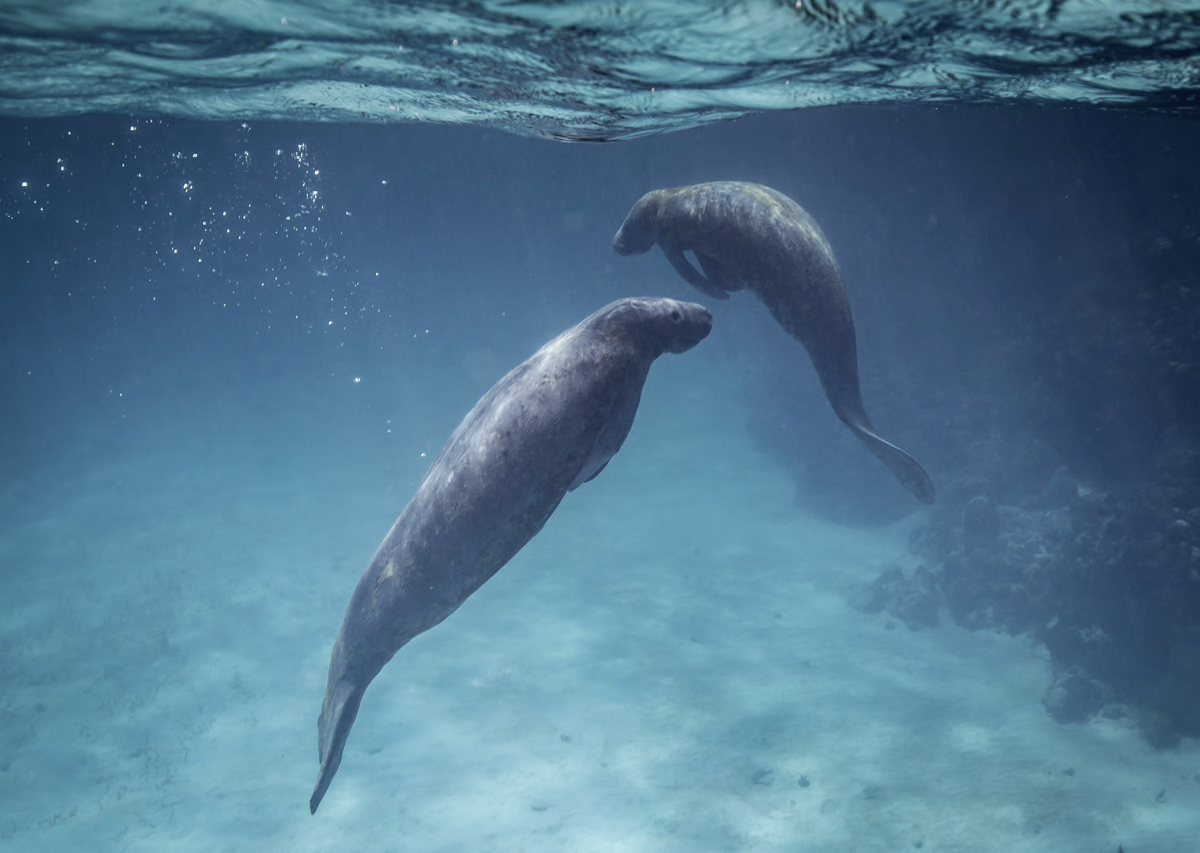
At Swallow Caye Wildlife Sanctuary, float quietly above the seagrass meadows, and you’ll often see a friendly face rise with curious grace to investigate. It’s best to visit with a private tour at sunrise or sunset, when these peaceful “sea cows” are most active, and the light is just right to spot them. The white propeller scars you may see on their backs are reminders of what these manatees have survived, and why it’s so important to give them the space they need.
The wall of sharks in Coiba National Park
A sudden change in water temperature in Coiba, usually in March, causes nutrients to rise in the water, and schools of ocean life follow. It brings hammerheads in large groups, usually from March through August, with the most active season in April to June. When you enter the water, the ocean is alive with silent movement: dozens of sleek, wide-headed sharks gliding together like underwater guards.
Liveaboard trips or private dive charters get you out to the best spots, with more time in the water and far fewer divers than the usual day trips from shore.

Bioluminescent bays
Although bioluminescent bays exist all over the Caribbean and Central America, few have a consistent-enough experience to feature on this list. The exception is Mosquito Bay in Vieques, Puerto Rico.
Mosquito Bay has exceptionally high concentrations of dinoflagellates and has been recognized as one of the brightest bioluminescent bays in the world. When you dip your paddle into the dark water of Mosquito Bay, it glows electric blue. Each stroke leaves a shimmering trail, making the sea look lit from within. This glow comes from healthy red mangroves around the bay, which feed the tiny organisms that light the water.
Tours enter by kayak, generally using the small town of Esperanza as their meeting point. Swimming is prohibited, and nightly visitor permits are limited to protect the ecosystem. The glow is brightest on new moon nights, when the sky is darkest.
Among the rays in Grand Cayman
In the clear shallows of Grand Cayman’s North Sound, wild southern stingrays gather over a pale sandbar, sometimes passing close enough to brush gently against your legs. The tradition began decades ago, when fishermen cleaned their catch inside the shelter of the reef and rays learned to associate arriving boats with food. They remain free to come and go, but generations of feeding have made this one of the Caribbean’s most predictable stingray gatherings.
The rays move with remarkable precision. Their broad fins ripple through the water, their eyes remain raised above the sand, and small openings behind the eyes called spiracles allow them to breathe even when resting on the seabed. Rather than reaching for them, stand quietly and watch how easily they navigate between swimmers.
The Sandbar and Stingray City are designated Wildlife Interaction Zones, the only places in the Cayman Islands where visitors may legally interact with or feed marine wildlife. Even here, the Department of Environment says observation without touching is best. Tour guides should control all feeding, and rays should never be lifted, pinned against the body, or raised far enough for their gills to leave the water.
A small private boat or the first departure of the morning creates a calmer experience than arriving with the busiest tour groups. Enter slowly, shuffle your feet across the sand, and give each ray room to move away. The encounter is at its best when the animals choose to approach, rather than being held in place for a photograph.
Expert insight: “Stingray City” is often used for the entire experience, but there are two separate sites. The shallow Sandbar is where most visitors stand and snorkel; the original Stingray City is a deeper site better suited to scuba divers. For the most respectful experience, choose a licensed operator that limits handling and does not encourage guests to lift, restrain, or repeatedly pose with the rays.

Birdlife & rare species
The resplendent quetzal in Costa Rica's cloud forests
In Monteverde's misty cloud forest, the resplendent quetzal blends in with moss-covered branches and green leaves. The male stands out with long, flowing tail feathers that can reach three feet, shimmering like ribbons of emerald and gold.
With patience and some luck, particularly near wild-avocado trees at dawn, you might spot one of these elusive and beautiful birds. Guests at cloud forest lodges sometimes watch these birds feast on fruit, helping to spread seeds and keep the forest thriving. For a better chance at spotting a quetzal, a private naturalist guide is worth the cost. They know what trees are fruiting, and where, and can turn a long waiting game into one of the most unforgettable sightings in Central America.
Expert insight: Quetzal sightings peak during the breeding season when wild avocado trees are fruiting, with the best time for sightings usually occurring in March and April. During this period, males make courtship flights, pairs become more vocal and active around nesting territories, and adults repeatedly visit fruiting wild-avocado trees. That makes them easier for experienced guides to locate than when they disperse through the forest after breeding.

Scarlet macaws in flight
A harsh squawk often breaks the morning silence before you see a flash of scarlet. In Corcovado National Park and on the wider Osa Peninsula, these beautiful macaws fly in lifelong pairs, two bright streaks of red, blue, and gold moving together through the dense canopy.
You can often see and hear scarlet macaws in Beach Almond trees along the coast, cracking open tough nuts with their strong beaks. Thanks to ongoing conservation, their numbers are increasing across Costa Rica, and they can now be spotted not only in the Osa Peninsula, but along the Golfo Dulce, in and around Carara National Park (from Jacó to Quepos), and on the Nicoya Peninsula.

The flamingo horizon in the Bahamas
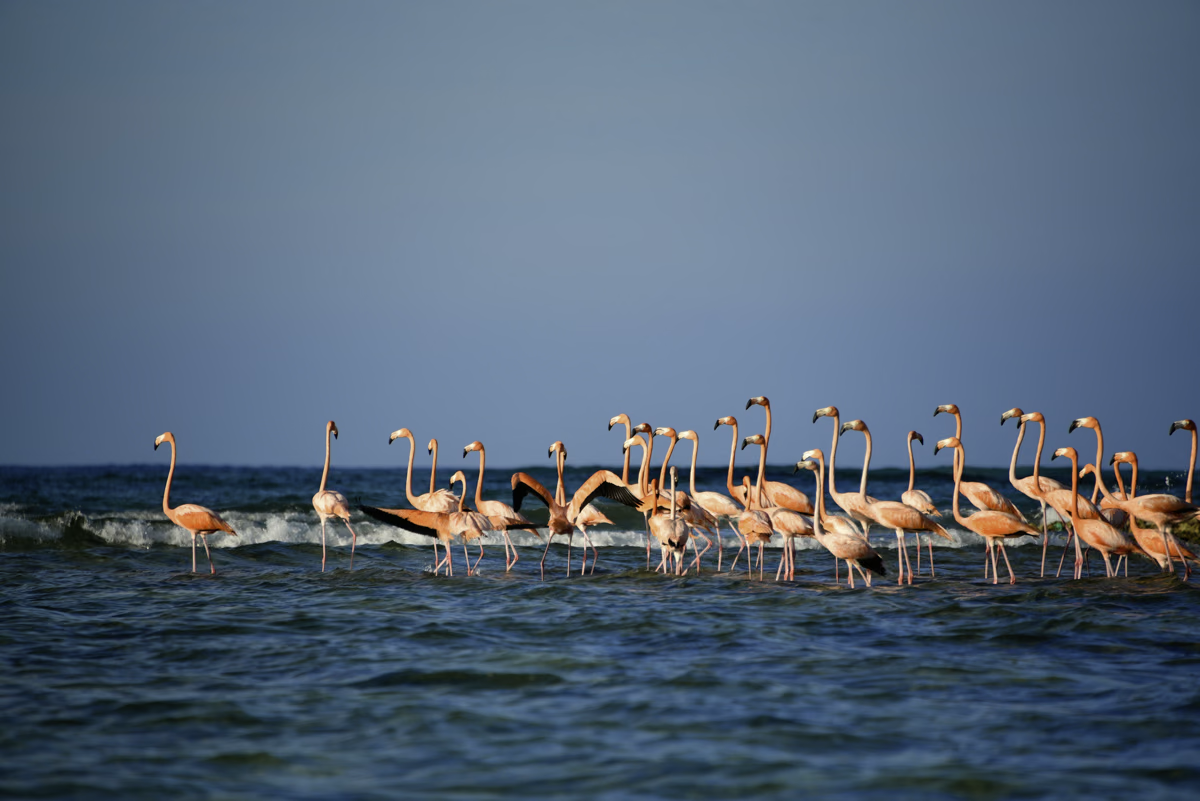
Across the salt flats of Great Inagua National Park, thousands of West Indian flamingos gather in one of the species’ largest breeding colonies. From a distance, the flock can look like a pink line drawn across the horizon, broken only when the birds begin feeding, calling, or moving through the shallow water.
Their color comes from pigments in the algae, shrimp, and other small organisms they eat. The birds are naturally cautious, and a close approach can send an entire colony into the air at once. The sight is dramatic, but also signals that the flock has been disturbed.
Expert insight: Visit in the early morning or late afternoon, when the light is softer, temperatures are lower, and the birds tend to be more active. Keep your distance and allow enough time to watch without pressing closer.
Selecting ethical tours: a 4-point checklist for conscious travelers
Choose experiences that protect what they show you. Before booking, ask three questions:
- Does the operator hold official certifications, such as Costa Rica's CST (Certificate for Sustainable Tourism)?
- Do they maintain clear distance rules and avoid baiting?
- Do they employ local guides and staff?
- If the activity is regulated (like sperm whale swimming is), does the company have appropriate permits?
Your 12-month wildlife calendar: when to go where
Time your journey to nature's rhythm for the best wildlife experiences in Central America:
| Months | Season | What's happening |
|---|---|---|
| January–March | Dry season | Dry, clear skies and active humpback whales. |
| April–July | Transition season | Whale sharks at Gladden Spit and the first sea turtle nests. |
| August–October | Green season | Lush landscapes, lower prices, and peak bird activity. |
Are you planning a wildlife-focused journey?
We create custom trips throughout Central America and the Caribbean, planning them for the best wildlife, matching you with expert guides, and taking you to places many travelers never get the chance to go. Every journey is designed around what matters most to you.
Last updated August 2026. Wildlife timing can vary year to year based on weather and natural cycles.

Frequently asked questions
What's the best time of year for wildlife viewing in Central America and the Caribbean?
There isn't one best month. Different animal encounters peak at different times: humpback whales from January to March, whale sharks from March to June, nesting sea turtles starting in April, and peak bird activity in the August to October green season. Wildlife trips are largely built around whichever of these you most want to see, so flexibility is key.
Is it safe to swim with whale sharks or manatees?
With a reputable operator that follows distance rules, yes. The risk to the animals is stress: chasing, touching, or crowding causes undue discomfort. That's why the "float parallel, keep your distance, let the animal decide" approach matters.
Do you need a private guide to see a jaguar in the wild?
Jaguars are solitary and elusive, and what you're usually reading is sign, tracks, scat, claw marks, rather than seeing the cat itself. A guide who works Cockscomb Basin regularly knows how to read those signs and where fresh sign is most likely, which is the difference between a walk in the forest and a chance at a sighting (though sightings are very, very rare).
What makes a wildlife tour operator ethical?
Three things worth checking before you book: certification (Costa Rica's CST is one example), clear rules about distance and no baiting or feeding wildlife to guarantee a sighting, and local guides and staff rather than an outside operator parachuting in. All three protect the animals and usually mean a better-informed guide too.
Costa Rica or Belize for wildlife: which is better?
They're better at different things. Costa Rica has the edge on terrestrial cloud forest and rainforest species: sloths, quetzals, scarlet macaws, tapirs. Belize is better in the water: manatees at Swallow Caye, whale sharks at Gladden Spit, the second largest barrier reef in the world, teeming with undersea wildlife.