


Luxury in Costa Rica doesn’t look like it does elsewhere. It's not about marble lobbies or overwater bungalows, but instead, waking up to howler monkeys calling above your terrace, a soak in a natural hot spring at the base of a volcano, or scarlet macaws crossing overhead while you're in your plunge pool at sunset. The country’s best properties are so integrated with nature that wildlife is a staple and a given, not a checklist item you have to go to a specific location to see.
This compact country delivers a lot of diversity: steaming volcanoes, misty cloud forests, remote rainforest lodges, surf towns, and pristine Pacific beaches. When planned right, travel days become part of the adventure, with lots to see and do along every route. This guide covers where to go, what to expect, which resorts fit which travelers, and how to plan a trip that takes advantage of all of Costa Rica's wonders. Read on for an overview, or if you're looking for something specific, we’ve broken out deep dives on best beachfront hotels and resorts, birding lodges, adventure travel, and wildlife destinations.
Who loves Costa Rica
- Honeymooners who want privacy but also adventure.
- Families who’d rather spend the week outside than by a pool.
- Wildlife-focused travelers.
- Anyone doing a wellness reset.
- Couples splitting the difference between beach and rainforest, or between adventure and hanging at the beach.
What to expect
Costa Rica’s luxury tier runs boutique: small eco-lodges and design-forward resorts rather than large-scale chains, though there are some ulta-luxe chain properties here as well, including Four Seasons and the Ritz-Carlton Collection.
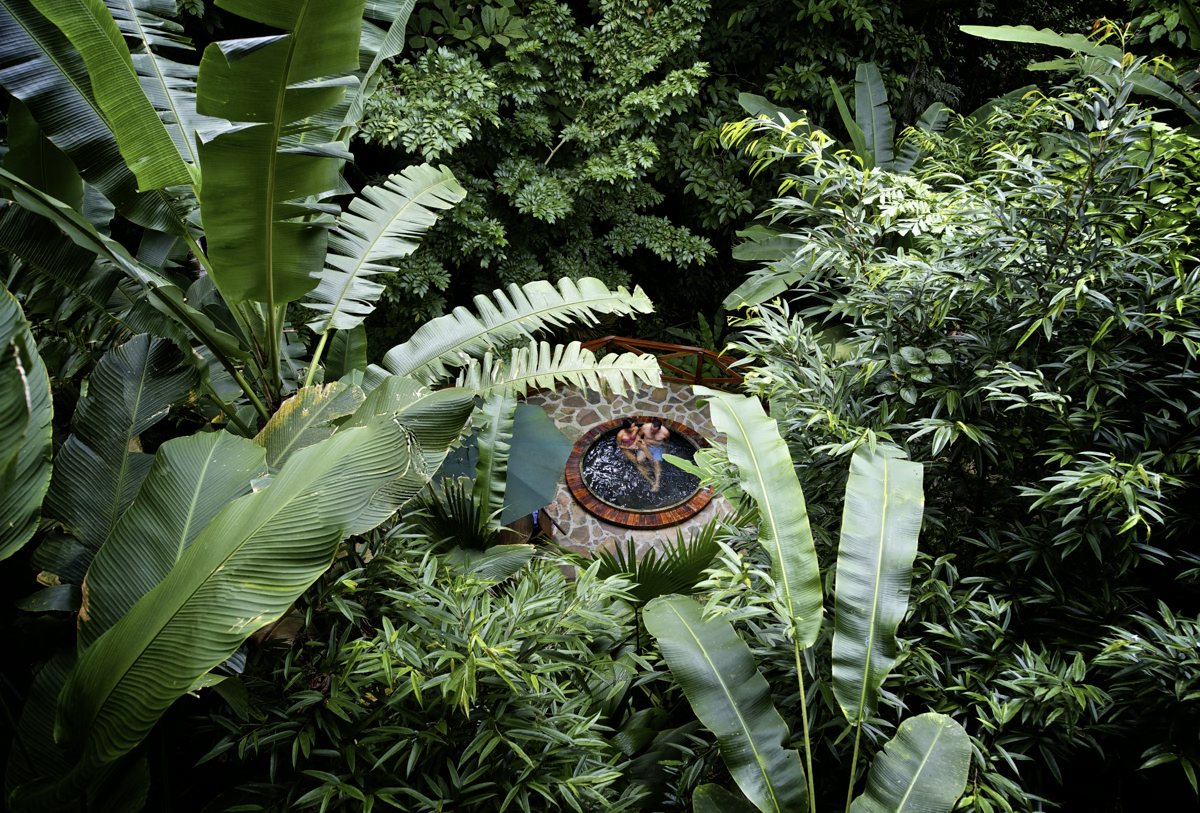
We tend to favor smaller properties with private plunge pools and outdoor living space built into most rooms, yoga and jungle spa treatments using local ingredients, wildlife you can spot from the property, open-air suites that revolve around a stellar view, private naturalist guides, and hotels that take conservation seriously.

The best regions for luxury travel
Arenal & La Fortuna
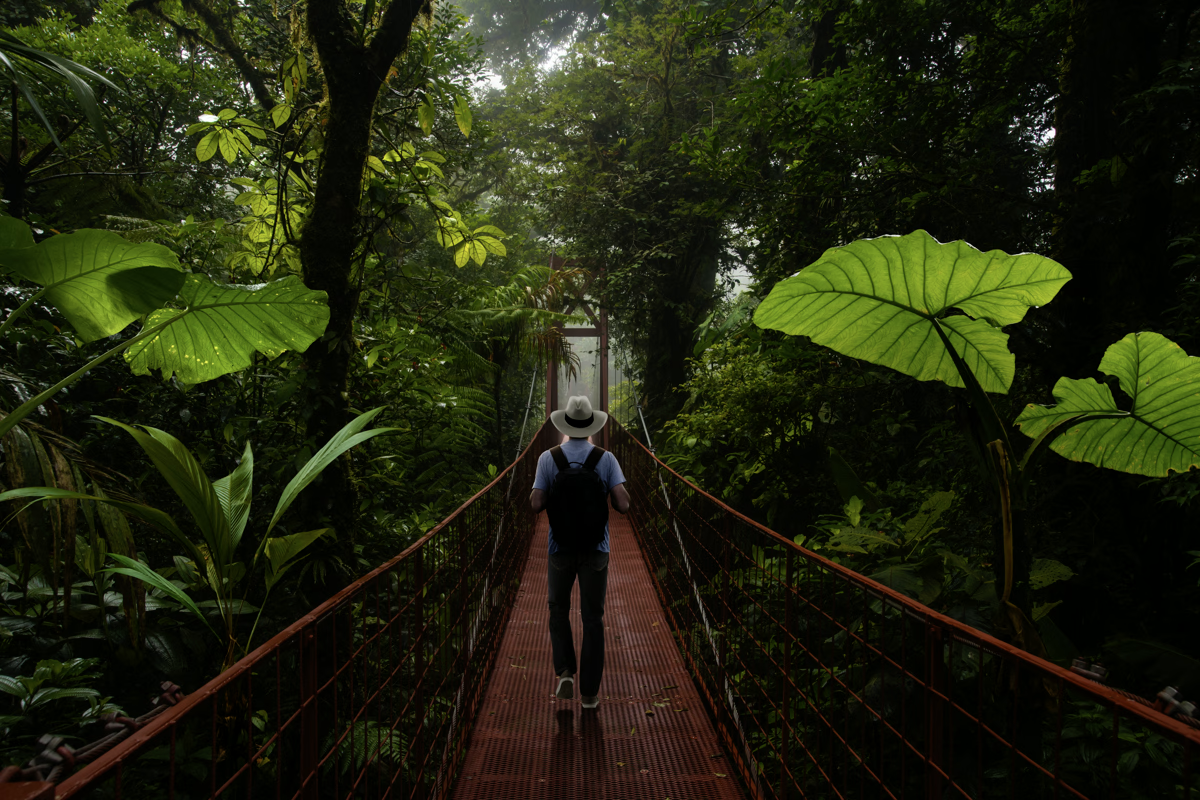
Volcano views, natural hot springs, rainforest surroundings, and the country’s easiest access to adventure activities: whitewater rafting, waterfall rappelling, ziplining, hiking. This is volcano region you might see splashed across almost every bit of Costa Rica marketing you've ever seen, and though it's one of the most-visited spots in the country, it lives up to the hype, with well-built infrastructure and little stress for first-timers.
Things to know: the volcano summit is often cloud-covered, and it gets crowded around Christmas and Easter. Traffic around these periods can be brutal, so plan your travel time accordingly. Plan 3–4 nights, and pair it with Manuel Antonio or Papagayo for a classic combination.
Where to stay: Nayara Springs, an adults-only resort with mountain views (roughly $1,000–$3,500+/night); Nayara Tented Camp, safari-style suites with private thermal plunge pools fed by the same springs; and Tabacón Thermal Resort & Spa, built directly around natural hot springs with volcano views and access to hanging bridges (roughly $500–$1,500+/night).
Manuel Antonio
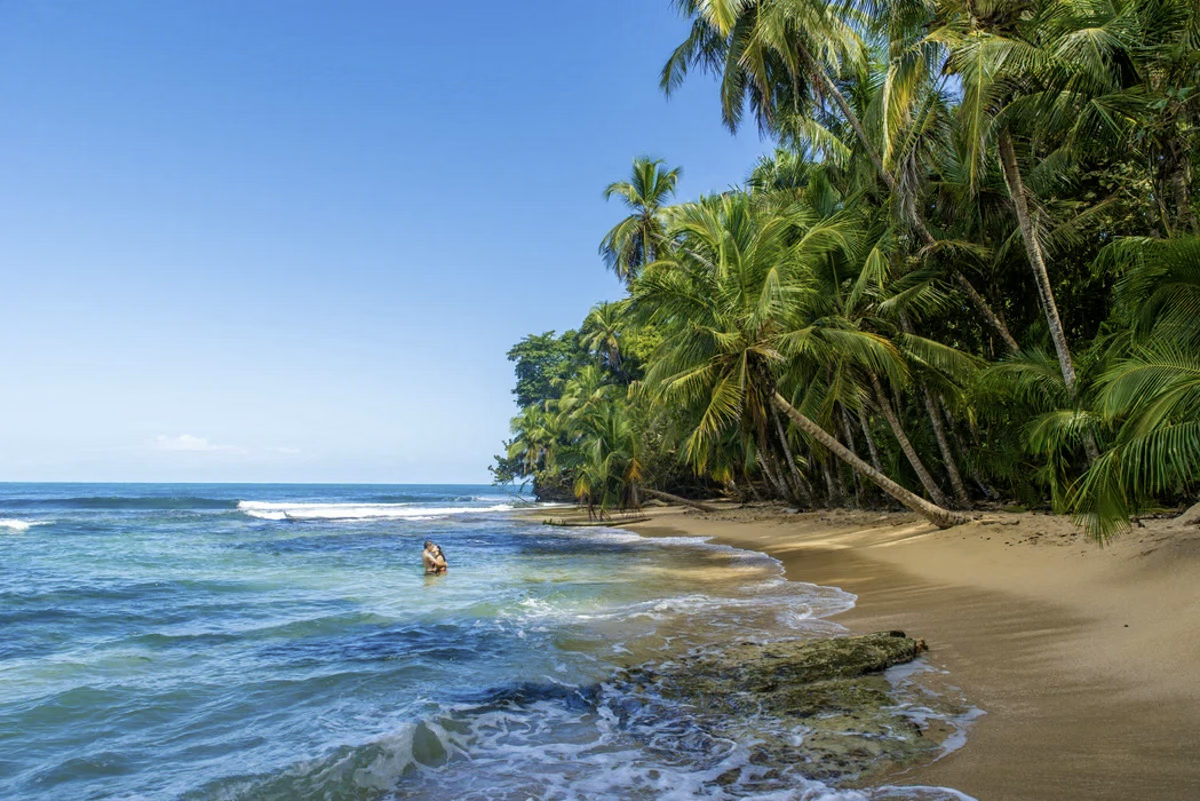
If you're seeking rainforest and beach in the same stay, with wildlife dense enough that monkeys show up on hotel terraces without any effort on your part, Manuel Antonio delivers. Plus, some of the best beaches in the country, with protected, undeveloped white-sand beaches inside the national park.
It’s also one of the most visited regions in the country. Trails and beaches get crowded in peak season, and national park tickets frequently sell out ahead of time. It’s convenient rather than remote, and it’s genuinely not the right fit for anyone chasing solitude. Plan 3–4 nights, paired with Arenal for the iconic combination or Uvita if you want a quieter southern extension of the same coastline.
Where to stay: Makanda by the Sea, an adults-only boutique built around a private wildlife sanctuary, with artistic villas and ocean views (roughly $700–$1,800+/night); and Arenas del Mar, a true beachfront eco-resort directly on Playa Espadilla with outdoor jacuzzis and wildlife that turns up on the property itself (roughly $600–$1,800+/night).

Guanacaste & Papagayo
Polished, beach-focused luxury, with a dry, reliable climate and easy logistics, thanks to the Liberia airport nearby. This region is great for destination wedding groups, family reunions, corporate incentive travel, and shorter trips that prioritize beach over adventure.
There's a tradeoff to the convenience: Guanacaste feels less "wild", and is resort-heavy, with little cultural immersion and lower biodiversity than other regions. Plan 3–6 nights. Pair it with Arenal for jungle contrast, or with Nosara and Santa Teresa for a more soulful stretch of beach time.
Where to stay: Four Seasons Resort Costa Rica at Peninsula Papagayo, with two private beaches, treehouse-style villas, and a kids’ club (roughly $1,300–$5,000+/night); Andaz Costa Rica Resort at Peninsula Papagayo, contemporary and bayside, with a family pool and complimentary water sports (roughly $800–$2,500+/night); Casa Chameleon at Las Catalinas, a Relais & Châteaux adults-only property with 21 private villas and saltwater plunge pools (roughly $700–$2,000+/night); and Nekajui, a Ritz-Carlton Reserve, the newest and most polished ultra-luxury property on this stretch of coast, on its own pristine cove (roughly $1,200–$4,000+/night).
Uvita & the Osa Peninsula
This is the wildest, most biodiverse corner of the country. Long empty beaches, snaking river systems, and protected land: the Osa Peninsula in particular holds some of the highest wildlife concentrations anywhere in the country, and has been called the "most biologically intense place on earth" by National Geographic.
The Osa is far from the tourist circuit, so getting here takes more effort: flights or long drives, some of it on unpaved road, and the properties themselves are boutique rather than grand. That’s a fair trade for travelers who want few other people around. Plan 4–5 nights, longer if you’re staying deep in the Osa. Pair it with Manuel Antonio for beach-and-rainforest, or Arenal if you want adrenaline to offset the seclusion.
Where to stay: El Remanso Rainforest Lodge, a cliffside ecolodge with ocean views, private villas, and naturalist guides who know the area intimately (roughly $800–$2,000+/night); Corcovado Wilderness Lodge near Drake Bay, rustic-luxury with guided hikes into Corcovado National Park itself (roughly $900–$2,200+/night); and Lapa Rios, one of the highest-ranked properties in the country for wildlife density.
Monteverde
A high-altitude cloud forest on the continental divide, cool and misty, with exceptional birdwatching. This is quetzal country.
Getting here means a long, winding drive from the lowlands, so pack Gravol. Once you’re there, amenities and nightlife are limited. Monteverde isn't a good fit for beach lovers or sun-seekers. Plan 2–3 nights; it doesn’t need more, and the travel time to reach it eats into longer stays. Pair it with Arenal for easy logistics, or Guanacaste if you want the cool-to-warm contrast.
Where to stay: Hotel Belmar, a Design Hotels-member boutique built into the cloud forest with sweeping valley views, a genuinely serious restaurant and spa program, and easy access to the Monteverde and Santa Elena reserves.
The Nicoya Peninsula: Nosara & Santa Teresa
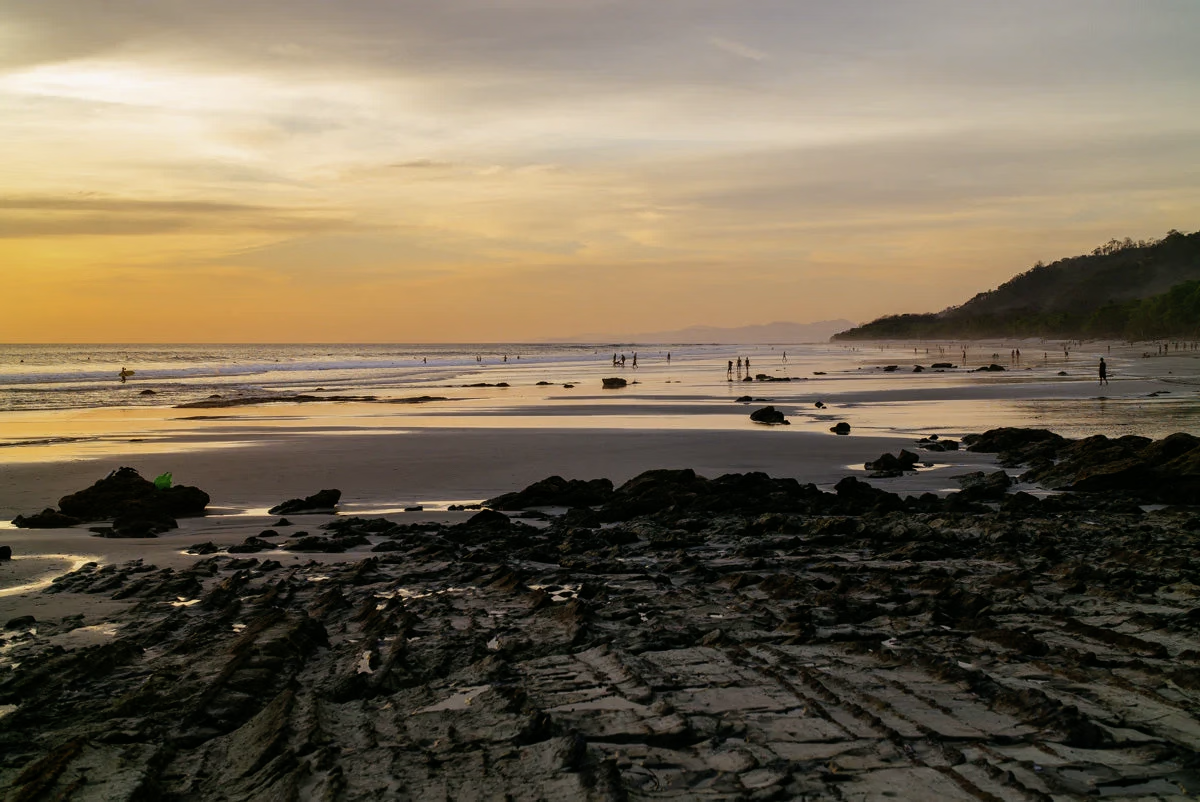
Laid-back, lifestyle-driven luxury built around surf and wellness culture rather than formal service. Nosara, Santa Teresa, Malpaís, and Sámara all sit on this stretch, and the entire area has a strong sense of community baked in, rather than a resort-driven vibe.
Infrastructure is less developed here: dirt roads, the occasional power outage, and properties less polished than those in Papagayo. Don't expect kids programming. Plan 4–5 nights. Pair it with Papagayo for a refined-to-rustic contrast, or Monteverde if you’re stringing together a laid-back trip.
Where to stay: Nantipa in Santa Teresa, oceanfront villas with private plunge pools and a barefoot, minimalist feel, with surf access right from your door (roughly $450–$1,200+/night); and Lagarta Lodge in Nosara, a boutique property built into its own private nature reserve overlooking the Nosara River mouth and the Pacific.
Tortuguero
Reachable only by boat or small plane: dense jungle canals, abundant wildlife, and some of the famous turtle-nesting beaches that play host to three species, green, leatherback and hawksbill.
Once you’re there, you’re there: dining and activity options outside the lodges themselves are limited, and it has an isolated, locked-in quality that some travelers love and others find confining. Plan 2–3 nights. Pair it with Arenal for adventure, or Manuel Antonio since flights between the two coasts are easy.
Where to stay: Tortuga Lodge, set along the canals with a private villa option and easy access to guided wildlife excursions right from the dock.
Best luxury experiences by interest
| Interest | What's included | Best regions |
|---|---|---|
| Wildlife travel | Naturalist-guided rainforest hikes, whale-watching, sea turtle nesting tours, sloth and monkey encounters, and nighttime forest walks, none of it demanding, all of it real. | Osa, Tortuguero, Manuel Antonio, Monteverde, and Arenal |
| Adventure travel | Whitewater rafting, waterfall canyoning and rappelling, cloud forest ziplining, horseback rides, surfing, snorkeling. Built for travelers who want real activity without giving up good lodging at the end of the day. | Arenal, along the Pacuare River, Manuel Antonio, Guanacaste, and Uvita |
| Wellness travel | Yoga with a view, jungle spa treatments built on local ingredients, natural hot springs, guided meditation and sound healing, farm-to-table food, and genuine digital-detox settings. | Nosara, Santa Teresa, Papagayo, Arenal, and the wider Nicoya Peninsula |
| Honeymoons and romantic travel | Private plunge pools in settings built for two, adults-only properties, sunset sailing, couples' spa treatments, private dining, and beach walks with nobody else around, plus lighter adventure options for couples who want to move during the day. | Arenal, Uvita, Osa, Manuel Antonio, and Santa Teresa |
| Family luxury travel | Wildlife encounters scaled for kids, chocolate and coffee farm tours, beginner rafting and surf lessons, hanging bridge walks, and beach time with sloths and monkeys close by. | Arenal, Papagayo, Manuel Antonio, and Guanacaste |
Best luxury resorts by category
For honeymoons: Nayara Tented Camp (Arenal), Makanda by the Sea (Manuel Antonio), Casa Chameleon at Las Catalinas (Guanacaste).
For families: Four Seasons Resort Costa Rica at Peninsula Papagayo, Tabacón Thermal Resort & Spa (Arenal), Andaz Costa Rica Resort at Peninsula Papagayo.
Eco-luxury lodges: Pacuare Lodge, El Remanso Rainforest Lodge (Osa), Corcovado Wilderness Lodge (Drake Bay).
Beachfront luxury: Arenas del Mar (Manuel Antonio), Nantipa (Santa Teresa), Nekajui, a Ritz-Carlton Reserve (Papagayo).
Wellness resorts: Hacienda AltaGracia (Talamanca Mountains), El Silencio Lodge & Spa (Bajos del Toro region), Origins Lodge (Tenorio region), a hillside property with volcano views and its own spa and yoga decks.
| Category | Best regions | Vibe | Standout for |
|---|---|---|---|
| Honeymoons / romance | Arenal, Manuel Antonio, Uvita | Private, intimate | Plunge pools and views |
| Families | Papagayo / Guanacaste | Spacious, activity-rich | Kids’ clubs and beaches |
| Eco-luxury / wildlife | Osa Peninsula, Tortuguero | Immersive, remote | Biodiversity |
| Beachfront | Papagayo, Santa Teresa | Relaxed coastal | Direct ocean access |
| Wellness | Mountains and Nicoya | Restorative, holistic | Spas and yoga |
Best time to visit
Dry season (December–April): peak season, reliable sunshine, especially on the Pacific side, higher prices, and more crowds.
Green season (May–November): afternoon and evening rain with bright mornings, waterfalls at full power, more active wildlife, lower rates, and no crowds. May–June and November tend to be the sweet spot: fewer crowds, lower rates, green landscapes, and still plenty of sun.
Regional variation: Guanacaste and Papagayo stay driest overall, Arenal and the northern rainforest stay lush year-round, Manuel Antonio sits in between, Osa is the wettest region on this list, and the Caribbean side runs on its own separate pattern, with September–October its best window.
Structuring a trip
5–7 days: stick to two regions at most.
8–10 days: the sweet spot for most travelers, with room for up to three regions if the route is planned carefully.
2+ weeks: four regions maximum, or fewer regions with longer stays in each. Depth beats quantity.
Combinations that work well: Arenal + Manuel Antonio (the classic pairing), Papagayo + Nosara (beach and wellness), Tortuguero + Arenal + Manuel Antonio (an all-rounder), and Monteverde + Arenal + Santa Teresa (a real climate contrast). On a short trip, skip Monteverde or Tortuguero: the travel time to reach either eats too far into a brief stay.
Planning tips
- Private transfers are the default choice for most itineraries; a good driver breaks long drives up with scenic stops and coffee breaks, so you get to see more of the country. Domestic flights save travel time to remote areas, like the Osa Peninsula, Tortuguero, or Santa Teresa.
- Don't choose a property by name alone. Make sure it fits the vibe you're going for. It can be tempting to book a property with a brand you're familiar with, but do your research so you don't miss out on Costa Rica's hidden gems that might be a better fit for you.
- Book premium boutique properties 6–12 months ahead during peak season, and build in unscheduled time, so you can explore on your own, or relax between excursions.

Why work with a specialist
Costa Rica looks simple on a map, but planning a trip here is a lot different in practice. Two five-star properties in the same region may have all the same amenities, but one offers more privacy and space between accommodations, so is better suited to couples, while the other is easy to get around and compact, so works great for families. “Best” beach town depends entirely on who’s asking. Some region combinations flow well together; others turn into exhausting travel days. Green-season weather varies a lot by area. Costa Rica's greatest strength is the ability to weave volcanoes, cloud forests, pristine beaches, and extraordinary wildlife into a relaxed, restorative journey. The key to an unforgettable trip is simple: embrace the country's authenticity, choose properties and guides that fit your style, and give yourself time to slow down and breathe.
For those who value connection and experiences that stay with you, Costa Rica has a unique ability to renew your sense of wonder.
At Osaviva, we build every itinerary around your priorities. We don't use templates. We work with you to choose the right mix of regions and properties for your group, protect you from the fatigue that comes with an overpacked route, and lave room for the slower, deeper version of Costa Rica that we don't want you to miss while you're rushing around. It may be boutique luxury, serious wildlife access, or full immersion in the landscape, but whatever it is, we design it around you.
Frequently asked questions
Is Costa Rica a luxury destination?
Yes, though it looks different from most luxury travel. Don't expect Europe. It leans on immersive nature over formal glamor: a private plunge pool with monkeys passing through beats a marble lobby here.
How does it compare to the Maldives?
Costa Rica wins on biodiversity, landscape variety, and active experiences; the Maldives wins on overwater isolation and formal service. Travelers who’ve done both often find Costa Rica the more memorable of the two.
Which region is best?
Arenal for a first trip, Papagayo or Guanacaste for a polished beach-and-family stay, the Osa Peninsula for serious wildlife, Nosara or Santa Teresa for surf and wellness. Most itineraries blend two or three regions rather than picking just one.
What’s the best region for a honeymoon?
Our honeymoon favorites are Uvita, Santa Teresa, the Osa Peninsula, and Arenal.
What’s the most exclusive resort in Costa Rica?
Nekajui, a Ritz-Carlton Reserve, in Papagayo, is on top for polish. For privacy with a wildlife focus, we love the remote lodges of the Osa Peninsula.
Is it worth the cost?
Unequivocally, yes. You get front-row-seat nature access, sustainability practices, and a customized trip you won’t find at a similar price point elsewhere.
Which resorts have the best wildlife?
Lapa Rios, Corcovado Wilderness Lodge, and El Remanso lead the Osa region. Tortuga Lodge in Tortuguero, Nayara Tented Camp in Arenal, and Arenas del Mar in Manuel Antonio are also great options.
Pacific coast or Caribbean coast?
The Pacific has better beaches, more luxury options, a drier climate, and easier logistics. The Caribbean side, especially Tortuguero, feels wilder and more immersive, with fewer high-end choices. Standouts in Puerto Viejo's beach region are Aguas Claras and awa Beach Resort.
Is Costa Rica better than Belize?
Costa Rica has the edge on biodiversity, landscape variety, and how easily you can move between regions. Belize’s strengths are its reef and its Maya archaeological sites. Neither is better, but we generally say Costa Rica for terrestrial wildlife, Belize for marine wildlife and history.
Are the resorts all-inclusive?
Some Papagayo properties are all-inclusive. Most of the boutique and eco-luxury properties in this guide are not. Explore more Costa Rica all-inclusives.
How many days do you need?
Five to seven days covers a solid introduction across two regions. Eight to ten is the sweet spot for most travelers, with room for two or three regions. Two weeks or more lets you go deeper or add a return visit to somewhere you loved.
Is Costa Rica safe?
Yes. It’s among the safer destinations in Central America, and problems are rare when you’re working with reputable hotels, private transfers, and trusted guides.
Can you combine rainforest and beach in one trip?
It’s one of the country’s biggest strengths, and most of the pairings in this guide combine the two.
Planning a Costa Rica trip of your own? We can help you build it.


