


When newlyweds (or not-yet-weds) are busy planning the getaway of their dreams, the first step is usually to choose a destination, which can seem overwhelming with the number of options available. For honeymooners looking to satisfy the need for a post-wedding reprieve in tropical paradise, both Costa Rica and Belize fit the bill perfectly, which might make it hard to decide between the two. So who wins? Read on to unveil (pun intended) a little more about each destination before you make your decision!
Below, we’ve compared the two category by category, with our honest pick in each. Spoiler: both are winners. One will just fit the two of you a little better.
Diving & snorkeling
Our pick: Belize, hands down.
Costa Rica
Though there are a few snorkeling sites along each coast in Costa Rica, avid divers or snorkelers will be disappointed. Visibility is generally pretty poor, and the variety and accessibility of undersea wildlife in this area is not great. It’s still fun to go out on a snorkeling trip if you keep your expectations in check, but the more amazing wildlife in Costa Rica is found on land.
There are a few bright spots for certified divers, though. From May to November, the Bat Islands off northern Guanacaste are famous for diving with bull sharks, best left to advanced divers thanks to deeper sites and strong currents. The nearby Catalina Islands draw giant manta rays in the dry season. And in the south, Caño Island has some of the clearest water on the Pacific side, about an hour from Uvita by boat, or an even easier boat ride from Drake Bay.
Belize
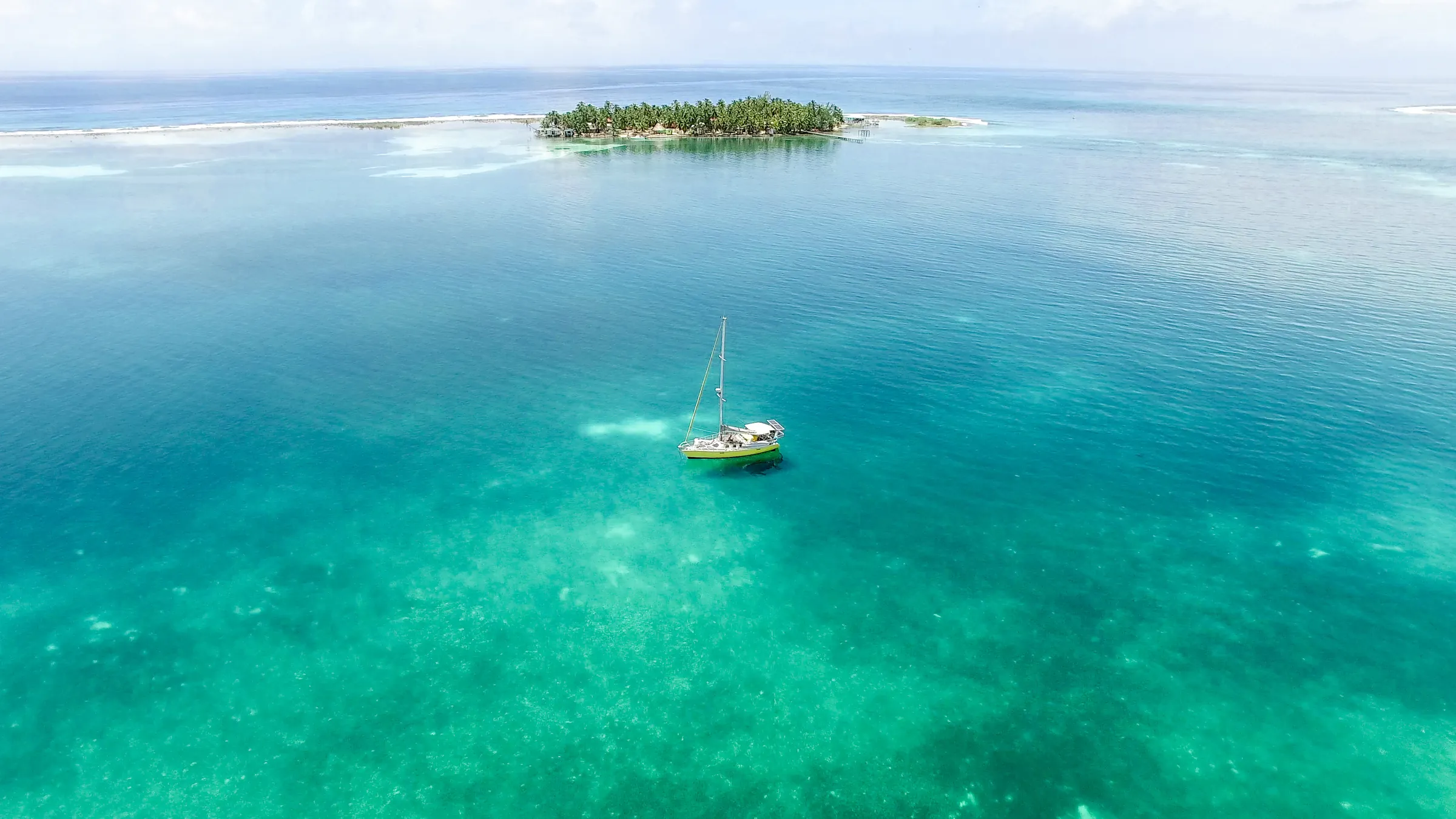
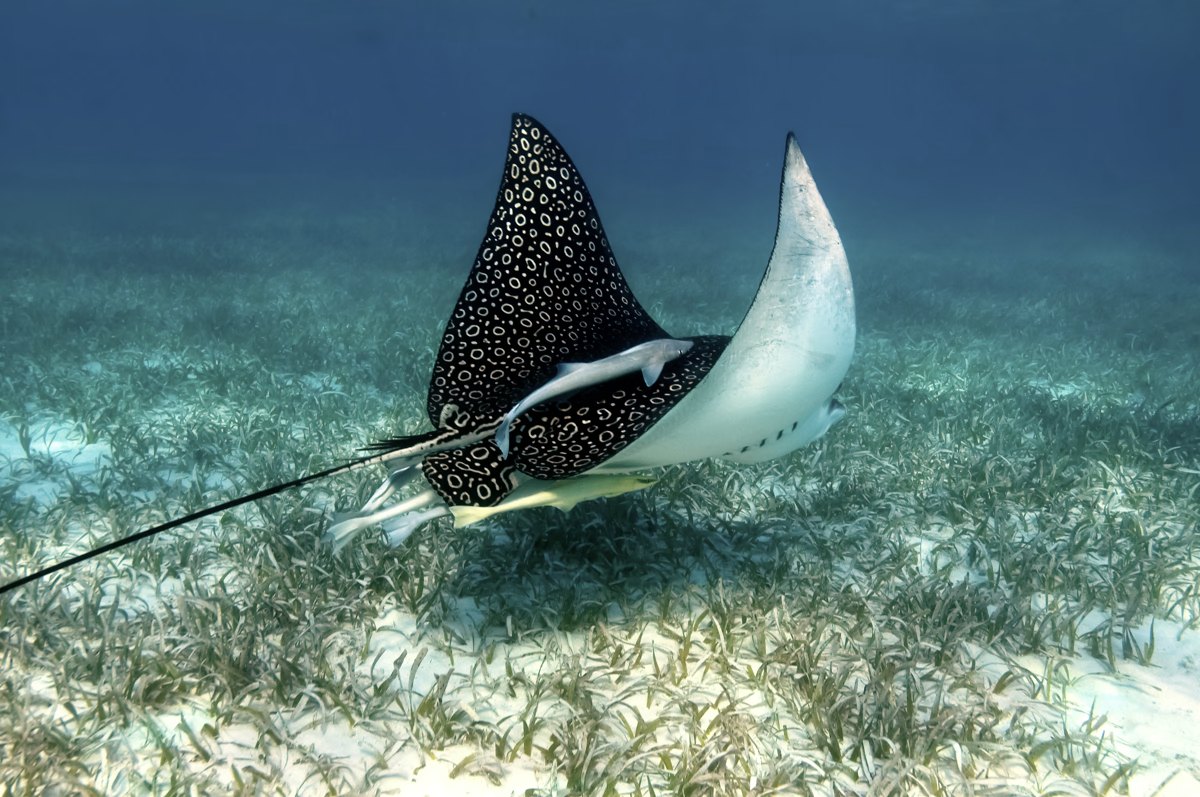
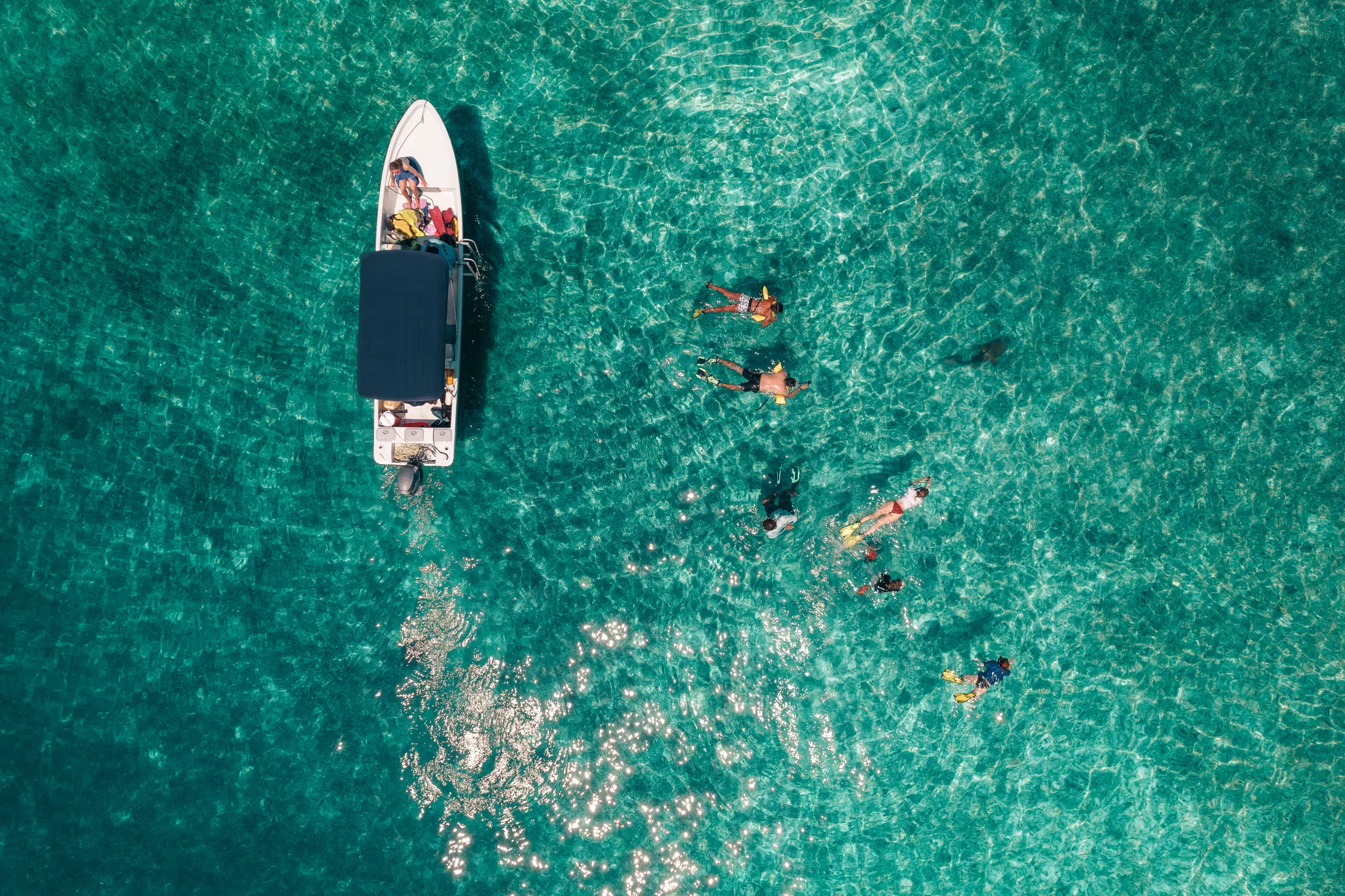
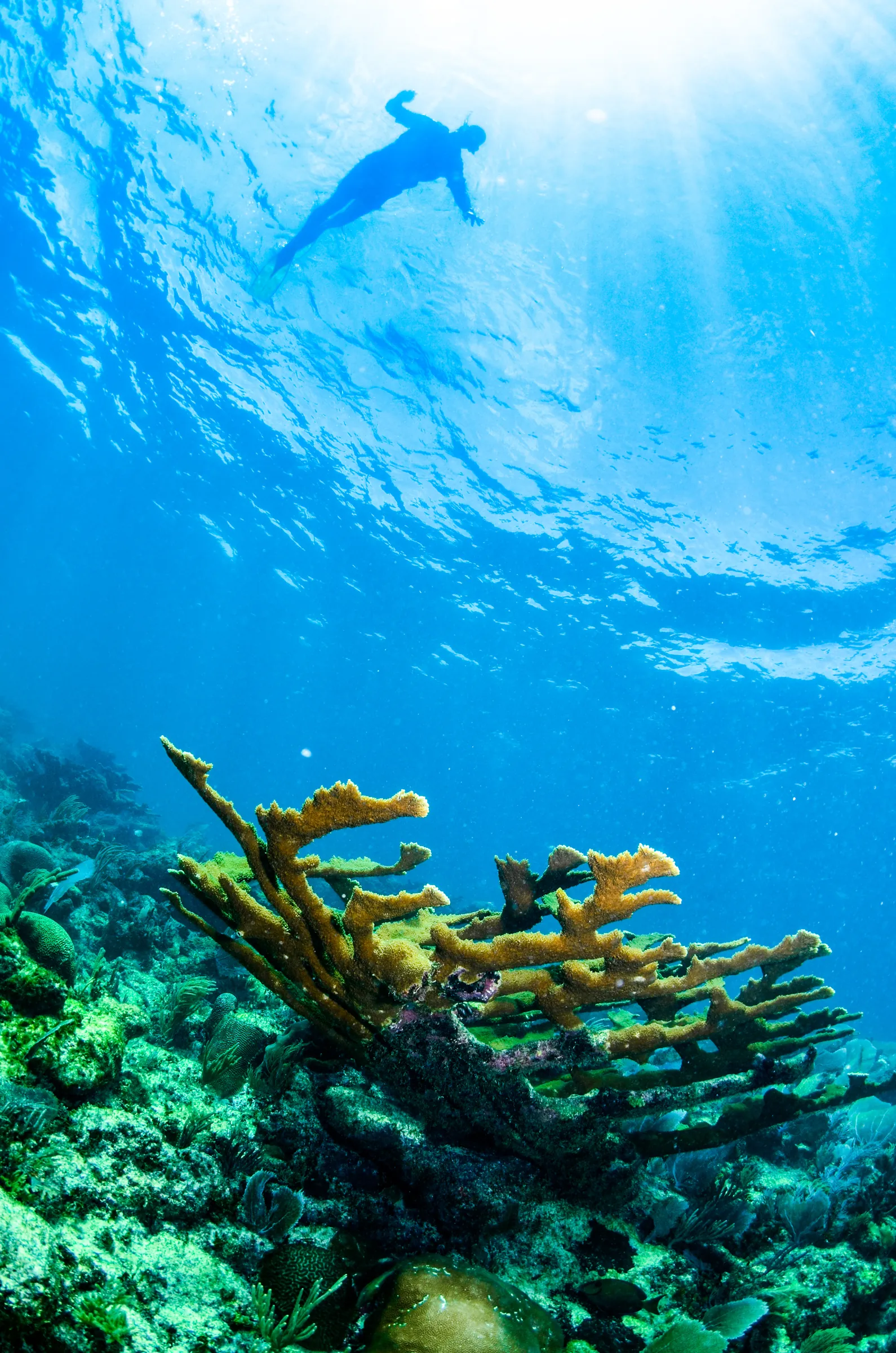
On the other hand, Belize snorkeling and diving is fantastic. Belize has one of the longest barrier reefs in the world, second only to Australia. It runs nearly the entire length of the country, 309 kilometers (192 miles), and features hundreds of snorkel and dive sites along the reef, in addition to others located on nearby cayes and offshore atolls. Under the waves, lives a magical community of abundant sea life and colorful corals, welcoming divers and snorkelers of all levels, with sharks, rays, seahorses, dolphins, morays, sea turtles, and hundreds of species of brightly colored tropical fish. But, don’t expect to snorkel from shore – sea grass is a problem here, so we prefer boat trips to the reef instead.
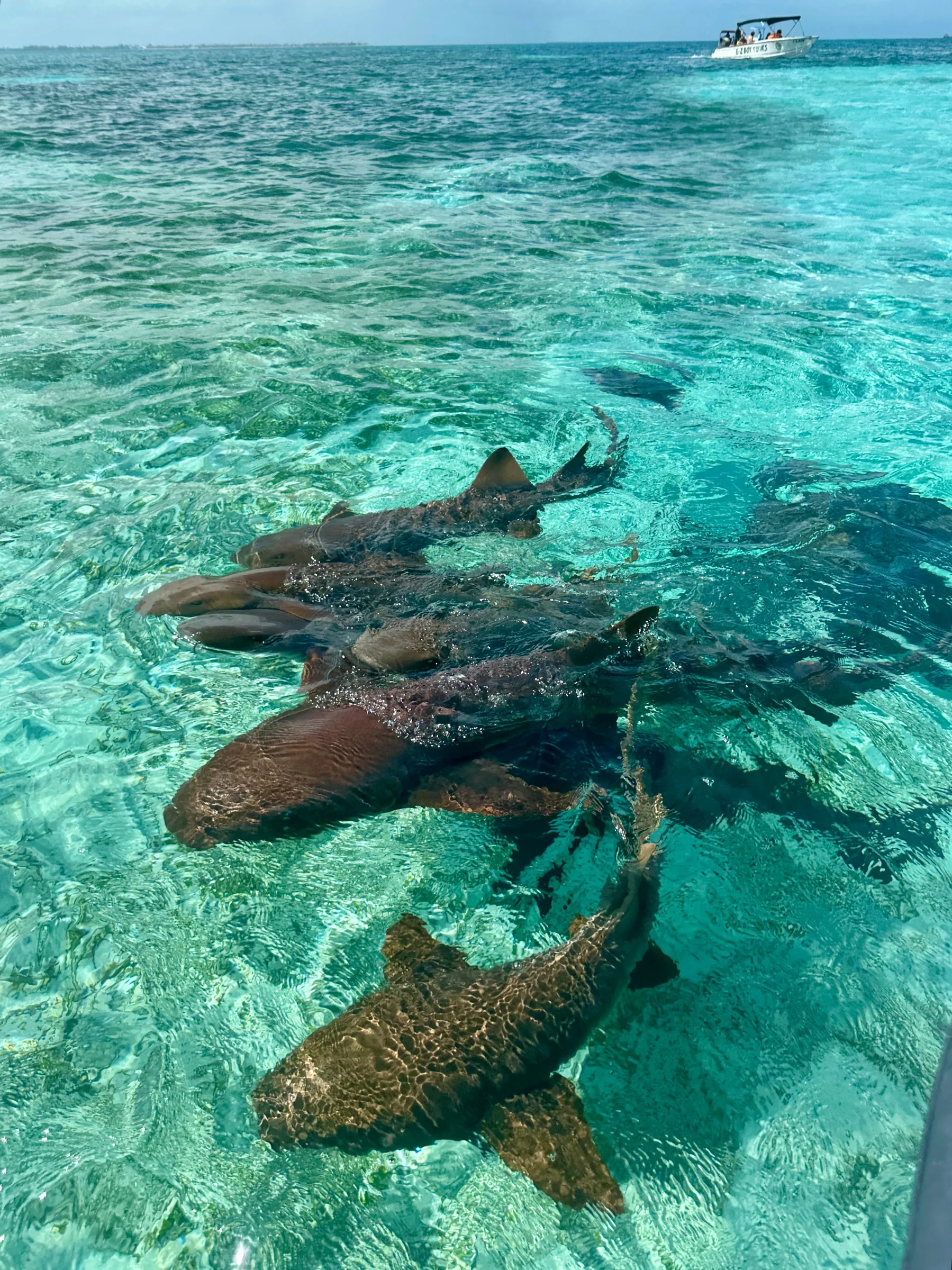
From Ambergris Caye, Hol Chan Marine Reserve and Shark Ray Alley are easy half-day snorkels where nurse sharks and stingrays glide up to the boat (fishermen used to clean chum here, so the sharks and rays have been coming here for generations – hence the name). For a full dive or snorkel day, Turneffe Atoll, Lighthouse Reef and the Great Blue Hole are a couple hours from the caye. If you’re staying in Hopkins or Placencia, there are great options there too – Silk Cayes, Laughing Bird Caye, and South Water Caye are all top spots for marine wildlife. If you’d rather step out to the reef right from your doorstep and avoid the sea grass, consider a private island stay like Ray Caye, Turneffe Island Resort, or Cayo Espanto. Or, something more rustic, like Tobacco Caye off the coast of Hopkins.
Romance
Our pick: it’s a tie.
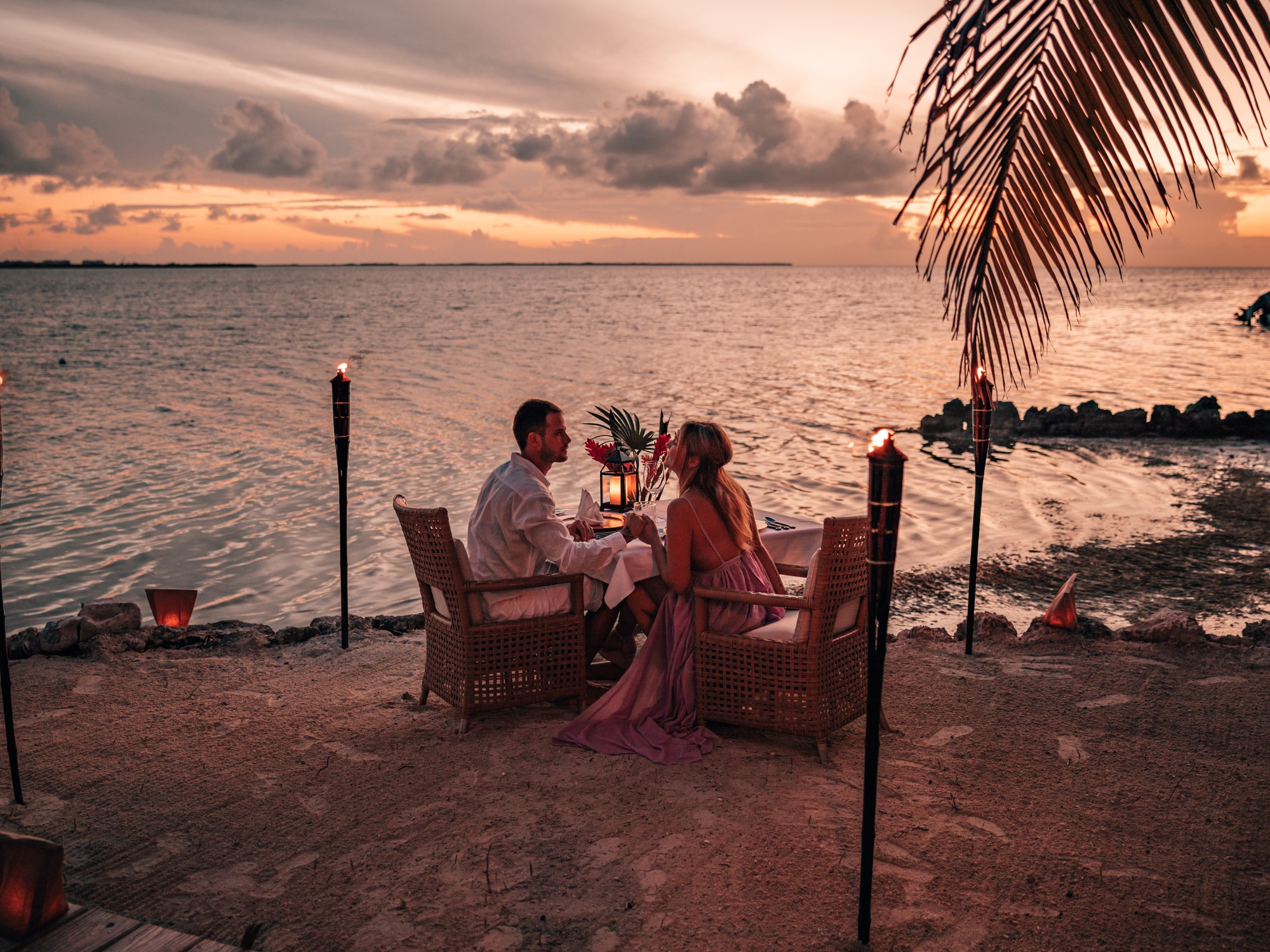
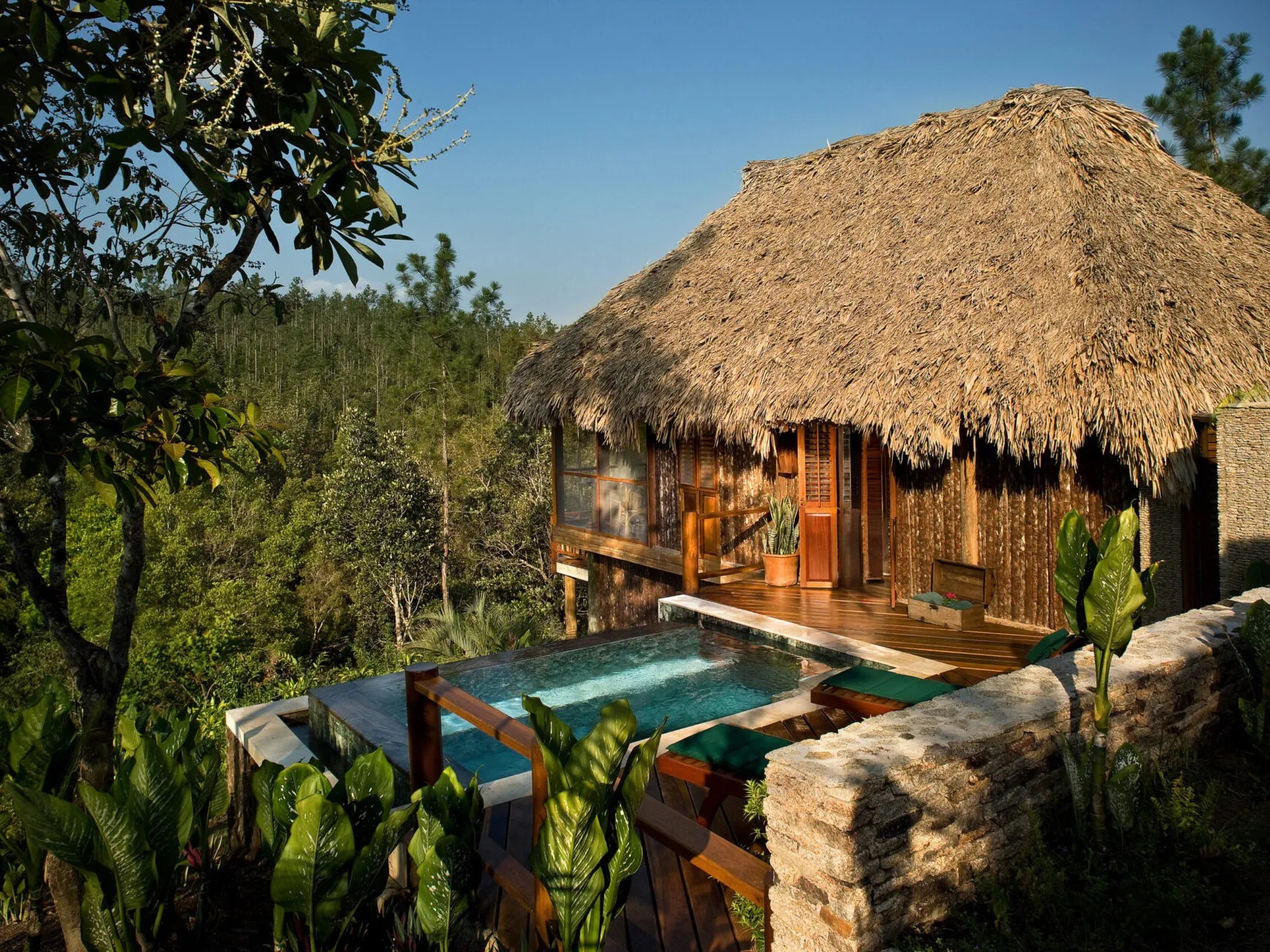
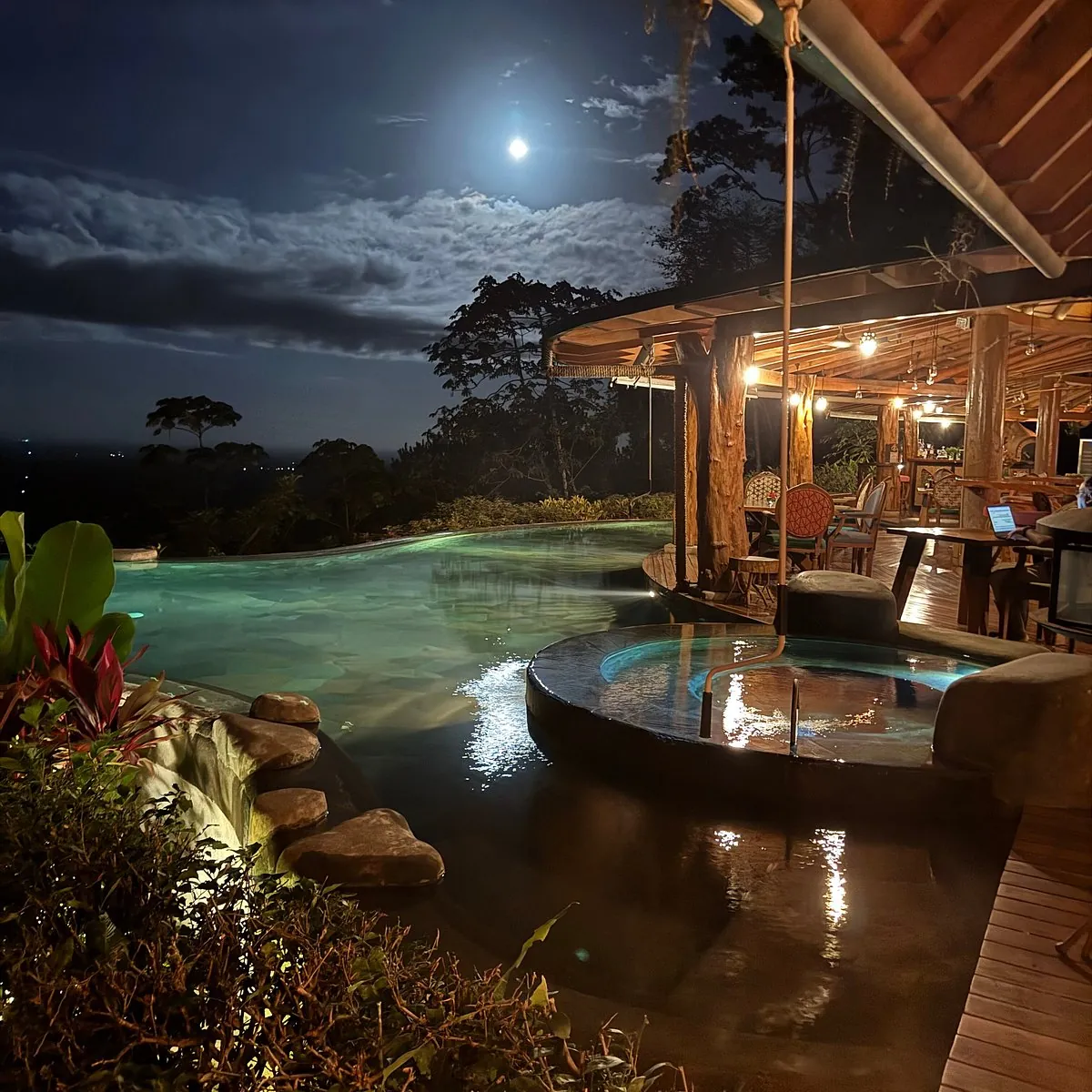
Both Costa Rica and Belize have great options for romantic accommodations, at a range of different price points. Honeymooners willing to shell out can stay on a private island in Belize, or book a suite or villa with an in-room plunge pool or a private Jacuzzi for an extra dose of luxe. Those on a budget can book a detached thatched-roof cabana for a more rustic, relaxed stay. Either way, our recommendation is to spend a couple of days at a remote jungle lodge, or beachfront resort on a deserted stretch of sand, to up the romance factor, unplug from your phone and laptop, and reconnect with one another.
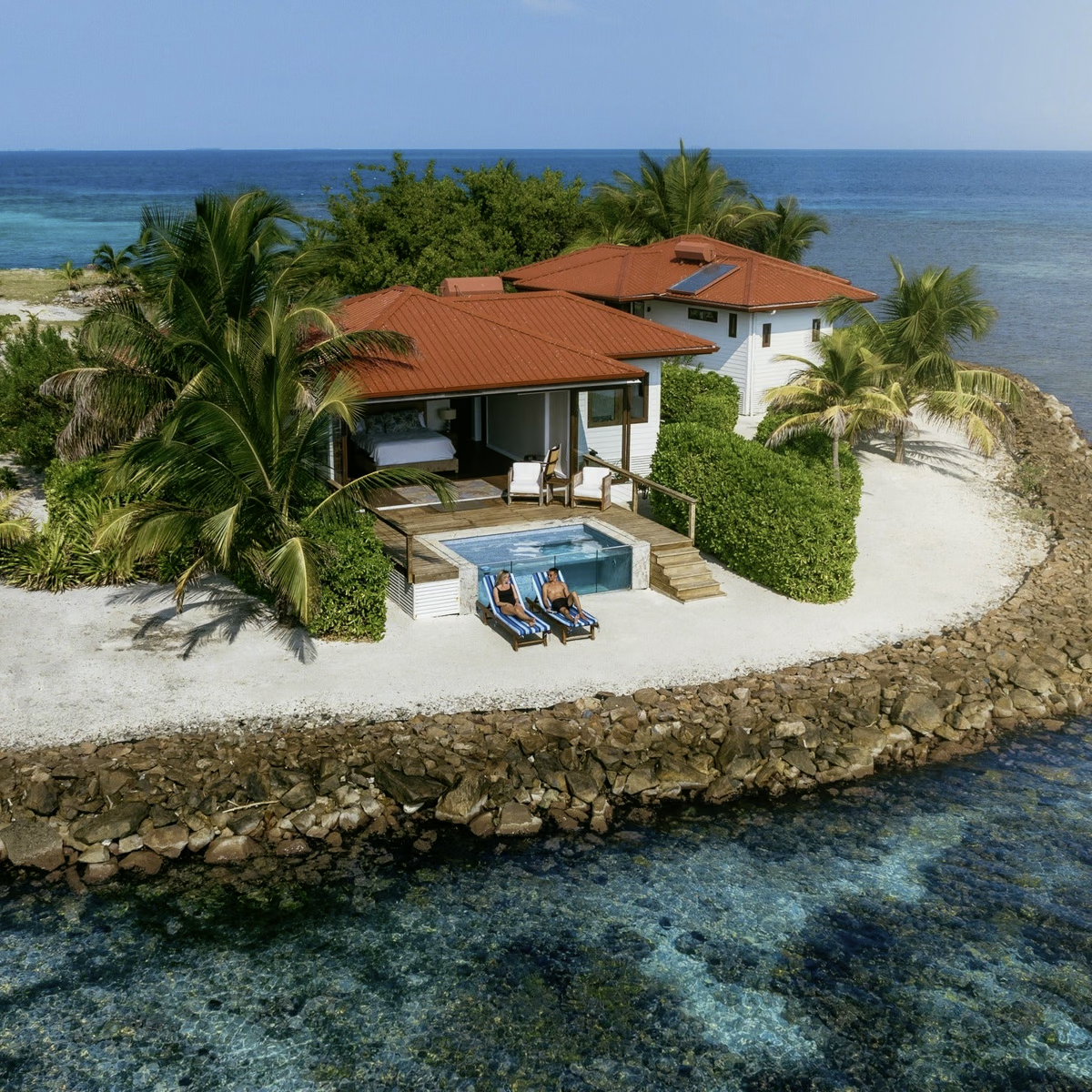
Check out our full list of Belize suites with private plunge pools, or if you want to widen the field (and see what Costa Rica has to offer), here are our picks for plunge pool suites in all of Central America.
History
Our pick: Belize.
Costa Rica
Costa Rica is not known for its historic sites.
A couple of exceptions are worth knowing about, though. In the south, near Palmar Sur, the mysterious stone spheres of the Diquís (some more than two meters across) were named a UNESCO World Heritage Site in 2014, and you can see them where they were found at the Finca 6 site, on the way to the Osa Peninsula. Guayabo National Monument, on the slopes of Turrialba Volcano, is the country’s largest archaeological site. Both make a great side trip on the way to somewhere else.
Belize
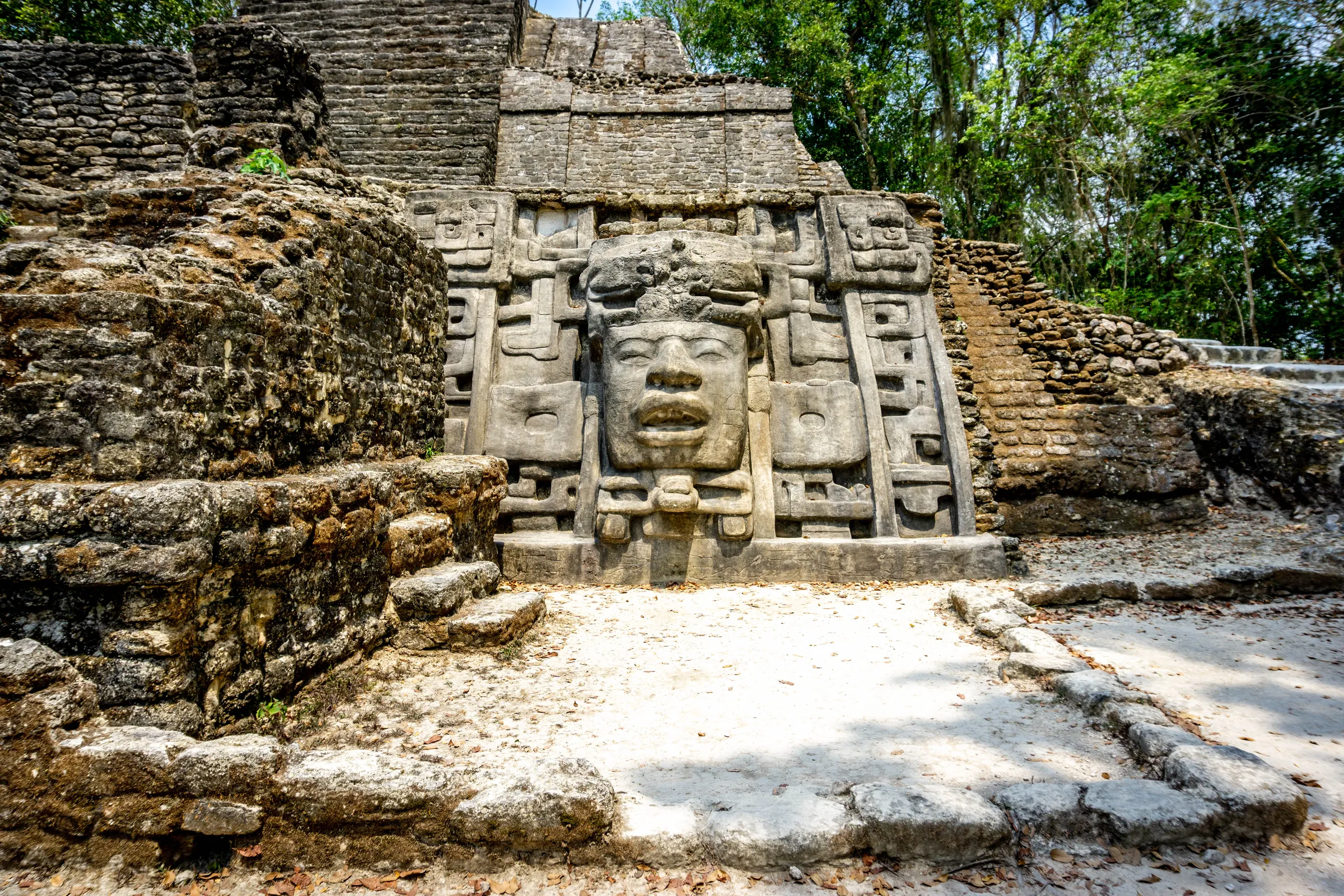
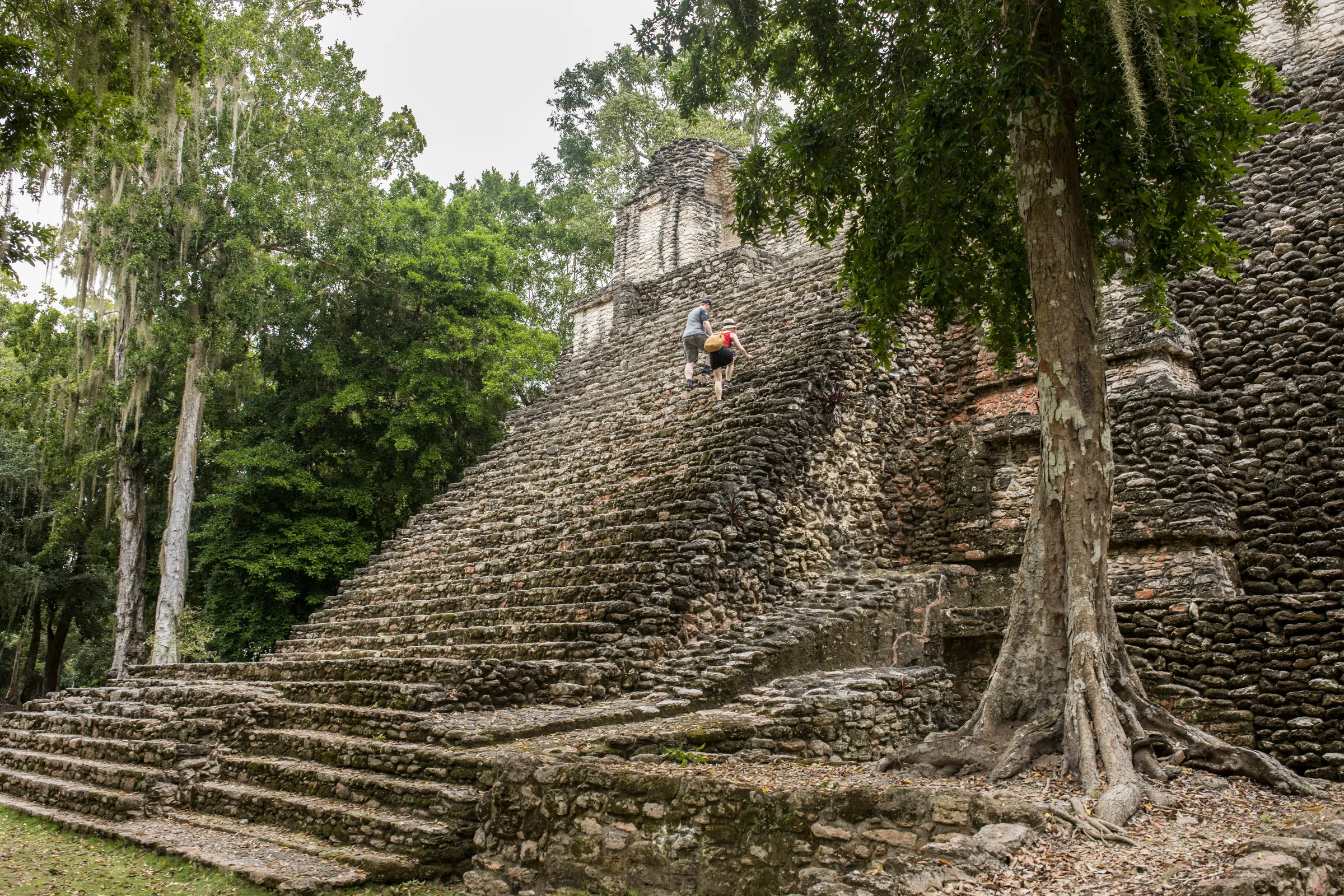
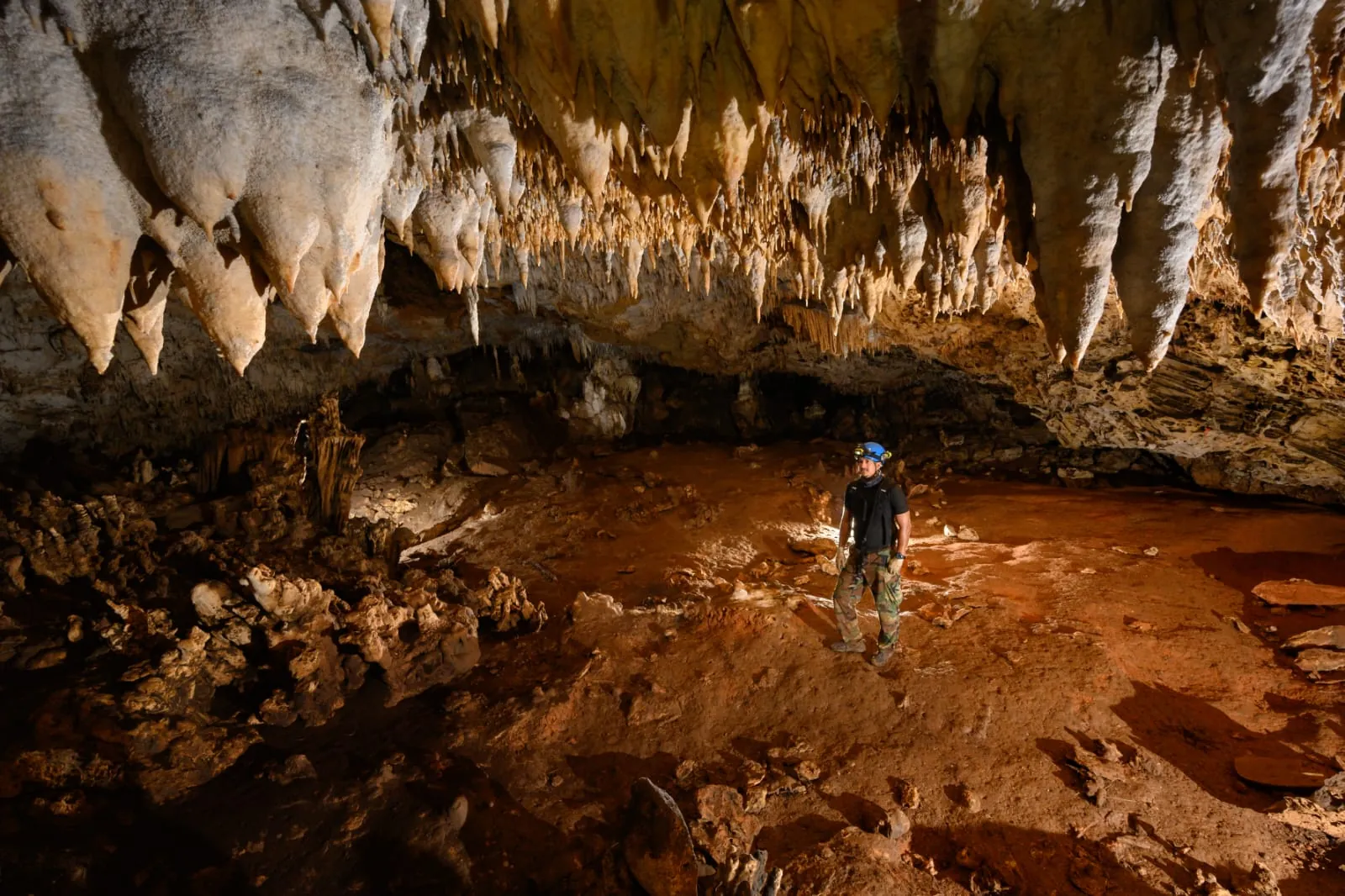
Belize is in the Maya heartland, with a wealth of rich history hidden in its jungle-cloaked interior. From sprawling Mayan ruins to ancient ceremonial caves, there is enough here to keep any history buff busy for days. Due to cruise tourism, the most visited Maya site in Belize is Altun Ha, but there are better and less crowded ruins further inland – we’d recommend Lamanai, Caracol, Xunantunich, and for a thrilling subterranean adventure, the ceremonial caves of Actun Tunichil Muknal.
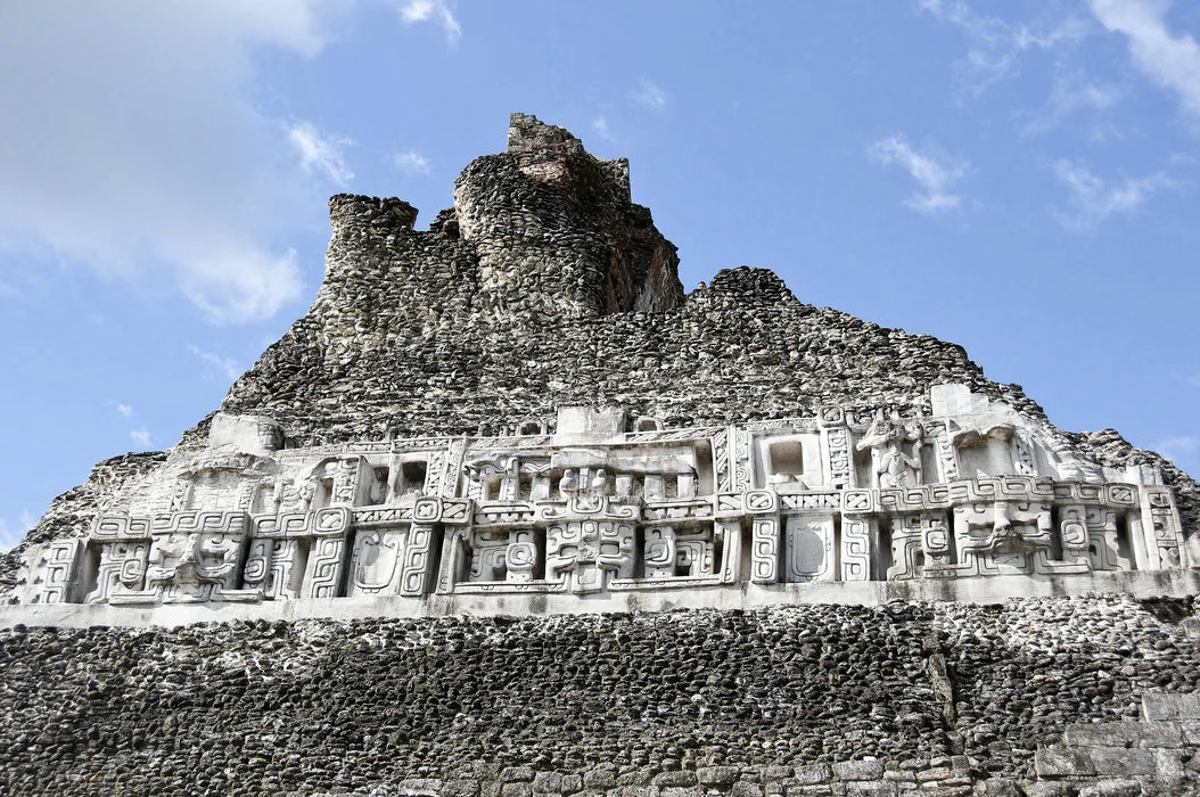
A few details to whet your appetite: Caracol’s Caana, or “sky palace,” is a temple that rises 43 meters (141 feet) and even today, remains the tallest man-made structure in Belize; to get to Lamanai you’ve got to take a boat up the New River (also great for wildlife spotting along the way); and, at Actun Tunichil Muknal, you’ll swim, climb and crawl deep into the cave where Maya pottery and skeletal remains were placed more than a thousand years ago.
Adventure
Our pick: Costa Rica.
Costa Rica
Though both Belize and Costa Rica have great adventure activities, Costa Rica has a wider variety of adventure tours available in more locations throughout the country (both inland and in coastal regions), so Costa Rica wins this category. However, both have adventures that are appropriate for a variety of comfort zones. You don’t have to be a hardcore mountain climber to get your adrenaline pumping here!

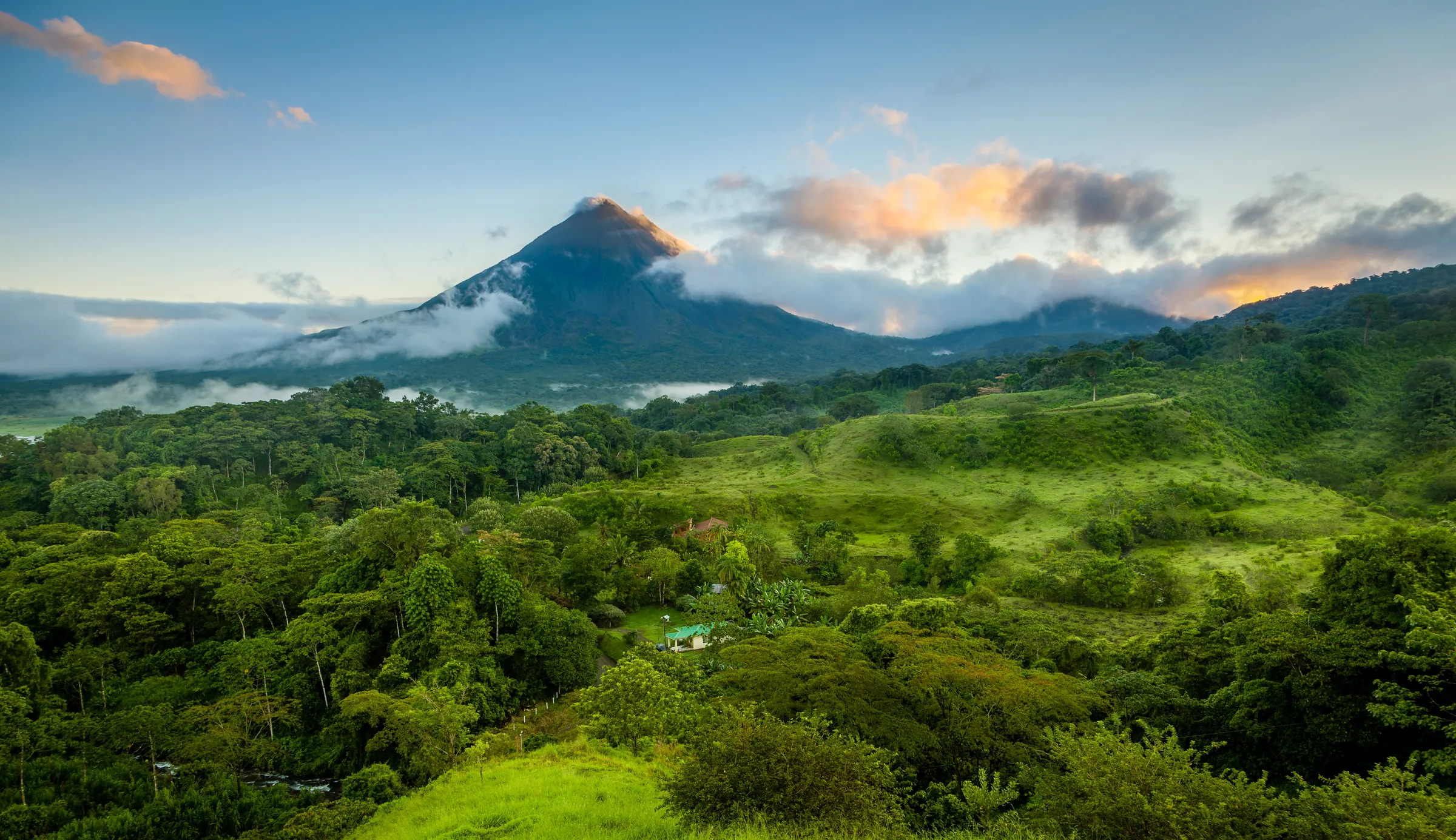
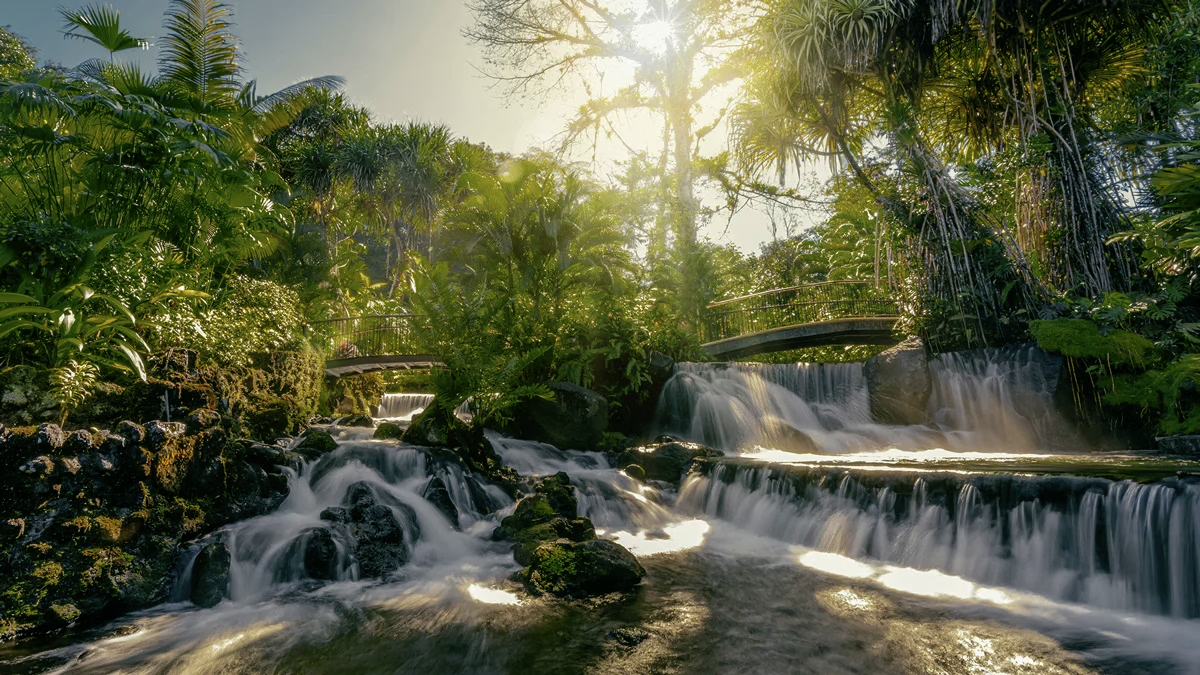
Costa Rica is well-known as an adventure destination, with most of the country’s most thrilling adventure excursions focused in and around Arenal Volcano, Monteverde, and the highlands. Still, almost anywhere you go, you’re not far from a thrill. Honeymooners craving a burst of adrenaline can hike jungle trails, cloud forests and volcanoes, go whitewater rafting or kayaking, ride horses or ATVs, or get a bird’s eye view on a zip line, canyoning or waterfall rappelling adventure.
Want something slower but just as memorable? Soak in the volcanic hot springs around Arenal after a day on the trails, or learn to surf together in Nosara or Santa Teresa.
Belize
In Belize, caving is a popular adventure activity that comes in many flavors – tubing, kayaking, canoeing, and spelunking through ceremonial caves. For those that want to stay above ground, hike beautiful trails through nature reserves, explore on horseback or ATV, take flight in a helicopter, whiz down a zip line, or go kite surfing. Out on the water, there are even more options.
Think sailing between the cayes, sea kayaking and paddleboarding along the mangroves, fly-fishing for bonefish and permit, or a scenic flight over the Great Blue Hole for that famous view from above.
Wildlife
Our pick: Costa Rica on land, Belize under the sea.
Costa Rica
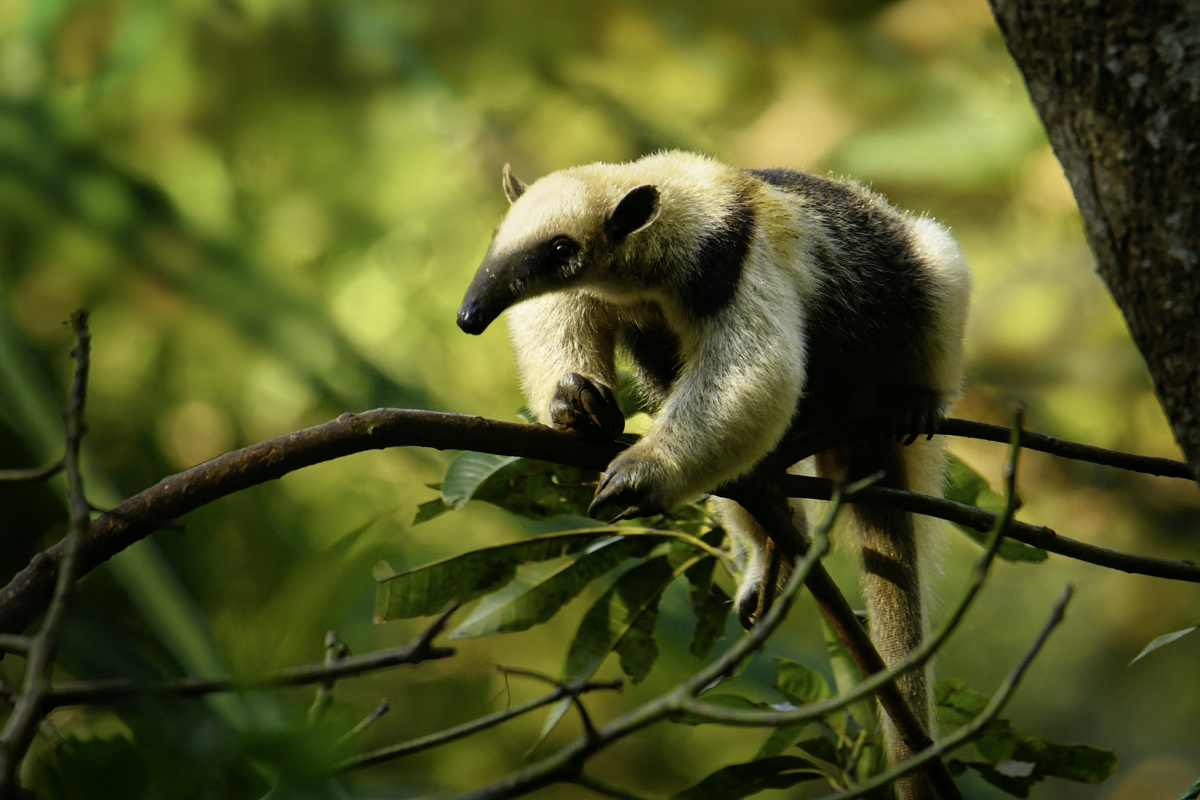
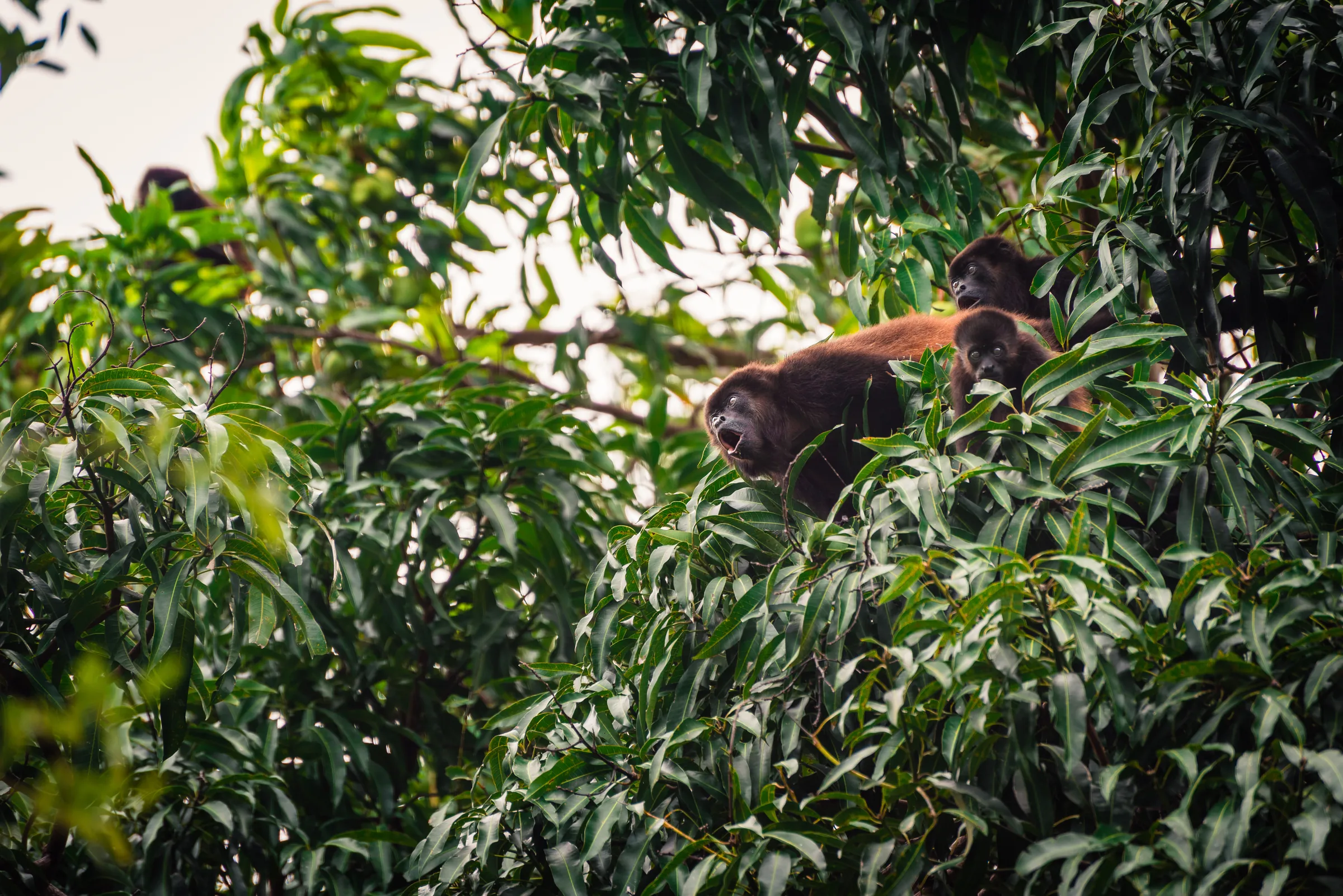
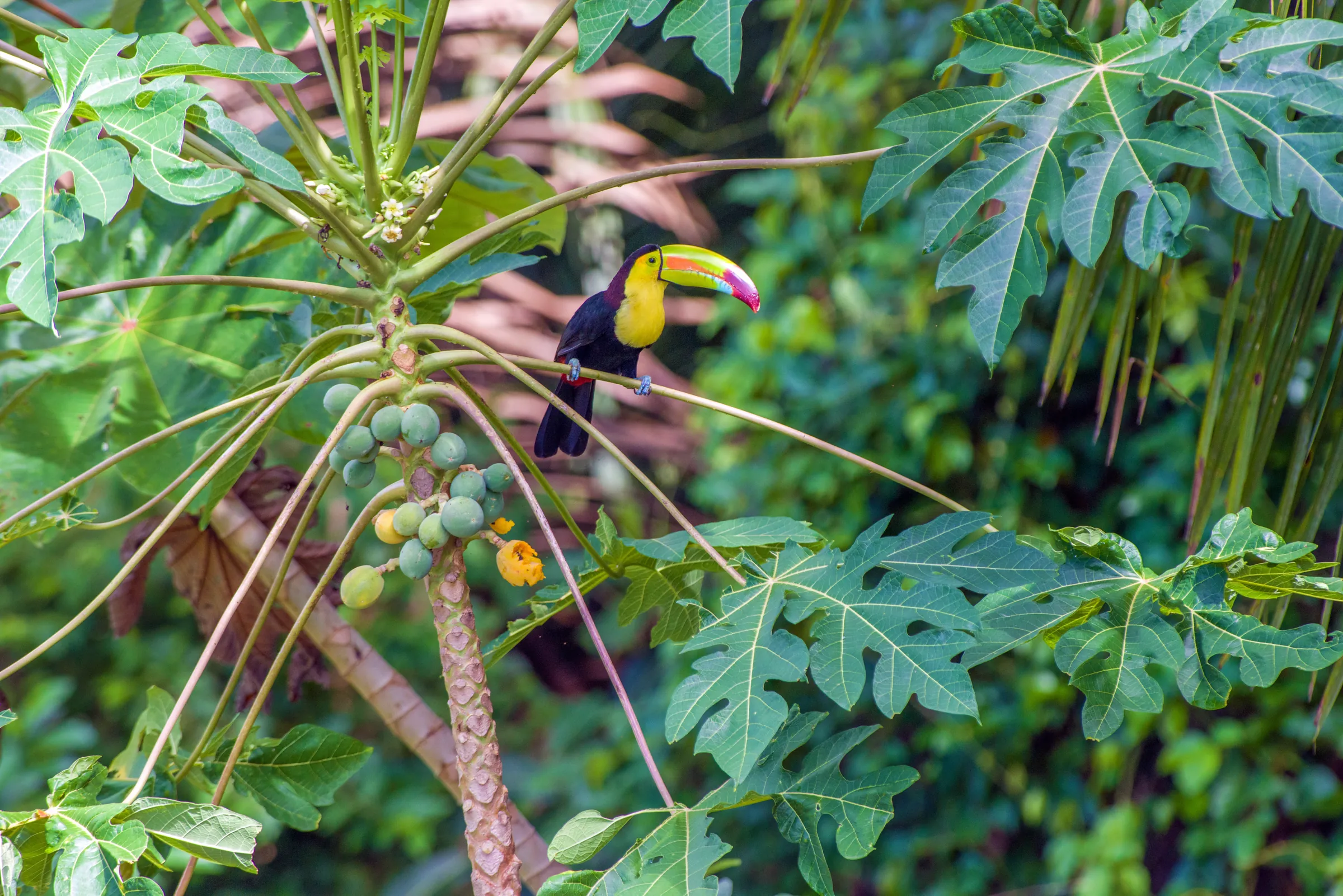
Costa Rica’s wildlife is unparalleled, with a wide range of terrestrial and birdlife visible throughout the country, particularly in lowland rainforest and cloud forested regions, including the Osa Peninsula, Tortuguero, Monteverde, Arenal, and the South Caribbean Coast. For honeymooners seeking a wildlife experience like no other, the Osa Peninsula – called “the most biologically intense place on earth” by National Geographic – is a must visit. In the unspoiled jungles of the peninsula, visitors can spot toucans, scarlet macaws, tapirs, three species of monkeys, red eyed tree frogs, sloths, and hundreds of other exotic animal species. In terms of biodiversity, Tortuguero is a close second, and boat cruises along the canals afford for spectacular wildlife viewing with no hiking required. Monteverde is known mainly for birds and amphibians, and Arenal and the South Caribbean Coast each offer a good cross-section of critters waiting to be discovered. Check out our top-selling Costa Rica Nature & Wildlife Honeymoon, or the luxurious Costa Rica Luxury Nature Escape.
Timing matters for a couple of Costa Rica’s showstoppers. Green sea turtles nest on the beaches of Tortuguero from about July to October, and humpback whales visit the southern Pacific coast twice a year, roughly July to November and again December to April.
Belize
Below the waves, Belize’s wildlife is far superior. Divers and snorkelers can hope to spot sea turtles, hundreds of species of colorful fish, nurse sharks, whale sharks (who come to dine on reef spawn between March and June), eagle and manta rays, stingrays, dolphins, and lionfish (which are an invasive non-native species and a serious threat to the ecosystem).
A quick update on whale sharks: sightings in Belize have become much less reliable in recent years, and anecdotally, we’ve heard that there have only been a couple of sightings since 2023. If whale sharks are a must, consider Isla Mujeres or Holbox instead.
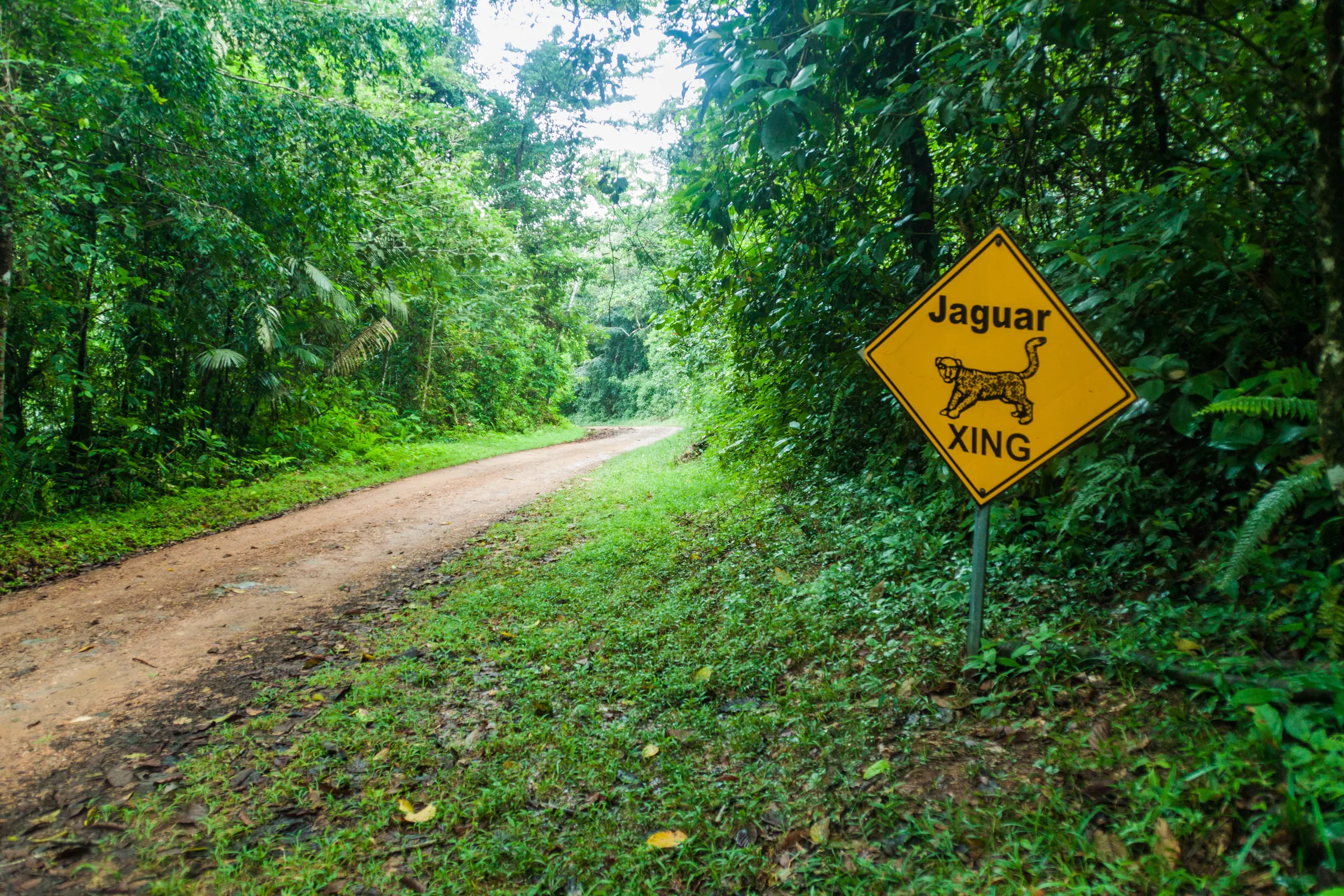
On land, Belize holds its own too. Cockscomb Basin Wildlife Sanctuary became the world’s first jaguar preserve in 1986, and its jungle trails and waterfalls are worth the trip even when the jaguars stay hidden (they usually do). You’ll hear black howler monkeys long before you see them at the Community Baboon Sanctuary, Crooked Tree Wildlife Sanctuary is a birder’s dream in the dry season, and keel-billed toucans, Belize’s national bird, turn up all over the country.
Beaches
Our pick: Costa Rica.
Costa Rica
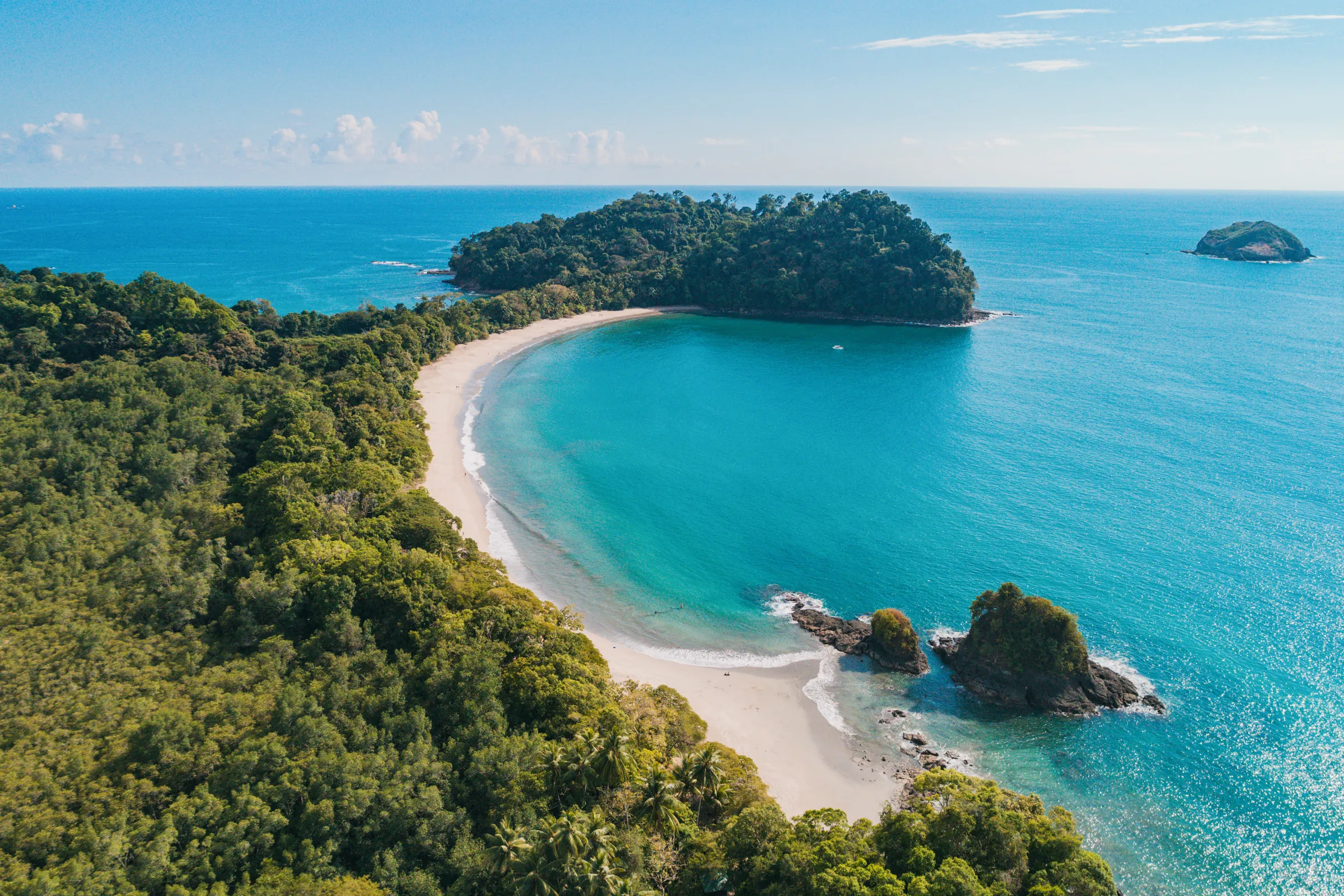
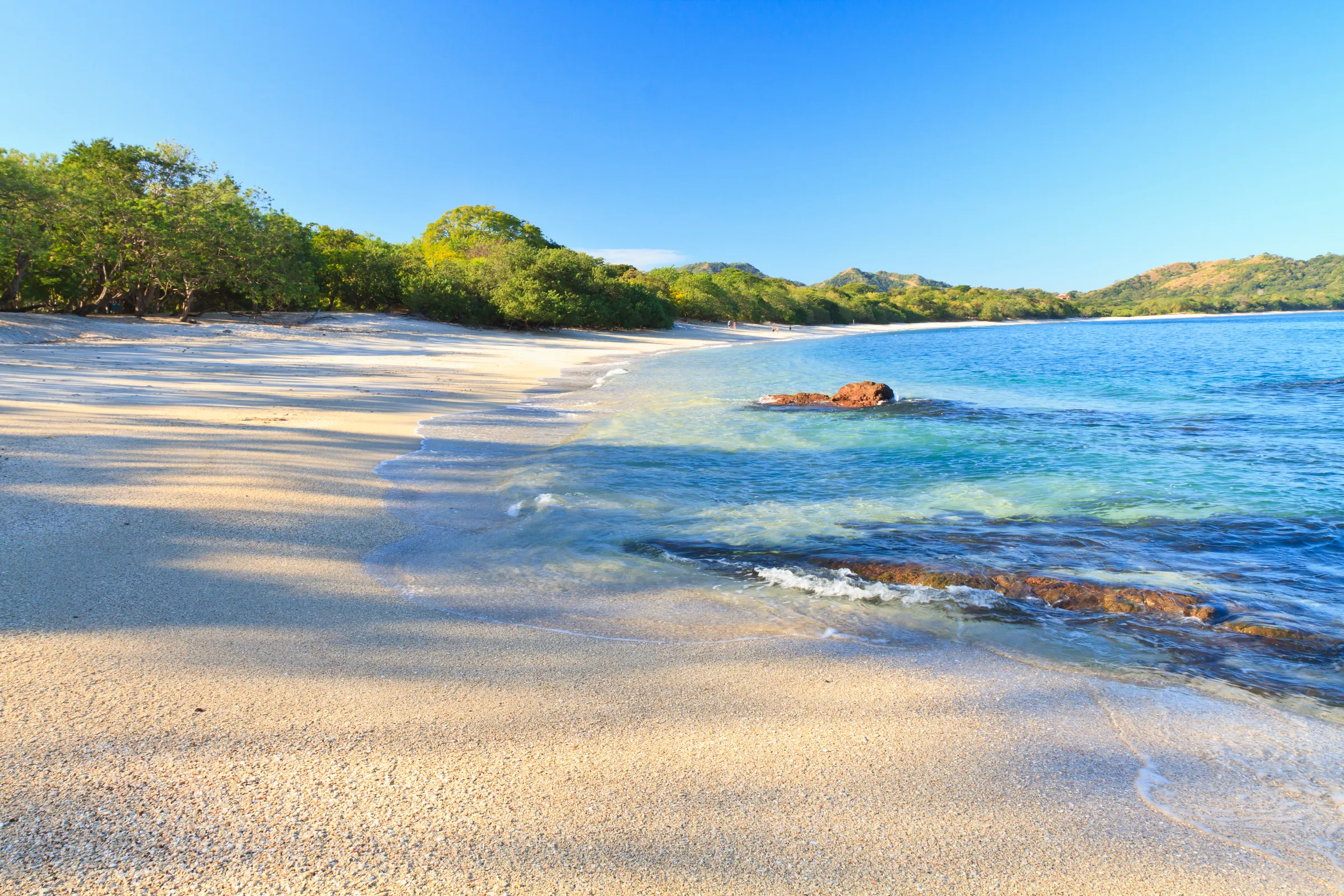
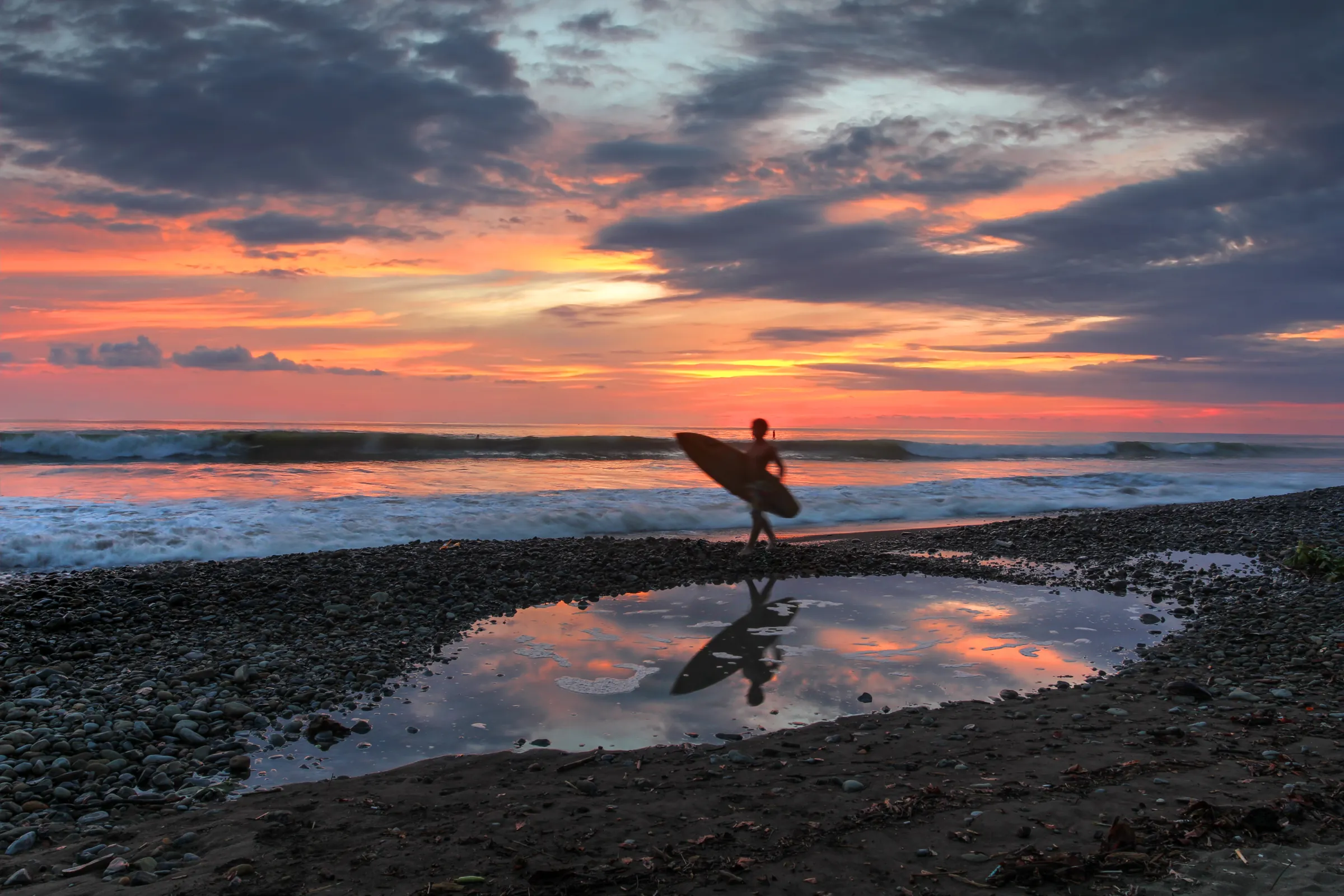
Neither Costa Rica nor Belize have the type of long, wide white sands that Caribbean islands are known for, but Costa Rica does have some truly stunning beaches. Some are quiet protected coves with white sand and calm turquoise water, while others are several kilometers long, often nearly deserted and fairly wild. With hundreds of beaches to check out along two long coastlines, there is something for every beachgoer in Costa Rica. Read more in our Costa Rica beach guide.
For families, we love the accessibility of the northern Guanacaste beaches, or Manuel Antonio for the wildlife (sloths and monkeys are crowd pleasers). For honeymooners and couples, we prefer something wilder: Nekajui’s private beach on the Peninsula Papagayo; Nosara’s sleepy surf and wellness vibe; Santa Teresa, at the end of the Nicoya Peninsula with its end-of-the-road kind of charm; or, further south, Uvita and the Osa Peninsula for truly virgin beaches where you might not see another soul on the sand. And, still Manuel Antonio – the beaches there are unbeatable.
Belize
Beaches in Belize are nice and scenic, usually white sand with small waves and a fair bit of sea grass in the water. It’s a good sign for sea life and diving, but also means that snorkeling and swimming may not be readily accessible right from the beach – dive in from the dock, instead. Don’t expect postcard-perfect Caribbean beaches here, long stretches of white sand like they have in the Yucatan or the Dominican Republic.
For the best beaches in Belize, head out to the cayes or down to Hopkins or the Placencia Peninsula. Secret Beach on Ambergris Caye, with its calm, clear water and beach bars on stilts, is one of our go-to picks during sargassum season in the rest of the Caribbean (but sargassum never reaches Pacific shores, so Costa Rica is safe, too).
Food
Our pick: Belize.
Costa Rica
There are tasty choices in both places. Local Costa Rica’s cuisine is very Central American – rice & beans (called gallo pinto), ceviche, tamales, olla de carne (beef stew served with rice, beans and salad) and the commonly eaten plato del dia or casado which typically includes meat, fried cheese, salad, rice and beans, and fried plantain.
On the Caribbean side around Puerto Viejo, food is different than the rest of Costa Rica. Rice and beans simmered in coconut milk, spicy rondón seafood stew and flaky patí pastries inspired by the region’s Afro-Caribbean roots.
Belize
Belize’s cuisine is infused with the influences of the many cultures that call this beautiful country home – Creole, Garifuna, Maya, and Mestizo – resulting in some seriously good eats! Think aromatic curries, coconut infused dishes, ceviche, fresh seafood, and more. If your honeymoon dates are flexible, try to time your visit with lobster season, which opens June 15th and closes February 15th each year. Read more on Belizean cuisine.
Language
Our pick: Belize.
Costa Rica
English is widely spoken in Costa Rica, though the official language is Spanish. More remote, less touristy destinations in Costa Rica will have fewer English speakers than the tourist hubs, though most hotel staff and tour guides speak English.
Belize
The official language of Belize is English, so it’s perfect for North American and British honeymooners.
You’ll also hear Kriol, Spanish and Garifuna as you travel, depending on where you are. Learning a word or two of each is a fun way to connect with the people you meet.
Nightlife
Our pick: it’s a tie.
For honeymooners looking for a vibrant nightlife scene, both countries have a few great options. In Costa Rica there are a few beach towns that qualify – the surfer towns of Tamarindo and Santa Teresa in the northwestern corner of the country, Dominical on the Central Pacific, and Puerto Viejo on the Caribbean. Each has a long list of bars and restaurants, some with chilled out vibes and live music, and others with pulsing reggaeton, where you can dance the night away. In articles online and forums, Jacó often comes up as a rowdy party town, but we’ve left it off of our list on purpose. Jacó is geared toward bachelor parties, known for prostitution and drugs, and generally a seedier experience than other locales in Costa Rica.
Similarly, in Belize there are a smattering of beach towns with great nightlife. San Pedro on Ambergris Caye is one of the most popular spots, and nearby luxury accommodation options makes it an ideal choice for honeymooners, while Caye Caulker caters more to backpackers and a younger crowd, and Placencia, located on the mainland, features a long line of beachfront bars and restaurants where you can dance the night away.
When to go
Both countries are similar: dry season from December through April, green season from May to November. Dry season means clear skies, more crowds and the highest prices. Shoulder season is great in both Costa Rica and Belize. We particularly like May and November for lush jungles, lesser crowds and better value, with sunny mornings and the occasional afternoon or evening rain shower.
Costa Rica’s Caribbean coast plays by its own rules, with September and October often the driest months there, while the rest of the country and much of the Caribbean battles with rain and storm season.
In Belize, the dry season often stretches into May, and lobster season opens mid-June. September and October are the wettest months and the peak of hurricane season, with lots of properties closing for maintenance during this time.
Getting there
Both countries are easy to reach from North America. Belize has one main international airport, just outside Belize City, with direct flights from hubs like Houston, Dallas, Miami and Atlanta, plus seasonal flights from Canada.
Costa Rica has two international airports: San José in the Central Valley, and Liberia in Guanacaste, a more convenient choice for the northern Pacific beaches. Plenty of North American cities fly direct to both.
Affordability: Belize vs. Costa Rica
Belize and Costa Rica are both more affordable honeymoon destinations than Hawaii or more far-flung locales like Bora Bora or the Maldives. They offer the same warm tropical waters, luxury accommodation options, high-quality dining and romantic couples’ experiences, but the value is better. In general, we find Belize has more mid-tier luxury options (some even with special features like plunge pools) at a more accessible price point. The typical honeymoon we sell to either location usually ranges between $3,500-5,000 per person, though pricing can increase substantially if you’re traveling at peak season, or have specific five-star properties in mind.
So, when it’s Belize vs. Costa Rica, which destination is the right one for your honeymoon? The answer, as with most other things, is it depends.
Both countries are amazing. Belize has better diving, snorkeling and water activities, great food, and the added attraction of the Mayan heartland. Costa Rica is stronger in terms of wildlife, beaches and has a more developed infrastructure for inland adventure activities. We know you’ll love the destination you choose! Take a look at our most popular Belize honeymoon packages, and our best-selling Costa Rica honeymoon packages to get inspired, or reach out to us for guidance.