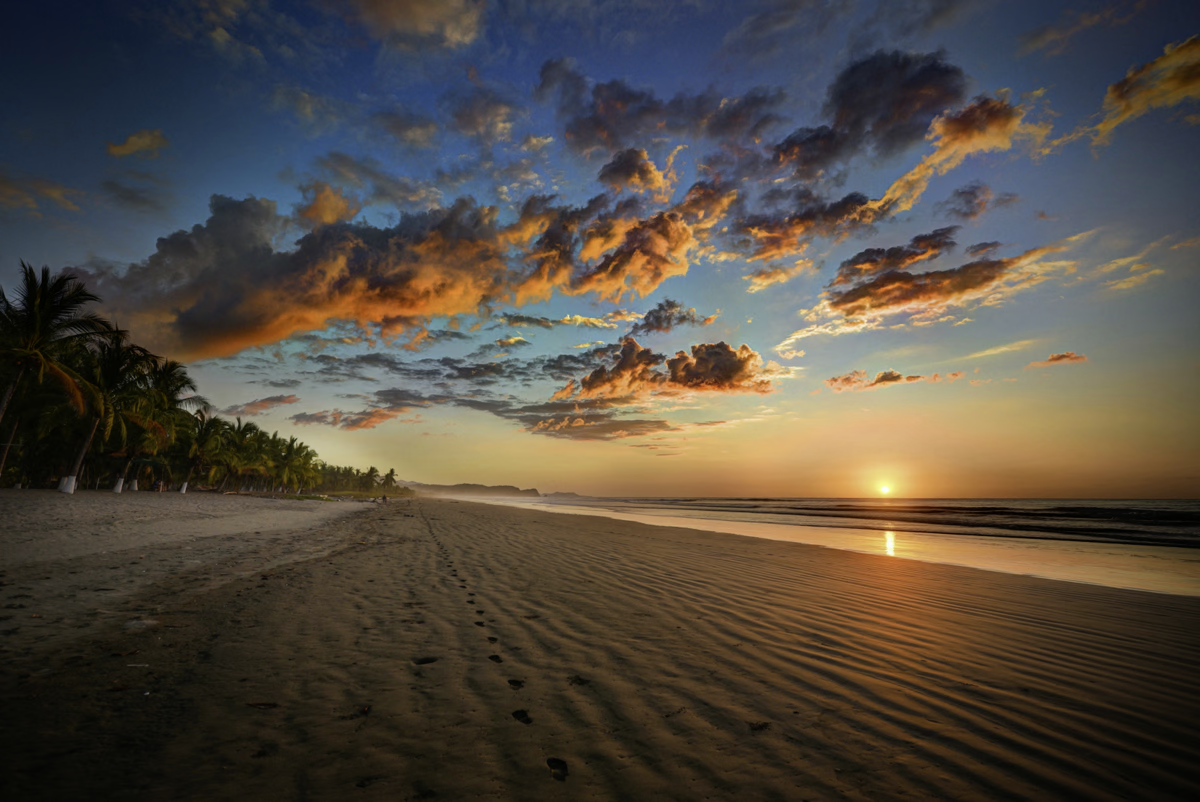
Planning a honeymoon while you're in the midst of wedding planning can be exhausting, and these one-in-a-lifetime trips aren't getting any cheaper. But, you're supposed to enjoy your honeymoon, not stress over it! It's the first exotic adventure you'll embark on as a married couple, and the perfect kick-off to oodles of wedded bliss. All you need is a solid plan, a few expert tips, and maybe the guidance of a professional honeymoon planner, if that feels right.
Blissfully beachy and romantic in a wild and exotic sort of way, Costa Rica's an ideal choice for honeymooners looking for something just a little bit different.
Costa Rica is immensely beautiful and packed with breathtaking landscapes: two beautiful coastlines, majestic volcanoes, misty cloud forests, and pristine jungles teeming with exotic wildlife. There's so much to do and see, and with a seemingly endless selection of luxury boutique hotels and resorts, it's hard to know where to start. That's where we come in!
Best Costa Rica honeymoon packages
If the planning process isn't for you, and you'd rather hand all the details off to a professional, there are a multitude of options. You could go fully custom, and let a honeymoon expert craft a trip tailored to you and your partner's budget and wish list, or pick an off-the-shelf private itinerary that looks like a good fit.
Tell us about your Costa Rica honeymoon
Planning the perfect honeymoon in Costa Rica
Unless you're booking a group trip, our top piece of honeymoon planning advice is to start early!
Whether or not you engage a travel agency to help you out, an early start on things, 6 to 8 months before your planned departure, can mean the difference between getting the room you want and being forced to book a sub-standard room at whichever hotel is still available.
There are a number of specialized boutique resorts in Costa Rica that cater specifically to honeymooners and couples. It's not unusual for these types of hotels to book up months in advance, particularly during the high season, between December and March.
If you're open to going the group trip route, the waiting game might pay off. Similar to all-inclusive resorts, it's not unusual for group tour operators to offer unbelievable last-minute deals on package trips, and you might be able to get between 30-50% off, providing your trip dates are flexible.

When to go
The best time to visit Costa Rica is just after the rainy season (December through January). The Pacific coast is lush, green and not too hot. As the dry season progresses, it can become uncomfortably hot in the lowlands and along coastal regions, waterfalls and rivers dry up, and vegetation in the northwestern region begins to die off. This is the best time for bird watching in the rainforests, and snorkeling along the Caribbean, where the waters are calmer and clearer.
For the right traveler, the rainy season (May to November) is also a great time to visit. Hotels often offer reduced rates during the low season, the landscape becomes super lush and green, and the rains are not as bad as they sound, with showers normally occurring in the afternoon and at night. In our opinion, the best time to honeymoon in Costa Rica is during shoulder season, in either May or November. You'll likely get to benefit from reduced hotel rates and fewer crowds, yet still enjoy great weather most days.
Christmas, New Years and Easter (called Semana Santa in Latin America) are the biggest holidays in Costa Rica, and during these times, locals flock to the beaches, meaning hotels are at capacity and charge premium rates. Many local stores and businesses close down during these periods, and tourist attractions become busy and overcrowded.
Getting to Costa Rica
From North America: several airlines offer direct and connecting flights to Costa Rica's two international airports: Juan Santamaría International Airport in San José (airport code: SJO) and Daniel Oduber Quirós International Airport in Liberia (airport code: LIR). Including connection time, flights from the USA typically range from 3 to 9 hours in duration. Most flights from Canada range from 9 to 15 hours in duration. Canadian air carrier WestJet also offers direct flights between Liberia and both Toronto and Calgary, generally the fastest way to reach Costa Rica from Canada at roughly 5 to 7 hours.
From the UK: there are currently no direct flights to Costa Rica from the UK, but there are several flight options connecting in the United States and/or Canada. Including connection time, flights from the UK typically range from 12 to 18 hours in duration.
Most international flights land in San José, though the number and frequency of direct international flights arriving to Liberia, the gateway to the beaches of Guanacaste and the Nicoya Peninsula, is increasing. If you're planning to spend all, or most of your honeymoon exploring Guanacaste, it makes sense to fly into Liberia. It will save you the cost of a separate flight to and from San José, or around 5 hours in a car or bus.
San José is a better option if you plan to visit Manuel Antonio, the Central Pacific coast, the Caribbean lowlands and coast, or the Osa Peninsula.

How to Get Around
While it may be true that sometimes, "it's the journey, not the destination," most honeymooners don't want to deal with long layovers, multiple stops, bus changes, and hours on bumpy dirt roads to get where they're going. Luckily, Costa Rica has a well-developed tourism framework, and it's easy to get around, with several methods of transportation to take you from Point A to Point B.
The country's major touristic sites are spread out, spanning coast to coast and top to bottom, so it's not unusual for honeymooners to use a few different methods to get around over the course of their trip.
Domestic flights
Domestic airline Sansa Airlines operates out of San José's Juan Santamaría International Airport, offering flights on "puddle jumper" propeller planes to destinations throughout Costa Rica. It's an ideal way to avoid long driving days required for longer journeys (say, to the Osa Peninsula or Tortuguero), but there are a couple of things to watch out for. You'll be weighed with your luggage, and the baggage rules are generally very strict, meaning hefty fees for excess baggage if you overpack. Flight schedules also change frequently and without notice. Delays are common due to inclement weather, so don't book a domestic flight that will make a tight connection with your international flight.
Public buses
Local buses operate throughout Costa Rica, mainly in urban centers including San José, Puntarenas, San Isidro de El General, Golfito and Limón. There is also an extensive bus network that runs throughout the country to remote destinations, though many routes may only have one or two departures per day. Local buses will get you to where you need to go, at the expense of comfort and convenience, with most routes picking up passengers on the street along main roads, and allowing as many people to pile on as can fit. The ride can get hot, crowded and uncomfortable on long journeys, so arrive early and try to get a seat. Bus terminals and stations are often busy and chaotic, the perfect place for pickpocketing and purse snatching. Always mind your belongings.
Rent a car
In general, the roads in Costa Rica are poor, and it is recommended that you spring for a four-wheel-drive, particularly if you are exploring areas not along the main tourist trail. The Pacific Coast is the most beautiful area to travel by car, and the highways along the coast are well-maintained. Gasoline (petrol) is widely available, and you can find 24-hour stations along the Interamericana. In more remote areas, fuel may be sold out of homes or at neighborhood corner stores.
Car rentals are generally inexpensive, but shop around. The international airport in San José has several rental car facilities onsite, and Liberia also has a few. Lots of agencies have small satellite offices dispersed throughout Costa Rica, but there is often a fee to drop a car off at a different location than where you picked it up. Get unlimited mileage, carefully inspect rental cars for minor damage and ensure any damage is noted on the agreement. Costa Rican rental car insurance is required by law, even if you have other insurance, through credit cards or auto policies at home, and usually costs somewhere in the range of $15 to $25 per day. Most insurance policies do not cover damage caused by flooding or driving through rivers, so verify the extent of your policy before doing any off-roading.
Though the road system in Costa Rica is uncomplicated and easy to navigate outside of San José, GPS is helpful. You may have coverage on your cell phone, or can download the Costa Rica roadmap from Google Maps before your trip. Alternatively, most car rental agencies will have GPS units that can be rented on a daily or weekly basis.
Taxis and shuttles
Hiring taxis or arranging shuttle buses ahead of time is an increasingly popular way of navigating Costa Rica. Small, private companies will pick you up at your airport or hotel and transfer you to your next destination. There are several shuttles per day from destinations all over Costa Rica, and the rides are reliable, comfortable and usually air-conditioned. Some even have WiFi!
In San José, taxis are metered, and it is illegal for drivers not to use them. Outside the capital, most taxis do not have meters and fares should be agreed upon in advance. Bartering is common. Taxi drivers are not normally tipped unless they assist with luggage or have provided exceptional service.
Private drivers
Similar to the shuttle companies, private drivers are available throughout Costa Rica. They're also usually small, private companies, and will pick you up and offer door-to-door service to your next destination. Significantly more expensive than shuttle companies, these are most appropriate for guests who want to be able to dictate where they stop along the way, or for groups of five or more traveling together.
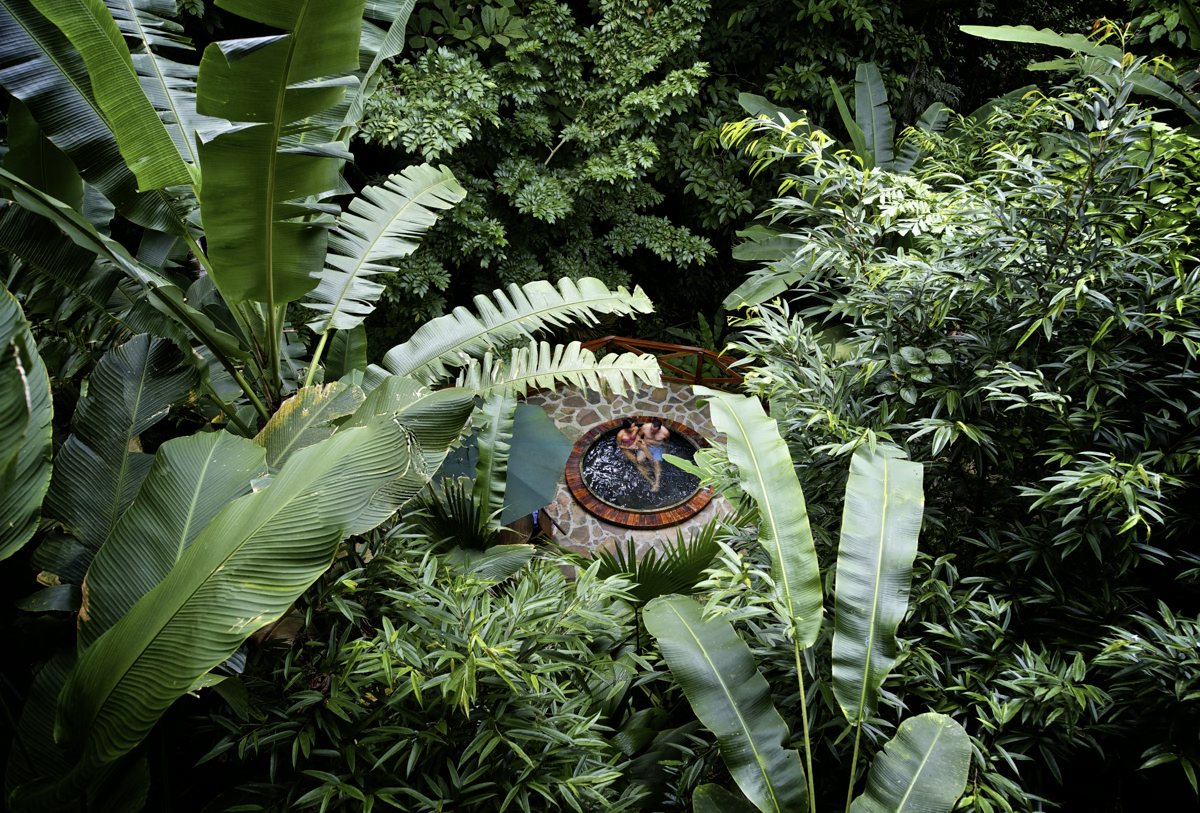
How much does a honeymoon in Costa Rica cost?
Though located in Central America, Costa Rica is significantly more expensive than neighboring Nicaragua, and a honeymoon here requires a budget more in line with that of a trip to a Central European country than other countries in Central America.
Still, Costa Rica honeymoon costs can vary, depending on your travel style, length of stay, the number of destinations you visit, and the activities you choose to include.
If you've been daydreaming about a luxury getaway with five-star hotels, private drivers, and three gourmet meals per day, your budget will be much higher than if you book an out-of-the-way Airbnb, or a private room in a guesthouse and eat most of your meals at small local restaurants, called sodas. Make the most of your budget by saving where you can, food, shuttles, and shared tours, and splurge on a couple of nights of luxury at an upscale hotel. It is your honeymoon, after all!
Ten days in Costa Rica is long enough to visit most of the major tourist areas without feeling rushed, but you can easily spend two weeks or longer here without getting bored. With so much to see and do in a place like Costa Rica, most honeymooners visit at least two destinations, often splitting their time between jungle and beach. It's tempting to try to fit as much as you can in, but more than three destinations over the span of a week might turn out to be more than you bargain for. Distances can be deceptive here, even when destinations look close on a map, the poor road conditions in some areas may turn a 20-kilometer drive into an hour-long ordeal. Add travel time, and the process of unpacking and re-packing at each hotel, and you may spend more time doing that than actually exploring.
Flights to Costa Rica: USD $500 - $2,000 for two people
Where you depart from and the time of year has a big impact on the cost of flights. Prices from the northern US states and Canada will typically cost between $500 and $700, though there are occasionally amazing deals (like $350 round trip from Canada). Flights from the southern US states generally cost between $250 and $500, though low-cost carriers might have cheaper flights available. During holiday periods including Christmas, Easter and spring break, flight prices often double.
For the best prices on flights, book three months to six weeks before your departure.
Hotel cost for a week long Costa Rica honeymoon: USD $1,200- $8,500+
Accommodation is usually the biggest honeymoon expense, but if you're flexible with where you stay, there are a wide range of options that will fit nearly any budget, anything from hostels to Airbnb to high-end luxury eco-lodges. If you plan to spend most of your days exploring, a mid-range or budget option makes sense. A hotel pool with a swim-up bar and a view sounds nice, but don't waste money on amenities and add-ons if you won't be using them anyway.
Still, it's nice to be pampered, and if you've got room in your budget, it's worth a splurge on an upscale stay in a unique location. Book a stay in a hotel with a private in-suite plunge pool, a great spa, or an expansive ocean-view deck. You won't regret it, we promise.
Food & drink costs in Costa Rica: USD $400 - $1,000 for two people for a week
Most hotels in Costa Rica include breakfast, usually an option of American fare or a tasty Tica breakfast with gallo pinto, plantains, and eggs to your liking, and remote lodges like Copa del Árbol, Lapa Rios and Pacuare Lodge, will include meal packages with your stay, but for the most part, you'll be on your own for lunch and dinner.
Local restaurants or sodas offer cheap typical meals (called casados) that consist of rice and beans, cheese, plantain, your choice of meat, and a small side salad with lettuce or cabbage, for as low as $5 to $7 per plate. In more upscale restaurants that cater to tourists, expect to pay between $18 and $25 per person per meal, including a drink.

Transportation costs in Costa Rica: USD $200 - $1,000+ for two people for a week
If you rent a car, limit your trip to one destination, or use public buses to get around, transportation is cheap. Car rentals cost roughly $10 to $25 per day, plus daily insurance of around $25. Public buses are the most economical option, and you can get around most of the country for less than $10 each way.
Shared tourist shuttles are the next cheapest option, ranging in price from $20 to $125 per person depending on the destination and how far you have to go. In some cases, particularly for travel to and from the capital, domestic flights may be cheaper than tourist shuttles, so take the time to check out all of your options before you book.
For a once-in-a-lifetime splurge, chartered helicopter and plane flights can also be arranged, starting at $1,000 and ranging up to $6,500 per leg.
Average budget for a week-long honeymoon in Costa Rica
- Budget: $2,000 ($1,000 per person)
- Mid-Range: $3,800+ ($1,900 per person)
- Luxury: $8,000+ ($4,000 per person)
- Ultra-Luxury: $25,000 ($12,500 per person)
Did you know: If you book with a travel advisor, you may get perks like room upgrades, breakfast included, and more, at no additional cost to you. You'll pay the same whether you book directly or through us! Reach out today to start planning your Costa Rica honeymoon.
The top Costa Rica honeymoon destinations
It may seem daunting to put together a Costa Rica honeymoon itinerary that makes sense. Generally, we recommend splitting your time between jungle and beach, adventure and relaxation. Most of our clients visit two to three destinations on a 10 day Costa Rica honeymoon, giving them sufficient time to unpack and relax at each location before they need to move on to the next one.
1. La Fortuna and Arenal Volcano, Costa Rica
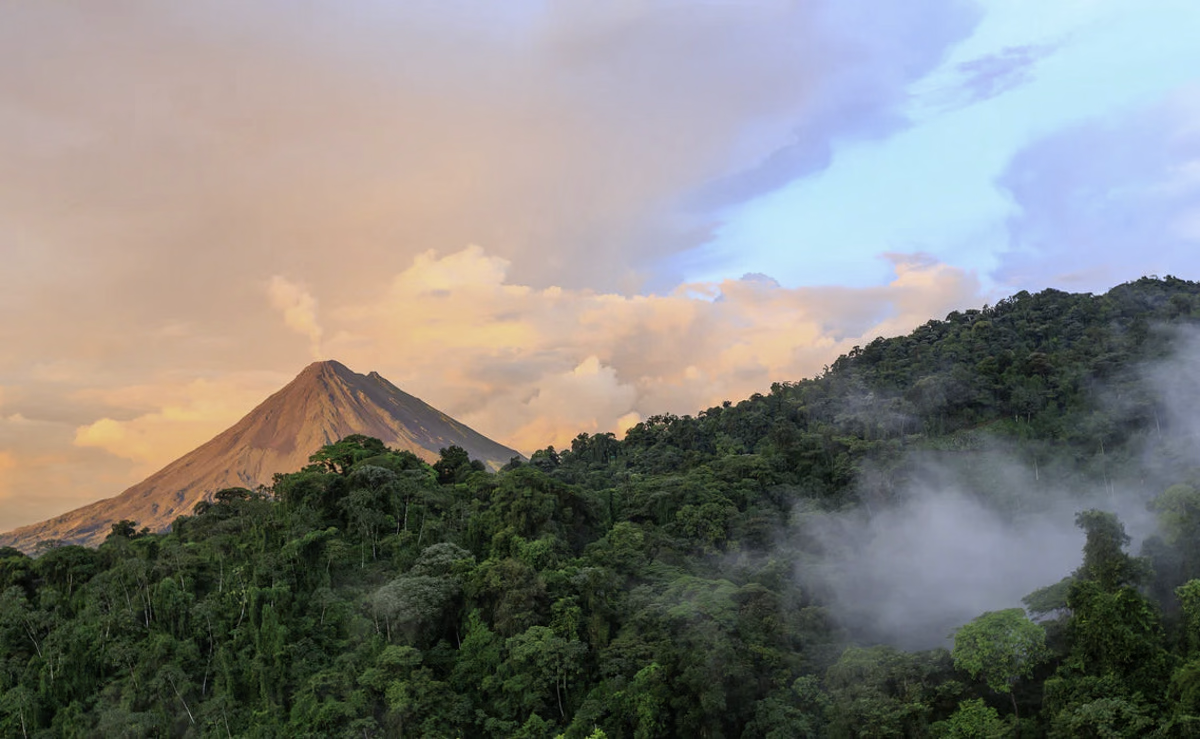
For most of La Fortuna's history, it has been a quiet agricultural town, situated six kilometers (3.7 miles) from the base of the majestic Arenal Volcano. In 1968, after nearly 400 years of dormancy, Arenal erupted violently, burying the small villages of Pueblo Nuevo, San Luís and Tabacón. Overnight, tourists from around the globe descended en masse to see the fiery eruptions by night, and though the volcano stopped spewing lava in 2010, La Fortuna remains one of the top destinations in Costa Rica to this day.
Centered around a small park with a church and manicured gardens, the town itself is unremarkable, apart from phenomenal views of the volcano, but the essentials are easy to find, restaurants and bars, supermarkets, souvenir shops, and a gas station. There is little in the way of nightlife with most people opting for a night at the hot springs instead of a night at the bar, but don't despair! A small but vibrant nightlife scene in La Fortuna includes a couple of reggae bars and one of Costa Rica's biggest dance clubs.
As Costa Rica's adventure capital, the word romantic may not be the first thing that comes to mind when you arrive to this enchanting area, but you'll soon change your mind. After days spent hiking, horseback riding, waterfall rappelling, zip lining, and whitewater rafting, there's nothing quite like indulging in a passionfruit smoothie (or a cocktail, it's your honeymoon after all), as the sky turns pink, and the sun sets beyond the volcano. Then, after dark, whittle your evening away in one of many steamy volcanic hot springs before you retire to a perfect honeymoon suite in one of the area's beautiful hotels.
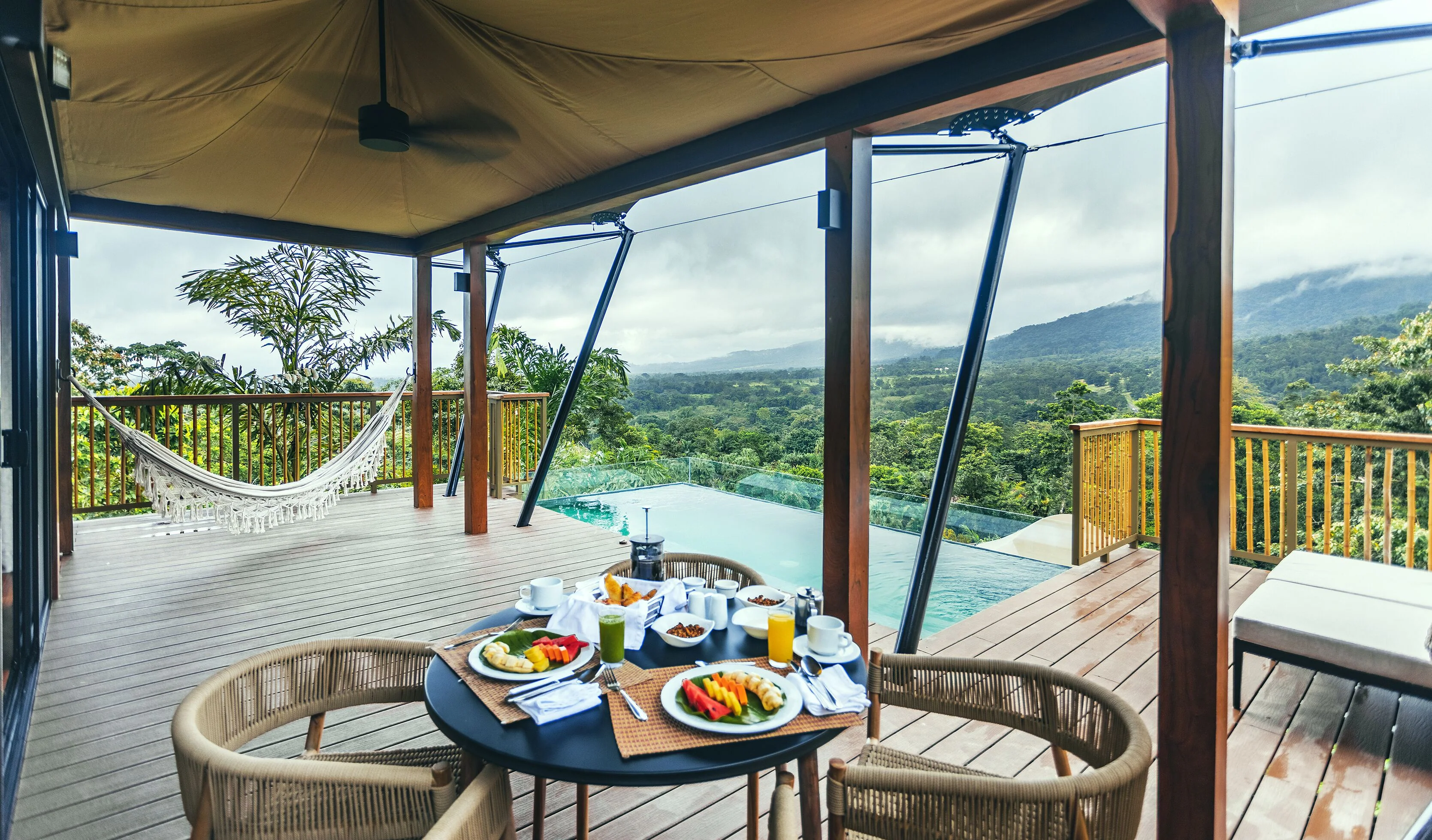
Osaviva's pick: Nayara Tented Camp
The most dramatic of Nayara's three sister properties: safari-style tented villas up in the rainforest canopy, each with its own private plunge pool, on grounds that used to be cattle pasture and are now home to more than 20,000 replanted native trees. It's the pick for couples who want Nayara's romance with a wilder edge than Springs' polish. Ask us about a stay at Nayara Tented Camp
Where to stay in Arenal
- Mid-Range: Arenal Observatory Lodge from $121/night
- Mid-Range: Hotel Silencio del Campo from $182/night
- Luxury: Nayara Resort Spa & Gardens from $475/night
- Luxury: Nayara Springs from $600/night
- Luxury: Tabacón Thermal Resort & Spa from $310/night
2. Dominical
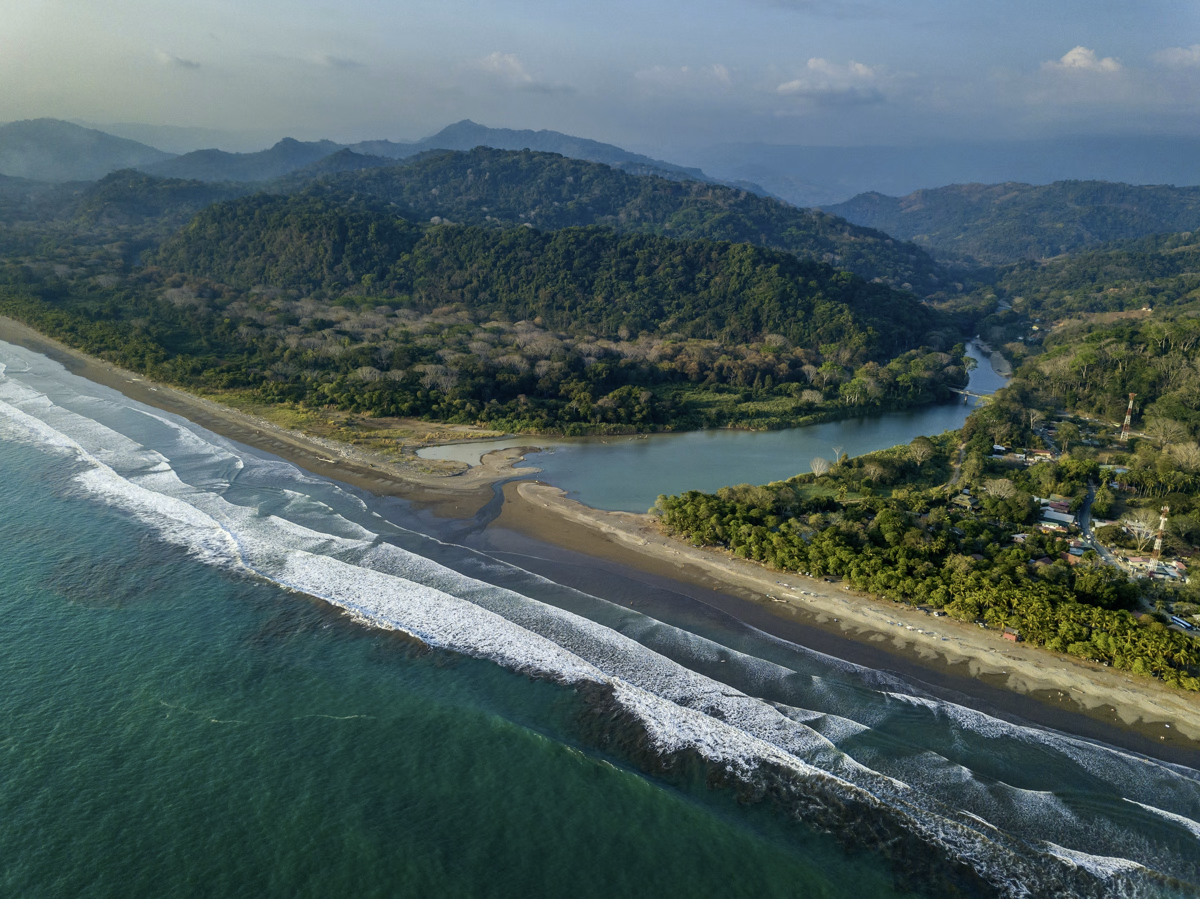
Best known for its waves, the quirky little beach town of Dominical on Costa Rica's Central Pacific has long been a favorite destination for those looking for something more off the map, attracting a motley crew of surfers, backpackers, and sun worshippers. For a long time, the only way to get to town was to travel a dusty, pitted stretch of dirt road south of Manuel Antonio, keeping the less adventurous travelers at bay. Though the development of the Costanera Sur highway has brought a buzz of development and with it, hordes of fresh faces to the area, Dominical has maintained its laid-back, beachy vibe, with unpaved roads and free from big chain resorts and fast food restaurants.
The beach fronting Dominical is one of the best surfing beaches in Costa Rica, offering consistent waves, great for both beginner and experienced surfers. The dark rocky stretch of sand meanders along the coastline for 4 kilometers (2.5 miles), with deep blue water lining one side, and jungle-covered hills sloping up the other, and the further you walk, the quieter the beach becomes, you won't be sharing the sand with more than a handful of bathers at any given time. Though this isn't the prettiest beach in Costa Rica, sunsets here are spectacular, and as twilight comes calling, locals and tourists alike congregate on the beach, beer in hand, to watch the sun dip below the horizon.
Where to stay in Dominical
- Mid-Range: Costa Paraiso from $125/night
- Mid-Range: Tree of Life Cabinas from $95/night
- Luxury: Hotel Cuna del Angel from $202/night
- Luxury: Villas Alturas from $165/night

3. Manuel Antonio
The small seaside village of Manuel Antonio is famous for its national park, and though it is tiny, the village is bustling with packs of tourists, street vendors, and guides hunting for clients to take into the park. The best time to visit the town is during low season or on a Monday when the park is closed, the town transforms into a quiet, sedate, relaxing place, with waves lapping at the white sands of Playa Espadilla and La Playita, both open to the public even when the park is closed.
Do not miss Manuel Antonio National Park, even if you have to fight the crowds. The payoff is worth it! Inside the gates, a short walk down a service road, the park contains some of the most perfect white sand beaches in the entire country, protected coves with turquoise water and powdery sand lined with palm trees filled with white-faced monkeys and backed by thick, lush jungle. It really is something close to paradise.

Osaviva's pick: Makanda by the Sea
Adults-only and tucked into jungle just far enough from town that Manuel Antonio's buzz melts away almost the moment you arrive. Makanda pairs plunge-pool and jacuzzi suites with candlelit paths and wide-open Pacific views. Every corner of this property photographs beautifully, but it lives up to the photos too, which is the harder trick. Ask us about a stay at Makanda.
Where to stay in Manuel Antonio
- Mid-Range: Hotel Plaza Yara from $110/night
- Luxury: Arenas del Mar Beachfront & Rainforest Resort from $240/night
- Luxury: Gaia Hotel & Reserve from $265/night
- Luxury: Tulemar Bungalows & Villas from $385/night
4. Monteverde
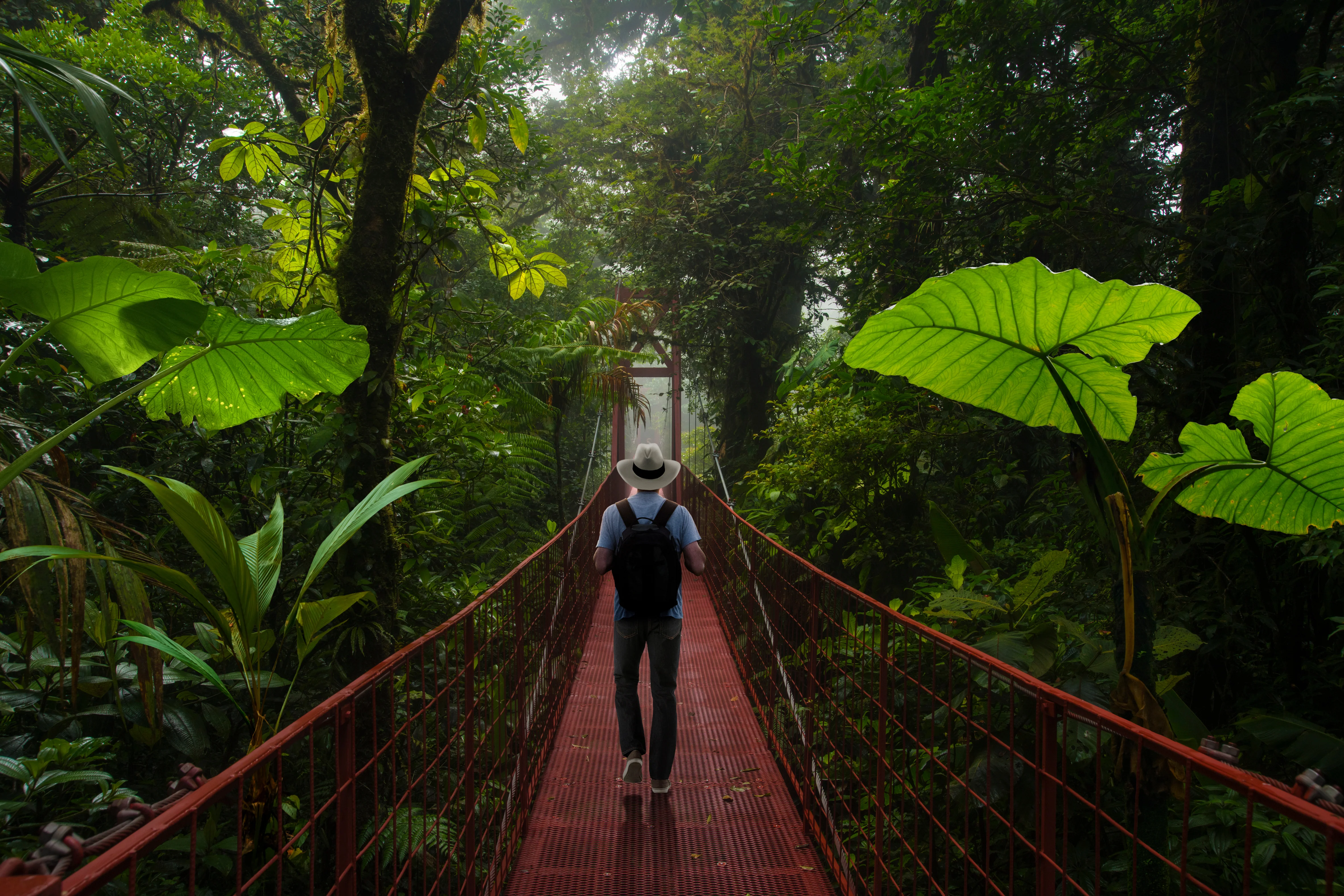
Nestled atop the spine of Costa Rica's continental divide, Monteverde is a mystical place of cloud forest and coffee plantations at an altitude of 1,440 meters (4,662 feet) above sea level, what sounds more romantic than that? It's a place of astonishing, otherworldly beauty, where everything drips and every surface is damp, slippery, and green, coated in thick moss and gnarled roots centuries in the making. A cool, heavy mist hangs close to the ground, and the forest fades in and out of focus as the thick fog ebbs and flows. The reserve, which stretches over 10,500 hectares (26,000 acres), supports a complex ecosystem that harbors over 100 species of mammals, 400 species of birds, tens of thousands of insects, and over 2,500 plant varieties, 420 of which are orchids alone.
The reserve offers 13 kilometers (8 miles) of well-marked, well-maintained trails, zip lines and hanging bridges, which stretch across canyons and disappear into the mist, giving visitors the unique feeling of floating above a swirling white abyss. To skip the crowds and really feel like you and your partner are the only ones in the reserve, the best time to visit Monteverde is at the end of the dry season in the last two weeks of April, when weather is balmy and pleasant enough for a stroll, but all of the tourists have gone home.

Osaviva's pick: Hotel Belmar
A 40-year-old, family-owned property that just became Costa Rica's first Design Hotels™ member and landed at #3 on Travel + Leisure's 2026 World's Best Awards. Belmar pairs Alpine-inspired architecture with hand-carved local furnishings and farm-to-table dining grown on its own partner farm. Its newest addition, Artista Villas, ten private residences built into the cloud forest, is the one to book for a honeymoon splurge. Ask us about a stay at Hotel Belmar.
Where to stay in Monteverde
- Mid-Range: Monteverde Lodge & Gardens from $136/night
- Mid-Range: Hidden Canopy Treehouse Boutique Hotel from $239/night
- Luxury: Hotel Belmar from $199/night
- Luxury: Senda Monteverde Hotel from $220/night

5. The Osa Peninsula
On Costa Rica's wild, lush Osa Peninsula, Puerto Jiménez (or simply Jiménez, as it's known to locals) is the primary gateway to the beautiful rainforests of the Osa, flanked on one side by the emerald waters of the Golfo Dulce, and on the other, an expanse of jungle and farmland that stretches to the crowned jewel of the Costa Rica parks system, Corcovado National Park. Though it's one of Costa Rica's most popular destinations, the region remains free of high-rises and large-scale developments, instead favoring small boutique eco-lodges surrounded by vast private nature reserves.
Corcovado National Park is the largest national park in Costa Rica, and the largest primary forest on the American Pacific coast, known worldwide for its stunning array of wildlife and pristine jungle terrain. The park protects a diverse collection of ecosystems, 13 in total, from montane forest to cloud forest to mangrove swamps and coastal marine habitats, and is home to a dizzying variety of species, including 700 tree species, 1,000 orchids, 10,000 insects, 367 birds, 140 mammals, and 117 amphibians and reptiles. Called "the most biologically intense place on Earth," in fewer than 42,000 hectares (104,000 acres) of land, Corcovado houses 3% of global biodiversity, and visitors have a good chance of spotting some of Costa Rica's most endangered inhabitants here, Corcovado boasts a sizable population of the Baird's tapir, harpy eagle, jaguar, puma, scarlet macaw, and four monkey species.
A few kilometers out of the park, on the southernmost point of the Osa Peninsula where the Golfo Dulce meets the Pacific Ocean, the remote Cabo Matapalo is a perfect locale for honeymooners looking to experience something extraordinary. Cabo Matapalo is spectacularly wild, characterized by deserted beaches, lush rainforest and an eco-friendly way of life. For adventurous honeymooners, there is no better place, the Osa Peninsula offers an immersive jungle experience that can't be beat. It's Costa Rica's last frontier, and hard as it is to get to, it's well worth the long and arduous trek to get here.

Osaviva's pick: El Remanso Rainforest Lodge
Down the road from Lapa Rios, a little smaller and less polished at the edges, which is exactly the appeal. El Remanso tucks plunge-pool villas into the hillside above the Pacific, with hidden waterfalls on the property and howler monkeys crossing the canopy most afternoons. The pick for couples who want the Osa's wildness without giving up genuine comfort. Ask us about a stay at El Remanso.
Where to stay on the Osa Peninsula
- Mid-Range: Finca Exotica Ecolodge, Carate; all-inclusive packages from $140 per person, per night. Includes taxes and three meals per day.
- Mid-Range: Ojo del Mar, Cabo Matapalo; bed & breakfast packages from $105/night. Includes taxes and breakfast for two.
- Luxury: Bosque del Cabo Rainforest Lodge, Cabo Matapalo; all-inclusive packages from $225 per person, per night. Includes taxes and three meals per day.
- Luxury: El Remanso Rainforest Lodge, Cabo Matapalo; all-inclusive packages from $245 per person, per night. Includes taxes and three meals per day.
- Luxury: Lapa Rios Ecolodge, Cabo Matapalo; from $340 per person, per night. Includes three meals per day.
6. Santa Teresa
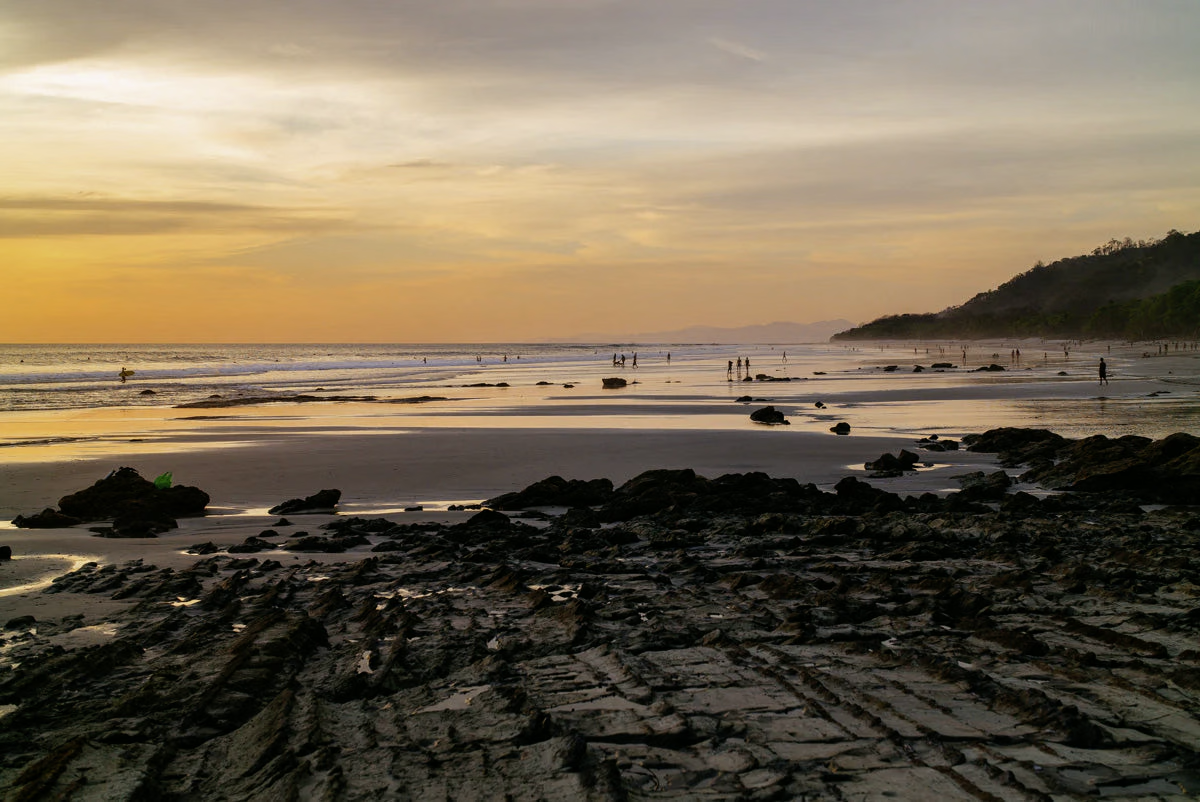
On the western edge of the Nicoya Peninsula, Santa Teresa is an idyllic beach village that sprawls parallel to the coast, along miles of dusty dirt road. Despite its small size, the last several years have seen this laid-back town blossom into a booming travel destination, with luxury hotels springing up to accommodate the surfers and foreigners coming from far and wide to visit the powdery white beaches and constant, reliable swells fueled by offshore tropical winds.
Osaviva's pick: Hotel Nantipa
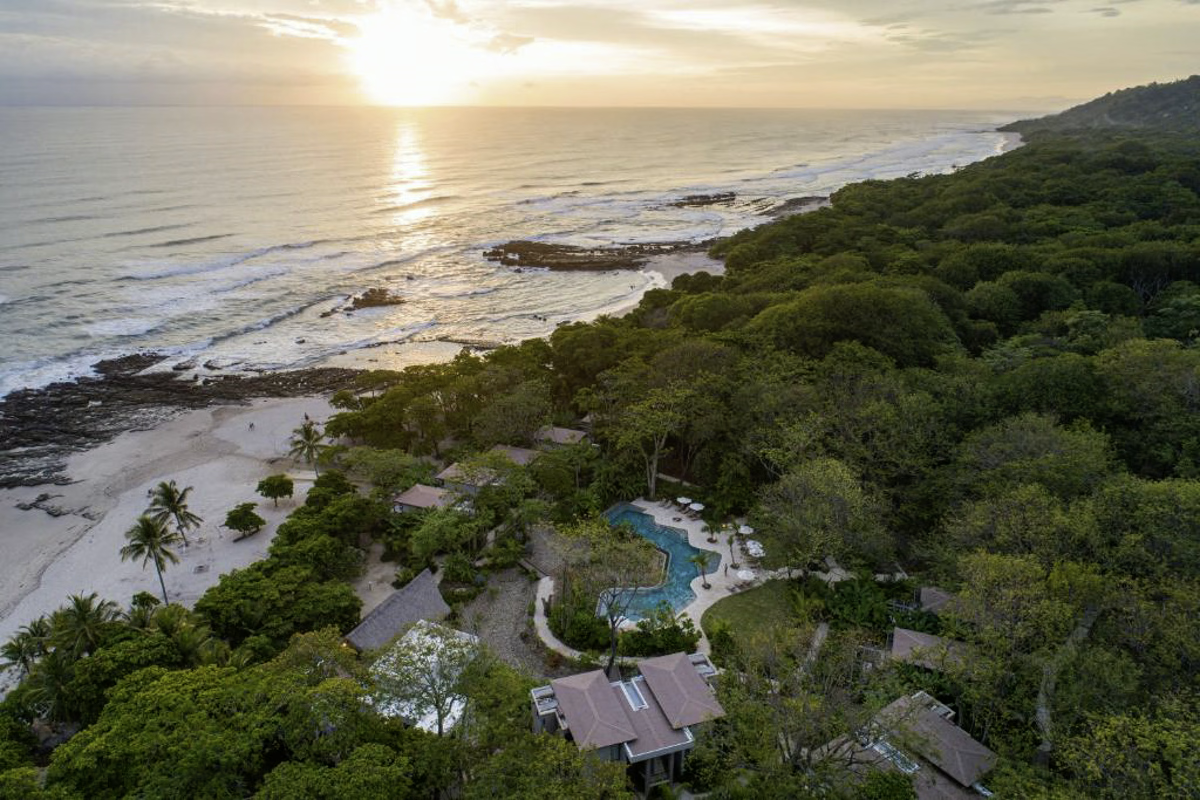
Beachfront bungalows right on Santa Teresa's sand, each with a private patio and plunge pool, in a barefoot-luxe, minimalist style that leans into the town's end-of-the-world feel rather than fighting it. Surf access is right from your door, one of the few properties on this stretch where you can roll out of bed and be in the water in under a minute. Ask us about a stay at Nantipa.
Revised Where to Stay in Santa Teresa:
- Mid-Range: Canaima Chill House from $80/night
- Mid-Range: Nautilus Boutique Hotel from $110/night
- Luxury: Hotel Nantipa from $325/night
- Luxury: Hotel Fermata, brand new (opened December 2025) directly on Playa La Lora, named to Travel + Leisure's Best New Hotels list for 2026 Request a current quote for your dates.
- Luxury: Ocio Villas by Casa Chameleon, a private plunge pool villas in the hills above town rather than individual hotel rooms.
7. South Caribbean and Puerto Viejo
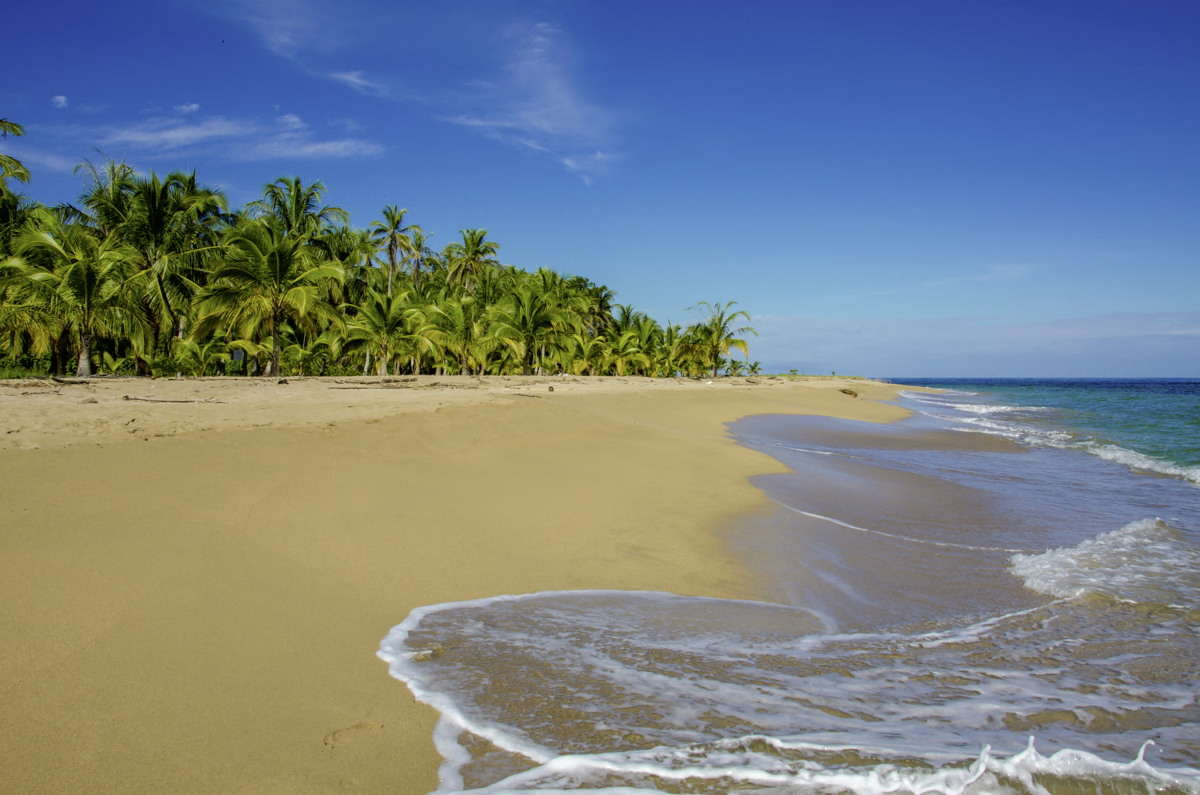
On the shores of the turquoise Caribbean Sea in the southeastern corner of Costa Rica, Puerto Viejo de Talamanca is a laid-back beach town with a distinctly Caribbean vibe. This vibrant seaside town has an easy charm and a unique culture with strong Afro-Caribbean and indigenous influences, making dining in Puerto Viejo a dream. On the main drag, there are lots of tasty, stylish eateries that serve global fusion, or international cuisine, but the real gems can be found when you stray a couple of blocks off the main street and find yourself savoring flavorful coconut rice and spicy Caribbean stews.
The region is also a beach lover's dream, sitting between some of the most spectacular beaches in the country, white and black sand beauties with warm water in hues from turquoise to cobalt blue, lined by coconut palms. Rent a bicycle and trek up or down the coast to find an unoccupied stretch that you can call your own for the day. For surf-loving honeymooners, beaches near Puerto Viejo have great surfing year-round, and the party scene here is legendary, with an array of bars and discos pumping dancehall, calypso and reggaetón day and night.
Osaviva's pick: Aguas Claras
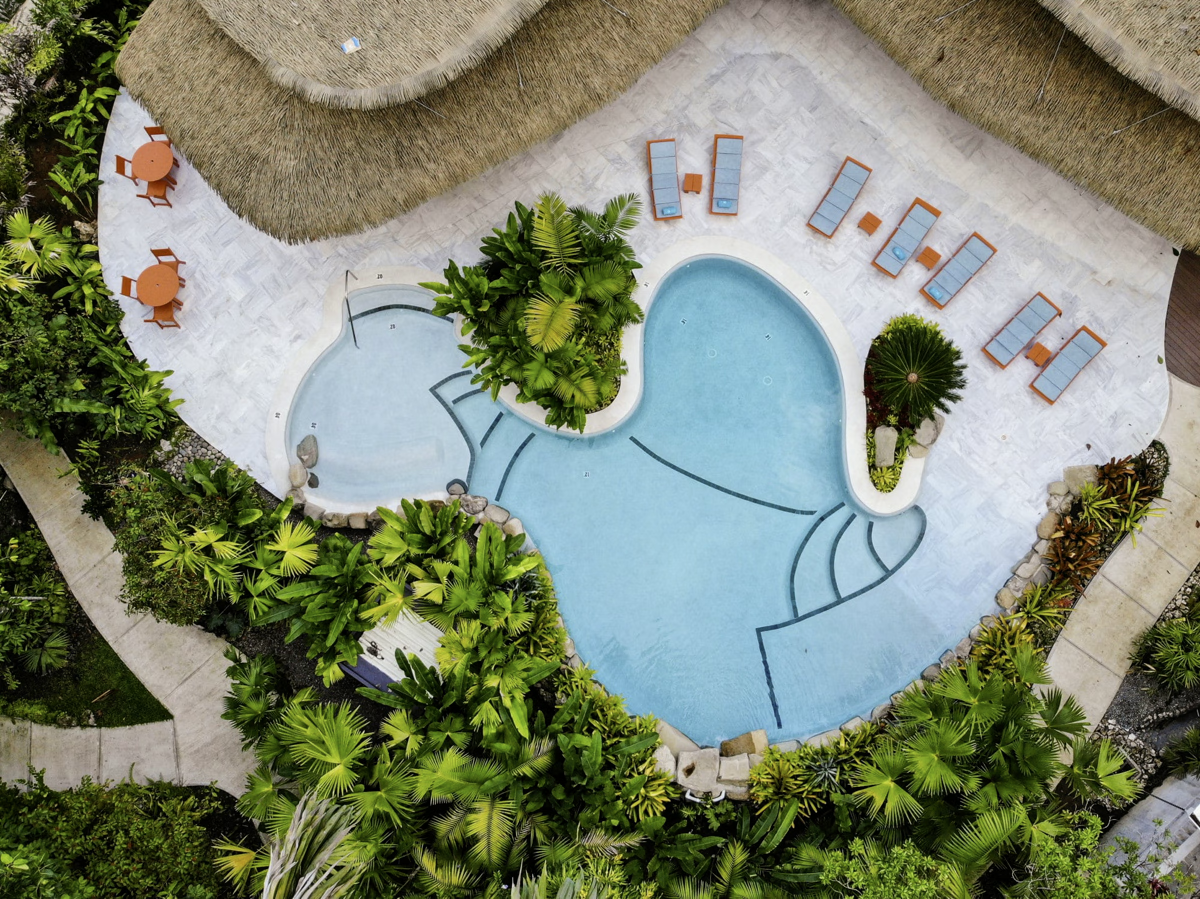
Our pick for honeymooners who want to see the Caribbean side of Costa Rica, not just the Pacific. Aguas Claras sits right on Playa Chiquita, all color and lush garden and easy warmth, rooted in the owners' long-standing ties to the local community. It's playful rather than formal, and it's the clearest way to show a couple a different, less-photographed Costa Rica than the one most honeymoon guides show them. Ask us about a stay at Aguas Claras.
Where to stay in Puerto Viejo
- Mid-Range: Hotel Banana Azul from $109/night
- Mid-Range: Physis Caribbean Bed & Breakfast from $76/night
- Luxury: Geckoes Lodge from $150/night
- Luxury: Le Caméléon Boutique Hotel from $119/night
8. Tortuguero
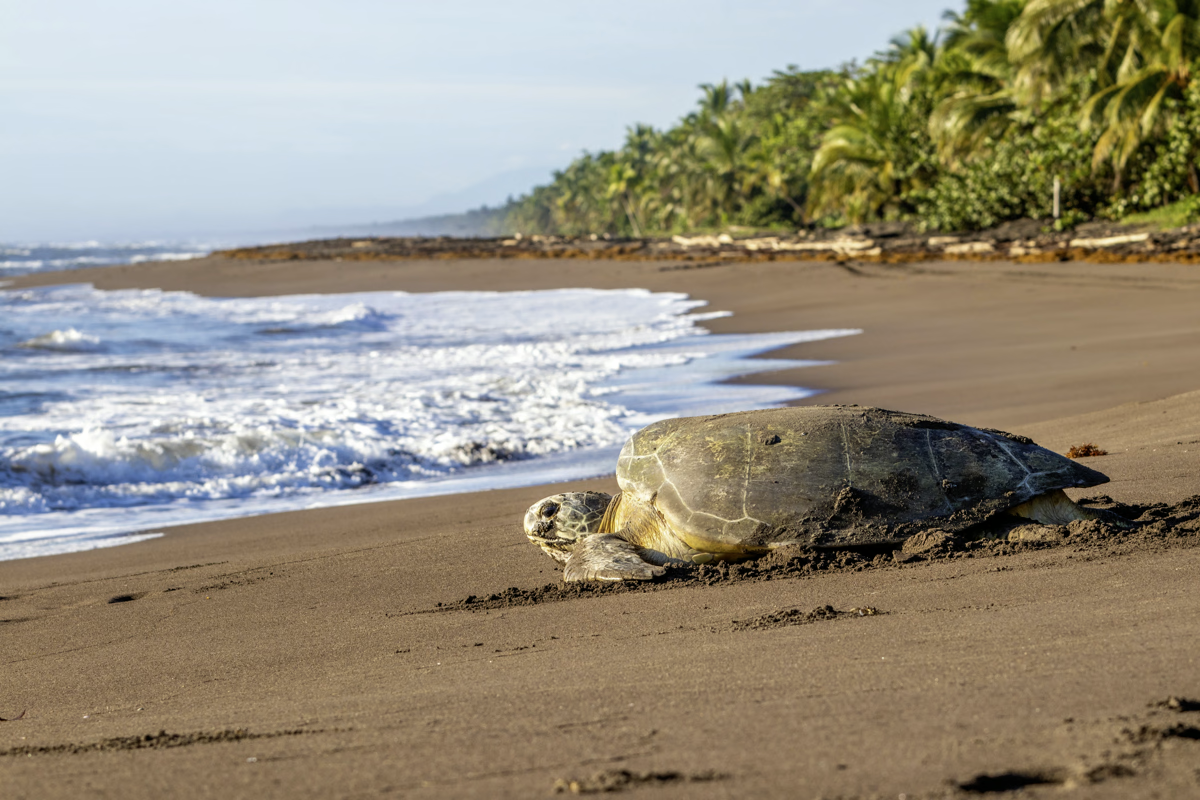
Tucked away in the northeastern corner of the country where jungle meets sea, Tortuguero National Park is a labyrinth of waterways, lagoons and channels that are home to a vast diversity of wildlife. Accessible by only boat or plane, this region is cut off from the rest of the country, flanked by the Atlantic Ocean to the east, and Barra del Colorado Reserve to the north. Tortuguero protects over 19,000 hectares (46,960 acres) of rainforest, including 35 kilometers (22 miles) of beach, and is among the most important nesting sites in the Western Hemisphere for endangered green sea turtles, and a key nesting area for leatherback, hawksbill and loggerhead sea turtles.
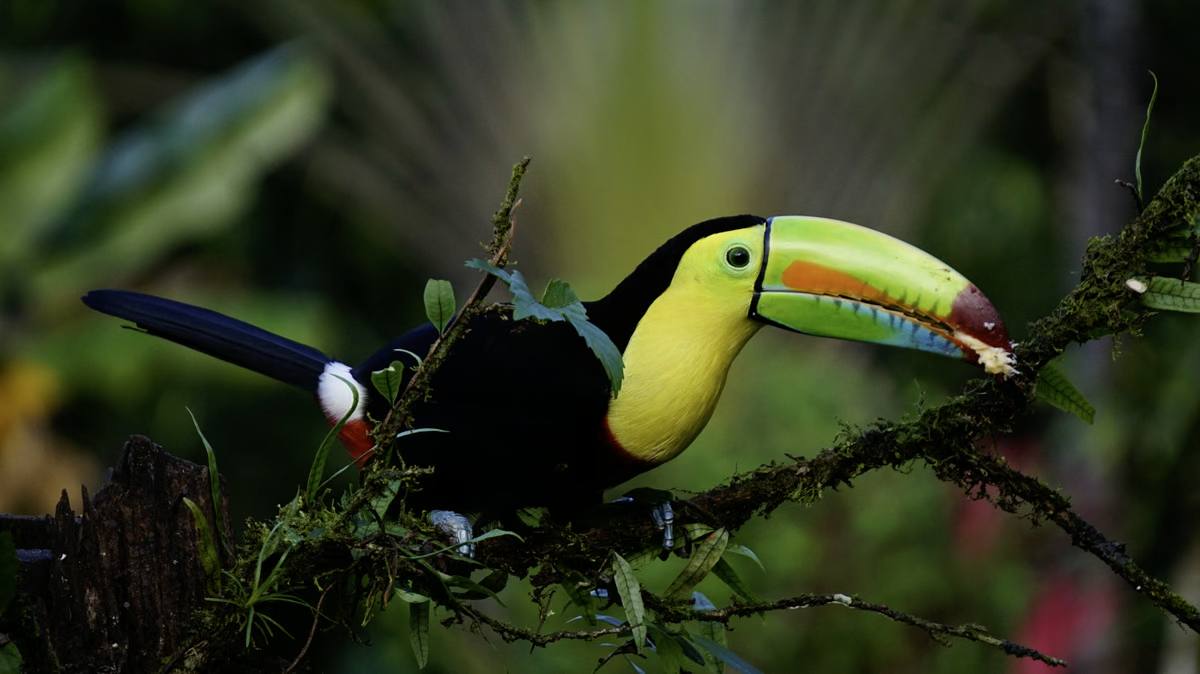
The exceptionally high level of rainfall and rich environment where freshwater meets the ocean makes the beaches, canals, lagoons and wetlands of Tortuguero an area of extreme biodiversity, home to around 170 species of reptiles and amphibians, 60 species of mammals, including monkeys, jaguars and tapirs, and more than 300 bird species. Along the zig-zagging canals, visitors can find everything from monkeys and turtles to caimans and wading birds. The most popular way to traverse the canals is on a boat, canoe, or kayak tour. For honeymooners, we recommend canoe or kayak. There's something magical about paddling out into the canals together, and spending the day enjoying the sun and exploring the rainforest surrounds for monkeys and toucans.

Osaviva's pick: Tortuga Lodge & Gardens
The only hotel in Tortuguero with its own private nature reserve, set right on the riverbank with plantation-style gardens on one side and jungle on the other. Its 29 rooms come with daily naturalist-led canoe trips, turtle-nesting tours and river excursions built in. Ask us about a stay at Tortuga Lodge.
Where to stay in Tortuguero
- Mid-Range: Laguna Lodge from $297 per person for a two night all-inclusive package. Includes taxes, round-trip transportation between San José and Tortuguero, guided wildlife expeditions, and three meals per day.
- Mid-Range: Mawamba Lodge from $338 per person for a two night all-inclusive package. Includes taxes, round-trip transportation between San José and Tortuguero, guided wildlife expeditions, and three meals per day.
- Luxury: Tortuga Lodge & Gardens from $698 per person for a two night all-inclusive package. Includes taxes, round-trip transportation between San José and Tortuguero, guided wildlife expeditions, and three meals per day.

9. Uvita
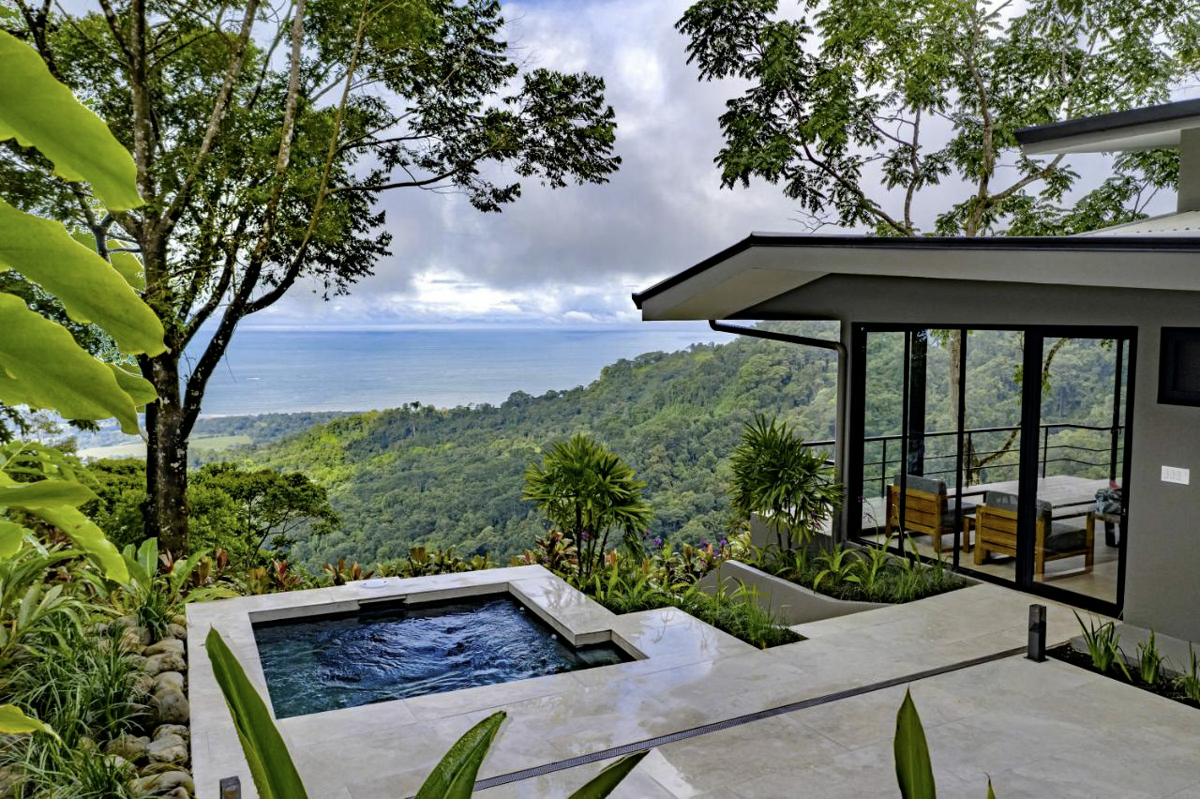
South of Dominical, Uvita is a quiet beach town with a gentle pace of life and a thriving expat community. The town is small and set into the jungle hillside overlooking the vast Pacific Ocean, with a scattering of hotels and lodges built into the greenery-covered cliffs, offering a luxurious retreat from the hectic (or mundane) day-to-day.
The area's main attraction is Marino Ballena National Park, famous for its migrating pods of humpback whales, wild, deserted beaches, and the whale's tail-shaped sandbar that stretches out into the ocean, best seen with a bird's eye view from high up in the hills.
Osaviva's pick: Rancho Pacifico
Quiet and elevated above the ocean, set high in the hills with panoramic Pacific views, yet still just a few minutes from town. Refined without being flashy: slow mornings, long swims, and evenings that revolve around the changing light rather than a scene. Select villas come with their own plunge pools. Ask us about a stay at Rancho Pacifico.
Where to stay in Uvita
- Mid-Range: TikiVillas Rainforest Lodge from $161/night
- Luxury: Kurà Design Villas from $450/night
- Luxury: Rancho Pacifico from $335/night
- Luxury: Vista Celestial Boutique Hotel from $650/night
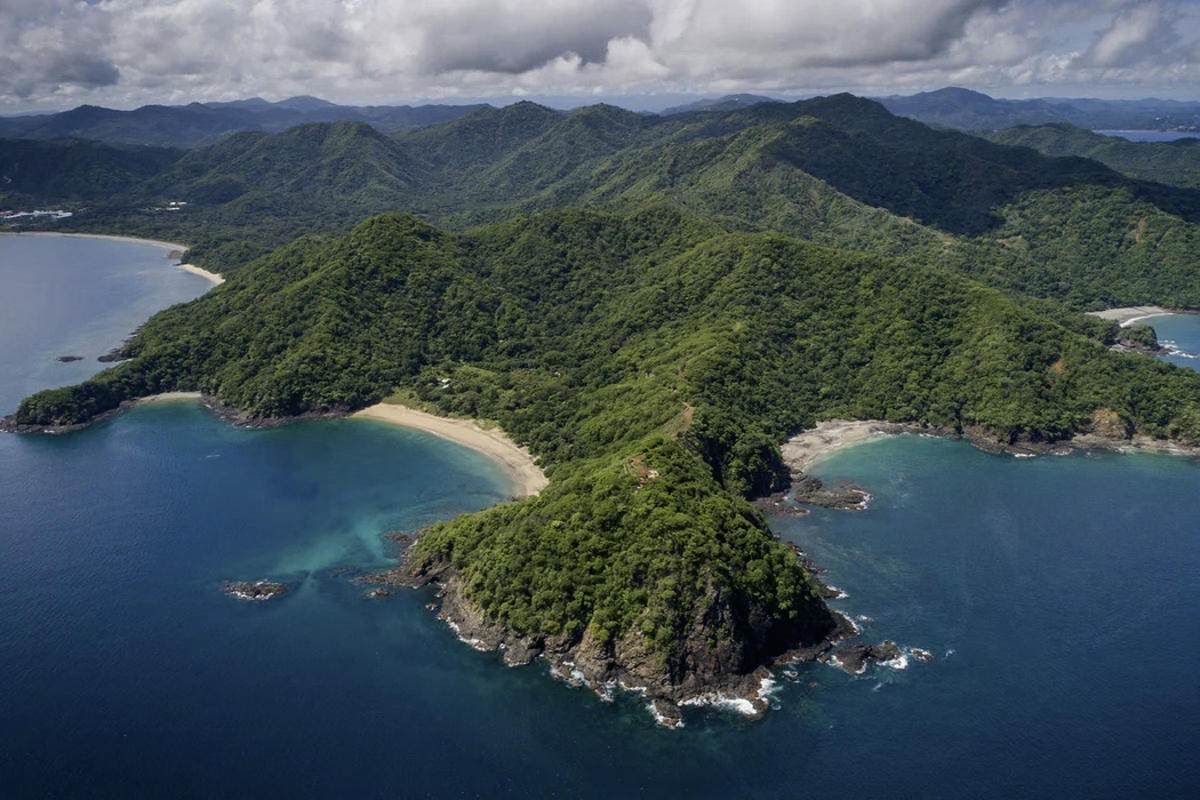
10. Papagayo Peninsula and Guanacaste
This is the region we send you to when you fly into Liberia. The Papagayo Peninsula, tucked into Guanacaste's northwest corner, is Costa Rica's most polished stretch of coastline, home to the country's biggest names in full-service luxury and a run of calm, protected beaches that feel worlds away from the surf towns further south. If Arenal is Costa Rica's adventure heart and the Osa its wild frontier, Papagayo is where you go for the version of a Costa Rica honeymoon that looks like a postcard from the moment you arrive: turquoise coves, manicured grounds, a beach chair with your name on it.
It isn't the place to go looking for a sleepy Costa Rican fishing village, most of what surrounds the resorts here is resort, not town, and that's exactly the trade some honeymooners are looking for. Pair a few days in Papagayo with a few days somewhere wilder, Monteverde or Arenal especially, and you get the best of both without sacrificing either.
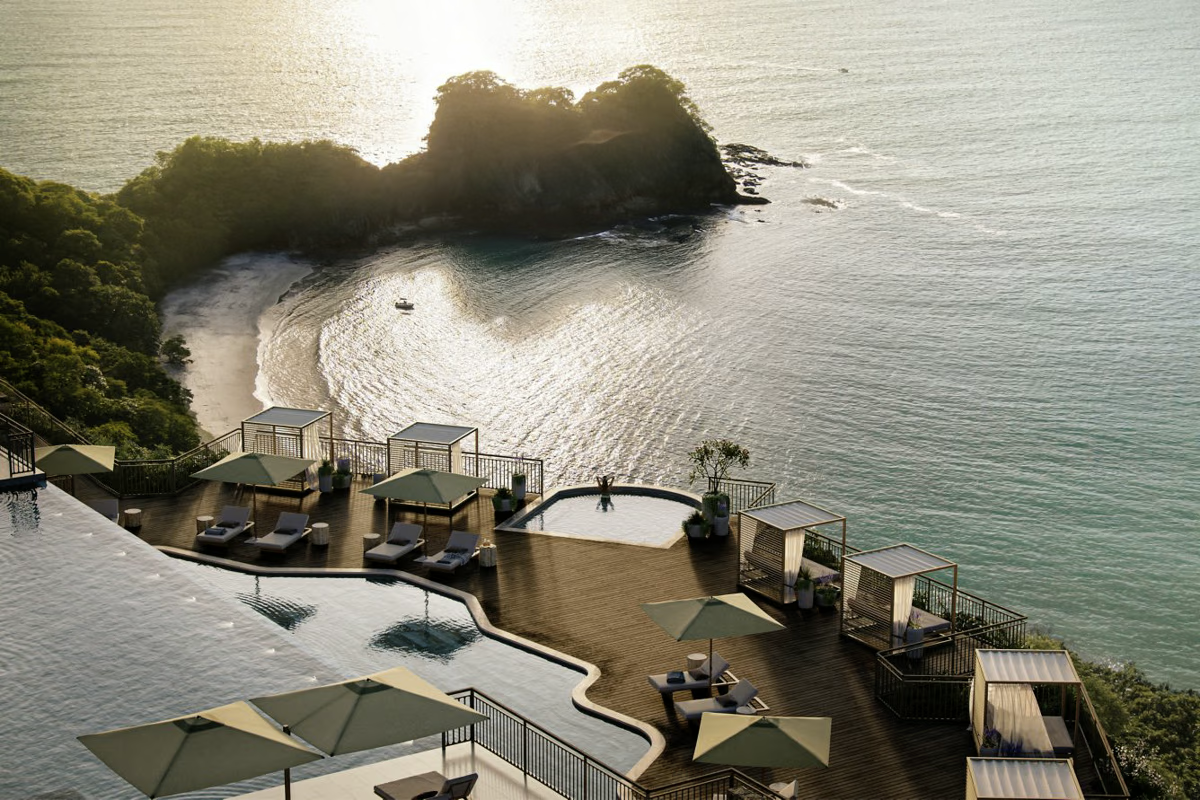
Osaviva's pick: Nekajui, a Ritz-Carlton Reserve
Cinematic is the right word. Dramatic, cliffside, tented architecture carved into the coastline with sweeping views of jungle and sea, few resorts in Costa Rica match Nekajui's sense of scale and exclusivity. Every detail, from arrival to service to the setting itself, feels intentional. Ask us about a stay at Nekajui.
Where to stay in Papagayo and Guanacaste
- Luxury: Four Seasons Resort Costa Rica, beachfront on the peninsula, with some of the most consistent five-star service in the country.
- Luxury: Andaz Costa Rica Resort at Peninsula Papagayo, a more playful, moderately priced entry into the same stretch of coast, with several pools and beach access along Culebra Bay.
- Luxury: Nekajui, a Ritz-Carlton Reserve, dramatic, cliffside, and about as scenic as Costa Rica luxury gets.
- Luxury, all-inclusive: Secrets Papagayo, adults-only and fully all-inclusive, the closest thing on this list to a classic fly-and-flop beach honeymoon.
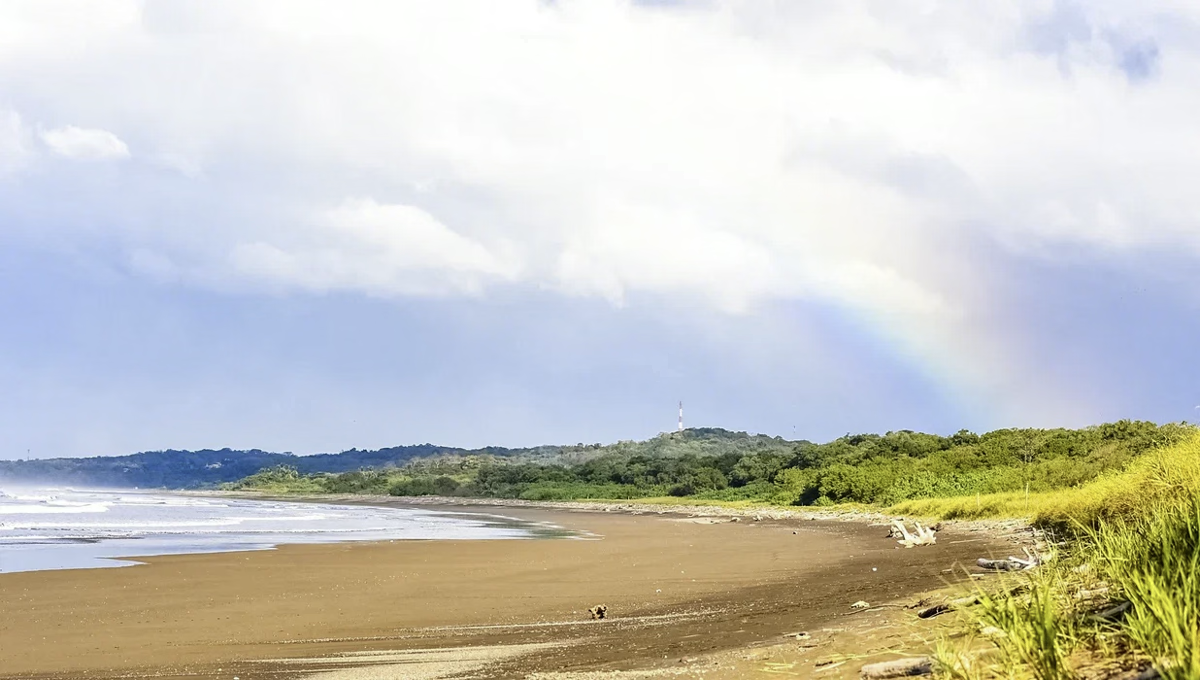
11. Nosara
On the Nicoya Peninsula's northern stretch, Nosara is Costa Rica's original surf-and-wellness town, and one of the reasons this peninsula is recognized as one of the world's five Blue Zones, regions where people live measurably longer, healthier lives. The town is really three connected neighborhoods, Playa Guiones, Playa Pelada, and the original village inland, spread along dirt roads that local building codes have deliberately kept low-rise and jungle-covered.
Playa Guiones is the heart of it: a long, consistent beach break that draws surfers of every level, framed by boutique hotels, juice bars and yoga studios rather than resorts. Playa Pelada, a short walk north, is smaller and calmer, better for swimming, with tide pools and one of the best sunset spots on this coast. Howler monkeys and scarlet macaws are a regular presence in the trees overhead, no safari required.
For honeymooners, Nosara works best for couples who want their romance mixed with genuine activity, a sunrise surf lesson or a yoga class, then an afternoon of doing absolutely nothing. It pairs naturally with Santa Teresa for a longer Nicoya stretch, or with Arenal or Monteverde for a jungle-to-coast itinerary.
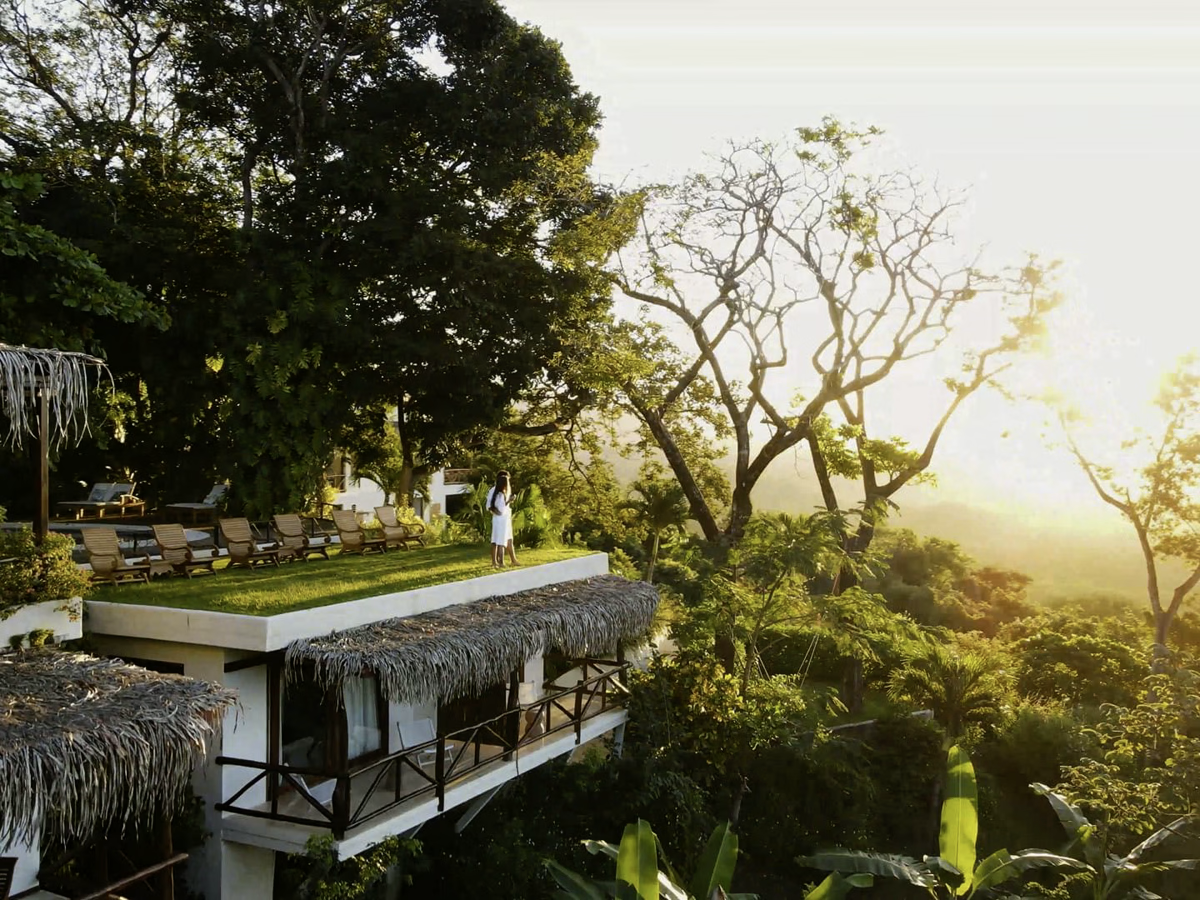
Osaviva's pick: Tierra Magnifica
Right on Playa Guiones, Tierra Magnifica pairs jungle-view suites with a restaurant serving refined Costa Rican cuisine from an in-house chef, and it's recent enough news to matter: a Michelin Key and a Condé Nast award, both in 2025. It's boutique in scale but polished in a way a lot of Nosara's surf-town stays aren't. Ask us about a stay at Tierra Magnifica
Where to Stay in Nosara
- Mid-Range: The Gilded Iguana, a longtime Playa Guiones surf hotel and restaurant, casual and social rather than a honeymoon splurge, but worth listing for couples who want that vibe.
- Mid-Range: Lagarta Lodge, a boutique eco-lodge built into its own private nature reserve overlooking the Nosara River mouth and the Pacific.
- Luxury: Harmony Hotel, Nosara's best-known sustainable surf-and-yoga retreat, an institution here rather than a new name.
- Luxury: Esh Hotel & Spa, adults and teens 13+, a Design Hotels™ member with jungle-immersed villas (some with private plunge pools) and its own wellness spa.
- Luxury: Sendero Hotel, steps from Playa Guiones, muted earthy interiors, rooms ranging from compact queens up to one-, two- and three-bedroom villas with private pools.
- Luxury: Tierra Magnifica.
Things to do on your Costa Rica honeymoon
There's a whole heap of things to do, and beautiful things to see in Costa Rica. Despite its size, it's a country with no shortage of things to explore, tropical rainforests, rugged mountains, serene beaches. It's the perfect spot to experience the unspoiled nature of Central America! So how should you fill your days to up the honeymoon ante? We've got some suggestions.
Adventure & adrenaline
Zipline along the base of a Volcano
Get your heart pounding on a zipline ride through the Costa Rican forest canopy; whizz along cables slung between canyons, admire incredible views, fly over and in between trees to feel an adrenaline rush like no other. Located in the forests near the base of Arenal Volcano, you'll ride in an open-air gondola to the top of the mountain to begin a zipline circuit that stretches across canyons and in between treetops, sending you flying through the forest canopy at speeds up to 70 km/h (43.5 mph). From $99 per person.
Rappel a waterfall in the heart of the rainforest
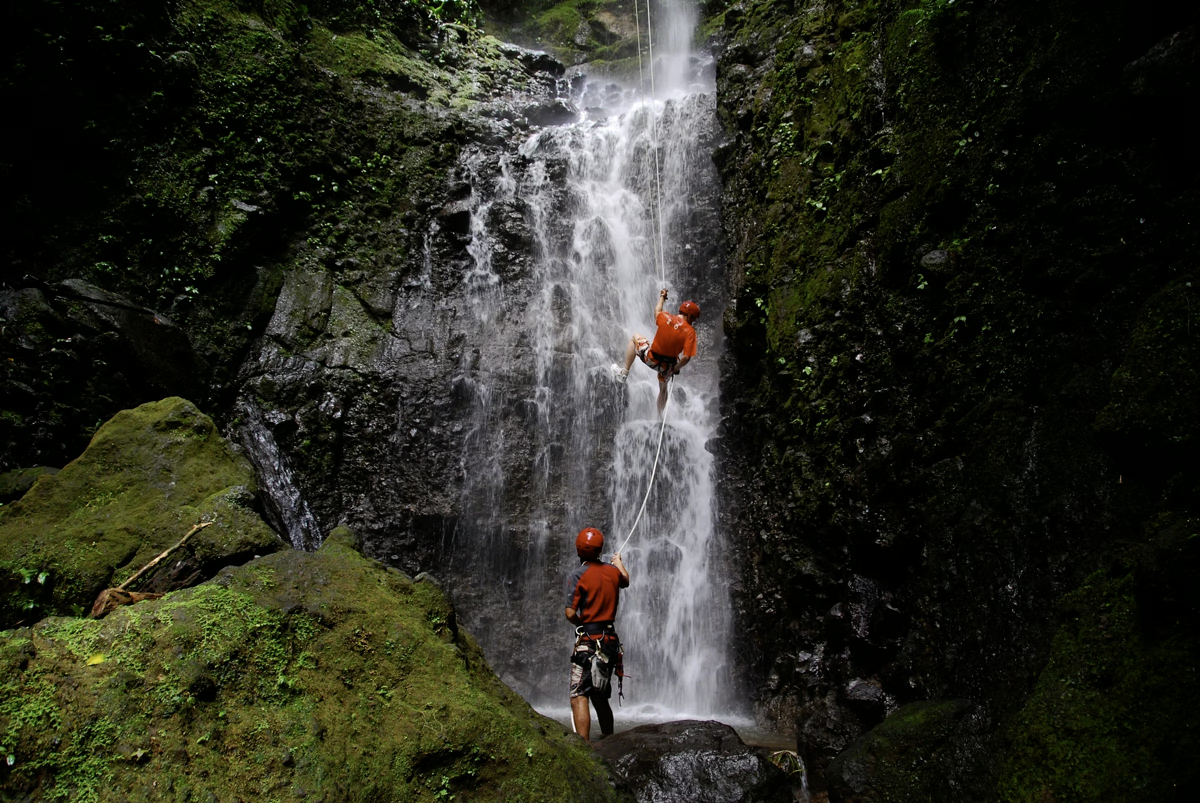
Take advantage of Arenal, the adventure capital of Costa Rica, with an excursion into the heart of the rainforest to hike jungle trails, rappel down waterfalls, jump into river pools, zip down guided rappels, and climb canyon walls. You'll get more thrills in the course of the day than you'll know what to do with. From $99 per person.
Whitewater raft the Pacuare River
Get a dose of adrenaline with a white water rafting trip down the Pacuare River, rated one of the top rivers in the world. Paddle through one of the most scenic rivers in Costa Rica as it cuts through lush, wild rainforest on 30 kilometers of Class III-IV whitewater, passing by cascading waterfalls, and spotting exotic birds and animals as you go. From $129 per person.
Catch a wave in Santa Teresa
Catch a wave in one of the world's best surfing destinations. Santa Teresa has waves for all levels of surfers. If you're experienced, rent a board for the day and enjoy the ride, and if you're brand new to the sport, take a class with a surf coach to get you started. From $45 per person.

Kayak jungle canals in Tortuguero
Set out into the canals and waterways of Tortuguero, exploring the lowland rainforest by kayak. Travel deep into jungle waterways few visitors ever see, to admire stunning views and spot exotic wildlife including monkeys, toucans, caimans, river turtles, and more. From $65 per person.
Explore beach & jungle on horseback
Watch the sunset over the ocean from the comfort of your saddle on the late afternoon ride or see the early morning sun glisten through the jungle, while you enjoy the freshness of a new day, riding along pristine, untouched Manzanillo beach, as you soak up the magnificence and beauty in complete peace, as there is no road access. Continue through rivers and jungle to a farm to experience life on a cattle farm before making your way back to Santa Teresa. From $95 per person.

Wildlife & nature encounters
Go where the wild things are
The world-famous Corcovado National Park is one of the most biologically rich places on Earth. It's home to some of the world's rarest wildlife, including jaguars, peccaries, tapirs and 450 bird species. To take best advantage of this magical place, head into the forest accompanied by a naturalist guide. Take a boat along the coast to Sirena Ranger Station, soaking in the stunning scenery and spotting marine wildlife as you go, and then once you reach land, embark on a rainforest trek you'll never forget. From $90 per person.
Spot wild sloths in Cahuita
Along with stunning scenery and pristine turquoise seas, Cahuita National Park is home to a visible population of sloths, so your chances of seeing one of these furry, smiley creatures is excellent here. For your best chance at spotting a sloth, hire a naturalist guide, they are trained to see sloths and have binoculars and telescopes to find them. From $49 per person.
If you're keen to try to find one on your own, start your adventure from the Kelly Creek station in the town of Cahuita, and walk along the 8-kilometer trail around Punta Cahuita toward Puerto Vargas Beach. Watch high in the treetops as you walk, paying special attention to the sloths' favorite trees, cecropias. Entrance to Cahuita National Park is $5 per person. The park is open from 8 AM to 4 PM daily.
Play a part in sea turtle conservation
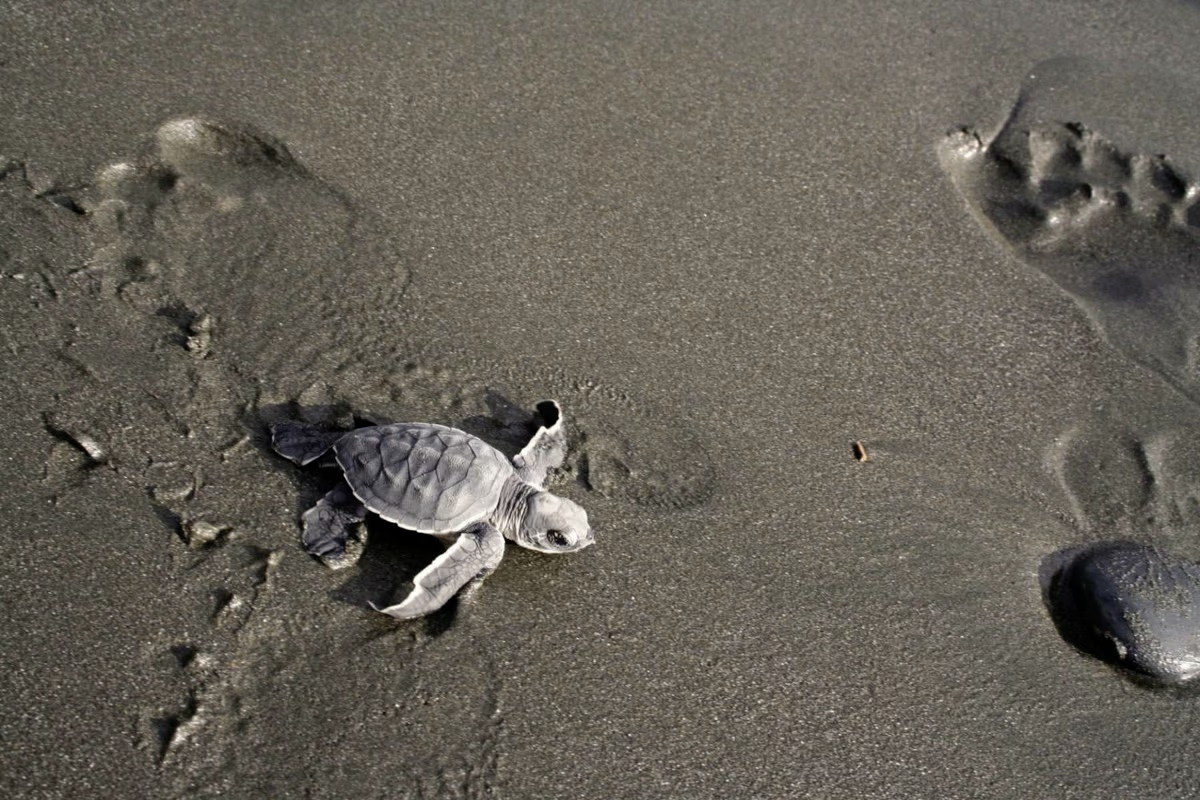
Take a night tour along the wild black beaches of Tortuguero, where endangered green turtles, leatherback, hawksbill and loggerhead turtles come to nest. Nesting season stretches from June through early October, with peak season occurring between July and September.
Turtles nest in the evening, to avoid predators. Guided nesting tours are available during this time and all tours are regulated by Tortuguero National Park. From $35 per person.]
Spot quetzals in the cloud forest
Head out into the swirling mists of Monteverde's cloud forests in search of the Resplendent Quetzal, one of the most elusive birds in the world. A startling vision of emerald green with a vibrant red breast, birders come from all over the world for a chance at seeing one of these beautiful birds. The best time to spot them is during breeding season, from February to June. Private birding tours from $120 per person.
Water & reef
Snorkel Caño Island
Spend a day exploring Caño Island, a beautiful island and marine sanctuary off Costa Rica's South Pacific coast. The island's surrounding waters contain some of the most varied and abundant marine life on the planet. Snorkel through cobalt waters and explore the underwater landscape of caves, cliffs, canyons and 19 species of corals including brain, head and sea fans, home to a vastly diverse array of creatures, including lobsters, sea turtles, rays, sea urchins, octopus, starfish, and many species of brightly-colored tropical fish.

Spot humpback whales at Uvita
Embark on a search for humpback whales, who convene in Marino Ballena National Park off the coast of Uvita from mid-July to late-October, and then again from mid-December through April. Here, in one of the best whale watching places in the world, you'll watch these gentle giants as they breach and play, and listen to their love songs, calling out to one another as they migrate to and from feeding and mating grounds. From $90 per person.
Natural wonders & hikes
Hike to hidden waterfalls
Bajos del Toro Waterfall is a little-known waterfall in the remote mountains north of the Central Valley. This stunning jungle cascade is one of the largest in Costa Rica, dropping 90 meters (300 feet) into an extinct volcanic crater. Remote rainforest surroundings and few visitors up the romance factor, giving the unspoiled valley of Bajos del Toro a lost-in-the-jungle feeling all its own. Park entrance $14 per person.
Witness unearthly blues at Río Celeste
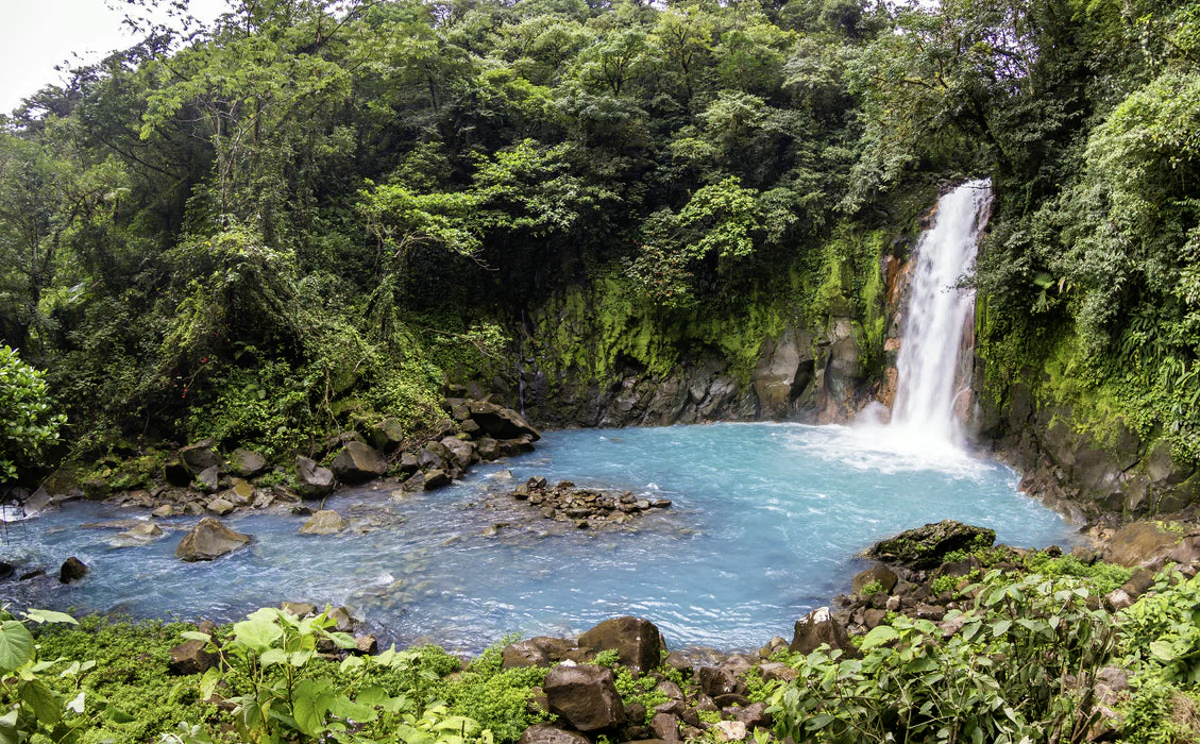
A place that must be seen to be believed, the Río Celeste (Blue River) and waterfall is a natural wonder, with brilliant blue water whose show-stopping hue comes not from a dye or a chemical reaction, but from an optical trick: dissolved minerals in the water scatter sunlight the same way particles in our atmosphere scatter it to make the sky look blue. Hike through Tenorio National Park's dense, lush tropical rainforest to the banks of the riverbed, where you'll witness the striking change in the water's color. Local indigenous legend tells that the color comes from God's paintbrush, as he painted the sky its celestial blue, he reached down to dip his brush into the river, turning the waters of the Río Celeste into the magical blue color they are today. Guided tours from $115 per person.
Culture & cuisine
Taste coffee from bean to brew
Explore your passion for coffee with a guided tour through the lifecycle of gourmet coffee in Costa Rica's Central Valley. Begin in the nursery, following beans through their growing cycle. Next, let your nose be enchanted by the rich aromas in the roastery, and learn how different roasting techniques affect the beans and the brew, before you indulge in a cupping and tasting session of some of the finest gourmet coffee produced in Costa Rica. With round-trip transportation from San José from $43 per person.
Relaxation & romance
Savor a sunset in Dominical
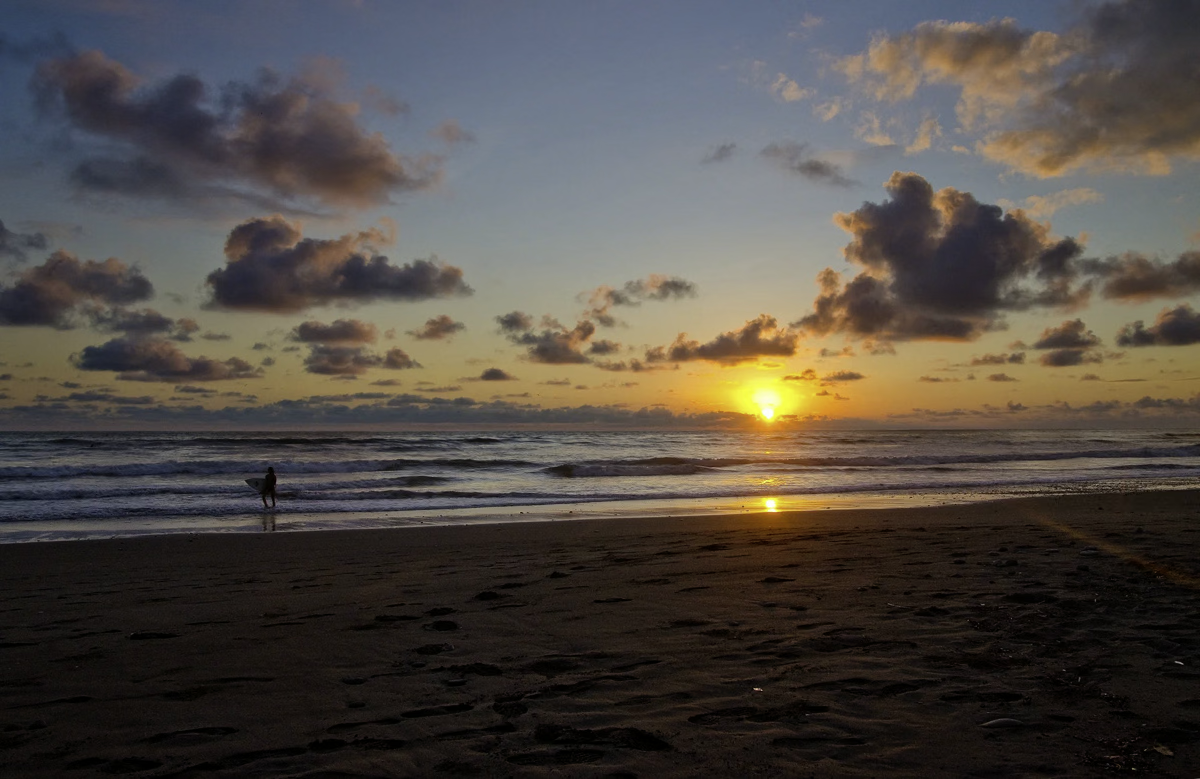
Grab a drink and stroll the beach as the sun goes down in the small surfer town of Dominical. Imagine this: the sounds of waves crashing on the beach, and the sensation of your toes in the sand as the sky turns technicolor, a dramatic showing of magnificent golds, fiery oranges, deep fuchsias and cotton candy pinks. It doesn't get much better than this.
Dance until the sun comes up in Tamarindo
Tamarindo is one of the most popular party and surf destinations in Costa Rica, with hordes of visitors coming to enjoy sun, sand and surf by day and a vibrant nightlife once the sun goes down. There's no shortage of music options, beach bars pumping reggaeton, live salsa and calypso bands, and discos featuring house and electronic beats, that will have you dancing with your love until your legs give out, or the sun comes back up again. Whichever happens first.

Relax on pristine beaches in Manuel Antonio
With three stunning beaches within the park, this is the place to spend the day in the sun, sand and surf. The park is closed on Mondays, and entrance is from $16 per person.
Road trip the Central Pacific
From Puntarenas to Uvita, drive a scenic route along the Costanera Sur highway, hugging seaside cliffs, winding through palm plantations and thick jungle as you blast your favorite road trip playlist.
Nightlife & social
Dance until the sun comes up in Tamarindo
Tamarindo is one of the most popular party and surf destinations in Costa Rica, with hordes of visitors coming to enjoy sun, sand and surf by day and a vibrant nightlife once the sun goes down. There's no shortage of music options, beach bars pumping reggaeton, live salsa and calypso bands, and discos featuring house and electronic beats, that will have you dancing with your love until your legs give out, or the sun comes back up again. Whichever happens first.

Frequently Asked Questions
When is the best time for a Costa Rica honeymoon?
Just after the rainy season, in December and January, gives you lush green scenery without the peak of dry-season heat. May and November, the shoulder months, are our favorite pick overall: lower rates, fewer crowds, and good weather most days. Avoid Christmas, New Year's and Easter week unless you've booked far ahead, prices spike and things get crowded.
How much does a Costa Rica honeymoon cost?
For a week-long trip, expect around $2,000 total on a tight budget, $3,800+ for a comfortable mid-range trip, $8,000+ for a luxury trip, and $25,000+ for an all-out ultra-luxury honeymoon. Hotels are usually the single biggest expense, so where you stay does more to move that number than almost anything else.
How many destinations should we visit?
Two to three over 10 days is the sweet spot for most couples. Costa Rica's roads are slower than they look on a map, so packing in more than that usually means spending more of your honeymoon in transit than you'd like.
Which airport should we fly into?
San José (SJO) for Arenal, Monteverde, Manuel Antonio, the Caribbean coast, Tortuguero, and the Osa Peninsula. Liberia (LIR) if your trip is centered on Papagayo, Guanacaste, or the Nicoya Peninsula, since it can save you hours of driving.
Do we need a rental car?
Not necessarily. Shared shuttles and private transfers cover the country well and take the stress out of navigating Costa Rica's rougher roads. A car makes sense if you want the freedom to stop wherever you like, especially along the Pacific coast, but budget for mandatory local insurance on top of the rental rate, and consider a 4x4 if you're heading anywhere off the main highways.
Ready to Start Planning?
Costa Rica rewards honeymooners who plan a little and then let the country do the rest, a few days of adventure, a few days of doing absolutely nothing, and enough contrast between them that the whole trip feels bigger than the sum of its stops.
If you'd rather hand the logistics to someone who already knows which rooms to ask for and which roads to avoid after dark, we'd love to help plan your Costa Rica honeymoon.