

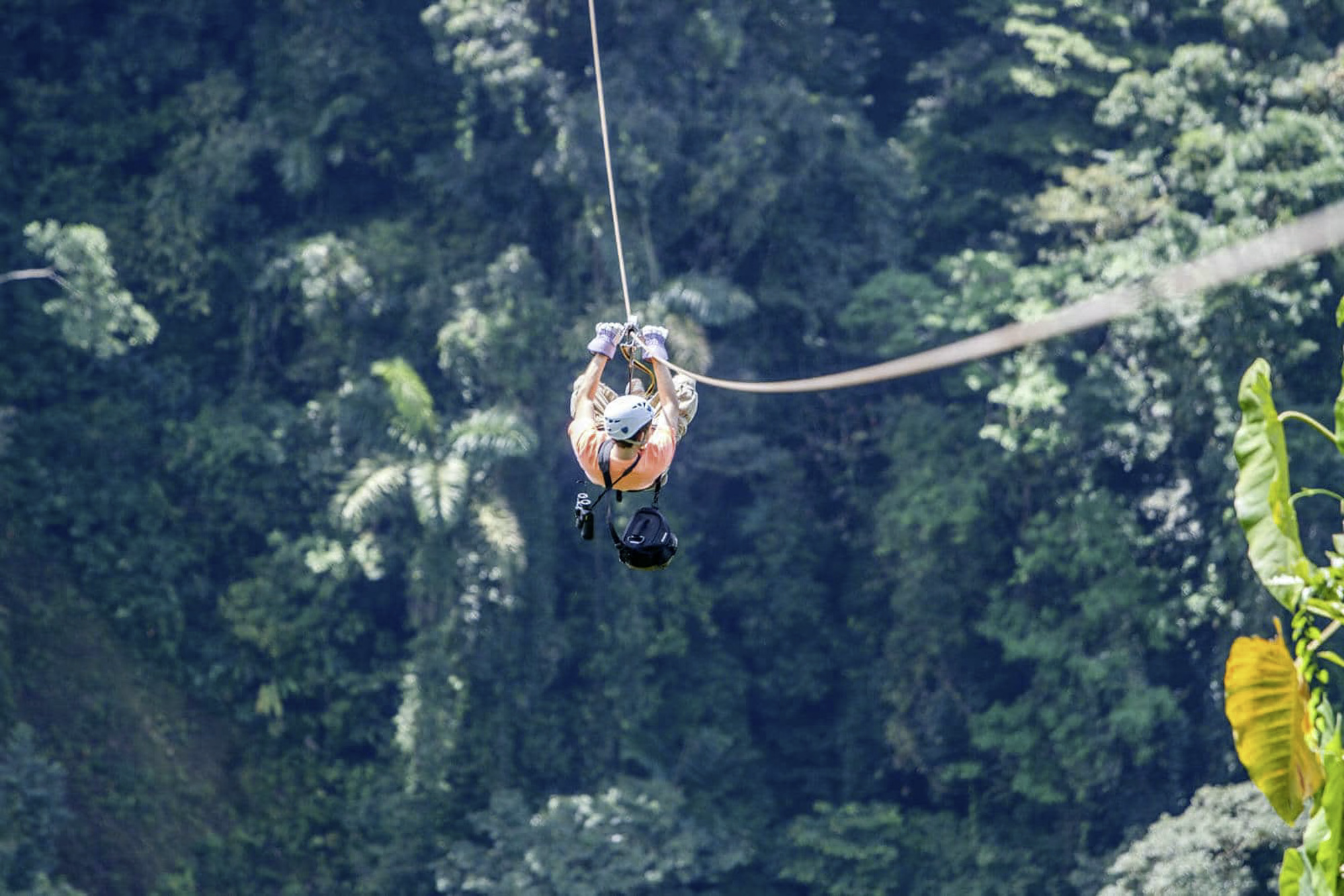
Imagine gliding through misty cloud forests on a zipline, the rush of wind and howler monkey calls surrounding you, or rafting turquoise rapids to a remote eco-lodge where toucans perch just feet from your deck. That’s the pull of Costa Rica adventure travel: adrenaline mixed with extraordinary biodiversity in one of the most beautiful places on earth. This guide covers the best Costa Rica adventure tours, region by region, so you can build a trip that focuses on the thrill.
Costa Rica’s adventure scene suits everyone: solo explorers seeking solitude, couples craving romance amid nature, families building shared memories, or groups mixing activities with relaxation. And when you travel with responsible, eco-conscious operators, your trip supports Costa Rica’s conservation directly: over 25% of the country is protected parkland, funded in part by tourism fees.
Quick decision guide: which Costa Rica adventure fits you?
Ziplining in volcanic rainforest feels completely different from ziplining in misty cloud forest or coastal jungle. Your first priority should be to select locations that match your energy level, climate preference, and wildlife interests, and then add activities, accordingly.
- First time in Costa Rica: Combine Arenal and Monteverde for diverse landscapes.
- Wildlife priority: Consider Manuel Antonio or the Osa Peninsula.
- Soft adventure with relaxation: Arenal hot springs paired with guided hikes.
- Cooler temperatures: Monteverde cloud forest experiences.
- High adrenaline: Pacuare River rafting or canyoning adventures.
- Serious whitewater, one region, no compromises: the Pacuare River corridor near Turrialba.
Arenal vs. Monteverde: which region calls to you?
Arenal and Monteverde anchor the adventure scene in Costa Rica. Both regions have well-established, safety-conscious operators, adventure activities that suit every fitness level and age, and plenty of lodging availability and tour capacity available at various price points. These two Costa Rica icons often top first-timer lists, but they're just a short transfer from one another, so you can easily do both! If you've got limited time and can only fit one, here's a quick way to help you decide between them.
| Arenal (La Fortuna area) | Monteverde cloud forest | |
|---|---|---|
| Vibe | Volcanic drama, warm tropical energy | Misty, ethereal serenity |
| Standout adventures | Hot springs soaks, waterfall rappelling, volcano hikes | Canopy ziplining, hanging bridges, quetzal spotting |
| Best for | Post-activity relaxation, wildlife variety | Cooler temps, birdwatching, canopy immersion |
| Insider tip | Add La Fortuna Waterfall swim for recovery | Go early, as visibility drops with clouds |
| Is it crowded? | Moderate; book ahead for hot springs | Higher weekends; opt for weekdays |
| Where to stay | Nayara Resort Spa & Gardens, with natural hot springs on-site and Arenal Volcano views | Hotel Belmar, a Design Hotels-member property built into the cloud forest with an on-site spa |
Signature experience spotlights
Ziplining in Monteverde
Soaring hundreds of feet above the canopy is a Costa Rica must. Multi-platform circuits deliver misty-valley views that can stretch all the way to the Pacific on a clear day.
- Best time: Dry season (Dec–Apr) for clearest skies; mornings before clouds build.
- What to expect: Safety gear provided, guides brief in English and Spanish. Most circuits end with a Tarzan swing over a canyon for extra adrenaline.
- Tip: Combine with the hanging bridges for a full day of canopy exploration without exhaustion.
Waterfall rappelling in Arenal
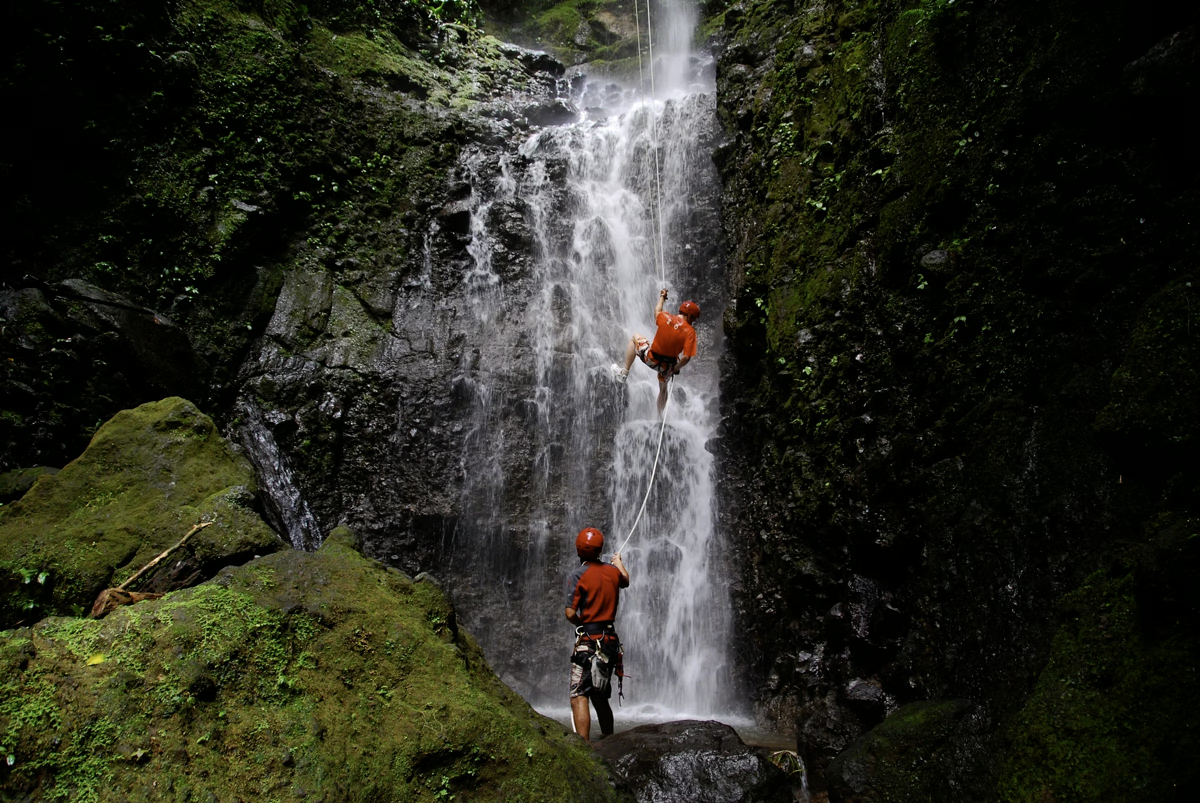
Canyoning tours near La Fortuna descend through a series of waterfalls via rappel, typically five descents in a single outing, with the longest around 200 feet.
- Best time: Runs year-round; dry season (Dec–Apr) gives the most predictable trail conditions, though the falls are fed by cloud forest runoff and rarely dry up.
- What to expect: Full harness and helmet provided, a guide anchors or rappels alongside you, and no prior climbing experience is required. Tours run about 4 hours round-trip from La Fortuna.
- Tip: Pair it with a soak in the hot springs afterward. The descent is a real workout on the legs.
Whitewater rafting on the Pacuare
Class III–IV rapids on the upper river, Class II–III on the more scenic lower stretch, through gorges and rainforest that stay this undeveloped in part because there's no road running alongside it.
- Best time: Raftable year-round. The Caribbean-side watershed keeps water levels more consistent through the dry season than most Costa Rica rivers; expect calmer Class III–IV conditions December–April and bigger, faster water May–November.
- What to expect: Full-day trips are the standard; overnight versions add a stay at a lodge accessible only from the river itself. No experience required for the standard descent.
- Tip: Book the overnight version if you can. Arriving at a jungle lodge by raft, with no road in, is most of the point.
Surfing the Pacific coast
Costa Rica surfing spans the full range: forgiving beginner breaks at Tamarindo and Nosara, faster reef and point breaks at Playa Hermosa and Dominical, and Pavones, one of the longest left-hand point breaks in the world.
- Best time: April through November tends to bring more consistent Pacific swell, though the beginner-friendly breaks work year-round.
- What to expect: Board and lesson rentals are easy to find in Tamarindo, Nosara, and Santa Teresa. Pavones and other remote breaks take more planning and a higher skill level.
- Tip: New to surfing? Start in Nosara or Santa Teresa, where the surf schools and the beginner-friendly waves are concentrated in the same stretch of coast.

Beyond Arenal and Monteverde: three more regions for active travelers
Arenal and Monteverde get most of the attention, but they’re not the only places built for this kind of trip.
Manuel Antonio: where rainforest meets beach
This is the one region on the list where you can hike a rainforest trail in the morning and be in the ocean by early afternoon, without a transfer in between. Manuel Antonio National Park itself is small but dense: capuchin monkeys, sloths, and toucans show up on the main trails without much effort. Surf lessons run year-round on the beach breaks just outside the park, and the snorkeling and mangrove boat tours out of Quepos add an easy water-based day when you want a break from hiking.
Stay at Arenas del Mar, a beachfront eco-resort directly on Playa Espadilla where wildlife shows up on the property itself, or Makanda by the Sea, an adults-only boutique built around its own private wildlife sanctuary. See our best beachfront hotels guide for the region’s full lineup.
Osa Peninsula: the serious wilderness option
If Corcovado’s multi-day treks pulled you in from the High-Adrenaline list above, this is where you base yourself. The Osa is remote by design, reachable by small plane or a long drive, and that difficulty part of what keeps the wildlife so prolific here, along with a very large footprint of state and privately owned conservation land. In these forests hide jaguars, tapirs, scarlet macaws, and hundreds of bird species. Beyond the multi-day treks, guided single-day rainforest hikes, mangrove kayaking near Drake Bay, and snorkeling at Caño Island round out the options for travelers who want the biodiversity without committing to a full expedition.
Stay at Lapa Rios, consistently ranked among the top properties in the country for wildlife density, or El Remanso Rainforest Lodge, a cliffside ecolodge with naturalist guides who know the peninsula closely. For more on Corcovado’s wildlife specifically, see our wildlife destinations guide.
The Pacuare corridor: Costa Rica’s whitewater capital
The stretch of the Pacuare River near Turrialba, in the Caribbean-side foothills, is what most of the country’s serious rafting is built around, and the only way into some of it is by raft or on foot; there’s no road. That isolation is the draw as much as the rapids: gorges, waterfalls, and rainforest with essentially no other tourism infrastructure around it. Multi-day trips typically combine the rafting descent itself with a stay at a lodge accessible only from the river.
Raft in to stay at Pacuare Lodge for the rare experience of an overnight jungle stay alongside a rushing river.
How much does a Costa Rica adventure trip usually cost?
Mid-range Costa Rica adventure vacations typically range from $175–$450 per person per day, including comfortable lodging, meals, and one major activity. Individual excursions like ziplining or national park hikes usually cost between $75 and $200, including round-trip transportation.
For luxury upgrades (private guides, premium lodges), add $150–$400/day.
Packing essentials for rainforests & beaches
Layer smart for humidity and sudden showers:
- Waterproof rain jacket (packable).
- 2–3 quick-dry pants/shorts.
- Moisture-wicking shirts (no cotton).
- Broken-in trail runners plus sandals.
- Swimsuit, hat, reef-safe sunscreen, bug spray.
- Reusable water bottle. Many spots have filtered stations to fill up.
Planning mistakes to avoid
- Not booking activities in advance, especially during peak and high seasons. Popular activities in popular regions (ziplining, hanging bridges, whitewater rafting, hot springs) often fill up weeks or months in advance, so if you wait until your week of travel to book, you may miss out on things you really want to do.
- Trying to visit too many regions in one week, and underestimating travel times between destinations. Costa Rica looks small on a map, but in practice, it’s often much slower to get from one location to another than it “should” be. Google Maps is frequently wrong about travel times in Central America. Don’t cram too many locations in without giving yourself adequate time in each region.
- Choosing activities without considering timing and climate. Costa Rica’s regions have very different weather patterns, and timing can significantly affect your experience. Ocean conditions, wildlife visibility, and trail quality all shift by season. A waterfall hike may be perfect in the dry season but muddy and slippery during greener months, while ocean tours depend heavily on wind and swell conditions.
- Selecting operators based only on price rather than safety standards. Lower prices can sometimes mean compromised safety, outdated equipment, or inexperienced guides. This matters especially for activities like rafting, canyoning, ziplining, or ocean excursions where guide expertise and proper gear are essential.
Safety essentials
Costa Rica consistently ranks among the safest destinations in Latin America, and most adventure activities are well regulated and professionally operated. The most common issue travelers encounter is petty theft, so simple precautions like keeping valuables secure and avoiding unattended belongings go a long way.
When booking adventure activities, prioritize reputable operators with certified guides, modern equipment, and clear safety briefings. Costa Rica’s top adventure providers maintain strong safety standards, but quality can vary, especially with heavily discounted tours. Expect to pay a bit more for a safer tour. You're paying for inspected gear, current guide certifications, and someone who's run this exact route hundreds of times and knows how to handle something unexpected. For rappelling, rafting, and anything else where the margin for error can be dangerous, it's worth the extra cost.
Adventure travel insurance is strongly recommended, particularly if your plans include activities such as rafting, canyoning, ziplining, or scuba diving. Choose a policy that specifically covers adventure sports so you’re protected if plans change or unexpected situations arise.

Sample itineraries
Balanced 7-day intro: Arenal + Monteverde
This classic pairing delivers the best of Costa Rica’s volcanoes, cloud forests, and soft adventure in one well-paced week. It’s ideal for first-time visitors who want iconic highlights with an active edge.
Days 1–3: La Fortuna (Arenal region)
Begin in the shadow of Arenal Volcano, where rainforest trails and mineral-rich hot springs set the tone.
- Guided volcano hike through lava fields and forest trails
- Swim beneath the iconic La Fortuna Waterfall
- Optional canyoning or whitewater rafting on the Balsa River
- Evenings soaking in natural hot springs surrounded by jungle
Expect a balance of adventure and recovery: mornings are active, afternoons ease into warm pools, sunset views, and relaxed dining.
Day 4: Scenic transfer to Monteverde
Travel by the famous Jeep–Boat–Jeep transfer across Lake Arenal. The journey itself is part of the experience, offering sweeping volcano views and a dramatic shift in climate as you climb into the misty highlands.
Days 5–7: Monteverde cloud forest
Monteverde feels completely different from Arenal. Cooler air, moss-draped trees, and constant birdsong define the landscape.
- Zipline through one of Costa Rica’s most renowned canopy systems
- Walk the hanging bridges suspended high above the forest floor
- Guided night hike to spot frogs, sloths, kinkajous, and tarantulas
- Optional coffee farm visit or private cloud forest reserve hike
This itinerary works well for couples, families, or active travelers wanting variety without constant hotel changes.
The 11-day Adventure & Adrenaline package
Osaviva’s longer-format trip combines Arenal and Monteverde with a beachside stay in Manuel Antonio, built for travelers who want the classic 7-day pairing above without cutting it short, plus real beach time at the end.
- Days 1–4, Arenal: volcano hikes, hot springs, and an optional Balsa River rafting or canyoning day.
- Days 5–7, Monteverde: zipline circuit, hanging bridges, a night hike for frogs and sloths.
- Days 8–11, Manuel Antonio: a Manuel Antonio National Park wildlife hike, a beginner surf lesson, and beach time at Arenas del Mar to close out the trip.
The Pacuare to Uvita loop
A more luxurious, romantic take on the classic route: a remote jungle lodge accessible only by raft, paired with Arenal and a quiet, ocean-view finish in Uvita.
- First 2–3 days, the Pacuare corridor: arrive at Pacuare Lodge by raft, with whitewater rafting on the river itself as the way in.
- Next few days, Arenal: volcano hikes and hot springs, the same core activities as the 7-day itinerary above.
- Final days, Uvita: a remote, ocean-view stay at Kurà Design Villas or Rancho Pacifico, both adults-focused properties above Marino Ballena National Park, for a slower close to the trip with whale-watching in season (December–April, plus a smaller window around September).

Frequently asked questions
Is Costa Rica adventure travel safe for beginners?
Yes. Most activities here, from ziplining to Class II–III rafting, are built for a wide range of fitness and experience levels, and reputable operators run a real safety briefing before anything starts. The high-adrenaline tier (canyoning, advanced surf, multi-day Corcovado treks, lower Pacuare whitewater) is where prior experience genuinely matters.
Should I do Arenal or Monteverde if I only have a few days?
Arenal if you want warmth, hot springs, and a wider range of activity intensity. Monteverde if cooler weather and serious birdwatching matter more to you. Most travelers with a week or more do both.
How much should I budget per day for an active Costa Rica trip?
Plan on $175–$450 per person per day for a mid-range trip covering lodging, meals, and one major activity, with individual excursions running $75–$200 each on top of that.
What’s the best time of year for ziplining and rafting?
December through April for the clearest skies and best canopy visibility. Rafting works well in the green season too, when rivers run higher; ask your operator which class of rapids that translates to for the specific river you’re considering.
Is the Osa Peninsula worth the extra travel time?
For serious wildlife and adventure travelers, yes. It’s harder to reach than Arenal or Manuel Antonio, by small plane or a long drive, but that difficulty is a big part of why the wildlife density stays as high as it does.
Do I need travel insurance for adventure activities?
It’s worth carrying if your trip includes rafting, canyoning, ziplining, or diving specifically. Standard travel insurance doesn’t always cover adventure activities, so check the policy before you book.
What should I pack that people usually forget?
Quick-dry clothing over cotton, which stays wet in the humidity, and a real waterproof rain jacket rather than a splash-resistant one. Both matter more here than they do on a typical beach trip.
Ready to design your Costa Rica adventure? Between extraordinary biodiversity, genuinely good eco-lodges, and experiences ranging from adrenaline-filled canyoning to slow wildlife immersion, Costa Rica rewards travelers who plan intentionally. A well-planned itinerary balances adventure and recovery, matched to season and region. Early booking is strongly recommended, particularly for travel between December and April when the most sought-after guides and properties are in high demand. Let’s plan it together.

